Assessment of Components of Fitness (Leaving Cert Physical Education): Revision Notes
📚Revision Notes
Assessment of Health- and Performance-Related Components of Physical Fitness
Designing a Fitness Test Battery
Note
Fitness Test Battery: A collection of fitness assessments that accurately reflect the physical demands of a particular sport or activity. These tests should be tailored to the specific demands of the sport or activity being assessed.
- Consider the physiological demands of the sport and then break this down into the different components of health and performance-related fitness
What is a fitness test battery?
Note
The goal when creating a fitness test battery is to choose tests that closely mimic the energy demands of the specific sport, rather than simply assessing a general fitness component. For example, a 6-minute walk test for cardiovascular endurance (CVE) wouldn't be very useful for a GAA player. The tests should be tailored to the specific requirements of the sport. It MUST be sport-specific
Reasons for creating fitness test batteries:
- To pinpoint strengths and weaknesses, which can guide training needs.
- To establish a baseline starting point and track progress over time.
- To help athletes set realistic goals, boosting motivation and enhancing performance.
- To design a focused and varied training plan that addresses different aspects of health-related and skill-related fitness.
Key Considerations
- Validity
- Reliability
- Tester Competence
- Health and Safety
- Sequence of Tests
- Normative Data
- Facility and Equipment
- Recording Scores
Things to consider when selecting tests:
- Validity
- Reliability
- Available facility and equipment
- Accurate recording of scores
- Tester competence
- Health and safety considerations.
Validity:
Validity ensures that the tests measure what they are intended to measure. To ensure validity, it is crucial to select tests that accurately reflect the specific physical attributes and skills relevant to the athlete's sport.
Example:
- One of the best ways to measure cardiorespiratory endurance is to bring the athlete into a sports science lab and measure their maximal oxygen uptake, or VO₂ max.
Reliability:
The tests should produce consistent results when repeated under similar conditions. Maintaining standardised testing conditions ensures reliable results.
- If results vary significantly, the test is considered unreliable. Example:
- An athlete taking a strength test in the morning should achieve almost the same score if they retake it later that day, as their strength shouldn't change within that short period.
Reliability and Validity:
- A test must be reliable to be valid.
- Test protocols help enhance both reliability and validity, such as ensuring athletes don't train or eat heavily before the test.
- Factors like these can impact the reliability of test results, so it's essential to communicate clear protocols with athletes.
- A structured warm-up should be performed consistently before administering tests.
- The warm-up should be comprehensive enough to prepare the athlete, but not so exhaustive that it affects performance. The RAMP Warm-up:
- A structured warm-up method, RAMP stands for "Raise, Activate, Mobilise, and Potentiate."
- The warm-up begins at low intensity and increases to high intensity over about 15 minutes, with three five-minute stages. Raise:
- The initial phase focuses on increasing:
- Blood flow
- Muscle temperature
- Core temperature
- Muscle elasticity
- This is achieved through sport-specific, low-intensity movements.
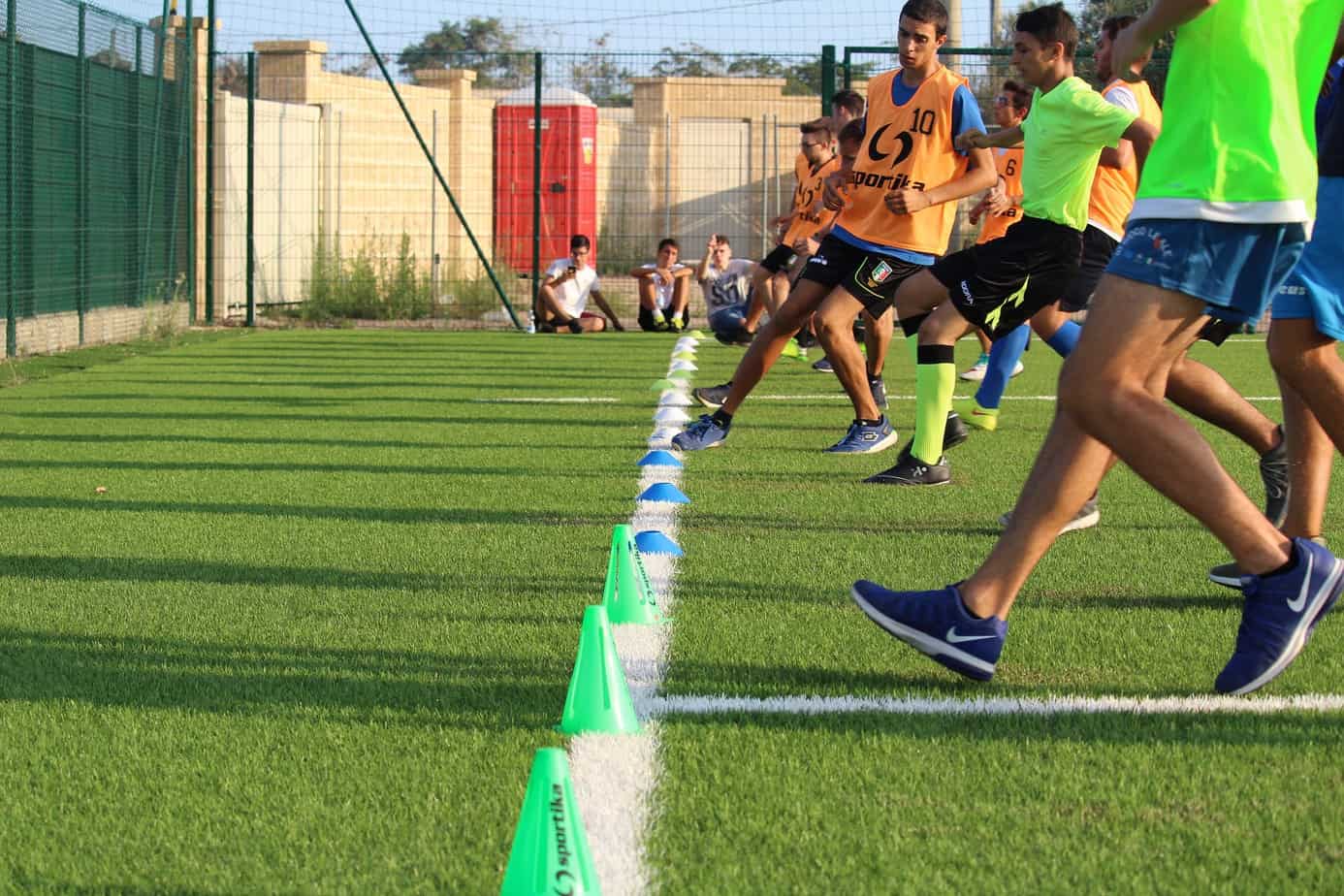
- For example, a football warm-up should be multidirectional, involving stops, starts, and changes of pace, similar to in-game movements. Activate and Mobilise:
- This phase aims to activate key muscle groups and mobilise joints and ranges of motion used in the sport.
- Dynamic stretches or movements are used to work muscles through their full range of motion, activating both the primary muscles and those that stabilise the body.
- When designing this phase, consider the key movement patterns and muscles involved in the sport.
- For example, while static hamstring stretches isolate the muscle, dynamic movements like 10 forwards leg kicks activate not only the hamstrings but also the surrounding muscles and joints. Potentiate:
- Potentiate refers to enhancing or improving effectiveness.
- This phase aims to improve the effectiveness of the warm-up by incorporating exercises that directly contribute to performance improvements.
- Intensity levels should gradually increase to match the demands of the upcoming activity.
- The potentiate phase should include relevant sport-specific activities.
Example of a RAMP warm up - Football
| RAISE | ACTIVATE | MOBILISE | POTENTIATE |
|---|---|---|---|
| Slow run through cones | Hip bridges | Variety of dynamic stretches | Speed work: Short sprints, increasing intensity from 60% to 100% |
| Hip in/Hip out jog | Donkey kicks | Leg swings | Modified passing game including contact |
| Heel flicks and toe touches | Single-leg squats | Straight leg kicks | High-intensity dribbling and passing drill |
| 50% run | Jumping and moving exercises | Lunges | Modified possession game with explosive jumps, short sprints, and direction changes |
| Modified passing drill focusing on changes of direction/speed | Thoracic rotations | Air squat/Jump squat | Note: Calling for the ball during possession drills helps mimic game play and enhances psychological preparation |
| Skipping and gentle bounding | Straight and zig-zag lunge walks | Push-ups | |
| Run at 80% | Note: Do not fatigue the body. Perform 8-10 reps of each exercise | Arm and shoulder rotations | |
| Mountain climbers | |||
| Note: 10 reps of each (each side where appropriate) |
Facility and Equipment:
Choosing tests that can be conducted with available facilities and equipment is important. Ensuring the environment is suitable for the tests helps avoid external factors that could affect performance.
- Tests should be selected based on the equipment, funding, and facilities available.
- The tests must be practical for the environment and provide the most reliable and valid results in those settings. Example:
- Conducting a sprint test on a flat, even surface ensures that the test conditions do not negatively impact the results.
Accurate Recording of Scores:
Accurate and precise recording of test scores is essential for comparison and tracking progress. Using a consistent unit of measurement and recording data to the required precision ensures reliability and accuracy.
- Pay attention to the units and level of precision specified in the test protocols, such as whether weight is recorded to 0.1 or 0.01 decimal places and in kg or lbs. Example:
- Using a digital timer for recording sprint times provides more precise results than a manual stopwatch. Normative Data:
Using normative data allows for comparing individual test results to a wider population. Norms should be relevant to the athlete's demographic and sport to ensure accurate and useful comparisons.
Example:
- Using age and gender-specific norms can help assess how an athlete's performance compares to their peers. Tester Competence:
- The quality of a test depends on the competence of the tester administering it.
- Testers must be thoroughly trained in the test protocols and should trial the test before using it in a performance assessment.
- Testers should administer the test consistently from one occasion to the next—this is known as "intra-tester reliability."
- Consistency between different testers—"inter-tester reliability"—is also crucial.
Health and Safety Considerations:
Ensuring the health and safety of athletes during testing involves checking for appropriate fitness levels and avoiding injury risks. Proper warm-up and hydration are crucial to prevent injuries.
- Coaches are responsible for ensuring the health and safety of athletes.
- Athletes should be at an appropriate fitness level and free from injuries that might affect performance.
- Test protocols must be strictly followed.
- Environmental factors, such as overcrowding, surface safety, and equipment safety, must be considered. Example:
- Conducting a pre-test medical screening can help identify any potential health risks. Sequence of Tests:
Arranging tests in a sequence that avoids fatigue impacting performance in subsequent tests is important.
- The sequence in which tests are administered is critical for reliability and safety.
- Many international strength and conditioning associations recommend the following order:
- Non-fatiguing tests (e.g., height and weight, skinfold measurements, vertical or horizontal jump tests)
- Agility tests
- Maximal strength/power tests
- Sprint tests
- Muscular endurance tests
- Aerobic capacity tests (e.g., cardiovascular endurance tests). Example:
- Start with non-fatiguing tests, followed by agility tests, maximal strength and power tests, and concluding with endurance tests.
Types of Fitness Tests
- Cardiorespiratory Endurance
- Muscular Endurance
- Muscular Strength
- Flexibility
- Body Composition
- Agility
- Balance
- Coordination
- Power
- Speed
- Reaction
1. Cardiorespiratory Endurance
- Purpose: Measures aerobic capacity and stamina.
- Test: 20m Shuttle Run (Beep Test)
- Procedure:
- Set up markers 20 metres apart.
- Athlete runs between markers, keeping pace with audio beeps.
- Beep intervals shorten as the test progresses.
- The test ends when the athlete fails to reach the marker in time for the beep.
Note
Alternative Tests: 7. Cooper 12-minute Run Measures distance covered in 12 minutes to estimate VO2 max. 8. Queens College Step Test Measures heart rate recovery after stepping for 3 minutes.
2. Muscular Endurance
- Purpose: Assesses the endurance of the whole body's muscles.
- Test: Plank Hold
- Procedure:
- Athlete gets into a plank position.
- Tester starts the stopwatch.
- The test ends when the athlete's form breaks or they choose to stop.
- The time held is recorded.
Note
Alternative Tests: 9. Press-up Test Measures upper body muscular endurance. 10. Squat Hold Measures lower body strength endurance.
3. Muscular Strength
- Purpose: Evaluates the maximum force a muscle can exert.
- Test: Standing Broad Jump
- Procedure:
- Athlete stands with feet shoulder-width apart behind a starting line.
- Jumps forwards as far as possible.
- Distance from the start line to the nearest heel on landing is measured.
Note
Alternative Tests: 11. One-Rep Max (1RM) Bench Press Test Measures the maximum weight an athlete can bench press in one repetition. The athlete lifts progressively heavier weights until reaching their maximum capacity. 12. Handgrip Dynamometer Strength Test Uses a dynamometer to measure grip strength, indicating overall muscular strength. The highest value from several trials is recorded.
4. Flexibility
- Purpose: Measures the flexibility of the lower back and hamstrings.
- Test: Back Saver Sit-and-Reach Test
- Procedure:
- Athlete sits with one leg straight and the other bent.
- Reaches forwards towards the toes of the straight leg.
- The distance reached is measured and recorded.
Note
Alternative Tests: 13. Straight-Leg Raise Assesses hamstring flexibility by measuring the angle at the hip when the leg is raised. The athlete lies on their back, and the angle generated by the raised leg is recorded. 14. Shoulder Flexibility Measures lateral rotation and hyperextension of the shoulder using a goniometer. The tests are conducted for both arms, and the angles are recorded.

5. Body Composition
- Purpose: Assesses body fat percentage.
- Test: Body Mass Index (BMI)
- Procedure:
- Measure the athlete's height and weight.
- Apply the formula: BMI = weight (kg) / height (m)^2.
- Compare the BMI value to standard classifications (underweight, normal, overweight, obesity).
Note
Alternative Tests: 15. Skinfold Assessment Measures subcutaneous fat at several body sites using callipers. The smaller the measurement, the lower the body fat percentage. 16. Bioelectrical Impedance Estimates body fat percentage by sending a low-level electrical current through the body. The speed of the current is used to calculate fat and lean body mass.
6. Agility
- Purpose: Measures the ability to change direction rapidly.
- Test: T-Test
- Procedure:
- Set up cones as per the diagram.
- Athlete starts at cone A, runs to touch cone B, side-steps to cone C, touches cone C, side-steps back to cone B, side-steps to cone D, touches cone D, and runs backwards to cone A.
- Time is recorded.
Note
Alternative Tests: 17. Illinois Agility Test Assesses the ability to change direction quickly while maintaining control. The athlete navigates a course of straight runs and direction changes, with the total time recorded.
- 505 Test Measures agility and quickness. The athlete sprints 5 metres, turns, and sprints back the same distance. The time taken to complete the test is recorded.
7. Balance
- Purpose: Assesses static balance.
- Test: Stork Balance Test
- Procedure:
- Athlete stands on one leg with the other foot placed against the knee of the standing leg.
- Hands on hips, the athlete lifts the heel of the standing foot.
- The time is recorded until the heel touches the ground or the foot moves away from the knee.
Note
Alternative Tests: 19. Ankle Proprioception Test Measures static balance and ancle stability. The athlete stands tall with eyes closed and tries to maintain balance on one leg with the other leg raised. 20. Bioelectrical Impedance Assesses dynamic balance. The athlete walks heel-to-toe along a line while keeping arms crossed. The number of steps before an error is recorded.
8. Coordination
- Purpose: Measures hand-eye coordination.
- Test: Wall Toss Test
- Procedure:
- Athlete stands 2 metres from a wall, throws a tennis ball with one hand, and catches it with the opposite hand.
- The number of catches in 30 seconds is recorded.
Note
Alternative Tests: 21. Stick Flip Test Measures hand-eye coordination and reaction. The athlete flips a stick horizontally and attempts to catch it after a full rotation. 22. Plate Tapping Test Measures the speed of hand movements. The athlete alternates tapping two plates as quickly as possible for a set time, with the number of taps recorded.
9. Power
- Purpose: Evaluates lower body explosive strength.
- Test: Vertical Jump Test
- Procedure:
- Athlete stands side-on to a wall, reaches up with the hand closest to the wall, and marks the highest point.
- Jumps vertically and marks the highest point.
- The difference between standing reach and jump height is recorded.

Note
Alternative Tests: 23. Overhead Medicine Ball Throw Measures upper body power. The athlete throws a medicine ball from an overhead position, and the distance thrown is recorded. 24. 3-Hop Test Assesses lower body power and coordination. The athlete performs three consecutive broad jumps, and the total distance is measured.
10. Speed
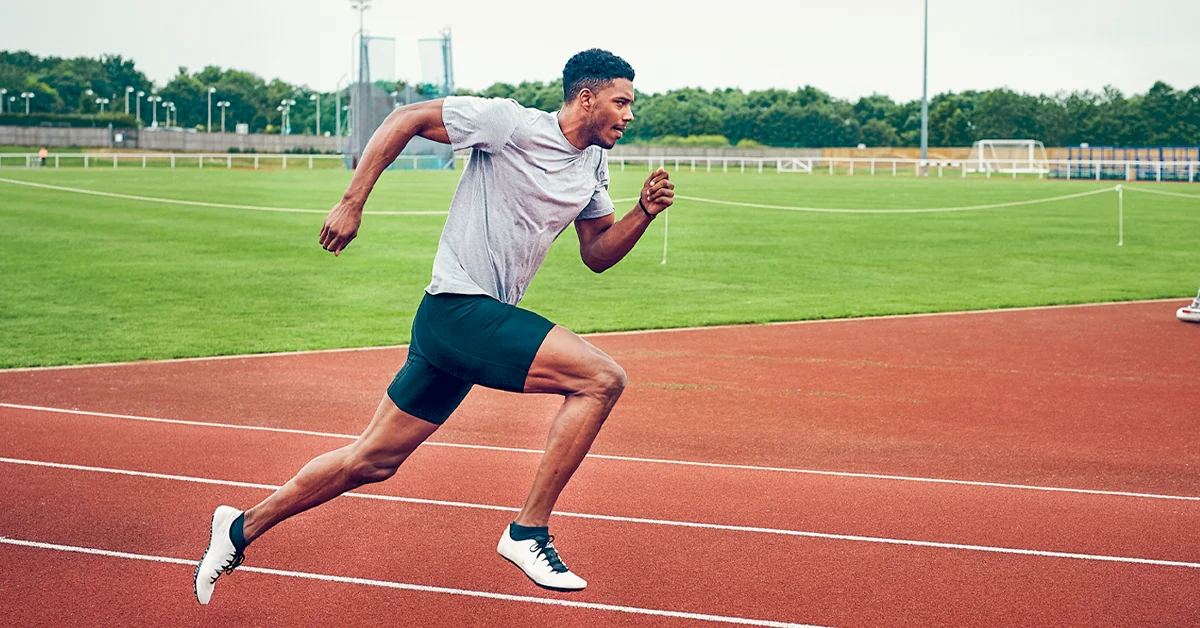
- Purpose: Measures the time taken to sprint 20 metres.
- Test: 20m Sprint Test
- Procedure:
- Athlete sprints 20 metres from a standing start.
- Time is recorded.
Note
Alternative Tests: 25. 100m Freestyle Measures swimming speed over a 100m distance. The time taken to complete the swim is recorded. 26. 40m Cycle Sprint Test Measures cycling speed over a 40m distance. The time taken to complete the sprint is recorded
11. Reaction Time
- Purpose: Assesses reaction time.
- Test: Ruler Drop Test
- Procedure:
- Tester holds a ruler between the athlete's thumb and index finger.
- Without warning, the ruler is released, and the athlete catches it as quickly as possible.
- The distance the ruler falls is measured.
Note
Alternative Tests: 27. Reaction Light Board Test Measures reaction time and coordination. The athlete presses lighted targets on a board as quickly as possible. The number of targets hit in a set time is recorded.
Principles of Training from a Performance Perspective
Note
Understanding and applying the principles of training is essential for optimising athletic performance. These principles ensure that training is effective, progressive, and tailored to the specific needs of the sport and athlete. Use SPORT RAID to remember these principles:
- Specificity
- Progressive Overload
- Reversibility
- Tedium (Variety)
- Rest, Recovery, and Overtraining
- Adaptation
- Individual Needs
- Diminishing Returns Principles of Training Mnemonic:
Note
Use the mnemonic SPORT RAID to easily remember the principles of training:
Specificity
Training must be relevant and appropriate to the sport or activity. It ensures that the exercises and activities are directly linked to the performance requirements of the sport.
Training should progress from general conditioning to specific training for the particular skills required in the sport/activity
Example:
- For a sprinter, specificity involves focusing on short, high-intensity interval training that mimics the explosive nature of sprinting events.
Progressive Overload
Note
Progressive overload involves making small, incremental increases in training each week, which leads to significant improvements over the duration of the training programme.
Athletes need to gradually push themselves harder in each training session, progressively increasing the load on their bodies. This allows their bodies to adapt to the new demands and improve overall fitness.
- For example, when developing muscular endurance, athletes will progressively increase the number of repetitions for each exercise on a weekly basis.
- Lower repetitions (less than 10) are typically associated with strength building, while higher repetitions (more than 10) are linked to endurance development. This prevents plateauing and promotes continuous improvement in performance.
Example:
- A runner might increase their weekly mileage by 10% to gradually improve endurance and prevent plateauing.
Reversibility
Fitness levels can decline if training is not maintained. This principle highlights the need for consistent training to retain fitness and performance gains.
Note
This concept is often referred to as "use it or lose it."
Reversibility commonly occurs when an athlete has to stop training, often due to injury.
- Over an 8-week period of inactivity, approximately 10% of strength can be lost, but up to 40% of muscular endurance may be diminished.
- Cardiovascular endurance tends to decline more rapidly than both muscular strength and endurance. Example:
- An athlete who stops training for several weeks may notice a decline in their cardiovascular fitness and muscle strength.
Tedium (Variety)
- Boredom is a major challenge in any training regimen.
- It is essential that training is designed with enough variety to keep the athlete engaged and prevent tedium. Including a variety of exercises and activities to prevent boredom and maintain motivation. This helps sustain athlete engagement and improves overall performance.
- Proper planning to avoid overly repetitive or monotonous sessions will help maintain motivation. Example:
- Incorporating different types of workouts such as swimming, cycling, and weight training to keep the training programme interesting and engaging. However, it is still important to keep training specific to the sport to ensure athletes meet their fitness objectives.
Rest, Recovery, and Overtraining
Adequate rest and recovery are essential for adaptation and preventing overtraining. This ensures the athlete can train effectively without the risk of injury or burnout.
- Overtraining happens when an athlete does not have enough time to adapt to the training demands.
- Typically, a ratio of three days of training to one day of rest is considered adequate.
- Adequate sleep and a proper diet are also critical to recovery. Example:
- Scheduling rest days and lighter training sessions to allow the body to recover and adapt, thereby preventing injury and burnout.
Adaptation
- Adaptation occurs when your body becomes accustomed to a particular exercise or training programme through consistent repetition.
- As the body adapts to the stress of exercise, it becomes easier to perform, and eventually, the exercise becomes less effective in promoting gains.
- This means that training programmes must be continually varied and adjusted to promote ongoing progress. Example:
- A weightlifter who consistently increases the weight they lift will see improvements in muscle strength and size over time.
Individual Needs
This principle emphasises the importance of creating a training programme that is personalised and relevant to the individual, recognising that "one size does not fit all."
Training should be tailored to meet the unique requirements of each athlete, taking into account their age, gender, fitness level, and specific goals.
- If a training programme is not tailored to the individual, they are less likely to stay motivated and adhere to it.
- Individual goals, health conditions, and fitness requirements must be evaluated and considered when designing a training plan. Example:
- A young athlete may require a different training intensity and volume compared to an experienced adult athlete, tailored to their developmental stage.
Diminishing Returns
As an athlete becomes more trained, the rate of improvement decreases. This principle emphasises the need for progressively challenging training to continue making gains.
- Individuals with lower starting fitness levels tend to experience more significant relative gains compared to those with higher initial fitness levels.
- A beginner in strength training will make substantial progress within the first few months, whereas someone with years of experience in strength training will not see the same rate of improvement. They will have to work harder to make further gains, and their progress will be slower compared to someone new to strength training. Example:
- A seasoned marathon runner may need to incorporate advanced training techniques and higher-intensity workouts to continue improving their performance.
The FITT Formula
Note
The FITT formula is a guideline for designing training programmes that improve performance. Each component should be tailored to the athlete's needs and the demands of the sport. Components of the FITT formula include:
- Frequency
- Intensity
- Time
- Type
Frequency
Refers to how often an athlete trains. Increasing the number of training sessions per week can enhance fitness levels.
Example:
- A swimmer increasing from three to five training sessions per week to improve overall fitness and performance.
Intensity
Describes how challenging an activity is or how hard the athlete is working during training. This can be adjusted by increasing the weight an athlete lifts in each session or by working at a higher percentage of their maximum heart rate.
Example:
- A weightlifter increasing the weight they lift to 80% of their one-rep max to build muscle strength more effectively.
Time
The duration of each training session or the number of sets and reps. Lengthening the session or increasing the number of reps can improve endurance and strength.
Example:
- A runner extending their long run from 30 minutes to 45 minutes to build greater endurance for marathon training.
Type
Refers to the specific kind of activity or exercise being performed. Different types of exercises can be used in a session (e.g., circuit training or a multi-sprint session to develop cardiovascular endurance for a soccer player). It's important to include a variety of activities but ensure that the chosen exercises align with the fitness goals.
Example:
- A football player incorporates both aerobic exercises like jogging and anaerobic exercises like sprint drills to enhance different fitness components.
Important
Important: When implementing the principle of progressive overload, it is crucial to change only one aspect of FITT at a time.
The FITT Formula Applied – Basketball
| Component | Frequency | Intensity | Time | Type |
|---|---|---|---|---|
| Cardiorespiratory Endurance (CRE) | 3-5 times a week | 60-90% of maximum heart rate | Long periods of continuous movement | Running, cycling, game-like drills |
| Muscular Strength | Up to three sessions a week (for different muscle groups) | 80-100% of 1RM, 3-4 sets, 1-5 reps | Long rest between sets | Resistance training, weightlifting |
| Muscular Endurance | 3-4 sessions a week (for different muscle groups) | 50%+ of 1RM, 1-3 sets, 12-20 reps | Short rest between sets | Bodyweight exercises, resistance training |
| Flexibility | Daily | Dynamic stretches during warm-up, static in cool-down | 10-20 minutes | Dynamic stretching exercises |
| Body Composition | Daily (combination of exercise and nutrition tracking) | Benefits from various intensity levels, high to low intensity | Short, explosive exercises or longer endurance training | Aerobic or anaerobic drills, strength training |
Calculating your Max Heart Rate
- Formula: 220 - Your Age
- Example: A 26-year-old athlete has a max heart rate (MHR) of 194.
| ZONE | INTENSITY | % OF MHR |
|---|---|---|
| 1 | Very Light | 50–60% |
| 2 | Light | 60–70% |
| 3 | Moderate | 70–80% |
| 4 | Hard | 80–90% |
| 5 | Maximum | 90–100% |
Calculating your 1 Rep Max (1RM)
- Calculating your 1RM is crucial for optimising training in different zones.
- For endurance building: work at 60% of your 1RM with higher reps.
- For strength building: work at approximately 95% of your 1RM with fewer reps.
| REPS PERFORMED | % OF 1RM |
|---|---|
| 1 | 100% |
| 2 | 95% |
| 3 | 93% |
| 4 | 90% |
| 5 | 87% |
| 6 | 85% |
| 7 | 83% |
| 8 | 80% |
| 9 | 77% |
| 10 | 75% |
| 11 | 70% |
| 12 | 67% |
| 15 | 65% |
Calculating your 1RM Example
- The table allows you to estimate your 1RM without performing the maximum lift.
- For example, if an athlete can lift 50 kg for 8 reps (to failure), this corresponds to 80% of their 1RM.
- 50 kg for 8 reps = 80% of 1RM
- Calculation:
- 50 kg ÷ 80 = 0.625 kg (1% of 1RM)
- 0.625 kg × 100 = 62.5 kg (100% of 1RM)
Exam Focus Questions – Higher Level
- Identify three key considerations when designing a battery of fitness tests. (8 marks)
- Evaluate four principles of training based on a specific physical activity. (16 marks)
- Suggest how three principles of training could be applied to a training plan for a marathon.
- Design a fitness test battery for a selected physical activity. Name three fitness components you are testing, describe each test, and explain why each component is important.
Exam Focus Questions – Ordinary Level
- Explain how to use the FITT formula to improve cardio-respiratory endurance.
- Explain, with practical examples, three principles of training.
- Define what the FITT acronym stands for.
- Explain how you would apply the FITT formula to develop cardio-respiratory endurance.