Designing a Fitness Plan (Leaving Cert Physical Education): Revision Notes
📚Revision Notes
Designing a Fitness Plan
Note
Learning Focus:
- Understanding various training methods.
- Applying these methods in sport-specific or general fitness contexts.
Note
A training method is a form of exercise selected to improve either health-related or performance-related components of fitness. Different training methods target different fitness components.
Note
Training methods refer to the types of exercises or activities selected to improve specific fitness components. These methods can either target health-related fitness (e.g. cardiovascular endurance, muscular strength) or performance-related components (e.g. speed, agility). Depending on the sport or fitness goals, different training methods are utilised. For example, plyometric training enhances strength and power through explosive movements, whereas continuous training improves aerobic endurance by maintaining a steady pace over long durations.
Training Methods
Types of training methods:
- Circuit Training
- Continuous Training
- Interval Training
- Fartlek Training
- Weight Training
- High-Intensity Interval Training (HIIT)
Circuit training
Circuit training involves rotating through a series of exercises targeting different muscle groups, with minimal rest between stations. It is designed to improve overall fitness, targeting strength, endurance, and flexibility.

In circuit training, athletes perform a set number of repetitions or a timed duration at each station. These stations focus on different fitness components, such as cardiovascular endurance, muscular strength, and agility.
Types of Circuits:
- Aerobic
- Local muscular endurance (LME)
- Anaerobic
- Strength
- Flexibility
- Skill-related (sport-specific)
A circuit can be designed to develop any aspect of fitness, but it is most commonly used for general body conditioning.
| Component | Frequency | Intensity | Duration | Type of Performer |
|---|---|---|---|---|
| Circuit Training | 1-2 sessions per week | Depends on type of circuit (high or low intensity) | 20-40 minutes | General fitness seekers, athletes requiring all-around conditioning |
| Overview | Advantages | Type of Performer |
|---|---|---|
| • Fitness circuit and skills circuit • Mainly aimed at improving muscular endurance and cardiovascular fitness • Involves a number of exercises at different stations • Involves periods of work and periods of rest | • Excellent for general all-round fitness • Equipment does not need to be expensive • Can be tailored to suit people of all fitness levels • Wide range of exercises. • Great for overall fitness and flexibility. • Can be performed with minimal equipment. • Adaptable to different fitness levels, making it suitable for team training. | All performers can benefit from circuit training as it can be tailored to suit individual needs |
Continuous training
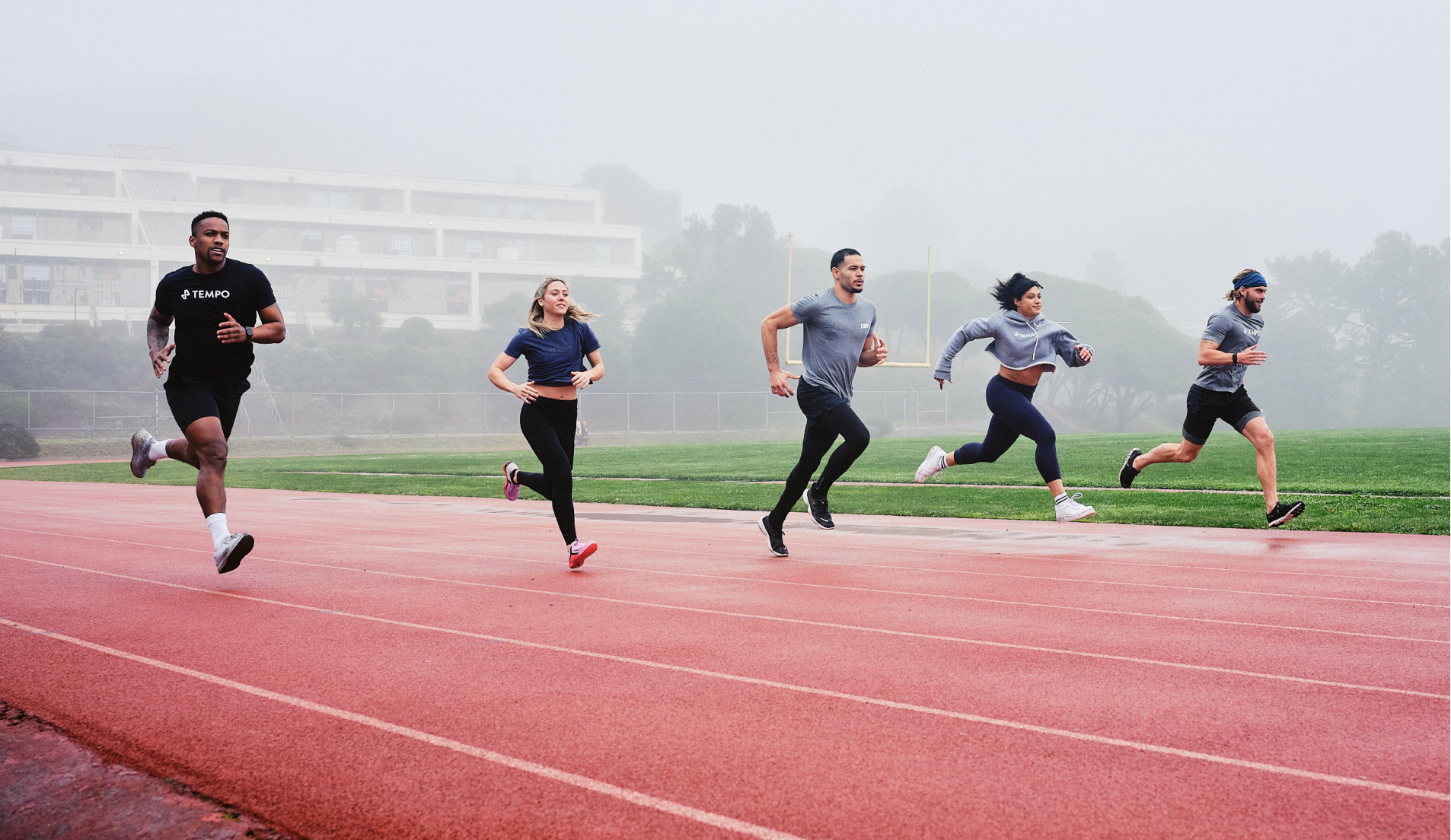
Continuous training is exercising continuously without a period of rest. It develops cardiorespiratory endurance.
Continuous training is commonly used for sports that require prolonged periods of effort, such as running, cycling, and swimming. Athletes train by maintaining a steady, moderate pace for extended periods, with no rest breaks.
Note
MHR: maximum heart rate.
| Component | Frequency | Intensity | Duration | Type of Performer |
|---|---|---|---|---|
| Continuous Training | 3-5 times per week, daily for elite performers | 70-80% of Maximum Heart Rate (MHR) | Minimum 20 minutes | Endurance athletes: runners, cyclists, swimmers |
| Overview | Advantages | Type of Performer |
|---|---|---|
| • Steady state training (same pace) • Activities: jogging, swimming, rowing • No rest periods | • Improves cardiovascular endurance • Can be done alone or in a group, and in a variety of places • Wide range of activities can be used. • Can be done without equipment and with minimal setup. • Suitable for all fitness levels and can be modified for individuals or groups. | Endurance performers: running/cycling/swimming middle or long distances |
Interval training
Interval training involves periods of intense work interspersed with timed rest or cardiac readiness.
Interval training alternates periods of high-intensity work with periods of rest or low-intensity activity, targeting multiple components of fitness such as speed, endurance, and recovery.
Intervals allow athletes to push beyond their normal limits during the high-intensity phases while using rest periods to recover. For example, a sprinter might run 200 metres at maximum effort, followed by 60 seconds of walking before repeating the effort.
| Component | Frequency | Intensity | Duration | Type of Performer |
|---|---|---|---|---|
| Interval Training | 1-2 sessions per week | 85-100% of MHR | 10-20 minutes (speed), 20-60 minutes (endurance) | Games players, sprinters, endurance athletes |
| Overview | Advantages | Type of Performer |
|---|---|---|
| • Period of high-intensity work followed by a period of rest • Rest can be active or passive • High working heart rate | • Can be used for aerobic and anaerobic training • Improves cardiorespiratory endurance (recovery) • Increases recovery speed and lactic acid tolerance. • Adaptable to sports requiring sudden bursts of effort, such as football or basketball. | • Particularly suited to sprinters (adequate recovery) |
Fartlek Training
Fartlek speed play mixes different speeds of movement around a set course/track. It involves varying the intensity and speed of exercise, blending continuous training with intervals of high effort.
Note
Did you know: Fartlek means "speed play" in Swedish, involves varying the intensity and speed of exercise, blending continuous training with intervals of high effort.
| Component | Frequency | Intensity | Duration | Type of Performer |
|---|---|---|---|---|
| Fartlek Training | 1-2 sessions per week | 60-85% of MHR, fluctuating intensities | 20-60 minutes | Field athletes: footballers, rugby players, hockey players |
This method combines aerobic and anaerobic training by incorporating changes in speed or intensity during a session. For example, a runner might alternate between jogging, sprinting, and walking throughout the workout.
| Overview | Advantages | Type of Performer |
|---|---|---|
| • Involves fast and slow running • Variety of terrains and distances • Active recovery periods | • Can take place in a variety of places • Can include uphill/downhill work • Can include repetitions • Suited for games-based activities • Improves both aerobic and anaerobic endurance. • Can be performed in various environments (e.g. hills, trails, roads). • Develops the ability to handle changes in pace, crucial in sports like football and rugby. | • Endurance events • Games players |
Weight training
Weight training is a training method which uses weights to increase muscular endurance, strength or power. Weight training uses resistance to build strength, muscular endurance, or power. It can involve free weights, machines, or body weight as resistance.
| Component | Frequency | Intensity | Duration | Type of Performer |
|---|---|---|---|---|
| Weight Training | 2-3 sessions per week | • Muscular strength: high weight, low reps • Muscular endurance: low weight, high reps • Power: moderate weight, moderate reps, high recovery time | • 20-60 minutes • Recovery time varies depending on type of session completed | Power athletes, bodybuilders, endurance athletes |
Weight training is highly adaptable, with athletes adjusting the load, sets, and repetitions to focus on different fitness goals. Strength training typically involves lifting heavy weights for low repetitions, while endurance training uses lighter weights with higher repetitions.
| Overview | Advantages | Type of Performer |
|---|---|---|
| • Uses progressive overload, either in actual weight or in terms of repetitions • Weights are lifted to increase muscular strength in certain areas of the body • Weight training can be compound or isolation exercises | • Used to improve muscular strength or endurance • Includes a wide variety of exercises • Allows for targeted improvements in specific muscle groups. • Easily measurable progress through increasing resistance or repetitions. | • Suitable for performers who take part in strength and power events • Used for outside the activity training for a number of sports and activities |
Note
Unilateral vs. bilateral exercises in weight training:
- Unilateral: Single-leg and single-arm training (single arm bicep-curl)
- Bilateral: Involve both arms or legs (squat)

High-Intensity Interval Training (HIIT)
High-Intensity Interval Training (HIIT): Short bursts of intense exercise followed by brief rest periods, effective for improving cardiovascular and muscular endurance.
Typically, exercises are performed at maximum effort for a set time, followed by a brief rest or low-intensity recovery phase. This cycle is repeated for multiple rounds.
Example Performing 20 seconds of squat jumps followed by 10 seconds of rest, repeated for several rounds.
Key Characteristics:
- Combines aerobic and anaerobic training.
- Can be adapted to different fitness levels by adjusting the work-to-rest ratio.
- Suitable for a variety of exercises, including bodyweight movements, resistance training, and cardio.
Target Audience: Athletes, fitness enthusiasts, and individuals seeking time-efficient workouts.
Considerations: Beginners should start with fewer rounds or longer rest periods; warm-up and cool-down are crucial to prevent injury.
The Benefits of HIIT:
| Benefit | Description |
|---|---|
| Improves cardiovascular endurance | Pushes the heart to work at higher intensities, improving overall heart health. |
| Builds muscular endurance | Repeated high-intensity efforts strengthen muscles and improve endurance. |
| Increases caloric burn | Burns more calories in a shorter time compared to traditional steady-state cardio. |
| Enhances fat loss | The afterburn effect (EPOC) helps burn additional calories even after exercise. |
Training Approaches Beyond the Activity
Training approaches can be classified into methods applied within the sport (within the activity) and those that are more generic and applicable across various sports (outside the activity).
Both approaches must be used to ensure that athletes address sport-specific skills and overall physical conditioning.
- Within the activity: sport-specific and focus on the skills and fitness requirements directly related to the sport e.g. shuttle runs in basketball
- Outside the activity: more generic and can be applied across a range of sports to develop overall fitness e.g. circuit training, where each station targets different muscle groups e.g. burpees, mountain climbers, squats
Training in the activity and outside the activity:
Examples:
- Within the activity: This could involve dribbling drills, passing drills, and kicking drills in soccer or football.
- Outside the activity: Weight training, plyometric training, and flexibility exercises.
Coaches may also use game-based practices, like match play, which focuses on skill improvement within the sport itself.
For sprinters, activities such as sprint starts and sprint interval training would be part of training within the activity, whereas plyometric training and weightlifting are considered outside the activity.
Table of activities within and outside the activity:
| Gaelic Football/Soccer | Within the activity | Outside the activity |
|---|---|---|
| Dribbling drills | Conditioned games | Running drills |
| Passing drills | Match play | Weight training |
| Kicking drills | Plyometric training | |
| Sprinting | Sprint starts | Interval training, Weight training |
Designing a Fitness Programme Using Test Data
When planning a training session or a block of sessions, coaches and performers will often use training methods within the sport or physical activity and supplement these with methods from outside the activity. For example, a Gaelic footballer or soccer player may use training drills with the ball during practice (inside the activity), and weight training or interval running outside the activity to improve fitness.
Note
Using fitness test data to design a fitness programme involves assessing the athlete's current fitness levels and creating a tailored training plan to meet their specific goals. This ensures the training is targeted and effective, improving performance and addressing areas of weakness by following these steps:
- Assess current fitness levels
- Identify fitness goals
- Develop the training plan
- Apply the training principles
- Monitor and Evaluate
Step 1: Assessment of Current Fitness Levels
- Use a fitness test battery to evaluate various components of fitness.
- Record baseline data for future comparison and progress tracking.
Step 2: Identifying Fitness Goals
- Determine specific, measurable, achievable, relevant, and time-bound (SMART) goals based on test results.
- Goals should align with the athlete's sport or activity requirements.
Step 3: Developing the Training Plan:
- Create a periodised training plan that incorporates different phases (preparatory, competitive, transition).
- Include various training methods (continuous, interval, resistance, flexibility) tailored to the athlete's needs.
Step 4: Application of Training Principles:
- Specificity: Training should be specific to the sport or activity, focusing on relevant skills and energy systems.
- Progressive Overload: Gradually increase training intensity, volume, or frequency to stimulate adaptations.
- Reversibility: Ensure consistent training to maintain fitness gains and avoid detraining.
- Tedium: Vary training activities to prevent boredom and maintain motivation.
Step 5: Monitoring and Evaluation:
- Regularly re-test fitness levels to monitor progress and adjust the training programme as needed.
- Use feedback to refine and improve the training plan.
Overtraining
Overtraining occurs when the balance between training load and recovery is disrupted. It can lead to performance decline and injury if not managed carefully.
Signs of overtraining include:
- Mood swings.
- Increased resting heart rate.
- Loss of appetite.
- Muscle soreness.
- Difficulty sleeping.
- Frequent illness or fatigue.
Peaking and Tapering:
- Peaking refers to having an athlete perform at their best during a key competition.
- Tapering involves reducing the training volume while maintaining intensity in the weeks leading up to competition to allow for full recovery and optimal performance.
Recovery Techniques
Learning focus:
- Strategies to support recovery and adaptation after training or competition.

Note
Recovery techniques allow the body to heal and adapt after training. Proper recovery helps to prevent injuries and improves long-term performance.
Note
Adaptation refers to the process of the body getting accustomed to a particular exercise or training programme through repeated exposure.
- Sleep
- Napping
- Relaxation techniques
- Cold-water immersion
- Compression garments
- Contrast bathing
- Active recovery
- Tapering
Adaptation refers to the body's process of adjusting to a specific exercise or training programme through repeated exposure. To improve fitness, adaptation must occur following training sessions.
Recovery is a key element in this process, allowing the body time to repair and prepare for further sessions. Adaptation ensures improved performance over time when appropriate recovery strategies are in place.
Stress-Recovery Adaptation:
As the body experiences stress during training, it needs time to recover for adaptations to occur. Without sufficient recovery, performance will eventually decline due to overtraining.
| Sleep | Sleep is crucial for athletes' recovery and performance, with a target of 8-9 hours per night to ensure optimal physiological and psychological readiness. Proper sleep helps the body recover and promotes muscle repair. |
|---|---|
| Napping | Short naps, typically lasting 20-30 minutes, can significantly enhance mental alertness and physical recovery, particularly after intense training sessions. |
| Relaxation techniques | Relaxation techniques such as mindfulness and deep breathing exercises help manage stress levels and aids in the recovery process by promoting mental and physical relaxation. |
| Cold-water immersion | Cold-water immersion, such as taking ice baths for 5-10 minutes, helps reduce muscle soreness and inflammation by decreasing blood flow and removing lactic acid build-up. |
| Compression garments | Wearing compression garments post-exercise can improve blood circulation, reduce muscle fatigue, and aid in quicker recovery by supporting muscle groups and reducing swelling. |
| Contrast bathing | Contrast bathing involves alternating between hot and cold water immersion to flush out waste products from muscles and reduce inflammation, thus aiding in faster recovery. |
| Active recovery | Incorporating light exercise such as walking or gentle cycling into rest days can improve circulation, enhance muscle recovery, and prevent stiffness without adding significant fatigue. |
| Tapering | Tapering involves gradually reducing training intensity and volume before major events to ensure the athlete reaches peak performance by allowing full recovery and energy restoration. |
| Cryotherapy: | Cold therapy, such as ice baths, reduces blood flow and muscle temperature to decrease inflammation and speed up recovery following intense exercise. It is particularly effective for reducing soreness and inflammation. |
| Self-myofascial release (foam rolling): | Foam rolling helps to release tight muscles, reduce delayed onset muscle soreness (DOMS), and improve flexibility by applying pressure to trigger points in the muscles. |
Note
Passive recovery:
-
Occurs when no physical activity is performed. This is complete rest or minimal activity. Passive recovery helps the body fully relax and promotes regeneration. Active recovery:
-
Low-intensity activities that promote blood flow to the muscles and encourage recovery without adding additional stress on the body. Active recovery can include light jogging or swimming. It encourages muscle recovery through the supply of oxygenated blood to the muscles and the removal of waste.
Stretching
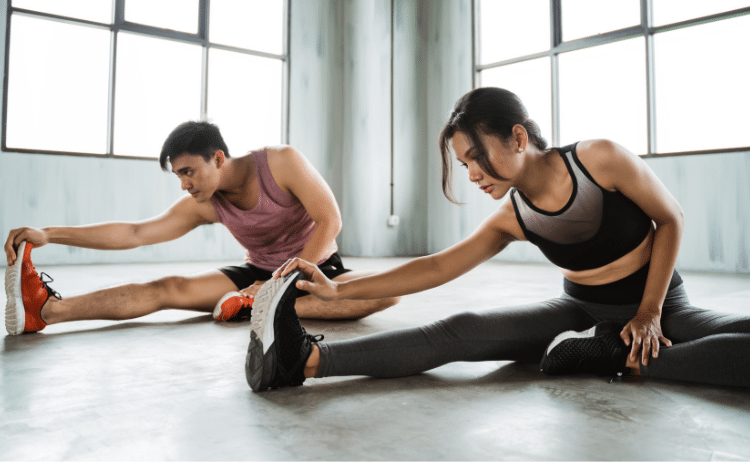
Stretching improves flexibility and range of motion, which are crucial for overall fitness and injury prevention.
- Static stretching
- Dynamic stretching
- Proprioceptive neuromuscular facilitation (PNF) stretching
| Static stretching | Static stretching involves holding a stretch for a period of time, usually between 10 to 30 seconds, to gradually improve flexibility. |
|---|---|
| Dynamic stretching | Dynamic stretching consists of active movements that take joints and muscles through their full range of motion, effectively warming up the muscles and preparing the body for physical activity. |
| Proprioceptive neuromuscular facilitation (PNF) stretching | PNF stretching combines both the stretching and contracting of muscles, typically with a partner, to enhance flexibility and increase the range of motion beyond the initial stretch. |
Periodisation in Training Programmes
Note
Periodisation is the division of a training plan (usually yearly) into training phases which apply the principles of training.
- Periodisation involves breaking down the training year into specific cycles, each serving a particular purpose, to effectively structure a training programme.
- This allows coaches and athletes to develop a training programme that addresses both short-term and long-term goals, ensuring optimal performance and recovery throughout the training year.
The three main cycles are:
- Macrocycle
- Mesocycle
- Microcycle
Note
The macrocycle is the full training cycle. It involves a long-term performance goal, usually spread out over the course of a year. Example: In Gaelic football, this could include the preseason (preparation), in-season (competition), and transition (rest) periods.
Note
A mesocycle is a number of continuous weeks where the training programme emphasises the same type of physical adaptations. Example: A 12-week 'general preparation period' for a hurdler, focusing on general conditioning, speed endurance, running form, basic technique, and strength.
Note
A microcycle is a small number of training sessions, with a daily breakdown of the training the performer will do every day.