Error in Measurements (Leaving Cert Physics): Revision Notes
📚Revision Notes
Error in Measurements
Introduction to measurement errors
When you take any measurement in physics, you'll never get a completely perfect result. Every measurement contains some degree of uncertainty or error. Understanding these errors is crucial for conducting reliable experiments and interpreting results accurately.
There are two main categories of measurement errors that you need to understand: systematic errors and random errors. Each type has different causes and requires different approaches to minimise their effects.
Types of measurement errors
Systematic errors
A systematic error is an error that affects all measurements in the same way, causing them to be consistently higher or consistently lower than the true value. The key characteristic of systematic errors is that they're predictable and consistent - they always push your results in the same direction.
Systematic errors are caused by:
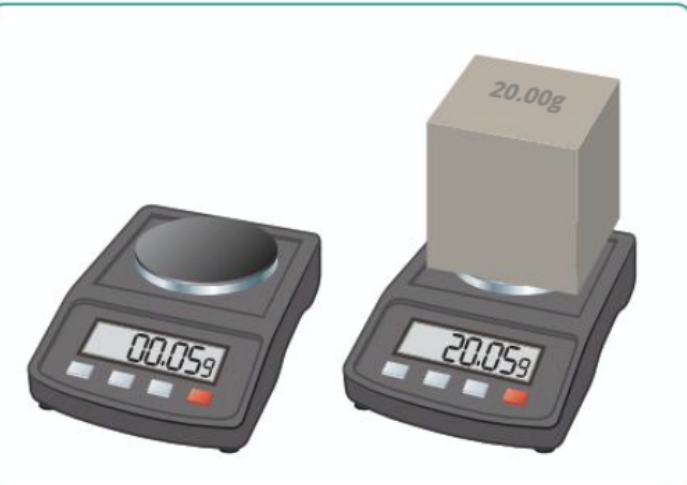
1. Problems with measuring instruments When measuring equipment isn't properly calibrated, it will consistently give incorrect readings. For example:
- If a balance hasn't been zeroed correctly, it might always add 0.05g to every measurement
- An ammeter that doesn't read zero when no current flows will consistently give readings that are too high or too low
2. Incorrect measurement technique When a person consistently uses the wrong procedure, systematic errors occur. A common example is parallax error - this happens when you don't view a measuring scale from directly above or at the correct angle.
Important
Parallax Error is a Common Mistake
Parallax error occurs when you read a scale from the wrong angle. Always ensure you're looking directly at the measurement point - your eye should be perpendicular to the scale. This is one of the most frequent sources of systematic error in student experiments.
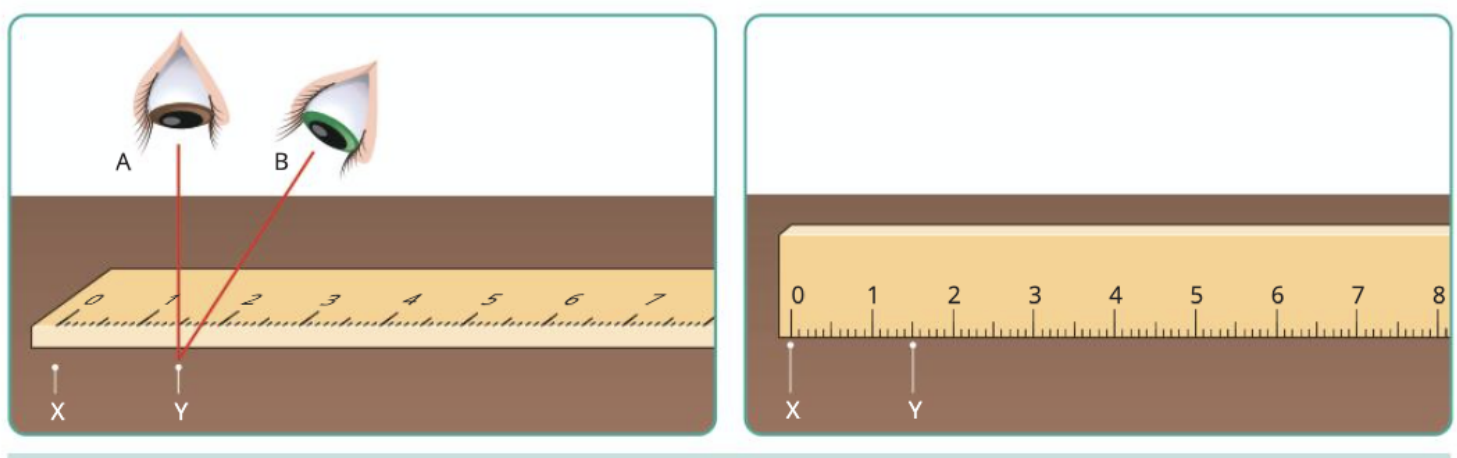
For instance, when using a metre stick, if you consistently read it from an angle rather than looking straight down, your measurements will always be slightly different from the true value by the same amount.
3. Limitations in experimental design Sometimes the experimental setup itself introduces systematic errors. For example, when measuring the specific heat capacity of a liquid, some heat energy might consistently escape to the surroundings, making all your results consistently lower than they should be.
Note
How to minimise systematic errors:
- Ensure all instruments are properly calibrated before use
- Follow correct measurement procedures carefully
- Take measurements from the proper viewing angle to avoid parallax error
- Be aware of limitations in experimental design and account for them
- Use appropriate measuring instruments for the task
Random errors
Random errors are unpredictable variations that occur when you repeat the same measurement multiple times. Unlike systematic errors, random errors don't consistently push results in one direction - they cause measurements to scatter around the true value.
Random errors are caused by:
1. Small variations in measuring instruments Some measuring instruments have slight random variations in their readings due to:
- Electronic fluctuations in digital devices
- Environmental conditions like temperature changes
- Mechanical vibrations
2. Human factors in measurement
- Slight variations in how you use instruments each time
- Reaction time differences when timing events
- Small differences in reading scales
Note
How to minimise random errors:
- Take multiple measurements and calculate an average
- Use more precise measuring instruments when possible
- Control environmental conditions as much as possible
- Take care to use consistent technique
Accuracy and precision
These two concepts are often confused but have distinct meanings:
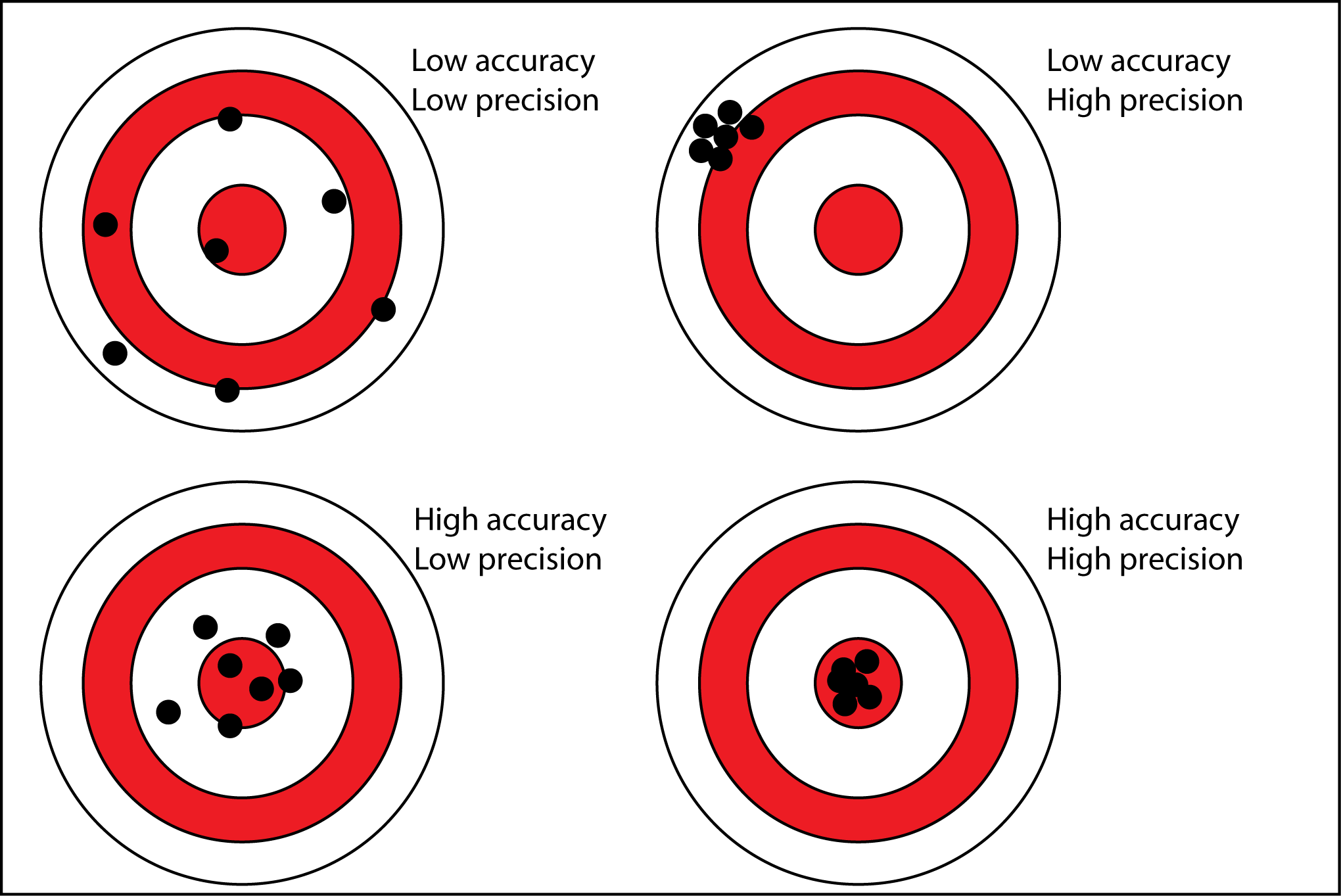
Accuracy refers to how close your measured value is to the true or actual value. The closer your measurement is to the correct value, the more accurate it is.
Precision refers to how close repeated measurements are to each other. If you get very similar results when repeating a measurement, your results are precise.
It's possible to have measurements that are:
-
Accurate and precise (ideal situation)
-
Accurate but not precise (measurements scattered around the true value)
-
Precise but not accurate (measurements clustered together but away from the true value)
-
Neither accurate nor precise (measurements scattered and away from the true value)
Calculating percentage error
Percentage error is a useful way to express how significant an error is relative to the size of the measurement.
When you know the true value:
Where: Error = |true value - measured value|
When you don't know the true value:
The estimated error is typically taken as half the smallest division of the measuring instrument.
Example
Worked Example: Calculating Percentage Error
The diameter of a wire is being measured using vernier callipers with 0.1 mm graduations. A student reads the value as 0.4 mm.
a) What is the likely error in this measurement? The likely error is half the smallest division = 0.1 mm ÷ 2 = 0.05 mm
b) Calculate the percentage error:
Strategies for improving measurements
Understanding how to improve your measurements is essential for reliable experimental work. Here are the key strategies for different types of errors:
To reduce systematic errors:
- Calibrate all instruments properly before use
- Use correct measurement procedures
- Be aware of experimental limitations and account for them
- Ensure you're viewing measurements from the correct angle
To reduce random errors:
- Take multiple measurements and calculate the average
- Use more precise instruments where possible
- Control environmental conditions
- Maintain consistent technique
General good practice:
- Choose appropriate instruments for the measurement range needed
- Record all measurements honestly, including any that seem unusual
- Identify potential sources of error in your experimental method
- Always estimate the uncertainty in your measurements
Summary
Key Points to Remember:
-
Systematic errors are consistent and predictable - they always affect measurements in the same way and can often be eliminated through proper calibration and technique.
-
Random errors are unpredictable variations that can be reduced by taking multiple measurements and averaging the results.
-
Accuracy refers to how close you are to the true value, while precision refers to how reproducible your measurements are.
-
Percentage error helps you understand how significant an error is: smaller percentages indicate more reliable measurements.
-
Most measurement errors can be minimised through careful technique, proper instrument calibration, and appropriate experimental design.