The Female Reproductive System (Grade 12 NSC Matric Life Sciences): Revision Notes
📚Revision Notes
The Female Reproductive System
Overview of the female reproductive system
The female reproductive system is a complex network of organs that work together to enable reproduction, hormone production, and menstruation. Understanding the structure and function of each component is essential for comprehending how human reproduction occurs.
The female reproductive system can be organised into four main categories:
- Primary sex organs - the ovaries
- Ducts - the fallopian tubes (also called oviducts)
- Accessory organs - the uterus and vagina
- External genitalia - the vulva
Each of these components has specific structural features that enable it to carry out its unique functions in the reproductive process.
Note
The female reproductive system is organised into four distinct categories, each with specialised functions that work together as an integrated system for reproduction and hormone regulation.
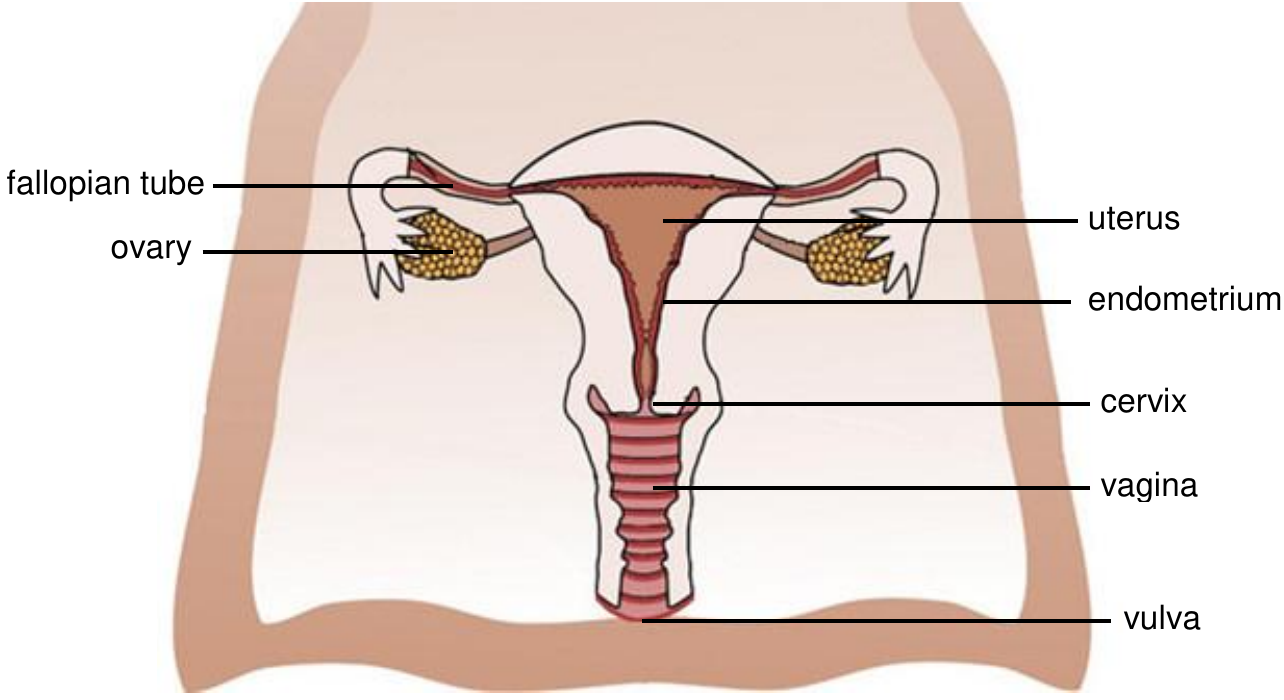
Detailed structure and function of female reproductive organs
Ovaries - the primary sex organs
The ovaries are the main female sex organs and serve as the foundation of the female reproductive system. These small, oval-shaped organs are found as a pair, with one positioned on either side of the uterus. They are surrounded by specialised tissue called germinal epithelium, which is responsible for producing egg cells.
Important
The ovaries have two critical functions that make them essential to reproduction:
- Egg production: They produce and release egg cells (ova) during the menstrual cycle
- Hormone secretion: They produce and release important reproductive hormones, particularly progesterone and oestrogen, which regulate the menstrual cycle and maintain pregnancy
Fallopian tubes - the transport pathway
The fallopian tubes are narrow tubes that create a vital connection between the ovaries and the uterus. These tubes are lined with specialised cells called ciliated columnar epithelium. These cells have tiny hair-like structures (cilia) that beat in a coordinated manner to help move the egg cells along the tube.
The fallopian tubes serve two essential purposes:
- Egg transport: They transport egg cells from the ovaries to the uterus
- Fertilisation site: This is where fertilisation typically occurs when sperm meets the egg
Important
Key Point: Fertilisation typically occurs in the fallopian tubes, NOT in the ovaries or uterus. This is a common exam question that students often get wrong.
Uterus - the protective chamber
The uterus is a hollow, pear-shaped muscular organ that serves as the main site for pregnancy development. Its thick muscular walls can stretch significantly to accommodate a growing foetus.
The primary function of the uterus is to:
- House and protect the developing embryo and foetus throughout pregnancy
- Contract during labour to help deliver the baby
Endometrium - the specialised lining
The endometrium is the inner lining of the uterus. This tissue is remarkable because it changes throughout the menstrual cycle, thickening in preparation for possible pregnancy and shedding during menstruation if pregnancy doesn't occur.
Important
Critical Concept: The endometrium is specifically the inner lining of the uterus, not the uterus itself. This distinction is crucial for understanding where implantation occurs.
The endometrium's key roles include:
- Implantation site: This is where a fertilised egg implants and begins developing
- Placenta formation: The placenta, which nourishes the developing baby, forms here during pregnancy
Cervix - the flexible gateway
The cervix is the lower, narrow opening of the uterus that connects to the vagina. Despite being small, it plays a crucial role during pregnancy and childbirth.
The cervix's important function is to:
- Stretch and open during childbirth to allow the baby to pass through
- Provide protection for the uterus during pregnancy by remaining closed
Vagina - the multipurpose canal
The vagina is a muscular tube that extends from the cervix to the external opening of the body. This flexible canal serves multiple important functions in reproduction and menstruation.
The vagina's various roles include:
- Receiving sperm during sexual intercourse
- Birth canal - providing the passageway for the baby during delivery
- Menstrual passage - allowing menstrual blood to leave the body
Vulva - the external protection
The vulva refers to the external female genitalia, which includes the opening to the vagina. It is protected by two folds of skin called the labia (sometimes referred to as vagina covers in basic terms).
The vulva's primary function is to:
- Protect the entrance to the internal reproductive organs
- Provide the external opening for reproduction and menstruation
Understanding the system as a whole
The female reproductive system works as an integrated unit where each organ depends on the others. The ovaries produce eggs and hormones, the fallopian tubes transport eggs and provide the site for fertilisation, the uterus houses the developing baby, and the vagina serves as both the pathway for sperm to enter and babies to exit the body.
Note
Think of the female reproductive system as a coordinated pathway: ovaries → fallopian tubes → uterus → cervix → vagina. Each structure has a specific role that depends on the others functioning properly.
Common misconceptions and exam tips
Important
Common Misconception Alert
Misconception: Students often confuse the fallopian tubes with the ovaries or think eggs are produced in the fallopian tubes.
Correction: Eggs are produced in the ovaries, while fallopian tubes only transport them and provide the site for fertilisation.
Important
Exam Success Tips
-
Remember that the endometrium is specifically the inner lining of the uterus, not the uterus itself. Questions often ask about where implantation occurs - this is in the endometrium, not just "the uterus."
-
When labelling diagrams, be precise with your terminology. Use "fallopian tubes" rather than just "tubes," and remember that the vulva refers to external structures while the vagina is internal.
Summary
Key Points to Remember:
- The female reproductive system consists of four main categories: primary sex organs (ovaries), ducts (fallopian tubes), accessory organs (uterus and vagina), and external genitalia (vulva)
- Ovaries produce eggs and hormones (progesterone and oestrogen)
- Fallopian tubes transport eggs from ovaries to uterus and are the usual site of fertilisation
- The uterus houses and protects the developing baby during pregnancy
- The endometrium is where implantation occurs and the placenta forms
- The cervix stretches during childbirth to allow the baby to pass through