The Male Reproductive System (Grade 12 NSC Matric Life Sciences): Revision Notes
📚Revision Notes
The Male Reproductive System
Introduction to human reproduction
Sexual reproduction involves two parents who each contribute special reproductive cells called gametes. In humans, these are sperm cells from males and egg cells from females. These gametes are produced through a special type of cell division called meiosis, which creates cells with half the normal number of chromosomes (haploid cells). When a sperm and egg join together during fertilisation, they form a zygote with the full chromosome number, which then develops into a new human being.
Understanding the male reproductive system requires familiarity with several important biological terms that describe the processes involved in creating and transporting sperm cells.
Note
Mastering the terminology of reproduction is essential for understanding how the male reproductive system functions. Each term represents a crucial concept that builds upon others throughout this topic.
Overview of the male reproductive system
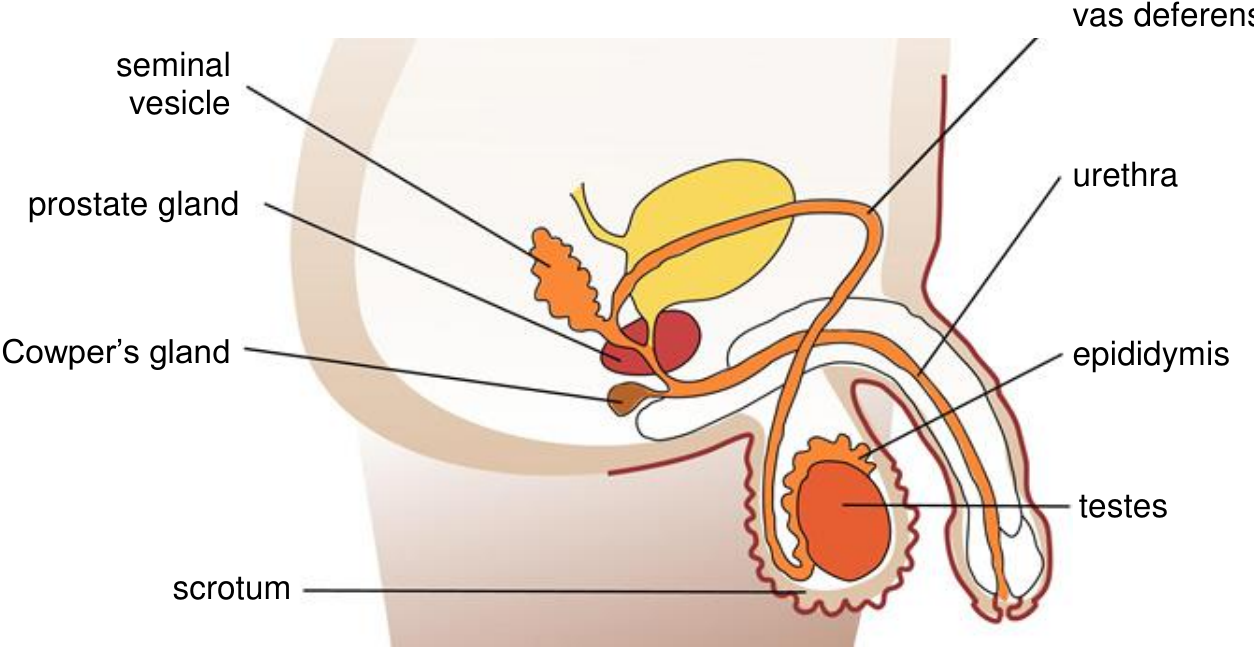
The male reproductive system is designed to produce, mature, store, and deliver sperm cells for reproduction. This complex system consists of several key components working together:
- Primary sex organs: A pair of testes located in the scrotum
- Transport system: Various ducts including seminiferous tubules, epididymis, vas deferens, and urethra
- Accessory glands: Prostate gland, Cowper's glands, and seminal vesicles
- External structures: Penis for delivery of sperm
Each component has evolved to perform specific functions that ensure successful sperm production and delivery for reproduction.
Anatomical structures and their functions
Each part of the male reproductive system has a specific structure perfectly adapted for its particular function in reproduction.
The testes
The testes are oval-shaped glands that serve as the primary male reproductive organs. They have two main functions: producing sperm cells and manufacturing the male hormone testosterone. The testes are suspended outside the main body cavity in the scrotum, which is crucial for proper sperm development.
Important
The external location of the testes is not just anatomical convenience - it's absolutely essential for male fertility. This positioning allows for the precise temperature control needed for healthy sperm production.
The scrotum
This skin pouch holds and protects the testes while keeping them positioned outside the body. This external location maintains the testes at approximately below normal body temperature, which is essential for healthy sperm production. The scrotal muscles can contract or relax to move the testes closer to or further from the body to regulate temperature.
The epididymis
This coiled tube structure sits on the outside of each testis but remains within the scrotum. The epididymis serves as a storage and maturation site where sperm cells continue developing until they become fully mature and capable of fertilising an egg.
Transport ducts
The vas deferens is a muscular tube that carries mature sperm from the epididymis towards the urethra. The urethra is the final transport tube that runs through the penis, carrying both urine and semen out of the body (though not simultaneously).
Note
The transport system works like a sophisticated delivery network, ensuring sperm cells move efficiently from their production site to their final destination while maintaining their viability.
Accessory glands
Three types of glands contribute important fluids to support sperm survival and transport:
- Prostate gland: The largest accessory gland, located below the bladder. It produces nutrient-rich fluid that energises sperm cells and helps them survive in the female reproductive tract.
- Cowper's glands: Small paired glands that produce mucus to help sperm move more easily through the reproductive ducts.
- Seminal vesicles: Medium-sized glands attached to the vas deferens that produce alkaline fluid. This fluid neutralises acidic conditions in the female reproductive tract that would otherwise kill sperm cells.
Seminiferous tubules and sperm production
Inside each testis are hundreds of tiny, coiled structures called seminiferous tubules where sperm production actually occurs. These tubules contain several types of specialised cells, each with important roles in spermatogenesis.
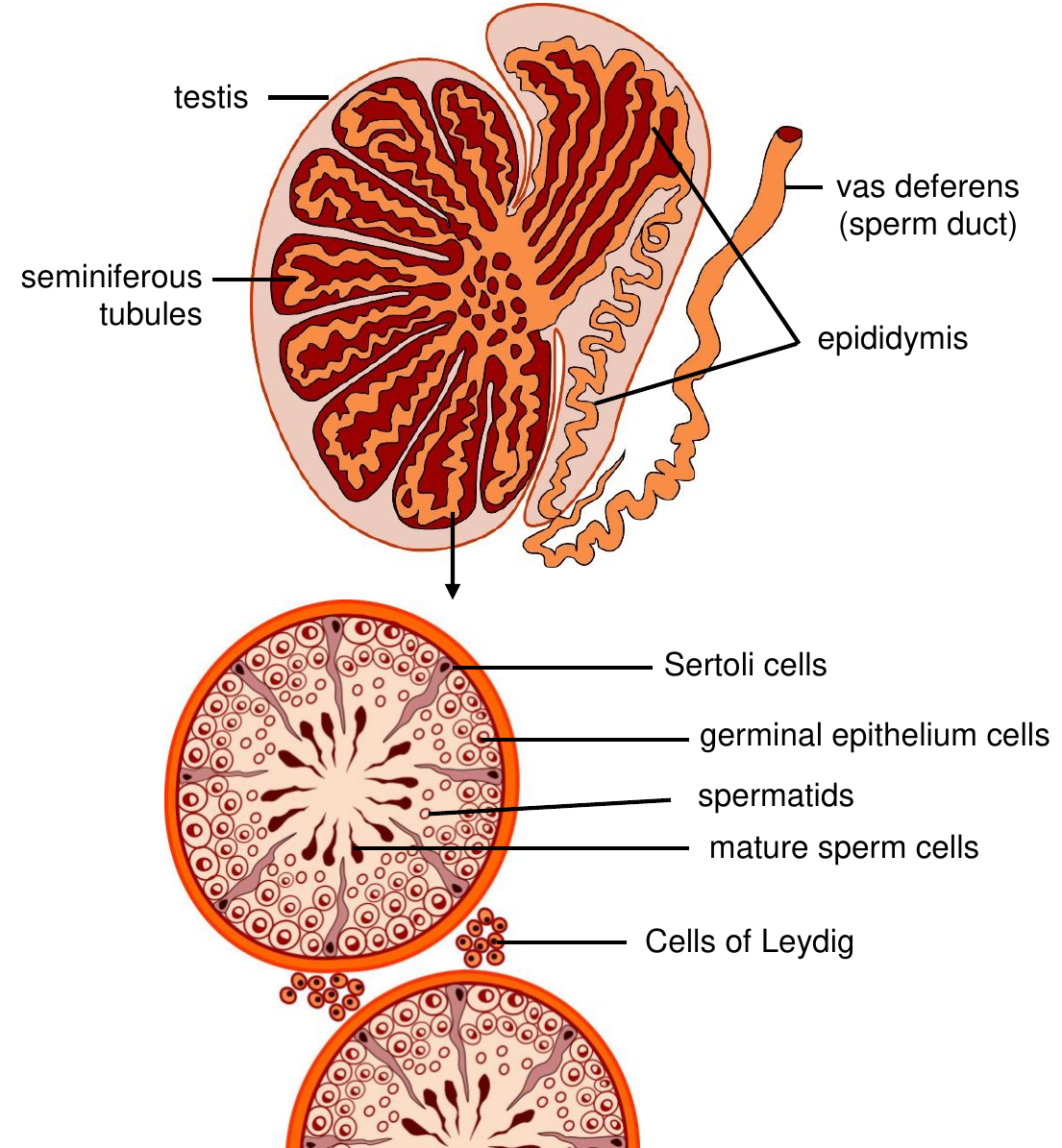
The walls of seminiferous tubules are lined with germinal epithelium cells that develop into sperm cells through the process of spermatogenesis. As these cells mature, they progress through several stages:
Example
Step-by-Step Process: Sperm Cell Development
Step 1: Germinal epithelium cells begin the process by dividing through meiosis
Step 2: Spermatids are immature sperm cells that develop from this division
Step 3: Mature sperm cells complete their development and move towards the centre of the tubule
Sertoli cells are supporting cells that provide nutrients and physical support to developing sperm cells as they mature. Think of these as "nurse cells" that care for the developing sperm.
Cells of Leydig are located in the connective tissue surrounding the seminiferous tubules. These cells produce testosterone, the primary male hormone that:
- Stimulates the development of male secondary sexual characteristics
- Promotes the maturation and production of sperm cells
Temperature regulation and male fertility
The location of the testes outside the body cavity is not accidental - it's essential for male fertility. Sperm production requires temperatures lower than normal body temperature. If the scrotum becomes too warm, it interferes with sperm quality and can lead to male infertility.
Important
Critical Temperature Requirements
Temperature regulation is absolutely crucial for male fertility. Even small increases in scrotal temperature can significantly impact sperm production and quality, potentially leading to fertility problems.
The scrotum has built-in temperature regulation mechanisms. In cold conditions, muscles contract to pull the testes closer to the warm body. In hot conditions, the muscles relax to allow the testes to hang further from the body, promoting cooling.
Note
This automatic temperature control system demonstrates how perfectly adapted the male reproductive system is for its function. The body constantly monitors and adjusts to maintain optimal conditions for sperm production.
Summary
Key Points to Remember:
- The male reproductive system produces gametes (sperm) through meiosis in the seminiferous tubules of the testes
- Temperature regulation is crucial- testes must be cooler than body temperature for proper sperm production
- Accessory glands (prostate, seminal vesicles, Cowper's glands) produce fluids that help sperm survive and travel through the female reproductive system
- Testosterone from Leydig cells controls male sexual development and stimulates sperm production
- The transport system (epididymis, vas deferens, urethra) moves sperm from production site to delivery point