Central Nervous System & Peripheral Nervous System (Grade 12 NSC Matric Life Sciences): Revision Notes
📚Revision Notes
Central Nervous System & Peripheral Nervous System
Overview of the nervous system
The human nervous system is your body's control centre that helps you respond to changes in your environment. Think of it as your body's electrical wiring system that carries messages between different parts of your body at incredible speeds.
Your nervous system can be divided into two main parts that work together to keep you functioning properly:
Note
The nervous system's ability to transmit electrical signals at speeds up to 120 metres per second makes it one of the fastest communication systems in the human body.
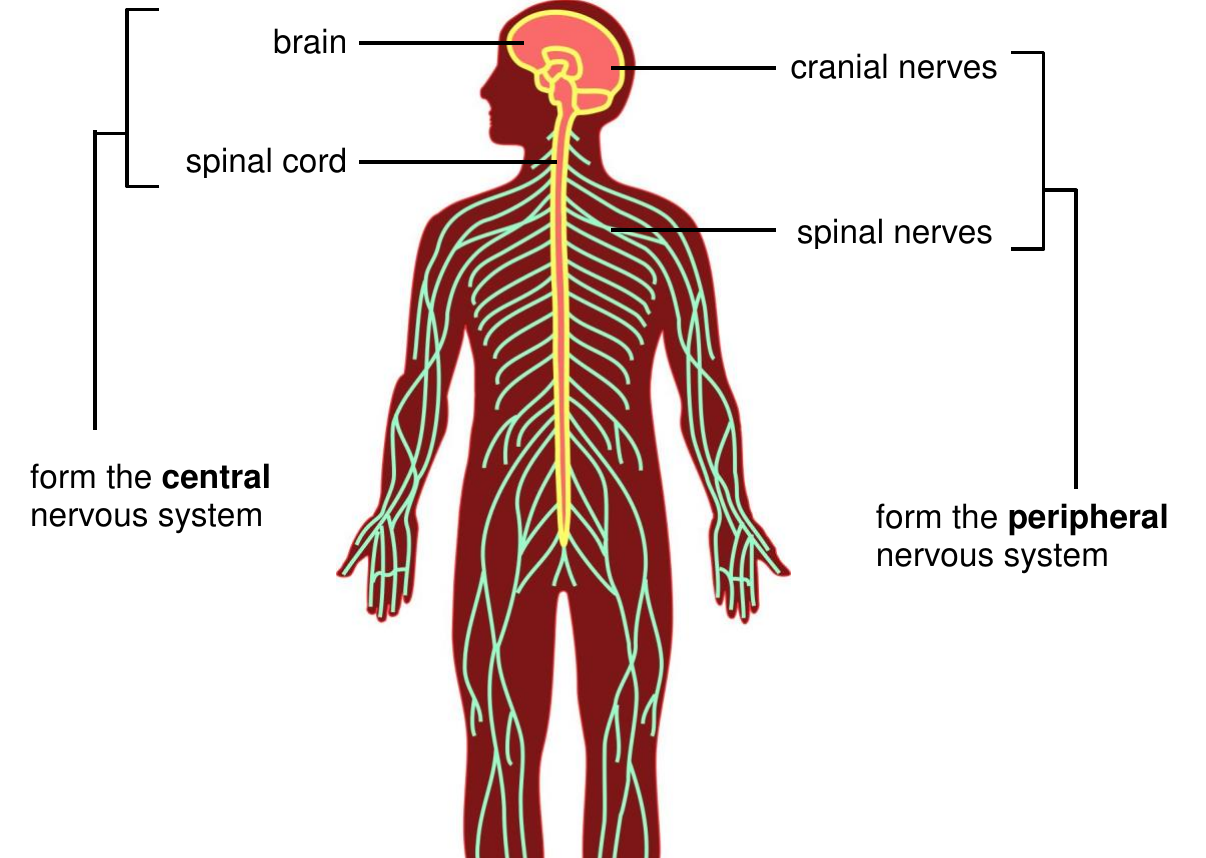
The diagram above shows how your nervous system is organised throughout your entire body, with the brain and spinal cord forming the central hub, and nerves branching out to reach every part of your body.
The central nervous system (CNS)
The central nervous system is made up of two main components: the brain and the spinal cord. These structures work together as your body's main processing centre, receiving information from all over your body and sending out appropriate responses.
The brain - your body's control centre
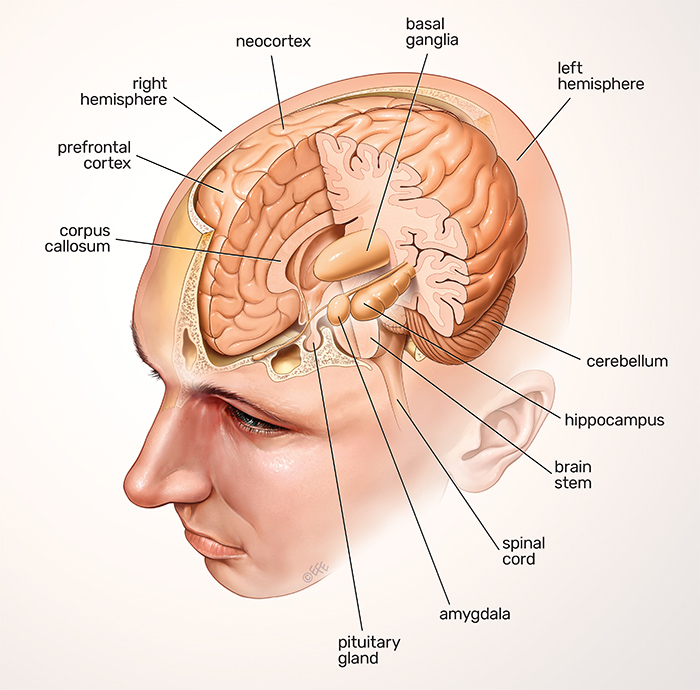
Your brain is an amazing organ made of sensitive nerve tissue that has limited ability to heal when damaged. Because the brain controls all the functions that keep you alive, it needs excellent protection, which it gets in three important ways:
- Bony protection: Your brain sits safely inside your skull (called the cranium), which acts like a hard helmet
- Membrane protection: Three layers of protective membranes called the meninges wrap around your brain
- Fluid protection: Your brain floats in a special liquid called cerebrospinal fluid that cushions it from bumps and impacts
Important
The brain's limited healing ability is why head injuries can be so serious and long-lasting. This triple protection system is essential for preventing permanent damage to this vital organ.
The brain contains several important structures, each with specific functions.
The cerebrum is the largest part where thinking happens, the cerebellum helps with balance and coordination, and the medulla oblongata controls vital functions like breathing and heart rate. The hypothalamus works with the pituitary gland to control hormones in your body.
The spinal cord - your body's information highway
The spinal cord is like a thick cable of nerve tissue that runs down your back, connecting your brain to the rest of your body. It carries messages up to the brain (sensory information) and down from the brain (motor commands).
Note
The spinal cord is so important that it's protected by the vertebral column (backbone) and also surrounded by the same protective membranes and fluid that protect the brain.
The peripheral nervous system (PNS)
The peripheral nervous system includes all the nerves that branch out from your brain and spinal cord to reach every part of your body. These nerves can be divided into two main groups:
- Cranial nerves: Twelve pairs of nerves that connect directly to your brain
- Spinal nerves: Thirty-one pairs of nerves that branch out from your spinal cord
The peripheral nervous system has two main divisions based on how much control you have over them:
Somatic nervous system (voluntary control)
This part of your nervous system controls actions that you can consciously decide to do. These are called voluntary actions because you have control over them. Examples include:
- Walking or running
- Writing or typing
- Eating and chewing
- Speaking
- Moving your arms and legs
Autonomic nervous system (involuntary control)
This part controls actions that happen automatically without you having to think about them. These are called involuntary actions or reflex actions because they occur without conscious control. Examples include:
- Breathing (though you can control it temporarily)
- Heart beating
- Digesting food
- Blinking and sneezing
- Controlling body temperature
The autonomic nervous system can be further divided into two parts that work in opposite ways:
Note
Understanding Antagonistic Systems
The sympathetic and parasympathetic systems work antagonistically, meaning they have opposite effects on the same organs. This allows for precise control of your body's responses.
- Sympathetic system: Prepares your body for action or stress (like speeding up your heart rate)
- Parasympathetic system: Helps your body rest and recover (like slowing down your heart rate)
How you respond to your environment
Throughout each day, your body constantly responds to changes called stimuli. These stimuli can come from two sources:
Internal stimuli (from inside your body):
- Changes in body temperature
- Water levels in your blood
- Sugar levels in your blood
- Carbon dioxide and oxygen levels in your blood
External stimuli (from your environment):
- Pain or touch
- Changes in environmental temperature
- Potential dangers
- Light, sound, and smells
Whether a stimulus comes from inside or outside your body, your nervous system must be able to detect it and respond appropriately to keep you healthy and safe.
Note
Your body processes thousands of stimuli every day, but you're only consciously aware of a small fraction of them. Most responses happen automatically to maintain your body's internal balance.
Common misconceptions and exam tips
Important
Common misconception: Students often confuse voluntary and involuntary actions.
Remember: If you can choose to do it or stop it, it's voluntary (somatic). If it happens without you thinking about it, it's involuntary (autonomic).
Important
Exam tip: When describing the nervous system divisions, always mention both the structural divisions (CNS vs PNS) and the functional divisions (somatic vs autonomic) as these are frequently tested.
Exam tip: Be able to identify structures on diagrams of the brain and nervous system - these are common in NSC examinations.
Summary
Key Points to Remember:
-
The central nervous system consists of the brain and spinal cord, while the peripheral nervous system includes all the nerves that branch throughout your body
-
Your brain is protected by the skull, meninges, and cerebrospinal fluid because nerve tissue cannot easily repair itself
-
The somatic nervous system controls voluntary actions you can consciously control, while the autonomic nervous system controls involuntary actions that happen automatically
-
Your body responds to both internal stimuli (from inside your body) and external stimuli (from your environment) to maintain health and safety
-
The sympathetic and parasympathetic systems work antagonistically to either prepare your body for action or help it rest and recover