Functioning of the Human Ear (Grade 12 NSC Matric Life Sciences): Revision Notes
📚Revision Notes
Functioning of the Human Ear
Introduction
The human ear is a remarkable sensory organ that performs two essential functions in our daily lives. It allows us to detect and interpret sounds from our environment while simultaneously helping us maintain our balance and spatial orientation. Understanding how the ear works helps us appreciate both the complexity of hearing and the importance of ear health.
Anatomy of the human ear
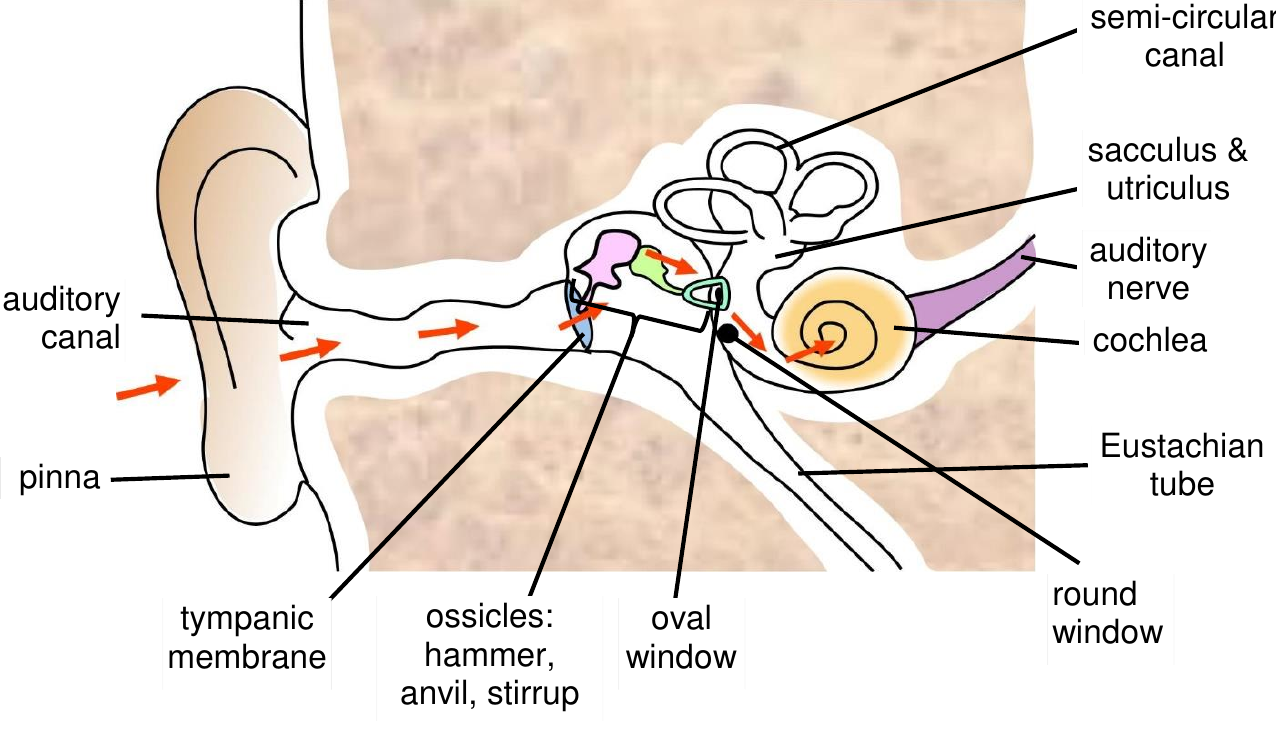
The human ear consists of three main sections, each playing a crucial role in either hearing or balance. These sections work together as an integrated system to convert sound waves into electrical signals that our brain can understand.
Outer ear
The outer ear includes the visible part of the ear (pinna) and the auditory canal. The pinna acts like a funnel, collecting sound waves from the environment and directing them into the auditory canal towards the eardrum.
Middle ear
The middle ear contains the tympanic membrane (eardrum) and three small bones called ossicles. These bones are known as the hammer (malleus), anvil (incus), and stirrup (stapes). The middle ear also connects to the throat through the Eustachian tube, which helps equalise air pressure.
Note
The three tiny bones in the middle ear are the smallest bones in the human body, yet they play a crucial role in amplifying sound vibrations by up to 20 times their original strength.
Inner ear
The inner ear houses two important systems: the cochlea for hearing and the vestibular system for balance. The cochlea is a spiral-shaped structure filled with fluid, while the vestibular system includes the semi-circular canals, sacculus, and utriculus.
Functions of the human ear
Hearing process
Hearing involves a complex sequence of events that transform sound waves in the air into electrical impulses that the brain can interpret. This process demonstrates how mechanical energy becomes neural information.
Example
Step-by-Step Hearing Process:
Step 1: Sound Collection The pinna captures sound waves and funnels them down the auditory canal towards the tympanic membrane
Step 2: Vibration Transmission When sound waves reach the eardrum, it vibrates in response to the pressure changes
Step 3: Amplification The vibrating eardrum causes the three ossicles to move, amplifying and transferring the vibrations to the oval window
Step 4: Pressure Amplification Since the oval window is smaller than the tympanic membrane, the pressure of the vibrations increases significantly
Step 5: Fluid Movement The vibrating oval window creates pressure waves in the endolymph fluid within the cochlea
Step 6: Sensory Detection These pressure waves stimulate the organ of Corti, which contains specialised hair cells that convert mechanical vibrations into electrical impulses
Step 7: Signal Transmission The auditory nerve carries these electrical impulses to the cerebrum for interpretation as sound
Step 8: Pressure Release The round window allows pressure waves to exit the cochlea, completing the cycle
Balance and equilibrium
Balance involves detecting changes in head position and body movement to help maintain stability and spatial orientation. The inner ear contains specialised structures that respond to both gravitational forces and rotational movements.
Detecting gravity and head position
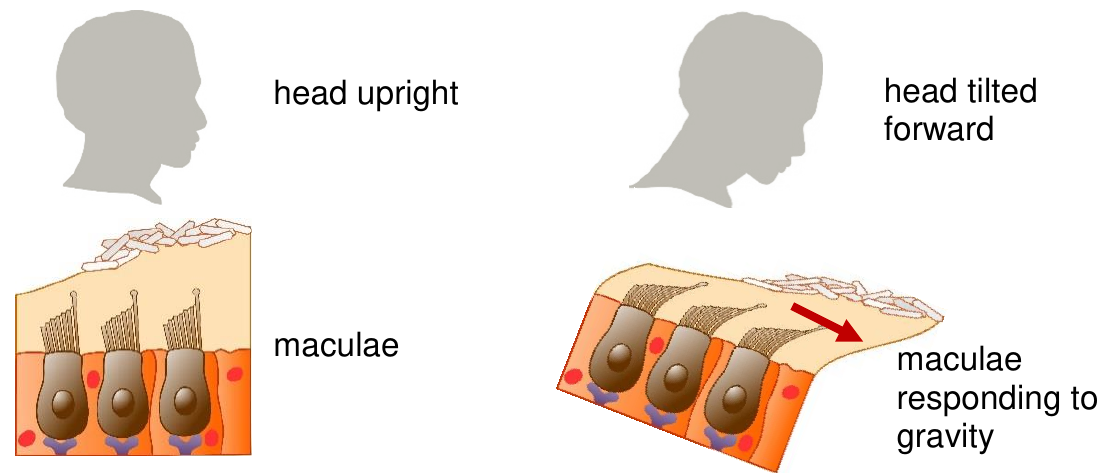
The sacculus and utriculus contain special receptor cells called maculae that respond to gravitational pull. These structures work as follows:
- The maculae contain sensory hair cells embedded in a gel-like substance
- When the head tilts or changes position, gravity causes the gel layer to shift
- This movement stimulates the hair cells to generate nerve impulses
- The impulses travel to the cerebellum, which coordinates muscle responses to maintain balance
Note
The maculae act like tiny biological accelerometers, constantly monitoring the position of your head relative to gravity. This is why you can sense when you're tilting your head even with your eyes closed.
Detecting rotational movement
The semi-circular canals detect changes in rotational speed and direction through structures called cristae ampullae:
- Three semi-circular canals are positioned in different planes to detect movement in any direction
- When the head rotates, the endolymph fluid inside the canals moves
- This fluid movement stimulates the cristae, which contain sensory hair cells
- The resulting nerve impulses inform the cerebellum about rotational changes
- The cerebellum then sends appropriate signals to skeletal muscles to maintain balance
Hearing defects
Middle ear infection
Middle ear infection is a common condition that occurs when harmful bacteria or viruses enter the middle ear space, usually through the Eustachian tube. When pathogens cause inflammation, the Eustachian tube becomes swollen and cannot drain fluid properly, leading to fluid accumulation behind the eardrum.
Important
Treatment options include:
- Antibiotics or other appropriate medications to fight the infection
- Grommets (small drainage tubes) for children with recurring infections
Early treatment is crucial to prevent complications and permanent hearing damage.
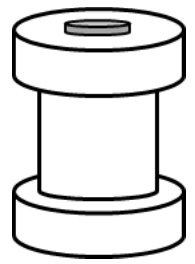
A grommet is a tiny tube surgically inserted through the eardrum to allow trapped fluid to drain out, preventing future infections and restoring normal hearing.
Deafness
Deafness describes partial or complete hearing loss that can result from various causes. Understanding these causes helps in determining appropriate treatments.
Common causes include:
- Physical injury to ear structures, auditory nerves, or brain areas responsible for hearing
- Hardening or damage to ear tissues, particularly the ossicles
- Genetic conditions like otosclerosis, where the stirrup bone becomes immobile
- Age-related hearing loss
- Exposure to loud noises over time
Important
Prevention Tips:
- Protect your ears from loud noises (use ear protection when necessary)
- Treat ear infections promptly
- Avoid inserting objects into your ears
- Have regular hearing check-ups, especially as you age
Treatments for hearing loss
Modern technology offers several effective treatments for different types of hearing loss, allowing many people to regain functional hearing.
Hearing aids
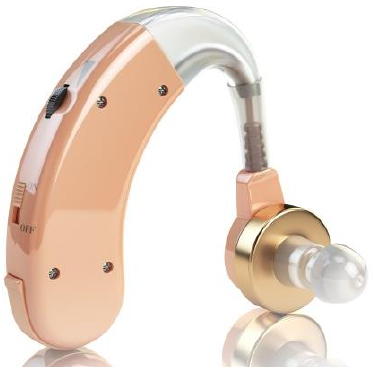
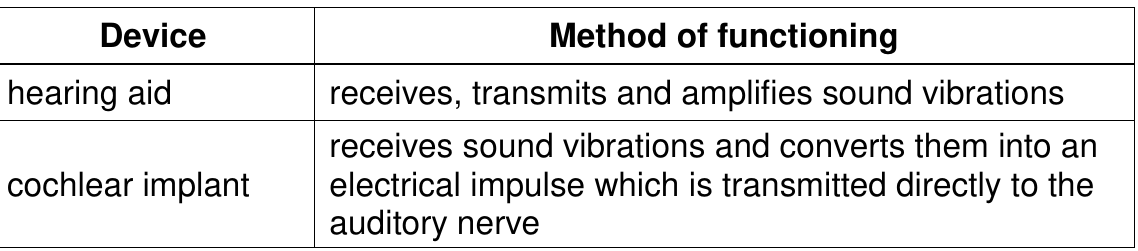
Hearing aids work by receiving sound waves from the environment, then amplifying and transmitting these enhanced vibrations to the ear. They are particularly effective for people who have damaged hair cells in the cochlea but still have functioning auditory nerves.
Note
Modern hearing aids are highly sophisticated devices that can be programmed to amplify specific frequencies based on an individual's particular type of hearing loss. Many are now digital and can philtre out background noise while enhancing speech clarity.
Cochlear implants
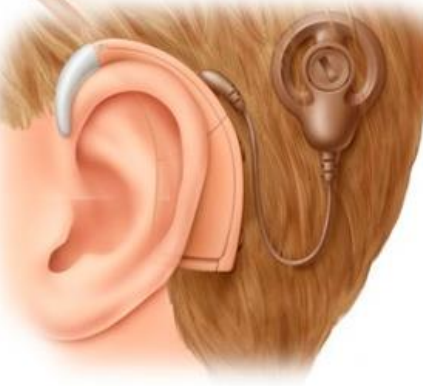
Cochlear implants represent a more advanced solution for severe hearing loss. These devices bypass damaged parts of the ear by converting sound vibrations directly into electrical impulses that stimulate the auditory nerve. This allows people with severely damaged cochleas to perceive sound signals that their brain can learn to interpret.
Other treatments
Depending on the specific cause of hearing loss, other treatments may include:
- Surgical repair of damaged ear structures
- Removal of blockages in the ear canal
- Treatment of underlying medical conditions affecting hearing
Summary
Key Points to Remember:
-
The human ear has two main functions: hearing and maintaining balance, both essential for daily life
-
Sound transmission follows a specific pathway: from the pinna through the middle ear bones to the cochlea, where mechanical vibrations become electrical signals
-
Balance depends on two systems: maculae detect head position changes relative to gravity, while cristae ampullae detect rotational movements
-
Common hearing problems have effective treatments: middle ear infections can be treated with medication or grommets, while hearing loss can often be addressed with hearing aids or cochlear implants
-
Prevention is important: protecting ears from loud noises and treating infections promptly can prevent many forms of hearing loss