The Human Nervous System (Grade 12 NSC Matric Life Sciences): Revision Notes
📚Revision Notes
The Human Nervous System
Introduction to nervous system organisation
Your nervous system is like the body's electrical wiring and control centre, coordinating everything from your heartbeat to your thoughts. Understanding how this complex system is organised will help you grasp how your body responds to the world around you.
Note
The nervous system follows a clear hierarchical structure, with each level having specific roles and responsibilities in maintaining your body's functions. This organisation helps you understand how different parts work together as an integrated system.
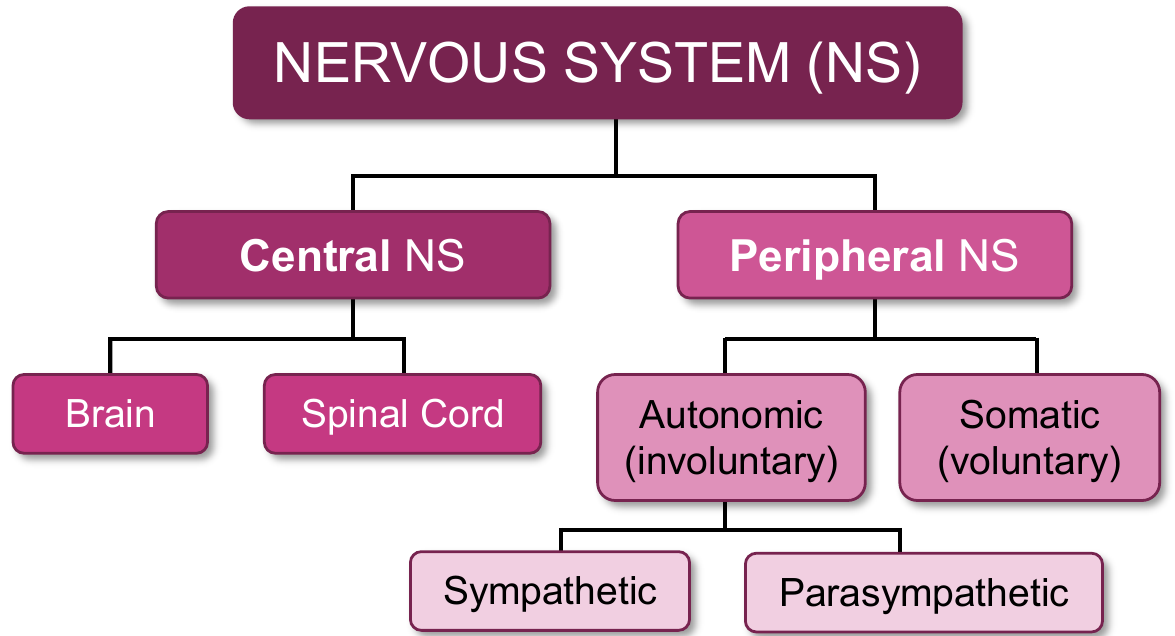
This organisational chart shows how the nervous system divides into two main branches: the central nervous system and the peripheral nervous system. Each branch has distinct components that work together to keep you alive and responsive to your environment.
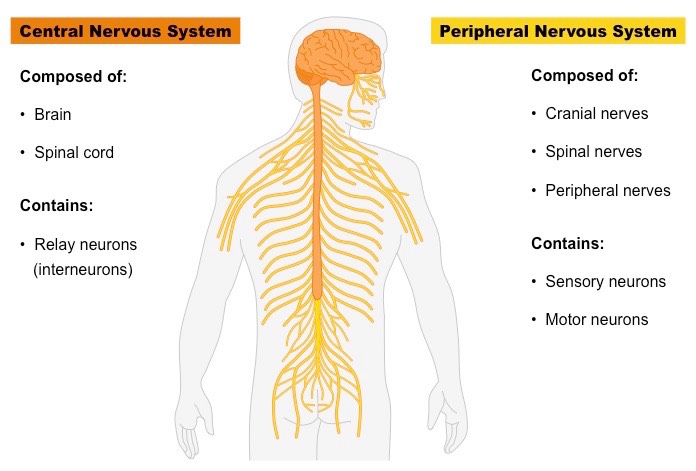
Essential terminology for understanding the nervous system
Before diving deeper into how the nervous system works, it's important to understand the key terms that describe its structures and functions. These terms form the foundation for all further learning about neural processes.
Protection structures
Your brain and spinal cord need excellent protection because they're so delicate yet vital. The cranium acts like a hard helmet, forming the part of your skull that surrounds and shields your brain from physical damage. Think of it as nature's crash helmet.
Note
Triple protection system
Your nervous system has three layers of protection working together:
- Cranium: Hard bony protection
- Meninges: Flexible membrane barriers
- Cerebrospinal fluid: Liquid cushioning system
The meninges are like layers of bubble wrap around your brain and spinal cord. These protective membranes create multiple barriers against infection and injury. Between these layers flows cerebrospinal fluid, which acts as a liquid cushion, absorbing shocks and providing nutrients while removing waste products.
Neural tissue types
Your nervous system contains two distinctly different types of tissue that you can actually see with the naked eye. Grey matter appears darker because it contains the main bodies of nerve cells (neurons) along with their branching dendrites. This is where most of the cell's processing happens - think of it as the 'thinking' part.
White matter looks pale because it consists of myelinated axons - nerve fibres covered in a white, fatty substance called myelin. This myelin acts like insulation on electrical wires, helping nerve impulses travel faster and more efficiently over long distances.
Cellular components and communication
A neuron is a specialised cell designed specifically for transmitting electrical and chemical signals throughout your body. These aren't ordinary cells - they're highly modified for rapid communication.
Note
The communication chain
Neural communication follows a specific pathway:
- Dendrites receive signals from other neurons
- Cell body processes the information
- Axon carries the signal away from the cell body
- Synapse transfers the signal to the next neuron using neurotransmitters
Dendrites are like the receiving antennae of neurons. These branched fibres collect incoming signals from other neurons and channel them towards the cell body, where the information gets processed.
Multiple neurons bundle together to form a nerve, creating information highways that carry signals between different parts of your body.
The synapse represents the communication gap between neurons. When a signal reaches the end of one neuron, it can't jump across this gap electrically. Instead, neurotransmitters - specialised chemical messengers - carry the signal across the synapse to trigger a response in the next neuron.
Maintaining balance
Homeostasis describes your body's remarkable ability to keep its internal conditions stable despite constant changes in the external environment. Your nervous system plays a crucial role in this process, constantly monitoring and adjusting everything from body temperature to blood sugar levels.
Central nervous system components
The central nervous system forms the command centre of your body's neural network. It consists of two main structures: the brain and spinal cord, both housed within protective bony structures and surrounded by the meninges.
Your brain serves as the ultimate control centre, processing sensory information, making decisions, storing memories, and coordinating complex movements. It's where consciousness, personality, and higher thinking occur.
The spinal cord acts as the major information highway between your brain and the rest of your body. It carries signals up to the brain from sensory receptors throughout your body, and carries commands back down from the brain to muscles and organs.
Peripheral nervous system divisions
Everything outside your brain and spinal cord belongs to the peripheral nervous system. This network extends throughout your body like branches of a tree, connecting the central nervous system to every organ, muscle, and sensory receptor.
Important
Key distinction: Voluntary vs Involuntary control
The peripheral nervous system divides based on whether you can consciously control the functions:
- Somatic: Actions you choose to perform (voluntary)
- Autonomic: Functions that happen automatically (involuntary)
Somatic nervous system (voluntary control)
The somatic division handles voluntary movements - actions you consciously decide to perform. When you choose to pick up a pen, wave your hand, or walk across a room, you're using your somatic nervous system. This system connects your brain and spinal cord to your skeletal muscles, giving you conscious control over your body's movements.
Autonomic nervous system (involuntary control)
The autonomic division manages all the automatic functions that keep you alive without conscious effort. Your heartbeat, breathing, digestion, and temperature regulation all happen thanks to this system. It operates largely below the level of consciousness, which is why you don't need to remember to make your heart beat or tell your stomach to digest food.
The autonomic system further divides into two complementary branches:
Sympathetic division activates during stressful or exciting situations. Often called the "fight or flight" response, it prepares your body for action by increasing heart rate, dilating pupils, and releasing stress hormones. Think of it as your body's emergency response system.
Parasympathetic division promotes "rest and digest" activities. It slows your heart rate, stimulates digestion, and promotes the calm, restorative processes that occur when you're relaxed and safe.
Important neurological conditions
Understanding common nervous system disorders helps illustrate how crucial healthy neural function is for normal life.
Important
Common neurological conditions
These conditions demonstrate what happens when the nervous system doesn't function properly, highlighting the importance of maintaining neural health throughout life.
Alzheimer's disease primarily affects older individuals and involves progressive damage to brain neurons. This leads to characteristic symptoms of memory loss, confusion, and difficulty with daily activities. The disease demonstrates how important healthy neurons are for maintaining cognitive function.
Multiple sclerosis occurs when the immune system mistakenly attacks the myelin sheaths surrounding nerve fibres. Remember that myelin acts like insulation on electrical wires - when it's damaged, nerve signals slow down or stop entirely, causing both physical and mental challenges for affected individuals.
Summary
Key Points to Remember:
- The nervous system divides into central (brain and spinal cord) and peripheral (everything else) components
- Grey matter contains neuron cell bodies and dendrites, while white matter consists of myelinated axons for faster signal transmission
- The peripheral nervous system splits into voluntary (somatic) and involuntary (autonomic) divisions
- The autonomic system has sympathetic ("fight or flight") and parasympathetic ("rest and digest") branches that balance each other
- Multiple protective layers including the cranium, meninges, and cerebrospinal fluid safeguard your delicate nervous tissue from damage