Negative Feedback: Blood Glucose Levels (Grade 12 NSC Matric Life Sciences): Revision Notes
📚Revision Notes
Negative Feedback: Blood Glucose Levels
What is blood glucose regulation?
Blood glucose regulation is one of the most important examples of negative feedback in the human body. Your body needs to keep glucose levels in your blood within a narrow, healthy range because glucose serves as the primary fuel for cellular respiration. When cells break down glucose, they release energy that gets stored in ATP molecules, which power all cellular activities.
Note
Think of blood glucose like the fuel gauge in a car - it needs to stay within the optimal range. Too much glucose can damage blood vessels and organs, while too little glucose means your cells can't produce enough energy to function properly.
The pancreas: your glucose control centre
The pancreas is a remarkable organ that acts as both an endocrine gland (releasing hormones into the bloodstream) and an exocrine gland (releasing digestive enzymes into ducts). For glucose regulation, we focus on its endocrine function.
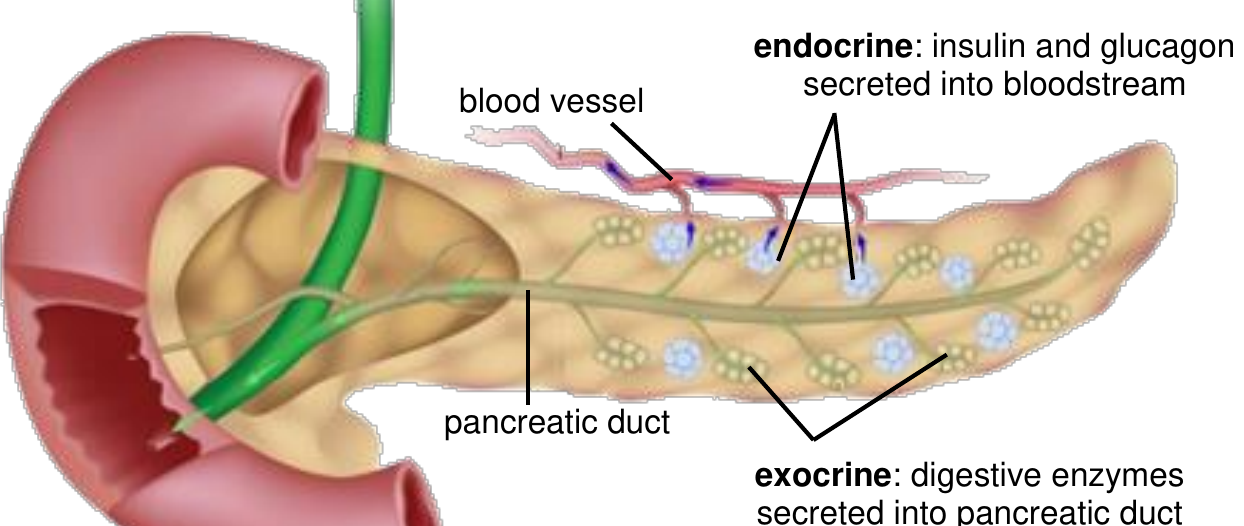
Within the pancreas are special clusters of cells called the Islets of Langerhans. These tiny structures contain two important types of cells:
- Alpha cells that produce glucagon
- Beta cells that produce insulin
Note
These two hormones work as opposing forces - like the accelerator and brake pedal in a car - to maintain perfect glucose balance.
How negative feedback works for glucose control
Negative feedback means that when something increases above normal, the body responds by decreasing it back to normal. When something decreases below normal, the body responds by increasing it back to normal. This creates a stable internal environment called homeostasis.
Important
For blood glucose, this works through two main pathways that operate like a see-saw - when one pathway is active, the other is not. This prevents conflicting signals and ensures effective glucose control.
When blood glucose is too high: the insulin response
Imagine you've just eaten a meal rich in carbohydrates - perhaps a plate of pap and sugar beans. Your blood glucose levels will rise above the normal range. Here's what happens:
Example
Worked Example: The Insulin Response Process
Step 1: Detection The Islets of Langerhans in your pancreas detect the elevated glucose levels in your bloodstream.
Step 2: Hormone release The pancreas responds by releasing insulin into your bloodstream. Insulin acts like a key that unlocks cells to allow glucose entry.
Step 3: Target organ response Insulin travels through your blood to reach the liver, which serves as the main effector organ. The liver responds in two ways:
- It takes up excess glucose from the blood
- Special enzymes convert this excess glucose into glycogen, a storage form of carbohydrate
Step 4: Return to normal As glucose gets converted to glycogen and stored, blood glucose levels drop back to the normal range. The negative feedback loop is complete!
When blood glucose is too low: the glucagon response
Now imagine you haven't eaten for several hours, perhaps you're writing a long exam and skipped breakfast. Your blood glucose levels drop below normal. Here's the opposing response:
Example
Worked Example: The Glucagon Response Process
Step 1: Detection The Islets of Langerhans detect the decreased glucose levels in your blood.
Step 2: Hormone release This time, the pancreas releases glucagon into your bloodstream. Glucagon acts like a signal telling the liver to release stored energy.
Step 3: Target organ response Glucagon travels to the liver, where it triggers the breakdown of stored glycogen. The liver converts glycogen back into free glucose and releases it into the bloodstream.
Step 4: Return to normal As glucose enters the bloodstream from the liver, blood glucose levels rise back to the normal range. Again, the negative feedback loop is complete!
The complete negative feedback loop in action
The beauty of this system lies in how smoothly these two pathways work together to maintain glucose homeostasis throughout the day.
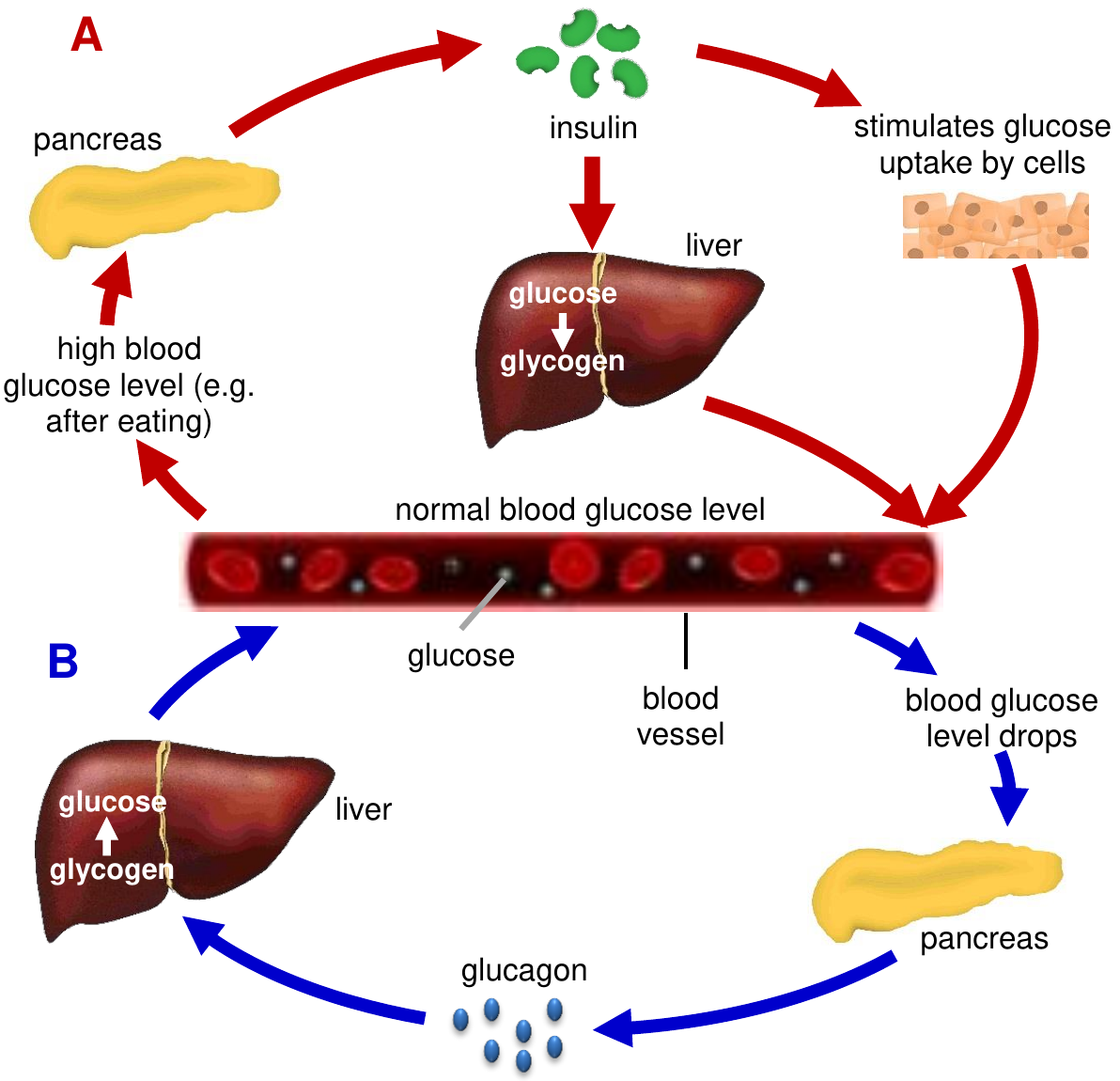
Pathway A (Red arrows - High glucose):
- High blood glucose (perhaps after eating)
- Pancreas releases insulin
- Insulin stimulates glucose uptake by cells
- Liver converts glucose to glycogen for storage
- Blood glucose returns to normal
Pathway B (Blue arrows - Low glucose):
- Low blood glucose (perhaps during exercise or fasting)
- Pancreas releases glucagon
- Liver breaks down glycogen to glucose
- Glucose enters bloodstream
- Blood glucose returns to normal
Why this system is so effective
This negative feedback mechanism is incredibly efficient because:
- It's automatic - you don't need to think about it
- It's rapid - responses happen within minutes
- It's precise - it stops when normal levels are reached
- It prevents extremes - both high and low glucose are corrected
Important
Exam tip: Remember that insulin and glucagon are antagonistic hormones - they have opposite effects. When one is released, the other is not. This prevents conflicting signals and ensures clear, effective responses.
Important
Common misconception: Students sometimes think both hormones work at the same time. In reality, your body releases either insulin OR glucagon depending on current glucose levels, not both simultaneously.
Note
South African context: Understanding glucose regulation is particularly important given the high rates of diabetes in South Africa. This knowledge helps explain how diabetes disrupts this normally perfect balance, either through insufficient insulin production (Type 1) or insulin resistance (Type 2).
Remember!
Summary
Key Points to Remember:
-
Negative feedback maintains homeostasis - when glucose goes up, the body brings it down, and vice versa
-
The pancreas is the control centre - its Islets of Langerhans detect glucose changes and release appropriate hormones
-
Insulin lowers glucose - it helps cells take up glucose and converts excess glucose to glycogen for storage in the liver
-
Glucagon raises glucose - it triggers the liver to break down stored glycogen and release glucose into the blood
-
The liver is the main effector organ - it responds to both insulin and glucagon by either storing or releasing glucose as needed