Regulation of Body Temperature – Thermoregulation (Grade 12 NSC Matric Life Sciences): Revision Notes
📚Revision Notes
Regulation of Body Temperature - Thermoregulation
Understanding thermoregulation
Thermoregulation is the process by which your body controls its internal core temperature when external environmental conditions change. This is a crucial homeostatic mechanism that keeps you healthy and functioning properly.
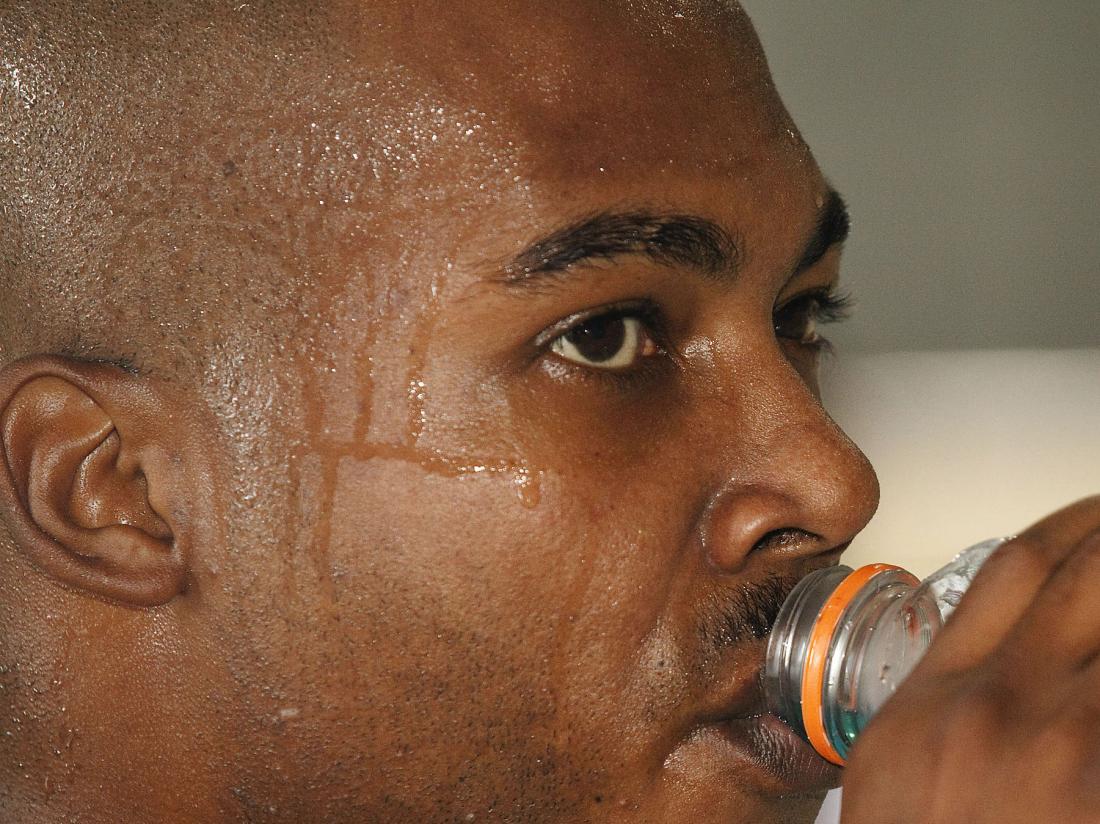
Humans are endothermic organisms, which means we can maintain a constant body temperature regardless of what's happening in our environment. Unlike reptiles that need to bask in the sun to warm up, our bodies automatically regulate temperature internally.
Your normal body temperature is approximately 36.8°C, and your body works hard to keep it at this level even when it's extremely hot or cold outside. This precise temperature control is essential because:
Important
Critical Temperature Ranges:
- If your body temperature drops below 36°C, your metabolic processes slow down significantly
- If your temperature rises above 37.5°C, your enzymes start to become denatured (lose their shape and stop working effectively)
- Without proper temperature control, many vital body functions would be disrupted or stop completely
The human skin as a thermoregulator
Your skin is perfectly designed for temperature control and is actually the largest organ in your body. It contains specialised thermoreceptors that detect temperature changes:
- Ruffini's corpuscles detect heat
- Krause's end bulbs detect cold
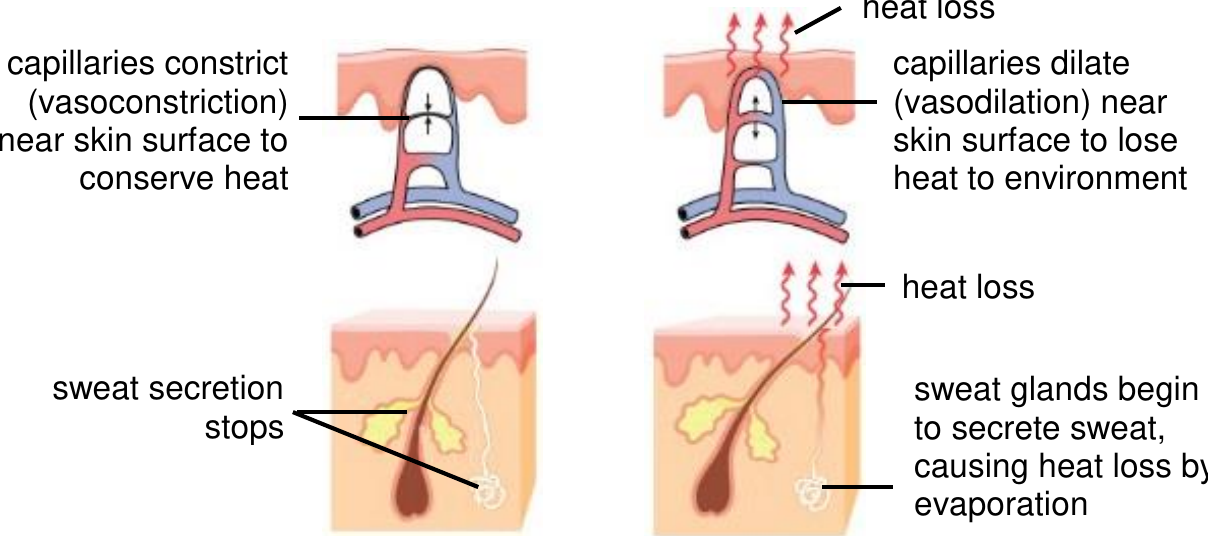
Note
Your body can lose heat through four main methods that work together to maintain optimal temperature:
- Evaporation - when sweat turns from liquid to vapour
- Radiation - heat energy radiating away from your body
- Conduction - direct heat transfer through contact
- Convection - heat loss through air movement
How thermoregulation works
The thermoreceptors in your skin constantly send messages to the hypothalamus (the temperature control centre in your brain). Based on these signals, your body responds with both conscious and subconscious actions to maintain the correct temperature.
Conscious responses are things you decide to do, like putting on a jacket when cold or finding shade when hot. Subconscious responses are automatic physiological changes your body makes without you thinking about it.
Note
Understanding the Control System: The hypothalamus acts like a sophisticated biological thermostat, processing temperature information and triggering appropriate responses without any conscious effort from you. This automatic system allows you to focus on other activities while your body maintains optimal temperature.
Responses to temperature changes
When the environment is hot:
Your body needs to lose heat quickly to prevent overheating:
Blood vessel changes:
- Vasodilation occurs - blood vessels near the skin surface dilate (widen)
- More warm blood flows close to the skin surface
- Heat is lost to the environment through radiation and conduction
Sweating response:
- Sweat glands are activated and begin producing sweat
- As sweat evaporates from your skin surface, it has a cooling effect
- This is why you feel cooler when there's a breeze - it speeds up evaporation
When the environment is cold:
Your body needs to conserve and produce heat to prevent dangerous cooling:
Blood vessel changes:
- Vasoconstriction occurs - blood vessels near the skin surface become narrower
- Less warm blood flows close to the skin surface
- Heat is conserved and kept in the body's core
Reduced sweating:
- Sweat glands become inactive
- No evaporation occurs, so no heat is lost through this method
Additional heat production:
- The adrenal glands release adrenalin
- The thyroid gland releases thyroxin
- Both hormones increase your metabolic rate, producing more body heat
- The hypothalamus stimulates skeletal muscles to contract
- Involuntary shivering occurs, which generates heat through muscle activity
Important
Key Hormonal Response to Cold: When your body detects cold temperatures, it doesn't just rely on physical responses like shivering. The release of adrenalin and thyroxin creates a systematic increase in metabolism throughout your entire body, generating heat at the cellular level to maintain core temperature.
Maintaining homeostasis
The human body's remarkable ability to maintain a constant core temperature of 36.8°C through thermoregulation is a perfect example of homeostasis - keeping internal conditions stable despite external changes.
This system works like a very sophisticated thermostat that:
- Detects temperature changes through skin receptors
- Processes this information in the hypothalamus
- Triggers appropriate responses to correct any temperature deviations
- Continuously monitors and adjusts to maintain the optimal temperature
Note
The Thermostat Analogy: Just like a home thermostat that turns heating or cooling on and off to maintain your desired room temperature, your body's thermoregulation system constantly makes small adjustments. The difference is that your biological thermostat is far more sophisticated, using multiple mechanisms simultaneously and responding within seconds to temperature changes.
Real-world application
Understanding thermoregulation helps explain many everyday experiences. For example, why you shiver when you're cold, why you sweat during exercise, or why you might feel cold after getting out of a hot bath. Your body is constantly working behind the scenes to keep you at the perfect temperature for optimal functioning.
Note
Everyday Thermoregulation Examples:
- After exercise: You continue sweating even after stopping because your core temperature is still elevated
- Getting out of a hot shower: You feel cold because the warm, humid environment prevented normal heat loss, and now your body overcompensates
- Feeling cold when sick: Fever changes your body's temperature "set point," making normal temperatures feel cold
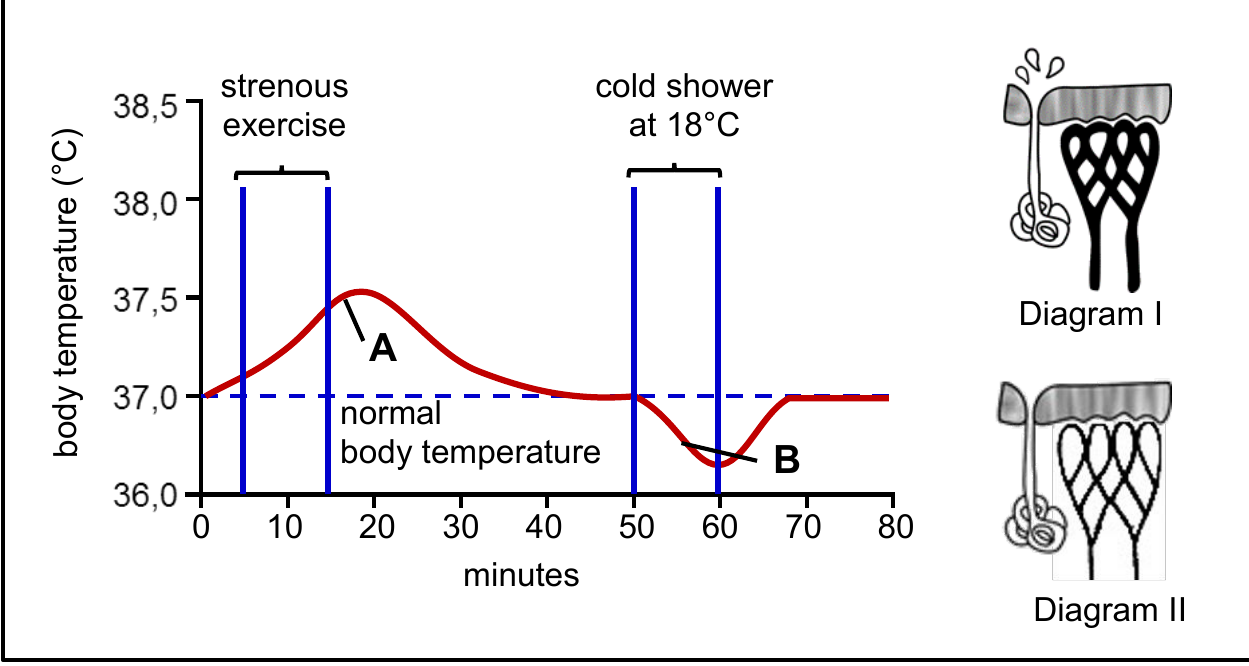
The graph above shows how your body temperature changes during different activities and how quickly your thermoregulation system responds to bring it back to normal. Notice how even during strenuous exercise or cold exposure, your body temperature doesn't vary dramatically from the normal range.
Summary
Key Points to Remember:
- Thermoregulation is your body's automatic temperature control system that maintains your core temperature at approximately 36.8°C
- Your skin contains thermoreceptors that detect temperature changes and send signals to the hypothalamus in your brain
- Hot conditions trigger vasodilation and sweating to increase heat loss through evaporation, radiation and conduction
- Cold conditions cause vasoconstriction and shivering, plus hormone release to conserve and generate heat
- This process involves both conscious behaviours (like putting on clothes) and subconscious responses (like sweating and shivering)