Acid-Base Reactions (Grade 12 NSC Matric Physical Sciences): Revision Notes
📚Revision Notes
Acid-Base Reactions
When acids and bases come into contact with each other, they undergo chemical reactions that produce new compounds. Understanding these reactions is essential for explaining many processes we observe in everyday life, from taking antacids for indigestion to treating acidic soil in gardens.
Note
Acid-base reactions are fundamental chemical processes that occur constantly in our daily lives, from biological processes in our bodies to industrial applications. Mastering these concepts will help you understand many real-world phenomena.
What is a salt?
A salt is a neutral ionic compound that forms when an acid reacts with a base. The salt contains positively charged ions (cations) from the base and negatively charged ions (anions) from the acid. This is different from the table salt we use for cooking, which is just one specific type of salt called sodium chloride.
Note
Definition of Salt
A salt is a neutral ionic compound composed of cations and anions. It is the result of an acid-base neutralisation reaction. The term "salt" in chemistry refers to any compound formed through acid-base reactions, not just table salt (NaCl).
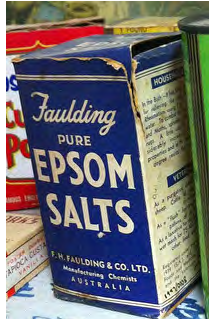
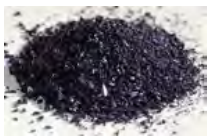
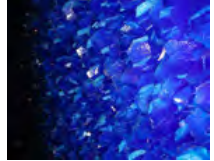
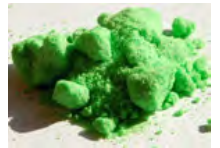
When we talk about salts in chemistry, we're referring to any compound formed through acid-base reactions. These salts can have many different colours and properties, depending on which acid and base were used to make them.
The formation of a salt follows a simple pattern: when an acid provides hydrogen ions () and a base provides hydroxide ions (), these combine to form water. The remaining ions from the acid and base combine to form the salt.
Neutralisation reactions
Neutralisation occurs when an acid and a base react together to form a salt. During this process, the acidic and basic properties of the reactants are neutralised, meaning the resulting solution is neither acidic nor basic.
Note
Equivalence Point
The equivalence point is reached when exactly the right amount of acid and base have been mixed together. At this point, there are equal numbers of hydrogen ions from the acid and hydroxide ions from the base, so they completely cancel each other out.
Basic neutralisation patterns
The general pattern for neutralisation reactions can be written as:
For specific examples:
- Single hydrogen acid:
- Double hydrogen acid:
Examples of neutralisation reactions
Let's look at some specific neutralisation reactions to understand how different acids and bases interact:
Hydrochloric acid with sodium hydroxide:
In this reaction, hydrochloric acid () reacts with sodium hydroxide () to produce sodium chloride (table salt) and water. The sodium ions () come from the base, and the chloride ions () come from the acid.
Hydrogen bromide with potassium hydroxide:
Here, hydrogen bromide reacts with potassium hydroxide to form potassium bromide salt and water.
Hydrochloric acid with sodium hydrogencarbonate:
This reaction is slightly different because sodium hydrogencarbonate acts as a base even though it doesn't contain hydroxide ions. Notice that this reaction produces carbon dioxide gas as well as salt and water.
Energy changes in neutralisation reactions
Important
Exothermic Nature of Neutralisation
All neutralisation reactions are exothermic, meaning they release energy in the form of heat. This is why the temperature increases when acids and bases are mixed together. This is a fundamental characteristic that applies to every acid-base neutralisation reaction.
When conducting neutralisation experiments, you can observe this temperature change by measuring the temperature before and after mixing the reactants. The temperature will rise as the reaction proceeds and then level off once all the acid or base has been consumed.
The heat release occurs because the formation of water from hydrogen and hydroxide ions is an energetically favourable process. The bonds formed in the products are more stable than those in the reactants, so energy is released.
Real-world applications of neutralisation
Neutralisation reactions are incredibly important in everyday life and have numerous practical applications:
Domestic uses
- Antacids: When we have excess stomach acid causing indigestion, we take antacids containing calcium oxide () or calcium carbonate () to neutralise the acid and provide relief
- Soil treatment: Powdered limestone () is used to neutralise acidic soil in gardens and farms, making it more suitable for plant growth
Biological uses
- Stomach acid regulation: Hydrochloric acid in our stomachs helps digest food, but too much acid can damage the stomach lining and cause ulcers
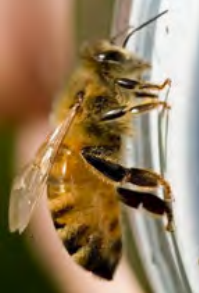
- Bee sting treatment: Bee stings are acidic and can be soothed by applying substances like calamine lotion, which contains mild alkalis
Industrial uses
- Gas absorption: Alkaline calcium hydroxide (limewater) is used in power stations to absorb harmful acidic gases like sulphur dioxide before they are released into the atmosphere
- Waste water treatment: Industrial processes often produce acidic or basic waste water that must be neutralised before disposal
Working with balanced equations
Understanding how to write and balance equations for acid-base reactions is crucial for solving chemistry problems. Let's work through some examples step by step.
Example
Worked Example 1: Magnesium carbonate and nitric acid
Question: Magnesium carbonate () is dissolved in nitric acid (). Give the balanced chemical equation for this reaction.
Solution:
Step 1: Identify the reactants We have an acid () and a metal carbonate ().
Step 2: Determine the products
When an acid reacts with a metal carbonate, the products are: salt + water + carbon dioxide
Step 3: Work out the salt formula
- The cation comes from the metal carbonate:
- The anion comes from the acid:
- Due to the charges, we need two ions for every ion
- Therefore, the salt formula is:
Step 4: Write the unbalanced equation
Step 5: Balance the equation The equation is not balanced initially. To balance it, we need two nitric acid molecules:
Now the equation is balanced with equal numbers of each type of atom on both sides.
Example
Worked Example 2: Hydroiodic acid and potassium hydroxide
Question: Hydroiodic acid () is added to solid potassium hydroxide (). Give the balanced chemical equation for this reaction.
Solution:
Step 1: Identify the reactants We have an acid () and a base ().
Step 2: Determine the products Since this is an acid-base reaction with a hydroxide-containing base, the products will be: salt + water
Step 3: Work out the salt formula
- The cation comes from the base:
- The anion comes from the acid:
- The charges are equal, so the salt formula is:
Step 4: Write the equation
Step 5: Check the balance
This equation is already balanced as written.
Example
Worked Example 3: Sulfuric acid and ammonia
Question: Sulfuric acid () and ammonia () are combined. Give the balanced chemical equation for this reaction.
Solution:
Step 1: Identify the reactants We have an acid () and a base ().
Step 2: Determine the products Since ammonia doesn't contain hydroxide ions, this reaction will produce a salt only (no water).
Step 3: Work out the salt formula
- The cation comes from the base: (ammonia gains a hydrogen ion)
- The anion comes from the acid:
- We need two ions for every ion
- Therefore, the salt formula is:
Step 4: Write the unbalanced equation
Step 5: Balance the equation To balance this equation, we need two ammonia molecules:
Now all atoms are balanced on both sides of the equation.
Summary
Key Points to Remember:
-
Salts are neutral ionic compounds formed when acids and bases react together, containing cations from the base and anions from the acid
-
Neutralisation occurs at the equivalence point when equal molar amounts of acid and base have completely reacted with each other
-
All neutralisation reactions are exothermic and release heat, causing the temperature of the reaction mixture to increase
-
The general pattern is: Acid + Base → Salt + Water, though some reactions may also produce gases like carbon dioxide
-
Real-world applications include antacids for indigestion, soil treatment in agriculture, and industrial waste water treatment