Alkyl Halides and Carbonyl Compounds (Grade 12 NSC Matric Physical Sciences): Revision Notes
📚Revision Notes
Alkyl Halides and Carbonyl Compounds
Introduction to alkyl halides
Alkyl halides (also called haloalkanes) are organic compounds where one hydrogen atom in a hydrocarbon has been replaced by a halogen atom. The halogens include fluorine (F), chlorine (Cl), bromine (Br), and iodine (I). These compounds play important roles in industry and everyday life.
Understanding substituents
Important
A substituent is any atom or group of atoms that is bonded to the main carbon chain of an organic molecule. This can be a single halogen atom or even a complete alkyl group that branches off from the main chain.
When we name organic compounds, we always identify the longest carbon chain as our main structure, and anything else attached becomes a substituent.
Molecular representations
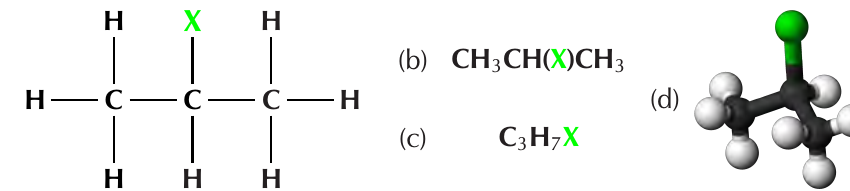
Organic chemists use several different ways to show the same molecule:
- Structural formula: Shows every atom and bond in detail
- Condensed structural formula: Shows the arrangement more simply (like CH₃CHClCH₃)
- Molecular formula: Shows only the total number of each type of atom (like C₃H₇Cl)
- 3D molecular models: Show the actual spatial arrangement of atoms
Common examples and uses
Alkyl halides have numerous practical applications:
- Fire extinguishers: Many halogenated compounds are excellent at putting out fires
- Aerosol propellants: Though some are now restricted due to environmental concerns
- Refrigeration: As coolants in refrigeration systems
- Plastic production: Used to create various types of foamed plastics
- Dry cleaning solvents: Effective at removing stains without using water
Note
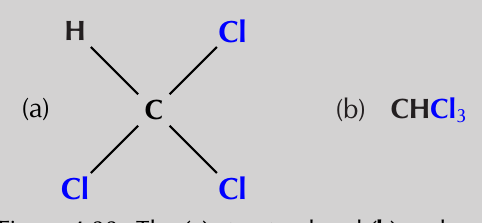
Chloroform (CHCl₃) is a well-known example that was historically used as an anaesthetic, though it's now known to be toxic and is rarely used for this purpose.
Carbonyl-containing compounds
The carbonyl group consists of a carbon atom connected to an oxygen atom by a double bond (C=O). This functional group appears in several important families of organic compounds.
Aldehydes
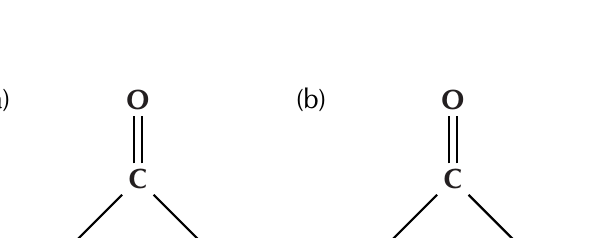
Aldehydes are compounds where the carbonyl group is located at the end of the carbon chain. In structural formulas, you'll see the carbon double-bonded to oxygen and also bonded to at least one hydrogen atom.

Key characteristics of aldehydes:
- The carbonyl group is always at the terminal (end) position
- The simplest aldehyde is methanal (formaldehyde)
- Names end in "-al" (like butanal, ethanal)
- General molecular formula:
Note
Common uses of aldehydes:
- Resin production: Over 6 million tonnes of formaldehyde are produced annually for making resins
- Plastics and detergents: Used in manufacturing various plastic materials and cleaning products
- Perfumes and flavourings: Many aldehydes have pleasant, distinctive smells
Ketones
Ketones are compounds where the carbonyl group is located in the middle of the carbon chain, not at the end. This means the carbon in the carbonyl group is bonded to two other carbon atoms.
Key characteristics of ketones:
- The carbonyl group is in an internal (middle) position
- The simplest ketone is propanone (acetone), used in nail varnish remover
- Names end in "-one" (like butanone, propanone)
- General molecular formula: (same as aldehydes)
Common uses of ketones:
- Solvents: Excellent for dissolving other substances
- Polymer production: Used in manufacturing various types of plastics
- Pharmaceutical manufacturing: Important in producing many medicines
Important
Both aldehydes and ketones have the same general molecular formula (), which means you cannot distinguish between them based on molecular formula alone. You must look at the structural arrangement to tell them apart.
Carboxylic acids
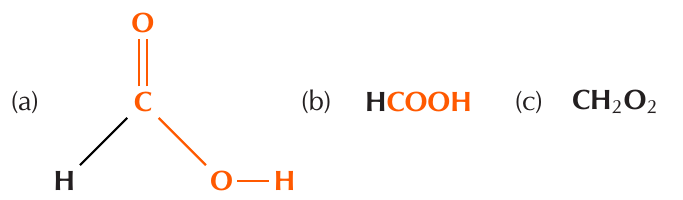
Carboxylic acids are organic compounds that contain the carboxyl functional group (-COOH). This group consists of a carbonyl group (C=O) attached to a hydroxyl group (-OH).
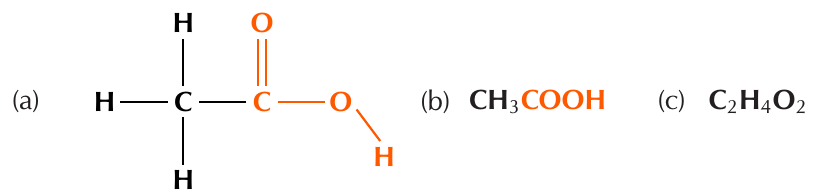
Key characteristics of carboxylic acids:
- Contains the -COOH functional group
- Names end in "-oic acid" (like methanoic acid, ethanoic acid)
- General formula:
- These compounds are acidic and can donate hydrogen ions (H⁺)
Common examples:
- Methanoic acid (HCOOH): Also called formic acid, found in insect stings
- Ethanoic acid (CH₃COOH): Also called acetic acid, the main component of vinegar
Formation of carboxylic acids through oxidation
Carboxylic acids can be produced by oxidising alcohols. This is exactly what happens when wine turns sour - the ethanol (alcohol) in wine reacts with oxygen in the air to form ethanoic acid (vinegar).
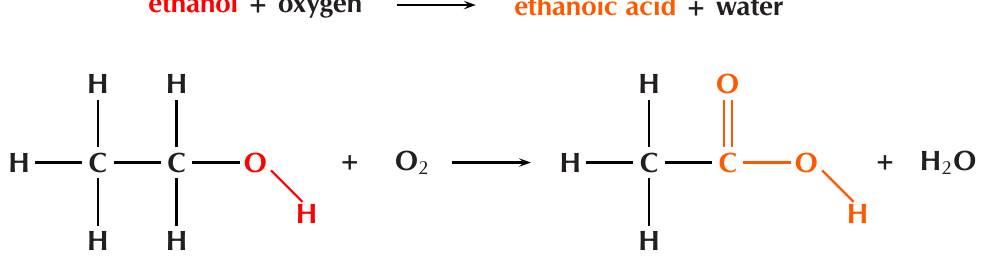
The oxidation reaction:
Note
This reaction explains why wine left open to air gradually becomes acidic and develops a vinegar-like taste, especially in warm weather where the reaction proceeds faster.
Esters
Esters are compounds formed when an alcohol reacts with a carboxylic acid. This process is called esterification and is a type of condensation reaction because water is eliminated during the process.
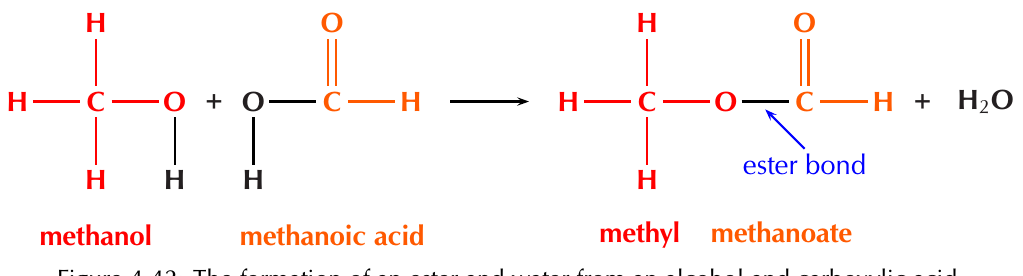
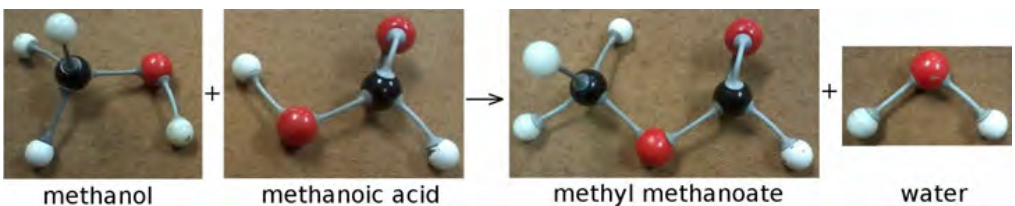
The esterification reaction:
For example: methanol + methanoic acid → methyl methanoate + water
Key characteristics of esters:
- Formed by condensation reactions between alcohols and carboxylic acids
- The reaction requires a catalyst (usually an inorganic acid like H₂SO₄)
- General formula:
- The bond linking the two parts is called an ester bond
Note
Common uses of esters:
- Cosmetics and fragrances: Most esters have pleasant, fruity smells making them ideal for perfumes and artificial flavourings
- Nail products: Found in nail varnish remover and model aeroplane glue
- Solvents: Effective at dissolving oils and resins because esters are less water-soluble than carboxylic acids
- Plasticisers: Make plastics less brittle and more flexible
Worked examples
Example
Worked Example 1: Identifying functional groups Question: Identify the functional group in CH₃CH₂CHO
Solution:
- Look at the end of the molecule: -CHO
- This is a carbonyl group (C=O) with a hydrogen attached
- The carbonyl is at the terminal position
- Answer: This is an aldehyde (specifically propanal)
Example
Worked Example 2: Writing structural formulas Question: Draw the structural formula for butanone
Solution:
- "Butanone" tells us: 4 carbons ("but-") and ketone functional group ("-one")
- Ketones have the carbonyl in the middle position
- Structure: CH₃-CO-CH₂-CH₃
- Answer: The carbonyl group is between the first and second carbon from either end
Example
Worked Example 3: Predicting reaction products Question: What happens when ethanol is oxidised in air?
Solution:
- Ethanol is an alcohol: CH₃CH₂OH
- Oxidation of alcohols produces carboxylic acids
- Answer: CH₃CH₂OH + O₂ → CH₃COOH + H₂O (ethanoic acid + water)
Example
Worked Example 4: Understanding esterification Question: What ester forms when ethanol reacts with ethanoic acid?
Solution:
- Ethanol: CH₃CH₂OH (alcohol)
- Ethanoic acid: CH₃COOH (carboxylic acid)
- In esterification: alcohol + acid → ester + water
- Answer: CH₃COOCH₂CH₃ (ethyl ethanoate) + H₂O
Example
Worked Example 5: Distinguishing aldehydes from ketones Question: How can you tell if C₄H₈O is an aldehyde or ketone?
Solution:
- Both aldehydes and ketones have the formula
- Cannot determine from molecular formula alone
- Need to examine structural formula:
- If carbonyl is at the end → aldehyde (butanal)
- If carbonyl is in the middle → ketone (butanone)
- Answer: Must look at the position of the C=O group
Exam tips
Summary
Key Exam Success Points:
- Remember the naming patterns: aldehydes end in "-al", ketones end in "-one", carboxylic acids end in "-oic acid"
- Functional group positions: aldehydes are always at the end, ketones are always in the middle
- Esterification requires a catalyst: usually concentrated sulfuric acid
- Oxidation reactions: alcohols can be oxidised to carboxylic acids
- Molecular formulas: aldehydes and ketones both have , so you need structural information to distinguish them
Remember!
Summary
Key Points to Remember:
-
Alkyl halides are hydrocarbons with hydrogen atoms replaced by halogens and have many industrial uses including fire extinguishers and refrigerants.
-
The carbonyl group (C=O) is the key functional group in aldehydes, ketones, carboxylic acids, and esters - its position determines the compound type.
-
Aldehydes have carbonyl groups at the end of carbon chains while ketones have them in the middle - both share the same molecular formula but differ in structure.
-
Carboxylic acids contain the -COOH group and can be formed by oxidising alcohols, which explains why wine turns to vinegar when exposed to air.
-
Esters form through condensation reactions between alcohols and carboxylic acids, producing compounds with characteristic fruity smells used in perfumes and flavourings.