DNA Technologies (HSC SSCE Biology): Revision Notes
📚Revision Notes
DNA Technologies
Introduction
In 2003, scientists completed the Human Genome Project (HGP), which sequenced the first complete human genome. This publicly funded project, led by James Watson (co-discoverer of DNA's structure), made all data freely available online for scientific use. The genome sequenced was actually a mosaic from multiple individuals rather than one person.
A commercial company called Celera Genomics sequenced a second human genome in 2008.
These projects have revolutionised our understanding of genetics, including:
- Genetic disorders
- Disease diagnosis
- Predisposition to disease
- Individualised medical treatment
Important
However, this knowledge also raises important ethical questions about privacy and potential discrimination by employers and insurance companies. These concerns continue to shape policy discussions around genetic testing today.
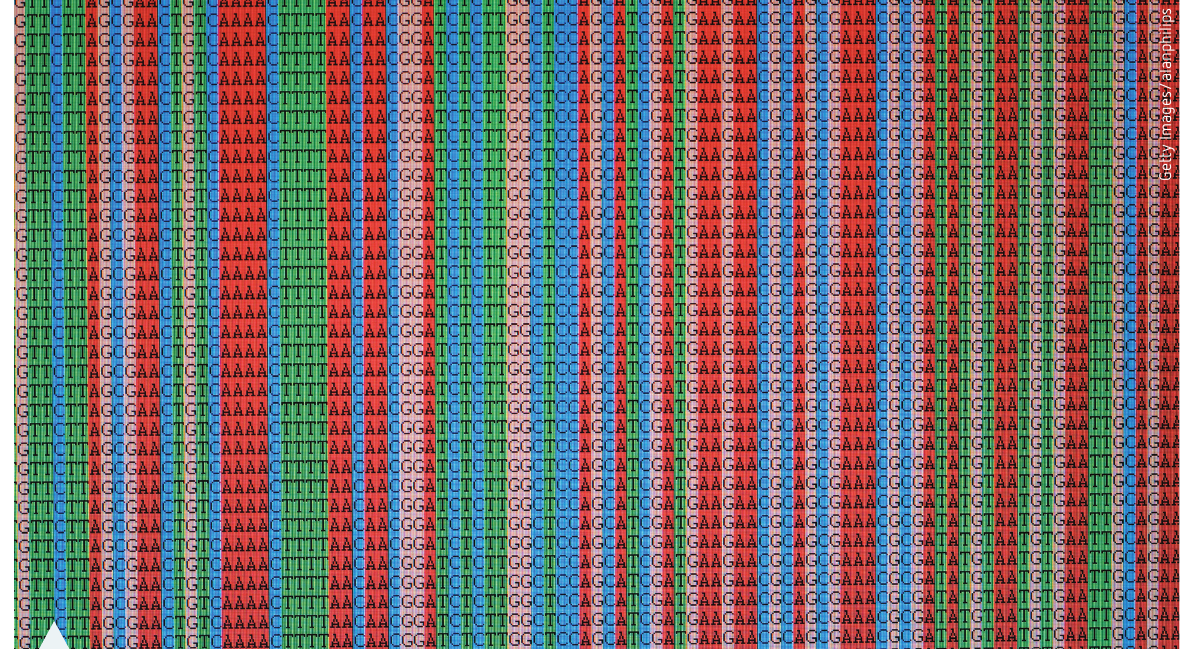
The Human Genome Project revealed approximately 3 billion base pairs making up roughly 21,000 genes across all chromosomes. It also identified information about approximately 4,000 genetic disorders.
What are DNA technologies?
After Watson and Crick discovered DNA's structure, scientists developed techniques to analyse DNA in detail. The two main DNA technologies are:
- DNA sequencing: Determining the precise order of nucleotides (bases A, T, G, C) in a DNA sample
- DNA profiling: Determining an organism's unique DNA profile, represented as a distinct series of bands
DNA sequencing
DNA sequencing allows scientists to read the exact sequence of bases in a gene. There are several methods available.
The Sanger method
The Sanger method, also called dideoxy DNA (ddDNA) sequencing, was developed by British biochemist Fred Sanger. When fully automated, this method can sequence approximately 1,000 bases per second.
Example
The Sanger Method: Step-by-Step Process
-
DNA isolation and replication: DNA is extracted from cells and copied using PCR (polymerase chain reaction)
-
Strand separation: Double-stranded DNA is heated to separate into single strands
-
Primer binding: A small DNA fragment called a primer attaches to the start of the single DNA strand
-
DNA synthesis: DNA polymerase builds the complementary strand using the template and free nucleotides
-
Chain termination: Special nucleotides called dideoxynucleotide triphosphates (ddNTPs) are added to the mixture. There are four types:
- ddATP
- ddTTP
- ddCTP
- ddGTP
These ddNTPs are "chain-terminating" because once they attach to the complementary base, no more nucleotides can be added to that strand.
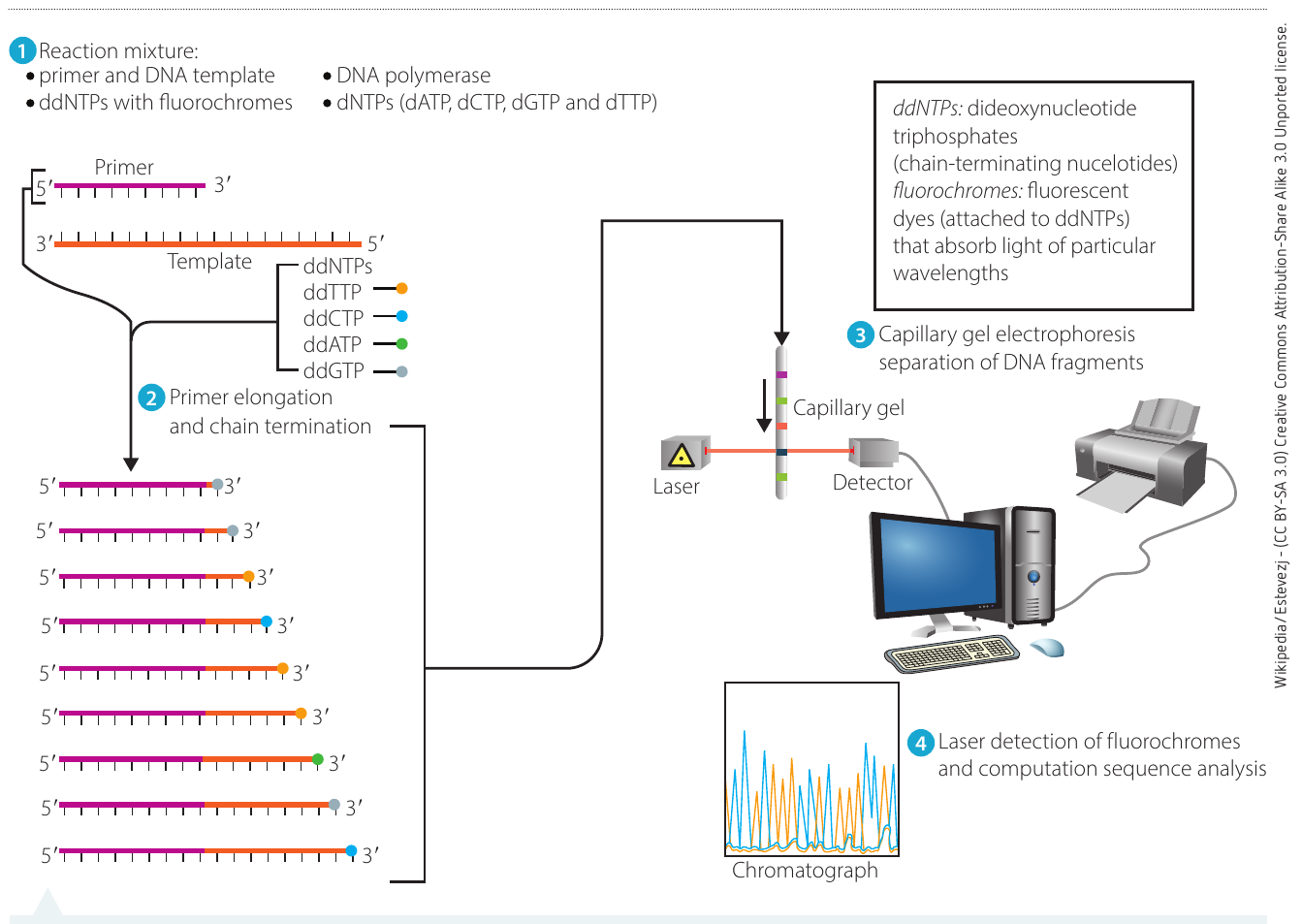
- Fluorescent labelling: Each type of ddNTP is labelled with a different coloured fluorescent dye. When a ddNTP randomly joins the growing DNA chain, it stops the chain and marks it with its specific colour
- Capillary gel electrophoresis: The DNA fragments are placed in a tiny gel-filled capillary tube. An electric current pulls the fragments through the gel. Shorter fragments move faster and emerge first, while longer fragments move more slowly
- Laser detection: As fragments emerge from the gel, a laser beam makes them fluoresce (glow). The colour of fluorescence depends on which base is at the end of the fragment
- Computer analysis: A computer detects the colours and creates a chromatogram showing the sequence of bases in the original DNA
Note
Important terms:
- Primer: A short DNA sequence that binds to the start of the DNA strand being sequenced
- ddNTPs: Chain-terminating nucleotides that stop DNA synthesis when incorporated
- Fluorochromes: Fluorescent dyes attached to ddNTPs that absorb light at specific wavelengths
- Capillary gel electrophoresis: Technique to separate DNA fragments by size using a gel-filled tube and electric current
The Maxam-Gilbert method
The Maxam-Gilbert method uses chemical reactions to sequence DNA. Although developed around the same time as the Sanger method, it's no longer widely used for routine sequencing because it:
- Is more complex
- Uses hazardous chemicals
However, it still has applications in studying DNA structure and modifications.
How the Maxam-Gilbert method works:
- Radioactive labelling: A radioactive phosphorus atom (P) is added to one end of the DNA strand
- Base-specific reactions: Chemicals are applied that target specific bases (either pyrimidines C and T, or purines A and G)
- Strand cleavage: The targeted base is removed from its sugar, and the DNA strand is cut at that position
- Gel electrophoresis: DNA fragments of different lengths are separated by size. Shorter strands travel further through the gel
- Pattern comparison: The process is repeated for each base type. By comparing all the patterns, the complete DNA sequence can be determined
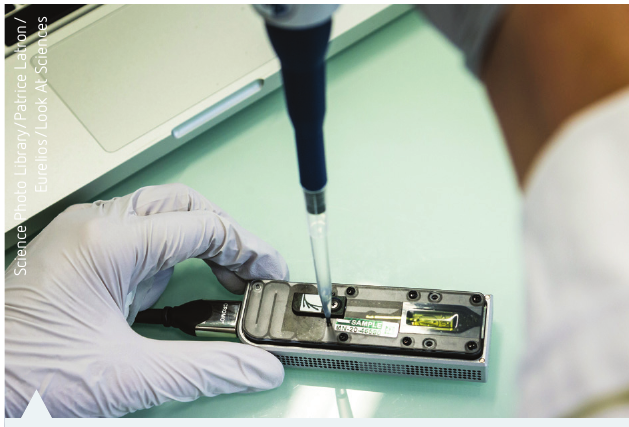
Next-generation technologies
Modern sequencing technologies are faster, cheaper, and more efficient than earlier methods. They can:
- Use shorter DNA lengths
- Sequence many fragments simultaneously
- Process data much faster
Example
Nanopore Sequencing Technology
This technology works by:
- Using a motor protein to push DNA molecules through a nanometre-sized pore (nanopore) in a membrane
- Measuring the electrical current as DNA passes through the pore
- Identifying bases based on how they affect the current
Key features:
- Can control up to 2,048 individual nanopores simultaneously
- Can process 450 base pairs per second per nanopore
- The Human Genome Project cost almost $100 million; by 2018, sequencing a genome with this technology cost significantly less
DNA profiling
DNA profiling (also called DNA fingerprint analysis) is a technique used to identify individuals by analysing unique characteristics in their DNA. It was developed by Sir Alec Jeffreys.
Applications include:
- Forensic investigations
- Paternity testing
- Other biological identifications
Important
The chance of two unrelated people having the same DNA profile is less than one in one billion.
How DNA profiling works
Key fact: While 99.9% of DNA is identical in all humans, there are unique sections called STRs that vary between individuals.
Note
STRs (Short Tandem Repeats):
- Sections of non-coding DNA
- Contain repeated sequences (for example, TATATATATA)
- The number of repeats varies between individuals
- Each person has two alleles for each STR (one from each parent)
DNA profiling process:
- DNA isolation: Extract DNA from nucleated cells (saliva, blood, or cheek cells)
- PCR amplification: Use polymerase chain reaction (PCR) to increase the amount of DNA
- Gel electrophoresis: Separate DNA fragments by size
- Smaller fragments (fewer repeats) migrate further through the gel
- Larger fragments (more repeats) migrate less far
- Pattern analysis: Compare the banding patterns between samples
Example
Paternity Testing
In paternity testing, DNA profiles are compared:
- The child's bands should match some bands from the mother
- The remaining child's bands should match the biological father
- If bands don't match a suspected father, he is excluded
This process provides highly accurate results due to the unique nature of STR patterns inherited from both parents.

Investigation: Guira cuckoo families
The guira cuckoo is a bird species with interesting breeding behaviour:
- They lay eggs in communal nests
- All group members share nest building and incubation
- Females may raise chicks from eggs they didn't lay themselves
DNA profiling can determine whether female cuckoos are raising their own biological offspring or acting as "social mothers" to unrelated chicks.
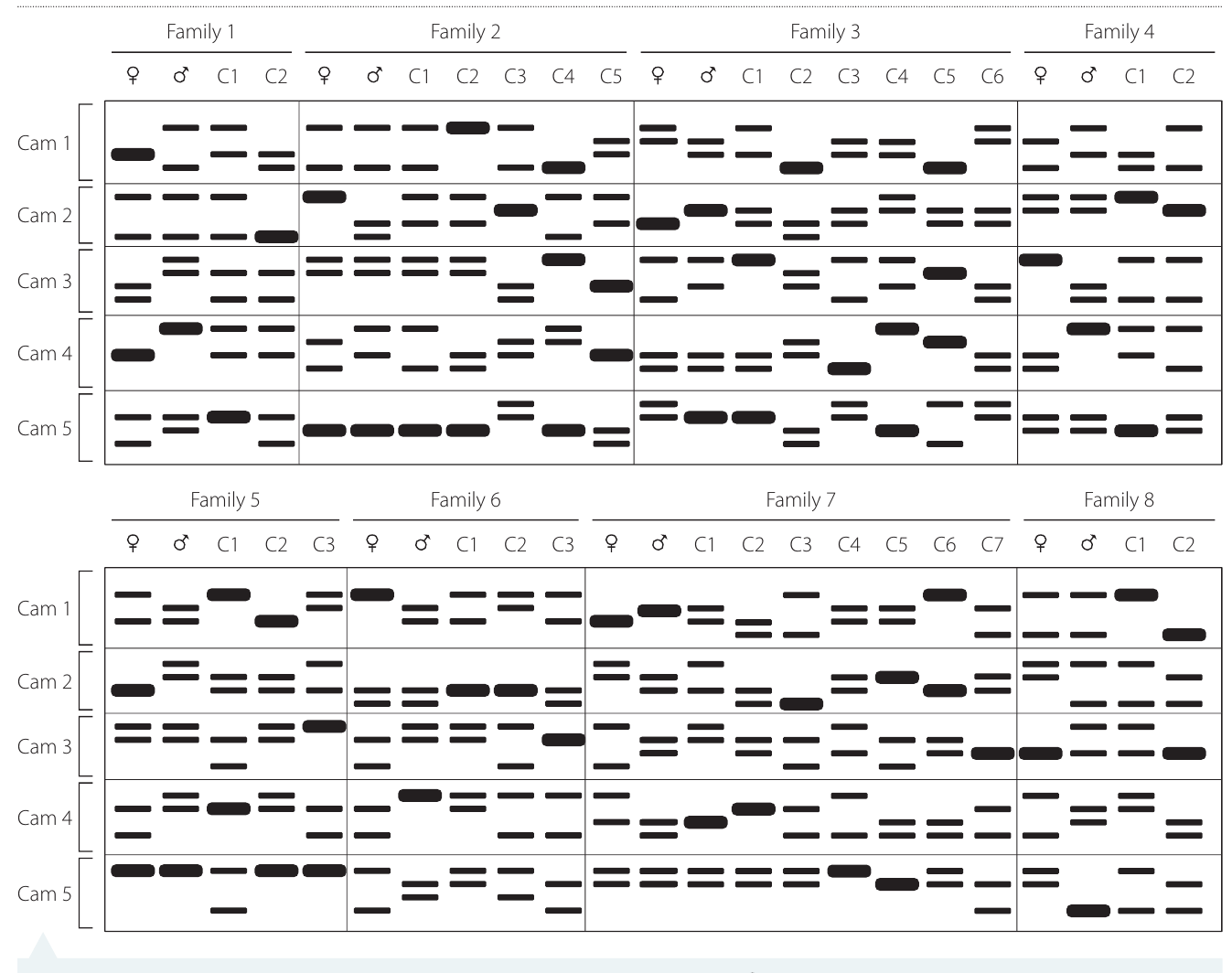
How to analyse the data:
- Compare DNA bands between mother and chicks for each STR marker (Cam1 through Cam5)
- Each chick should have one allele matching the biological mother and one from the biological father
- If a chick shares at least one band with the mother at every STR location, the mother is likely the biological mother
- If bands don't match across multiple STRs, the chick is being raised by a "social mother"
Note
Analysis shows:
- Some families contain only biological offspring
- Other families include "non-family chicks" raised by social mothers
- This cooperative breeding may help ensure species survival
Ethical considerations
DNA technology raises important ethical questions that society continues to grapple with as the technology becomes more accessible and widespread.
Privacy and ownership
Important
Critical Questions:
- Who owns the genetic information obtained?
- Who can access the data?
- Should results be shared with third parties?
These questions have no simple answers and vary by jurisdiction and context.
Genetic disorders
Consider someone carrying genes for Huntington's chorea:
- A progressive brain disorder causing uncontrolled movements, emotional problems, and cognitive loss
- Caused by a dominant mutated HTT gene
- Symptoms don't appear until someone is in their thirties or forties
Important
Questions arise:
- Would you want to know you'll develop this condition?
- What about children of affected individuals—should they be tested?
- How might this knowledge affect life planning and mental health?
Insurance discrimination
Current situation in Australia:
- Life insurance applicants must disclose genetic test results if asked
- Insurers can use results to charge higher premiums or deny coverage
- This may deter people from genetic testing or participating in medical research
Note
Other countries have protected consumers by restricting or banning the use of genetic information for insurance purposes, recognizing the potential for discrimination.
Gene patents
- Some companies have tried to patent gene mutations (e.g., BRCA1 and BRCA2)
- Patents could prohibit future research and development
- This might stifle scientific progress
- In 2013, a US court ruled that genes cannot be patented, overturning thousands of patents
Summary
Key Points to Remember:
-
DNA sequencing determines the exact order of nucleotides (A, T, G, C) in a gene using methods like Sanger, Maxam-Gilbert, or next-generation technologies
-
DNA profiling identifies individuals using unique DNA characteristics, particularly STRs (short tandem repeats)
-
STRs are repeated DNA sequences in non-coding regions that vary in length between individuals—each person has two alleles for each STR location
-
PCR (polymerase chain reaction) is essential for amplifying DNA samples before analysis
-
Gel electrophoresis separates DNA fragments by size—shorter fragments travel further than longer ones
-
Ethical considerations around DNA technologies include privacy concerns, potential discrimination, and questions about gene ownership and patents