Genetic Engineering (HSC SSCE Biology): Revision Notes
📚Revision Notes
Genetic Engineering
Genetic engineering offers powerful tools to prevent various types of non-infectious diseases and disorders. By manipulating genes, scientists can prevent genetic diseases through pre-implantation testing, address nutritional deficiencies through modified crops, and create vaccines that protect against certain cancers. Whilst these technologies show great promise, they also raise important ethical questions that need careful consideration.
What is genetic engineering in disease prevention?
Genetic engineering involves modifying or manipulating genetic material to achieve specific outcomes. In the context of disease prevention, this technology can be applied in several ways:
- Testing embryos before implantation to prevent genetic diseases from being passed on
- Creating crops that contain essential nutrients to prevent nutritional deficiencies
- Producing vaccines that protect against viruses linked to cancer development
- Identifying genetic predispositions to diseases so preventive measures can be taken
Each application uses different genetic engineering techniques, but all share the common goal of preventing disease before it occurs. This proactive approach is generally more effective and less costly than treating diseases after they develop.
Note
The shift from reactive treatment to proactive prevention represents a fundamental change in how we approach healthcare. By preventing diseases before they occur, genetic engineering has the potential to reduce both human suffering and healthcare costs significantly.
Pre-implantation genetic testing
Pre-implantation genetic testing (PGT) is a procedure that allows parents who carry genes for serious genetic conditions to have children free from those conditions. This technique combines reproductive technology with genetic engineering to screen embryos before pregnancy begins.
How PGT works
The PGT process involves several carefully coordinated steps:
Example
The PGT Process: Step-by-Step
Step 1: In Vitro Fertilisation (IVF) Eggs are collected from the mother and fertilised with the father's sperm in a laboratory setting. The fertilised eggs develop into embryos over three days until they reach the eight-cell stage.
Step 2: Cell Removal A specialist carefully removes a single cell from each embryo for testing.
Step 3: Genetic Testing The cell is tested using array comparative genomic hybridisation (aCGH), a sophisticated method that can:
- Detect the presence of specific gene mutations
- Determine whether the embryo is a carrier of a genetic condition
- Identify chromosomal abnormalities
Step 4: Selection and Implantation Embryos that test free of the genetic disease or are carriers (but won't develop the disease themselves) are retained for implantation. Those that would develop the disease are either destroyed or used for research purposes.
Step 5: Pregnancy On day five, one of the healthy embryos is implanted into the mother's uterus, whilst others may be frozen for potential future use. The pregnancy then proceeds normally, and the baby is born without the genetic condition.
Conditions that can be prevented
PGT can screen for a wide range of single-gene disorders, including:
- Cystic fibrosis
- Huntington disease
- Thalassaemia
- Muscular dystrophy
- Various conditions affecting hearing, such as mutations in genes involved in cochlear function
Important
This technique is effective in preventing the specific genetic disease being tested for, provided the testing is accurate and a healthy embryo is successfully implanted.
Ethical considerations
The use of PGT raises several important ethical questions that society continues to debate:
Embryo selection and disposal: The process involves creating multiple embryos and selecting only some for implantation. Embryos that carry genetic diseases are typically destroyed or used for research, which raises questions about the moral status of embryos.
Access and equity: PGT combined with IVF is expensive, meaning it may only be accessible to wealthier families. This raises concerns about health equity and whether genetic disease prevention should be available to all.
Scope of testing: Questions arise about what conditions should be tested for. Should PGT only be used for serious, life-threatening conditions, or could it be extended to less severe conditions or even non-medical traits?
Gender selection: The technology could potentially be used to select embryos based on gender, which raises concerns about social implications and the potential for discrimination.
Note
These ethical considerations need to be weighed against the effectiveness of PGT in preventing serious genetic diseases and the suffering they cause. Society must balance the potential to prevent devastating genetic conditions with concerns about embryo selection, equity, and the appropriate scope of genetic testing.
Using genetic engineering to prevent nutritional diseases
In many developing countries, populations suffer from diseases caused by vitamin and nutrient deficiencies. This occurs because their staple foods lack certain essential nutrients. Genetic engineering offers a potential solution by creating crops that contain these missing vitamins and minerals.
Golden rice: a case study
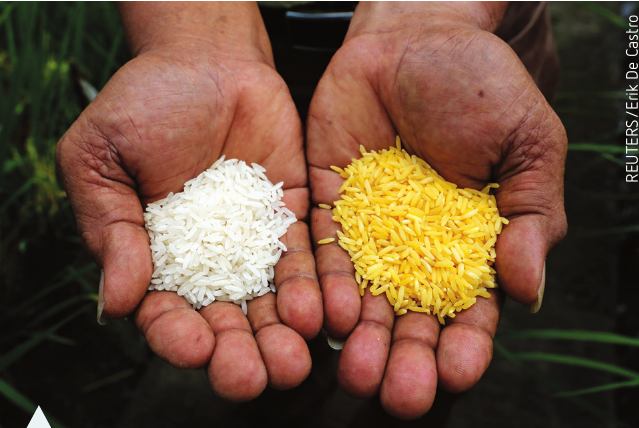
Golden rice represents one of the most well-known attempts to use genetic engineering to prevent nutritional disease. This modified rice addresses vitamin A deficiency, a serious public health problem in many parts of Africa and Asia.
The vitamin A deficiency problem
Vitamin A plays crucial roles in maintaining vision and supporting the immune system. When people don't get enough vitamin A in their diet, serious health consequences follow:
- Approximately to children in Africa and Asia become blind each year due to vitamin A deficiency
- Around two million people die annually from diseases they would normally survive, because vitamin A deficiency has weakened their immune systems
Important
These stark statistics highlight the urgent need for solutions to vitamin A deficiency in populations whose staple diet consists primarily of rice. The scale of preventable blindness and death makes this a critical global health priority.
How golden rice works
Scientists have genetically modified rice to produce beta-carotene, which the human body converts into vitamin A. This modification involved inserting two genes into the rice plant:
- One gene from maize
- One gene from a soil bacterium
These inserted genes enable the rice to synthesise beta-carotene, which gives the rice its distinctive golden-yellow colour. When people eat golden rice, their bodies use the beta-carotene to produce vitamin A, potentially preventing blindness and strengthening immune function.
Challenges and progress
The development of golden rice has faced several obstacles:
Lower yields: Early versions produced smaller harvests compared to traditional rice varieties, making farmers reluctant to adopt it.
Opposition to genetically modified foods: Organisations such as Greenpeace have opposed golden rice as part of broader concerns about genetically modified organisms in the food supply.
Testing and approval: The rice required extensive testing to ensure safety and effectiveness before it could be released to the public.
Note
Despite these challenges, the Bill and Melinda Gates Foundation has supported continued development, and golden rice was finally released in Bangladesh in 2018. If successful in real-world conditions, this genetically engineered crop will effectively prevent diseases and disorders caused by vitamin A deficiency.
Genetic engineering as a screening tool for disease susceptibility
Modern genetic engineering techniques have revolutionised our understanding of non-infectious diseases and how to prevent them. Two major advances in this area are the mapping of the human genome through the Human Genome Project and Genome Wide Association Studies (GWAS).
Identifying genetic predispositions
By using genetic engineering techniques, scientists can identify gene mutations that increase a person's risk of developing certain non-infectious diseases. This information proves invaluable for disease prevention because:
Early intervention becomes possible: When people know they carry genetic variants that increase disease risk, they can take preventive measures earlier.
Targeted screening programmes: Health services can focus screening efforts on people at higher genetic risk, making programmes more efficient and cost-effective.
Personalised prevention strategies: Understanding genetic risk allows for tailored lifestyle recommendations and monitoring plans specific to each individual's needs.
Planning and policy development: Population-level genetic data helps health authorities develop appropriate prevention strategies and allocate resources effectively.
Note
This approach shifts healthcare from reactive treatment to proactive prevention, potentially reducing both disease burden and healthcare costs. The ability to identify individuals at risk before symptoms appear represents a fundamental advancement in preventive medicine.
Genetic engineering to produce vaccines to prevent some cancers
Some cancers are caused by viral infections, and preventing these infections can effectively prevent the associated cancers. Genetic engineering plays a crucial role in producing vaccines against these cancer-causing viruses.
HPV vaccines
The human papilloma virus (HPV) causes the majority of cervical cancer cases and contributes to several other cancers, including anal, throat and genital cancers. Vaccines produced using genetic engineering techniques—such as Gardasil® and Cervarix®—can prevent HPV infection.
These vaccines work by training the immune system to recognise and fight HPV before it can establish an infection. When administered before individuals become sexually active (the primary route of HPV transmission), these vaccines are nearly effective in preventing cervical cancer and other HPV-related cancers.
Hepatitis B vaccine
Similarly, people with long-term hepatitis B virus infections face a much greater risk of developing liver cancer. The vaccine to prevent hepatitis B infection, produced using genetic engineering techniques, significantly lowers the risk of liver cancer for many individuals.
Important
Vaccines against cancer-causing viruses represent one of the most successful applications of genetic engineering in disease prevention. By preventing viral infections, these vaccines eliminate the root cause of certain cancers, demonstrating the power of prevention over treatment.
Benefits and risks of genetic engineering in disease prevention
When evaluating genetic engineering approaches to disease prevention, it's important to consider both potential benefits and risks:
| Benefits | Risks |
|---|---|
| Highly effective prevention of serious genetic diseases | Ethical concerns about embryo selection and disposal |
| Ability to prevent nutritional deficiencies in vulnerable populations | Potential for unintended environmental consequences from transgenic crops |
| Nearly complete prevention of certain cancers through vaccination | Concerns about safety and long-term effects of genetically modified foods |
| Empowers individuals with information about genetic predispositions | Raises questions about genetic privacy and potential discrimination |
| Reduces suffering and healthcare costs | May only be accessible to wealthier populations, creating health inequities |
| Provides alternatives to pregnancy termination after genetic diagnosis | Possible misuse of technology for non-medical selection |
Note
These benefits and risks must be carefully balanced when making decisions about implementing genetic engineering technologies for disease prevention. Each application requires thorough evaluation of its effectiveness, accessibility, safety, and ethical implications before widespread adoption.
Remember!
Summary
Key Points to Remember:
-
Genetic engineering provides several powerful tools for preventing non-infectious diseases, including PGT, transgenic crops, vaccines, and screening for genetic predispositions.
-
Pre-implantation genetic testing is effective in preventing genetic diseases by testing embryos before implantation, but raises important ethical questions about embryo selection and disposal.
-
Golden rice and other transgenic crops can prevent nutritional diseases by incorporating essential nutrients into staple foods, though they face challenges with yields and public acceptance.
-
Vaccines produced through genetic engineering, such as those for HPV and hepatitis B, are highly effective at preventing virus-related cancers when administered appropriately.
-
Whilst genetic engineering offers significant benefits for disease prevention, each application requires careful consideration of ethical implications, accessibility, and potential risks alongside its effectiveness.