Appreciation and Inflation (HSC SSCE Mathematics Standard): Revision Notes
📚Revision Notes
Appreciation and Inflation
Understanding how values change over time is essential for making smart financial decisions. Two important concepts help us track these changes: appreciation (when things increase in value) and inflation (when prices rise). Both use similar mathematical formulas, but they describe different economic phenomena.
Appreciation
What is appreciation?
When assets like artwork, gold, or property grow in value over time, we call this appreciation. This increase is typically expressed as a rate of appreciation, showing the percentage by which the asset's value grows each year.
Calculating appreciation works similarly to calculating compound interest. The value doesn't just increase by a fixed amount each year – instead, it grows based on the new, higher value each period. This creates an accelerating growth pattern.
Note
Appreciation uses compound growth, meaning each period's increase is calculated on the previous period's higher value. This is why the dollar amount of appreciation grows over time, even when the percentage rate stays the same.
How appreciation works
Consider a painting initially worth $100,000 with an annual appreciation rate of 10%. Here's what happens:
- After Year 1: The painting increases by $10,000, making it worth $110,000
- After Year 2: The 10% increase is now calculated on $110,000, giving an increase of $11,000
Notice that the amount of appreciation increased from $10,000 to $11,000. This happens because each year's growth is calculated on the previous year's higher value, creating compound growth.

The appreciation formula
To calculate the future value of an appreciating asset, use this formula:
Alternatively written as:
Where:
- = Future value of the item (what it will be worth)
- = Present value of the item (what it's worth now)
- = Rate of appreciation per compounding period (expressed as a decimal)
- = Number of compounding time periods
Important
Remember to convert percentages to decimals. For example, 9% becomes . This is one of the most common mistakes students make!
Worked example: Finding appreciated value
Example
Worked Example: Property Appreciation
Question: Joel bought a unit for $690,000. If the unit appreciates at 9% per annum, what is its value after 7 years? Answer to the nearest dollar.
Solution:
Step 1: Write the appreciation formula.
Step 2: Identify and substitute the values.
(initial purchase price)
(9% expressed as a decimal)
(number of years)
Step 3: Calculate the result.
Step 4: Round to the nearest dollar.
Answer: The unit is valued at $1,261,347 after 7 years.
Inflation
What is inflation?
Inflation refers to the rise in prices of goods and services over time. When inflation occurs, the same amount of money buys fewer items than before, meaning your spending power decreases.
Inflation is measured using the Consumer Price Index (CPI), which tracks the prices of a fixed basket of goods and services. This basket includes everyday items like food, clothing, housing, and transportation. By comparing the cost of this basket over time, economists can determine how much prices have increased.
Note
The CPI is calculated by monitoring a "fixed basket of goods" – a standard set of items that represents typical household purchases. When this basket becomes more expensive, it indicates that inflation is occurring.
The Reserve Bank's role
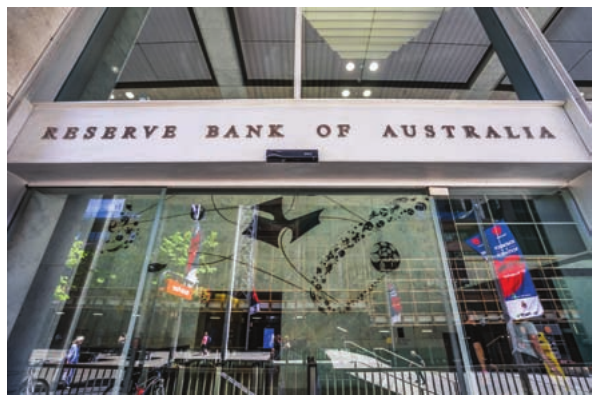
In Australia, the Reserve Bank manages monetary policy and aims to keep the inflation rate within a target band of 2% to 3% per annum. This moderate inflation rate is considered healthy for the economy – too low can indicate economic problems, whilst too high erodes spending power too quickly.
Important
The Reserve Bank of Australia targets a 2-3% inflation rate. This is a crucial economic indicator – too much inflation reduces your money's purchasing power, while too little can signal economic stagnation.
The inflation rate
The inflation rate is the annual percentage change in the CPI. This tells us how much prices have increased over a year. For example, an inflation rate of 2.6% means that on average, prices are 2.6% higher than they were a year ago.
Calculating inflation
Working out how inflation affects prices uses the same formula as appreciation:
Where:
- = Future price of the item
- = Present (current) price
- = Inflation rate per period (as a decimal)
- = Number of time periods
Worked example: Price changes with inflation
Example
Worked Example: Inflation Impact on Prices (Part a)
Question: What is the price of a $650 clothes dryer after one year following inflation? (Inflation rate is 2.6% p.a.)
Solution:
Step 1: Write the inflation formula.
Step 2: Identify and substitute the values.
(current price)
(2.6% as a decimal)
(one year)
Step 3: Evaluate the expression.
Answer: The clothes dryer will cost $666.90 after one year.
Example
Worked Example: Inflation Impact on Prices (Part b)
Question: What is the price of a $400 clothes dryer after three years following inflation? (Inflation rate is 3.2% p.a.)
Solution:
Step 1: Write the inflation formula.
Step 2: Identify and substitute the values.
(current price)
(3.2% as a decimal)
(three years)
Step 3: Evaluate the expression.
Answer: The clothes dryer will cost $439.64 after three years.
Exam tips
Important
Essential Exam Strategies:
- Always convert percentages to decimals before substituting into the formula
- Check whether you're calculating appreciation (asset values increasing) or inflation (prices increasing) – the formula is the same but the context differs
- Round your final answer appropriately (usually to the nearest dollar or cent)
- Remember that both appreciation and inflation use compound growth – the increase each period is based on the new, higher value
- Write your final answer in words with units (dollars) for full marks
Remember!
Summary
Key Points to Remember:
- Appreciation is when assets like property, art, or gold increase in value over time using the formula
- Inflation is when the prices of goods and services rise, reducing spending power. It's measured by the Consumer Price Index (CPI)
- The Reserve Bank of Australia targets an inflation rate of 2% to 3% per annum
- Both appreciation and inflation calculations use the same compound growth formula:
- Always express the rate () as a decimal, not a percentage, when substituting into the formula