Shares and Dividends (HSC SSCE Mathematics Standard): Revision Notes
📚Revision Notes
Shares and Dividends
What are shares?
When you purchase a share (also called a stock), you become a partial owner of a company. This ownership gives you certain rights, including the ability to receive a portion of the company's profits.
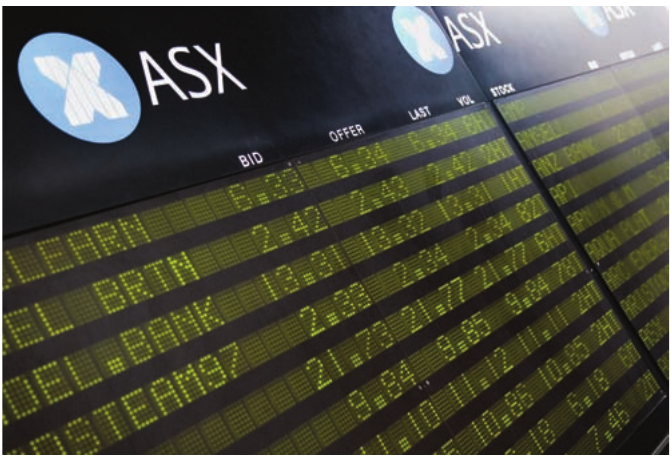
Shares are bought and sold through a stock market or stock exchange. In Australia, the primary stock exchange is the ASX (Australian Securities Exchange). The ASX serves as a platform where investors can trade shares and access important information about companies, including current share prices, market data, and investment resources.
Note
The ASX is Australia's primary marketplace for trading shares. It operates electronically, allowing rapid transactions and real-time price updates. The exchange provides transparency and regulation to ensure fair trading practices.
Important share price terms
Understanding share pricing requires familiarity with several key terms:
- Face value: This is the initial price assigned to a share when a company is first listed on the ASX. Think of it as the starting price.
- Market price: This represents the current price of a share at any given moment. It reflects what buyers are willing to pay right now.
- Cost price (or issued price): This is the amount you actually pay when purchasing a share.
- Selling price: This is the amount you receive when you sell a share.
Note
These different price terms exist because share values constantly change based on company performance and market conditions. Understanding the distinction between these terms is essential for calculating profits, losses, and total transaction costs.
How share prices work
Share prices are dynamic and can change frequently - sometimes from day to day, or even minute to minute. These fluctuations reflect the ongoing buying and selling activity in the market, as well as news about the company's performance.
You can monitor these changes through various channels. The ASX website displays current share prices in tables and provides charts (graphs) showing price movements over time. These charts also indicate the volume of shares being traded, giving you insight into market activity.
Buying and selling shares
To buy or sell shares, you need to use a broker. A broker is a licensed professional or service (such as CommSec) that facilitates share transactions on your behalf.
Costs involved in share trading
When you trade shares, you'll encounter two main costs:
- Brokerage fee: This is the fee charged by the broker for their service. It may be a flat fee or calculated as a percentage of the transaction value.
- GST (Goods and Services Tax): A 10% GST is added to the brokerage fee when buying or selling shares in Australia.
Important
These costs must be factored into your calculations when determining the total cost of purchasing shares or the net proceeds from selling shares. Many students forget to include brokerage fees in their calculations, leading to incorrect answers!
Example
Worked Example: Calculating the Total Cost of Shares
Question: Lucy bought shares at a market value of $6.80 each. Brokerage fees incurred were $33 including GST. What is the total cost of purchasing the shares?
Solution:
To find the total cost, we need to add the cost of the shares to the brokerage fee.
Step 1: Write the formula.
Step 2: Substitute the values.
Number of shares
Price per share
Brokerage fee
Step 3: Calculate.
Answer: The total cost of purchasing the shares is $3433.
Exam tip: Always remember to include brokerage fees in your calculations. Don't just multiply the number of shares by the price - the fees are part of the total cost!
Understanding dividends
As a shareholder, you're entitled to receive a portion of the company's profits. This payment is called a dividend.
A dividend can be expressed in two ways:
- As a specific amount per share (e.g., 62 cents per share)
- As a percentage of the issued price
When are dividends paid?
Companies typically pay dividends twice per year:
- Interim dividend: Paid mid-year
- Final dividend: Paid at the end of the financial year
Note
The timing of dividend payments is important for investors. The "Ex Dividend Date" shown in dividend tables indicates the cutoff date - you must own the shares before this date to receive the upcoming dividend payment.
The table below shows a real example of dividend payments over three years:
| Type | Cents per share | Frank % | Ex Dividend Date | Dividend Pay Date |
|---|---|---|---|---|
| Interim | 62.00 | 100 | 8/5/2018 | 1/7/2018 |
| Final | 74.00 | 100 | 8/11/2017 | 21/12/2017 |
| Interim | 62.00 | 100 | 14/5/2017 | 2/7/2017 |
| Final | 69.00 | 100 | 9/11/2016 | 15/12/2016 |
| Interim | 56.00 | 100 | 15/5/2016 | 3/7/2016 |
Notice how the interim dividends (paid mid-year) and final dividends (paid at year's end) vary based on company performance.
What is dividend yield?
The dividend yield represents the annual rate of return you earn from dividends relative to the share price. It helps you understand how much income you're receiving from your investment as a percentage.
The dividend yield is calculated by dividing the total annual dividend by the share's current market price, then converting to a percentage.
Calculating dividends
Key formulas
To work with dividends, you need to understand two important formulas:
Formula 1: Calculating dividend yield
Formula 2: Calculating dividend amount
Note
These formulas allow you to work in either direction - finding the yield if you know the dividend, or finding the dividend if you know the yield. They are inverse operations of each other.
Example
Worked Example: Dividend Calculations
Question: The share price of a company is $28.42.
a) The predicted dividend yield is . What would be the dividend?
b) The company decides to pay a dividend of $1.12. What is the dividend yield?
Solution:
Part a: Finding the dividend from the yield
Step 1: Identify what we need to find.
We need to calculate the dividend using the dividend yield and market price.
Step 2: Convert the percentage to a decimal and set up the calculation.
Dividend yield
Market price
Step 3: Calculate the result.
Rounding to two decimal places:
Answer: The dividend is $0.99 per share.
Part b: Finding the dividend yield from the dividend
Step 1: Write the formula.
Step 2: Substitute the known values.
Annual dividend
Market price
Step 3: Calculate the result.
Answer: The dividend yield is 3.94%.
Exam tip: When calculating dividend yield, remember to multiply by to convert the decimal to a percentage. When calculating the dividend amount, remember to convert the percentage to a decimal first by dividing by .
Summary
Key Points to Remember:
-
Shares represent partial ownership in a company and can be bought and sold on the stock exchange (ASX in Australia).
-
Four key price terms to know: face value (initial listing price), market price (current price), cost price (purchase amount), and selling price (sale amount).
-
Always include brokerage fees and GST when calculating the total cost of buying shares. The formula is:
-
Dividends are profit payments to shareholders, typically paid twice yearly as interim and final dividends, expressed as cents per share or as a percentage.
-
Two key dividend formulas:
- Remember to convert percentages to decimals when calculating!