Viral Replication (AQA A-Level Biology): Revision Notes
📚Revision Notes
Viral Replication
Viral replication is the process by which viruses reproduce within host cells. Unlike cellular organisms, viruses cannot replicate independently and must hijack the cellular machinery of their host to produce new viral particles.
Note
Understanding viral replication is crucial for comprehending how viruses spread and cause disease, as well as for developing antiviral treatments and vaccines.
The viral replication cycle
The replication of viruses follows a systematic process that can be broken down into several distinct stages. Understanding this cycle helps explain why viruses are considered non-living entities, as they depend entirely on living cells for reproduction.
- Attachment and entry
- Genetic material processing
- Assembly and release
Attachment and entry
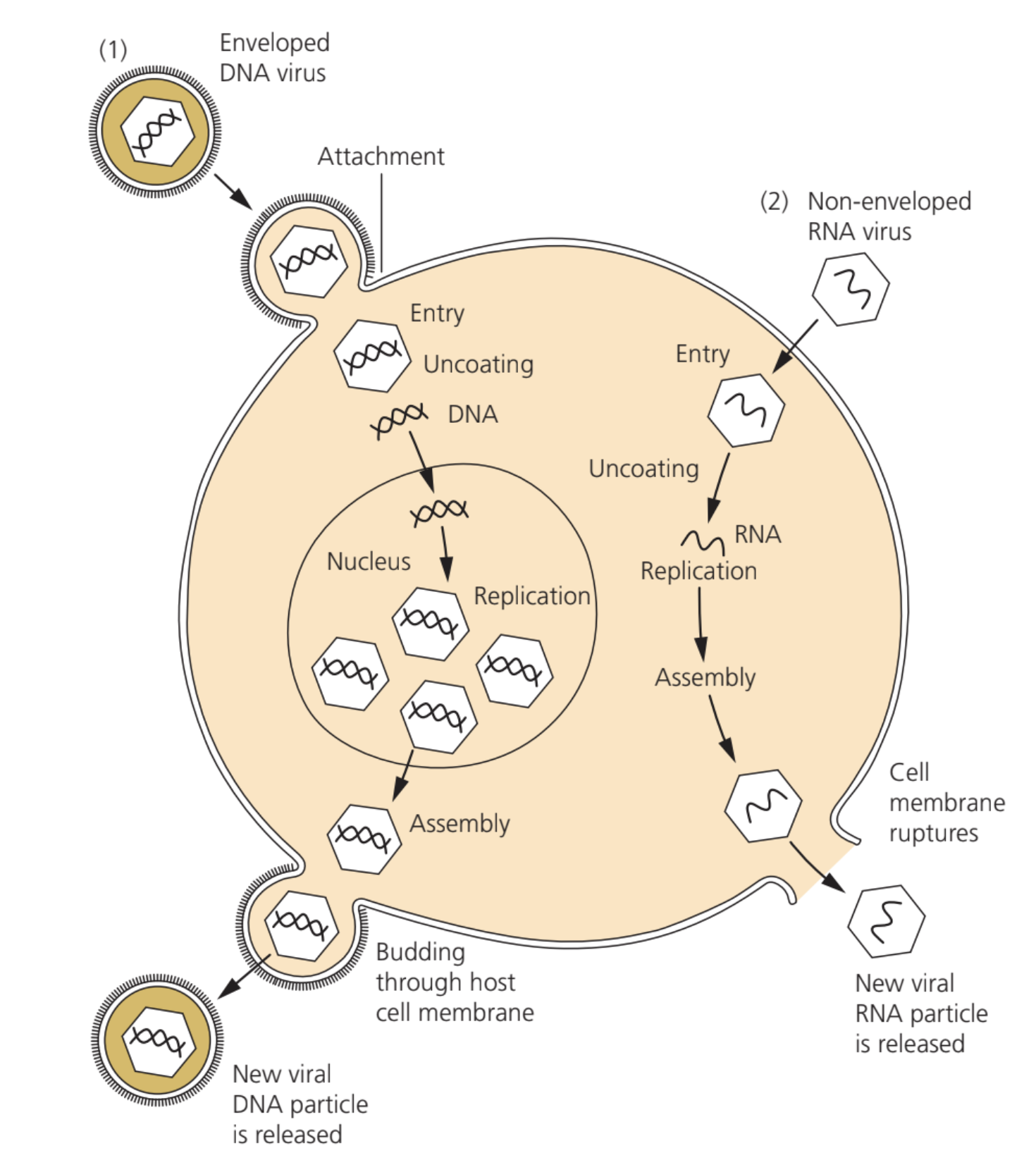
The replication cycle begins when a virus encounters a suitable host cell. The viral attachment protein on the virus surface binds specifically to complementary proteins on the cell membrane of the host cell. This specificity determines which types of cells a particular virus can infect.
Once attached, the virus gains entry into the host cell through various mechanisms. During this process, the capsid (the protein shell surrounding the viral genetic material) is removed, releasing the viral genetic material into the host cell's cytoplasm.
Important
The specificity of viral attachment proteins for particular cell membrane receptors explains why certain viruses can only infect specific types of cells or organisms.
Genetic material processing
The fate of the viral genetic material depends on its type. If the viral genetic material is RNA, it travels directly to the ribosomes within the host cell. Here, the ribosomes begin producing enzymes and proteins according to the instructions encoded in the viral RNA.
Alternatively, if the viral genetic material is DNA, it functions as the genetic template for producing RNA. This RNA then codes for the synthesis of viral enzymes and proteins necessary for creating new virus particles.
Example
Example: Two Pathways of Genetic Material Processing
RNA Virus Pathway: RNA virus → RNA goes directly to ribosomes → Ribosomes produce viral proteins
DNA Virus Pathway: DNA virus → DNA produces RNA → RNA goes to ribosomes → Ribosomes produce viral proteins
Assembly and release
New virus particles are assembled within the host cell using the viral components produced by the cellular machinery. The release of these newly formed viruses can occur through two main mechanisms.
In budding, viruses become coated with membrane material from the host cell as they exit. This process allows the host cell to remain intact initially, though it may be weakened.
Alternatively, viruses may escape by rupturing the host cell membrane. This method typically destroys the host cell completely, releasing all the viral particles simultaneously into the surrounding environment.
Important
The method of viral release significantly impacts the host organism - budding allows for prolonged infection as the host cell survives initially, while rupturing causes immediate cell death but rapid viral spread.
Biological significance
The viral replication process demonstrates the parasitic nature of viruses and explains their classification as non-living entities. Viruses lack the cellular machinery necessary for independent metabolism and reproduction, making them entirely dependent on host cells for their life cycle.
This dependency also explains the host-specificity of many viruses, as the viral attachment proteins must match compatible receptors on the host cell membrane for successful infection to occur.
Note
The debate over whether viruses are living or non-living continues in biology, but their complete dependence on host cellular machinery for replication strongly supports their classification as non-living entities.
Summary
Key Points to Remember:
- Viruses require host cells for replication as they lack independent cellular machinery
- Attachment occurs through specific binding between viral attachment proteins and host cell membrane proteins
- Viral genetic material (RNA or DNA) hijacks the host's ribosomes to produce viral components
- New viruses are released either by budding (keeping host cell initially intact) or by rupturing the host cell membrane
- The replication cycle explains why viruses are considered non-living entities