Cell Recognition & the Immune System (AQA A-Level Biology): Revision Notes
📚Revision Notes
Vaccination
Understanding immunity
Immunity refers to an organism's capacity to resist infection. This protection operates through two distinct mechanisms that differ in their source and duration.
Note
The key distinction between passive and active immunity lies in the source of antibodies and the duration of protection they provide.
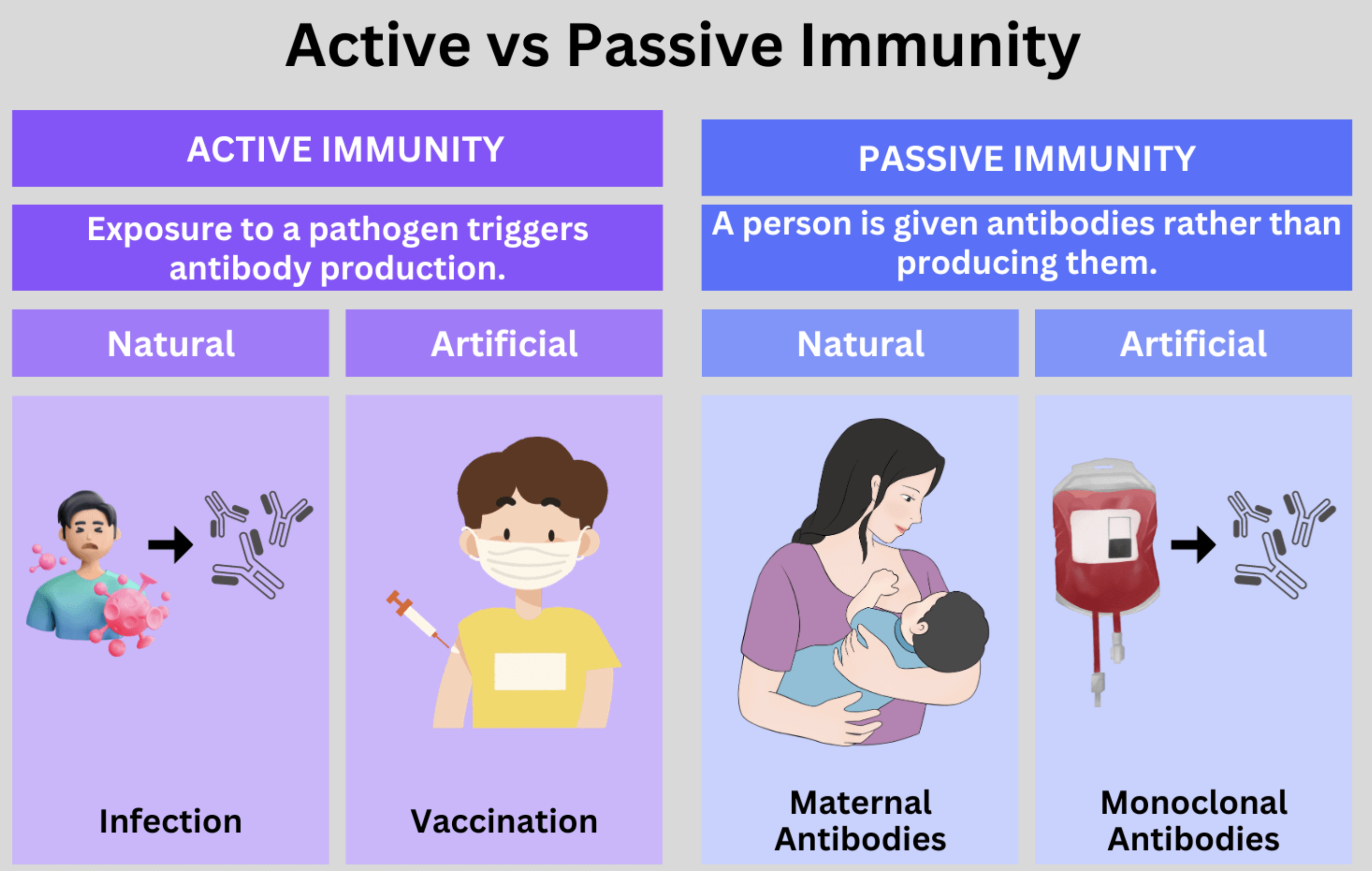
Passive immunity occurs when antibodies are introduced from an external source rather than being produced by the individual's own immune system. This form of protection is immediate but temporary. Since the recipient does not manufacture these antibodies, no memory cells are formed when the antibodies break down.
Example
Examples of Passive Immunity:
Anti-venom treatment: When someone is bitten by a venomous snake, they receive pre-formed antibodies from horses or other animals that have been immunised against the venom. This provides immediate protection but only lasts weeks to months.
Maternal antibodies: A foetus receives natural antibodies from its mother through the placenta, providing protection during early infancy until the baby's immune system develops.
Active immunity develops when an individual's immune system produces its own antibodies following exposure to a pathogen or its antigens. This process takes time to establish but provides longer-lasting protection. Active immunity occurs in two ways:
- Natural active immunity results from infection with a disease-causing organism under normal circumstances, leading to antibody production that may persist for years
- Artificial active immunity forms the foundation of vaccination programmes, where immune responses are deliberately triggered without causing disease symptoms
The vaccination process
Vaccination involves introducing specific disease antigens into the body through injection or oral administration. The material used is called a vaccine and contains one or more antigenic components derived from the target pathogen.
Note
How Vaccination Works:
When vaccines are administered, they essentially "trick" the immune system into thinking it has encountered a real infection. The immune system responds to these foreign antigens, but because only small quantities are introduced, the response is initially mild. The critical outcome is the production of memory cells that remain in circulation, ready to mount a rapid response to future encounters with the actual pathogen.
When administered, vaccines stimulate immune responses similar to those described in previous topics on cell recognition. The immune system responds to these foreign antigens, but because only small quantities are introduced, the response is initially mild. The critical outcome is the production of memory cells that remain in circulation.
These memory cells enable rapid, enhanced immune responses when the same pathogen is encountered again. This secondary response produces antibodies quickly and in large quantities, typically eliminating the infection before symptoms develop or become severe.
Large-scale vaccination programmes provide protection not only for individuals but for entire populations through collective immunity effects.
Requirements for effective vaccination programmes
Successful vaccination initiatives depend on several interconnected factors that must align for optimal disease prevention.
- Economic and logistical considerations include ensuring adequate vaccine supplies are available at reasonable cost to reach most vulnerable populations. The production, storage and transportation infrastructure must support the vaccine's requirements, often involving sophisticated refrigeration systems and sterile handling procedures.
- Safety profiles matter significantly because adverse reactions may discourage public participation. Programmes require minimal side-effects to maintain community confidence and uptake rates.
- Administrative capacity involves training healthcare personnel to deliver vaccines properly and at appropriate times across multiple locations. This includes establishing vaccination centres and ensuring staff possess relevant skills for different population groups.
- Population coverage must be sufficient to establish protective community-level effects. This requires reaching the vast majority of vulnerable individuals to generate herd immunity.
Herd immunity
Important
Herd Immunity: Community Protection
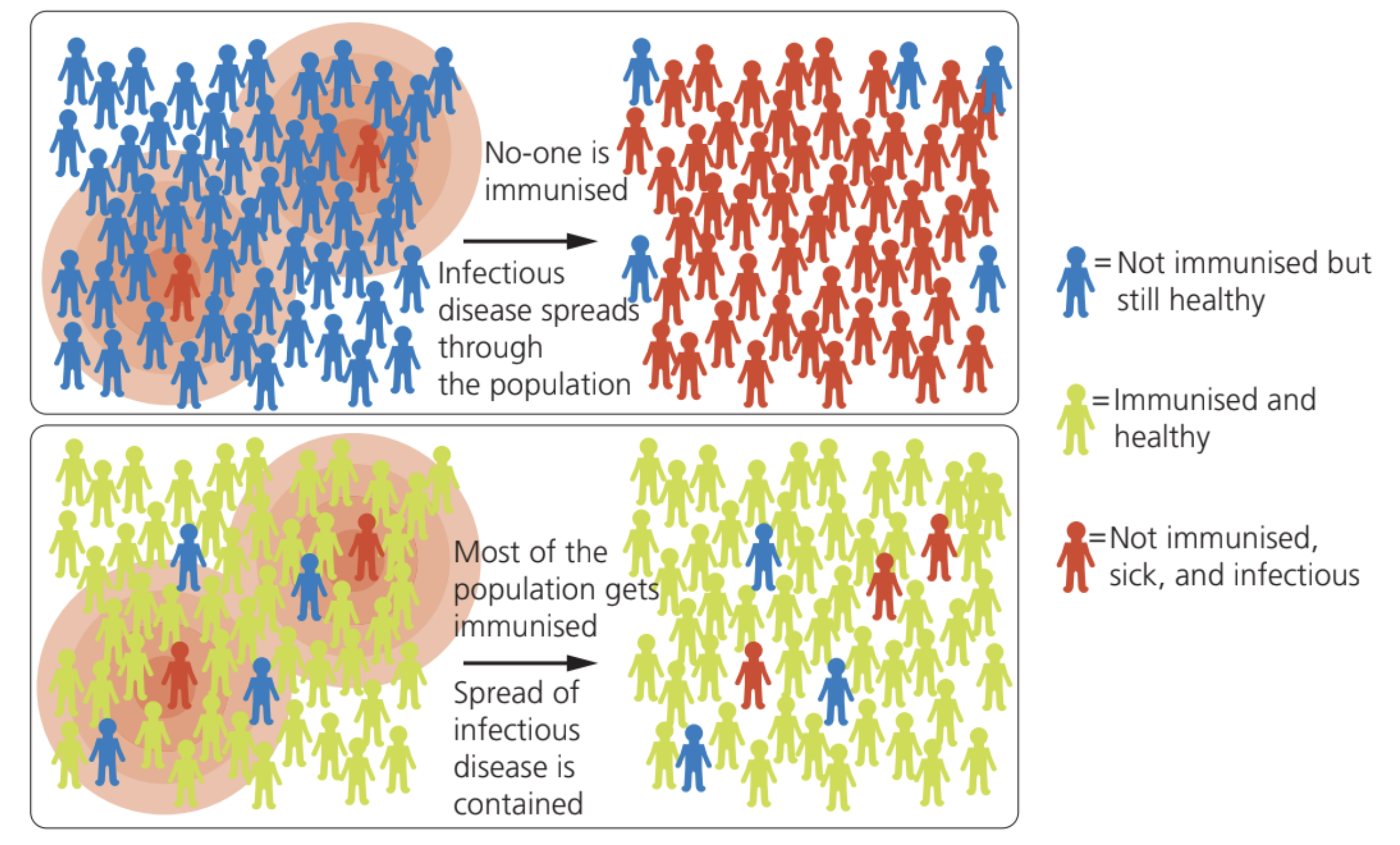
Herd immunity is one of the most important concepts in vaccination programmes. When vaccination rates within a population reach critical levels, the entire community becomes protected - even those who cannot be vaccinated.
Herd immunity develops when vaccination rates within a population reach levels that make pathogen transmission difficult. The concept relies on limiting contact between susceptible individuals and infectious agents.
When most people possess immunity to a disease, unvaccinated individuals gain indirect protection. Pathogens struggle to find new hosts in highly immunised populations, reducing transmission chains and protecting those who cannot be vaccinated.
This protection mechanism proves essential because universal vaccination remains impossible. Babies, young children, and immunocompromised individuals often cannot receive certain vaccines safely. The percentage of people requiring vaccination for herd immunity varies between diseases, but achieving this threshold protects the entire community.
For herd immunity to work effectively, vaccination campaigns should occur within concentrated time periods rather than being spread over many years. This approach minimises the window during which pathogens can circulate and establish transmission patterns.
Limitations of vaccination programmes
Even well-designed vaccination programmes may fail to eliminate diseases entirely due to several biological and practical constraints.
- Individual immune system variations mean some people do not develop adequate immunity following vaccination. Those with compromised immune systems may produce insufficient antibody responses, leaving them vulnerable despite receiving vaccines.
- Timing issues can occur when individuals contract diseases shortly after vaccination but before immunity fully develops. These people may harbour pathogens and potentially infect others during this vulnerable period.
Important
Pathogen Evolution: A Major Challenge
Pathogen evolution presents one of the most significant ongoing challenges to vaccination programmes. Some organisms, particularly viruses, can mutate so rapidly that vaccines become less effective over time.
- Pathogen evolution presents ongoing challenges, particularly with organisms that undergo frequent antigenic variability. When pathogens mutate rapidly, their surface antigens change faster than vaccine development can keep pace. The influenza virus exemplifies this problem, requiring annual vaccine updates as viral strains evolve continuously.
- Pathogen diversity complicates vaccine development for organisms with numerous variants. Some pathogens exist in over 100 different forms, making comprehensive vaccine coverage nearly impossible.
- Pathogen behaviour allows some organisms to evade immune detection by hiding within cells or colonising areas with limited immune surveillance, such as the intestinal tract.
- Social factors influence programme success when individuals refuse vaccination for religious, ethical, or medical reasons. Unfounded concerns about vaccine safety can reduce uptake rates below levels needed for herd immunity.
Ethical considerations
Vaccination programmes raise complex ethical questions that balance individual rights against collective health benefits.
Note
Balancing Individual Rights and Collective Benefits
Ethical considerations in vaccination involve weighing personal autonomy against public health benefits, creating ongoing debates about the appropriate balance between individual choice and community protection.
- Risk assessment requires weighing potential vaccine side-effects against disease risks. While vaccines generally carry minimal risks, some individuals may experience adverse reactions. Society must decide how to balance these individual risks against the broader population benefits of disease prevention.
- Research ethics involve questions about animal testing in vaccine development and the acceptable limits of human trials, particularly in regions where targeted diseases are common.
- Individual autonomy concerns arise around mandatory vaccination policies. Different societies approach the balance between personal choice and public health requirements differently, with ongoing debates about when compulsory vaccination may be justified.
- Resource allocation decisions involve determining whether expensive vaccination programmes should continue after diseases become rare, potentially redirecting resources from other health priorities.
- Testing protocols raise questions about acceptable research methods, informed consent procedures, and the extent to which individuals should accept personal risks for collective benefit.
Case study: MMR vaccine controversy
Example
Case Study: The MMR Vaccine
Background: The combined measles, mumps, and rubella vaccine introduced in 1988 replaced three separate vaccines. Initial research suggested links between the MMR vaccine and autism, leading to public concern and reduced vaccination rates.
Investigation: Subsequent investigation revealed significant flaws in the original research, including conflicts of interest, small sample sizes, and methodological problems.
Findings: Multiple large-scale studies involving tens of thousands of children found no connection between MMR vaccination and autism.
Lessons Learned: This controversy demonstrates how scientific evidence requires careful evaluation and peer review. Public understanding of research limitations proves crucial for making informed decisions about vaccination programmes.
This controversy demonstrates how scientific evidence requires careful evaluation and peer review. Public understanding of research limitations proves crucial for making informed decisions about vaccination programmes.
The episode illustrates broader challenges in science communication, showing how initial findings may be misinterpreted before more comprehensive evidence becomes available.
Summary
Key Points to Remember:
-
Passive immunity provides immediate but temporary protection through external antibodies, while active immunity develops through the body's own immune response and creates lasting memory cells
-
Vaccination works by introducing antigens that stimulate immune responses and memory cell formation, enabling rapid protection against future infections
-
Successful vaccination programmes require adequate supply, minimal side-effects, proper infrastructure, and sufficient coverage to achieve herd immunity
-
Herd immunity protects unvaccinated individuals by reducing pathogen transmission when most of the population is immune
-
Vaccination limitations include individual immune variations, pathogen mutation, multiple pathogen variants, and social factors affecting uptake rates