Phagocytosis (AQA A-Level Biology): Revision Notes
📚Revision Notes
Phagocytosis
When pathogens breach the body's first line of defence (physical and chemical barriers like skin), the immune system activates its second line of defence.
Phagocytosis represents a cellular process where specialised white blood cells identify, capture and destroy harmful microorganisms before they can cause infection.
Note
Phagocytosis is part of the innate immune system, providing immediate, non-specific defence against pathogens that have successfully bypassed physical barriers like skin and mucous membranes.
What is phagocytosis?
Phagocytosis is the process by which certain white blood cells engulf and digest large particles, particularly bacteria and other pathogens. The cells responsible for this process are called phagocytes - specialised white blood cells that patrol the bloodstream and can migrate into tissues when needed.
This cellular defence mechanism works by forming vesicles from the cell membrane that surround and capture pathogens, effectively removing them from circulation and destroying them through enzymatic breakdown.
Note
The term "phagocytosis" comes from Greek words meaning "cell eating" - literally describing how these immune cells consume harmful pathogens to protect the body.
The phagocytosis process
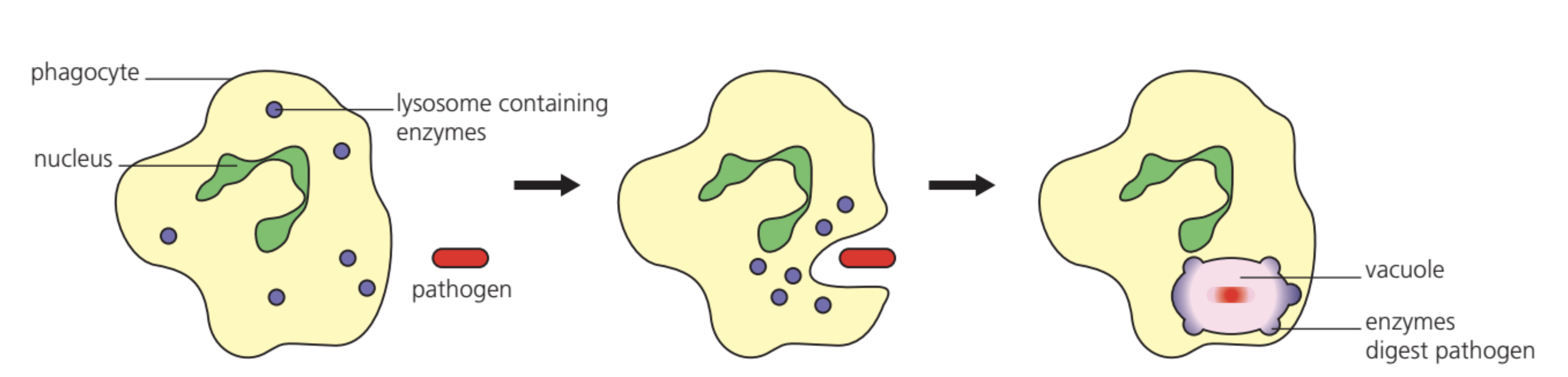
Phagocytosis occurs through a coordinated sequence of five stages that work together to identify, capture, and destroy pathogens:
Example
Complete Phagocytosis Process: Destroying a Bacterial Pathogen
Stage 1: Attraction A phagocyte detects chemical signals from damaged tissue and moves along a concentration gradient towards the infection site.
Stage 2: Recognition and binding Surface receptors on the phagocyte bind specifically to molecules on the bacterial cell surface.
Stage 3: Engulfment The phagocyte's membrane extends around the bacterium, forming a phagosome containing the captured pathogen.
Stage 4: Lysosome fusion Lysosomes fuse with the phagosome, releasing digestive enzymes into the compartment.
Stage 5: Digestion Lysozymes break down the bacterial cell wall through hydrolysis, destroying the pathogen completely.
Stage 1: Attraction
Phagocytes detect and move towards pathogens by following chemical attractants. These attractants include breakdown products released by damaged cells or chemicals produced by the pathogens themselves. The phagocyte moves along a concentration gradient towards the highest concentration of these signals.
Stage 2: Recognition and binding
Phagocytes possess multiple receptors on their cell-surface membrane that specifically recognise and bind to chemicals present on pathogen surfaces. This recognition system allows phagocytes to distinguish between harmful organisms and the body's own healthy cells.
Stage 3: Engulfment
Once bound to the pathogen, the phagocyte's cell membrane extends around the microorganism, completely surrounding it. This process forms a membrane-bound vesicle called a phagosome that contains the captured pathogen within the phagocyte's cytoplasm.
Stage 4: Lysosome fusion and enzyme release
Lysosomes within the phagocyte migrate towards the newly formed phagosome and fuse with it. These organelles contain powerful digestive enzymes called lysozymes that are released into the phagosome compartment.
Stage 5: Digestion and absorption
The lysozymes break down the pathogen through hydrolysis, particularly targeting bacterial cell walls. This enzymatic breakdown converts large, insoluble pathogen molecules into smaller, soluble products that can be absorbed into the phagocyte's cytoplasm and either used or disposed of safely.
Important
The hydrolysis reaction is crucial for completely destroying pathogens - without this enzymatic breakdown, captured bacteria could potentially survive and continue to cause infection even while trapped inside phagocytes.
Role of lysosomes
Lysosomes serve as the digestive powerhouses in phagocytosis. These membrane-bound organelles contain concentrated lysozymes - enzymes that specialise in breaking down bacterial components. The hydrolysis reaction they catalyse is similar to digestive processes in the intestines, converting complex molecules into simpler, manageable forms
Importance in immune defence
Phagocytosis provides rapid, non-specific immunity against bacterial infections. Phagocytes can respond quickly to tissue damage or infection, often arriving at sites of injury within minutes. Some phagocytes remain in circulation while others can leave blood vessels to patrol tissues directly, providing comprehensive protection throughout the body.
This process works alongside other immune mechanisms, including lymphocyte responses, to provide layered defence against disease.
Summary
Key Points to Remember:
- Phagocytosis is the process where white blood cells called phagocytes engulf and destroy pathogens
- The process follows five key stages: attraction, recognition, engulfment, enzyme release, and digestion
- Lysosomes containing lysozymes are essential for breaking down captured pathogens through hydrolysis
- This represents the second line of defence when physical barriers fail to prevent pathogen entry
- Phagocytosis provides rapid, non-specific immunity against bacterial infections