Meiosis & Genetic Variation (AQA A-Level Biology): Revision Notes
📚Revision Notes
Meiosis & Genetic Variation
Meiosis is a specialised type of cell division that produces gametes (sex cells) and plays a critical role in creating genetic diversity within populations. Understanding how meiosis generates variation is essential for comprehending inheritance patterns and evolutionary processes.
Key terminology
Before exploring the mechanisms of genetic variation, it's important to understand these fundamental terms:
Note
Key Definitions for Meiosis and Genetic Variation
Gene - a section of DNA that contains the instructions for producing a specific polypeptide chain.
Locus - the specific position where a particular gene is located on a chromosome or DNA molecule.
Allele - an alternative version or form of the same gene, which may produce different characteristics.
Homologous chromosomes - chromosome pairs where one originates from the mother and one from the father. These paired chromosomes carry genes for the same characteristics at corresponding loci, though they may contain different alleles.
Overview of meiosis
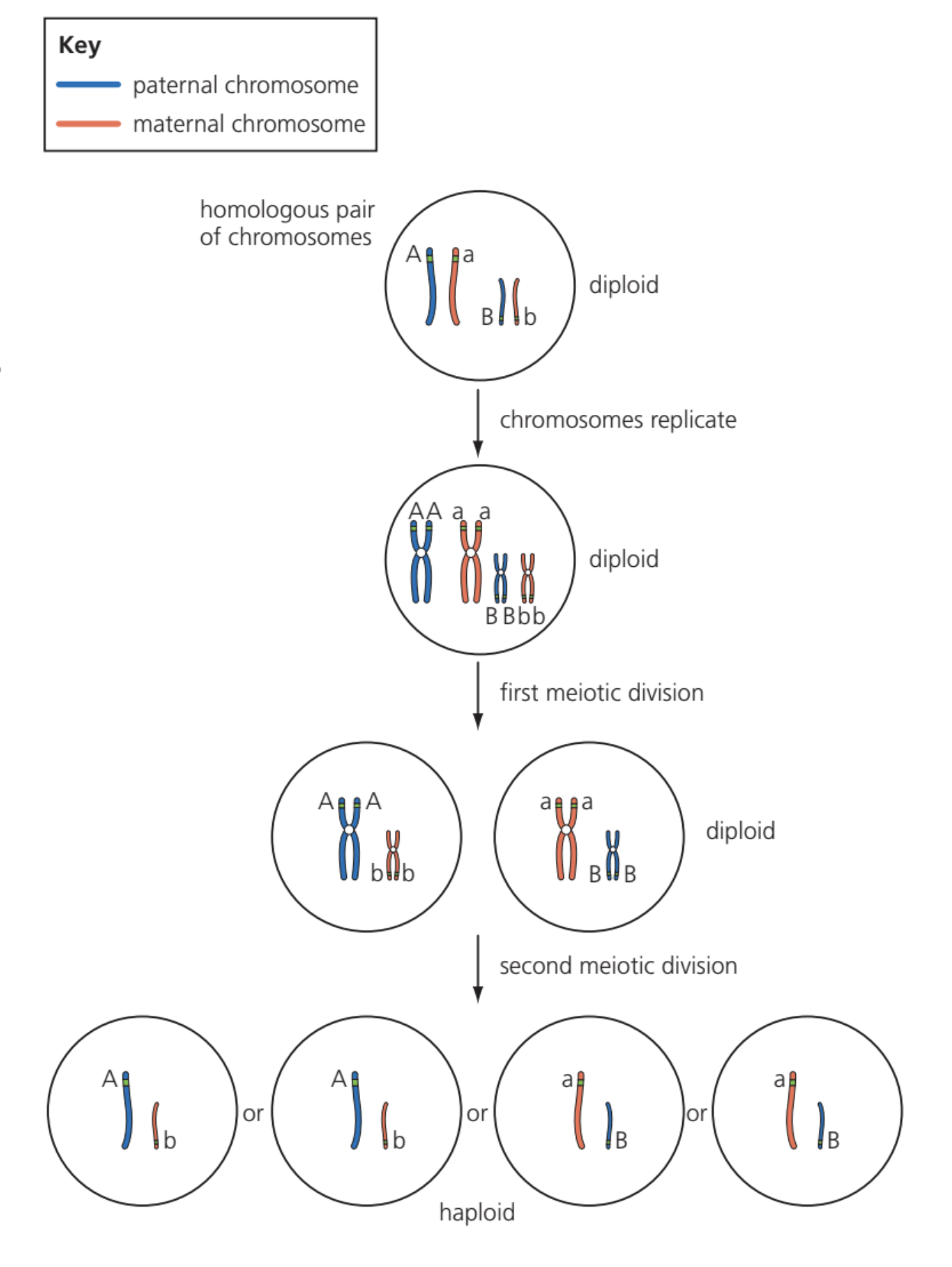
Meiosis consists of two consecutive divisions that reduce chromosome number from diploid to haploid. During this process, a single parent cell containing pairs of homologous chromosomes undergoes division to produce four genetically unique gametes, each containing only one chromosome from each homologous pair.
Important
The reduction in chromosome number is essential for sexual reproduction, as it ensures that when gametes fuse during fertilisation, the diploid chromosome number is restored in the offspring.
Independent segregation of homologous chromosomes
The process of independent segregation
During meiosis I, homologous chromosome pairs align at the cell's equator in a process called synapsis. The orientation of each pair is completely random - either chromosome from a homologous pair can face either pole of the cell. This random alignment is what creates independent segregation.
When the cell divides, one chromosome from each pair moves to each daughter cell. Since the alignment is random, the combination of maternal and paternal chromosomes that end up in each gamete varies between different cells undergoing meiosis.
Note
Think of independent segregation like shuffling a deck of cards - each time meiosis occurs, the chromosomes are "shuffled" into different combinations, ensuring that each gamete receives a unique mix of maternal and paternal chromosomes.
Genetic consequences
Independent segregation creates genetic variation because it produces gametes with different combinations of maternal and paternal chromosomes. For example, in humans with 23 pairs of homologous chromosomes, the random assortment during meiosis I can produce over 8 million different chromosome combinations in the resulting gametes.
Each gamete receives a unique mix of chromosomes that originally came from both grandparents, ensuring that offspring inherit varied genetic combinations even from the same parents.
Genetic recombination by crossing over
Mechanism of crossing over
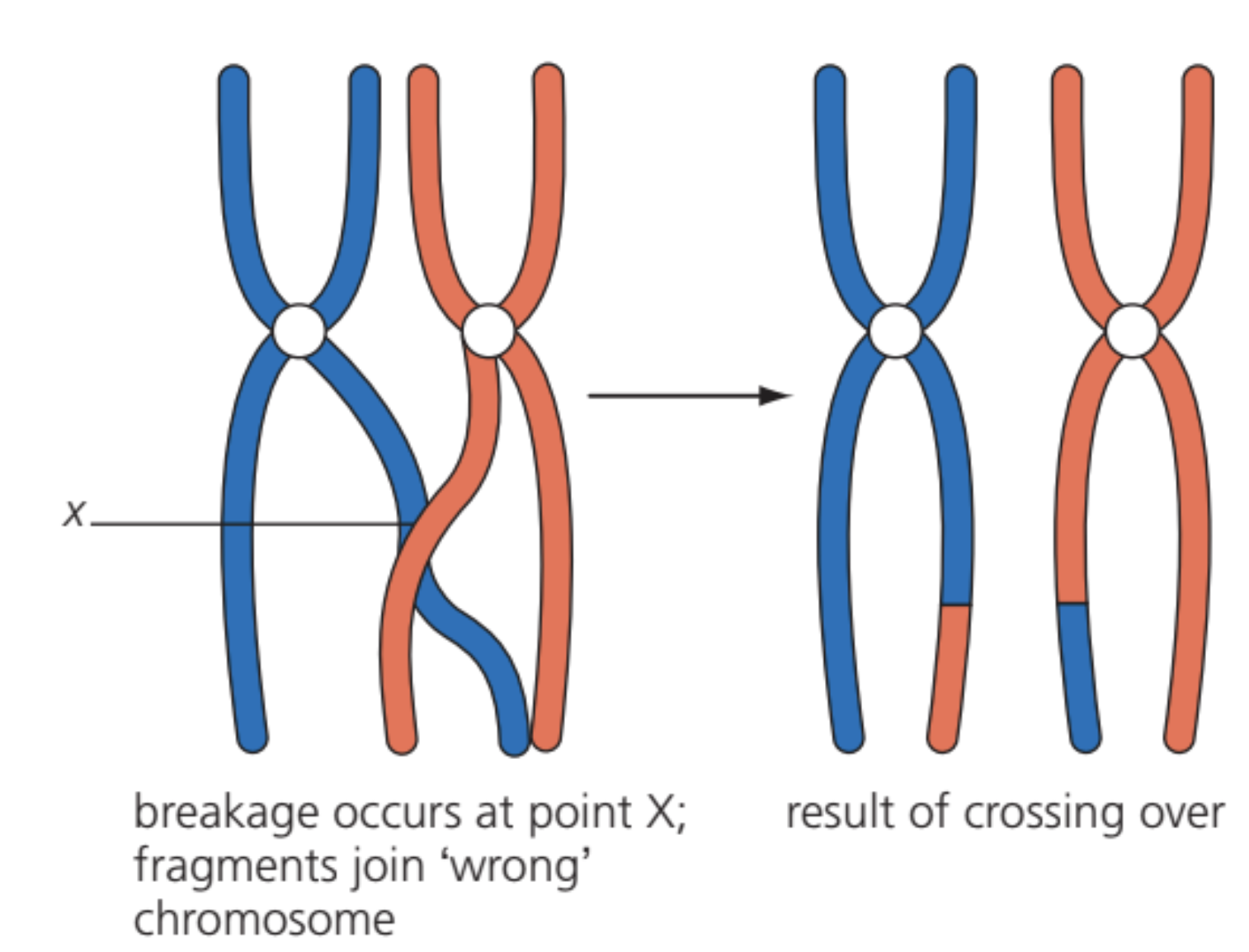
Crossing over occurs during the early stages of meiosis I when homologous chromosomes pair up closely. The chromatids (identical copies of each chromosome joined at the centromere) from homologous chromosomes become twisted around each other.
During this intimate pairing:
- Physical tensions develop between the intertwined chromatids
- Sections of chromatid break at corresponding points
- The broken sections rejoin with the chromatid from the homologous chromosome
- This exchange creates recombinant chromosomes containing genetic material from both parents
Impact on genetic variation
Important
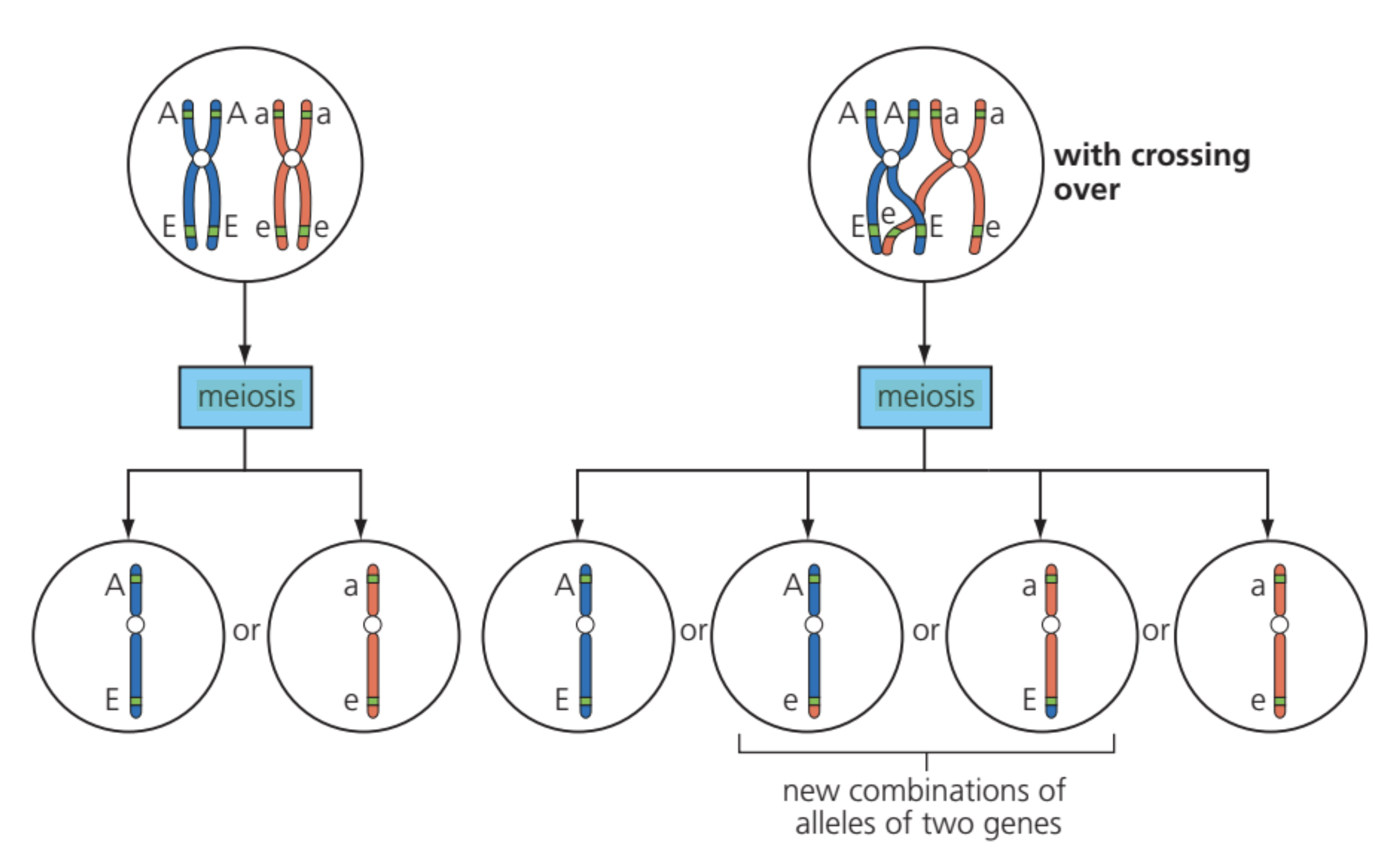
Crossing over dramatically increases genetic diversity by creating new combinations of alleles along individual chromosomes. Without crossing over, only parental combinations of alleles would be passed to offspring. However, recombination produces chromosomes that contain novel arrangements of genetic material.
The frequency of crossing over varies along chromosomes and between different chromosome pairs. Generally, longer chromosomes experience more crossing over events, further increasing the potential for genetic recombination.
Mathematical analysis of chromosome combinations
Basic chromosome combinations
The number of different chromosome combinations possible from independent segregation alone can be calculated using the formula:
where = the number of homologous chromosome pairs
Example
Worked Example: Calculating Chromosome Combinations
For organisms with 4 pairs of homologous chromosomes: possible combinations in the gametes.
Sexual reproduction calculations
When considering sexual reproduction, where gametes from two parents combine, the total number of possible chromosome combinations in offspring becomes:
where = the number of homologous chromosome pairs
Example
Worked Example: Offspring Combinations
Using the same example of 4 chromosome pairs: different possible combinations in the offspring.
Real-world implications
These calculations demonstrate the enormous potential for genetic variation. Human cells contain 23 pairs of homologous chromosomes, meaning sexual reproduction alone can produce approximately 70 trillion different chromosome combinations.
Important
When crossing over is included, the number of possible genetic combinations becomes virtually limitless, explaining why siblings (except identical twins) are genetically unique despite sharing the same parents.
Links to genetic diversity
Meiosis and genetic variation connect directly to population genetics and evolution. The variation produced through independent segregation and crossing over provides the raw material upon which natural selection can act, enabling populations to adapt to changing environmental conditions.
Summary
Key Points to Remember:
- Independent segregation occurs when homologous chromosome pairs separate randomly during meiosis I, creating different chromosome combinations in gametes
- Crossing over involves the exchange of genetic material between homologous chromatids, producing recombinant chromosomes with new allele combinations
- Mathematical formulas help quantify the enormous potential for genetic variation: for gamete combinations and for offspring combinations
- Both processes work together to ensure genetic diversity within populations, providing the variation essential for evolutionary adaptation
- The combination of these mechanisms means that each gamete (and therefore each offspring) receives a unique genetic makeup