Digestion (AQA A-Level Biology): Revision Notes
📚Revision Notes
Digestion
Overview of the digestive system
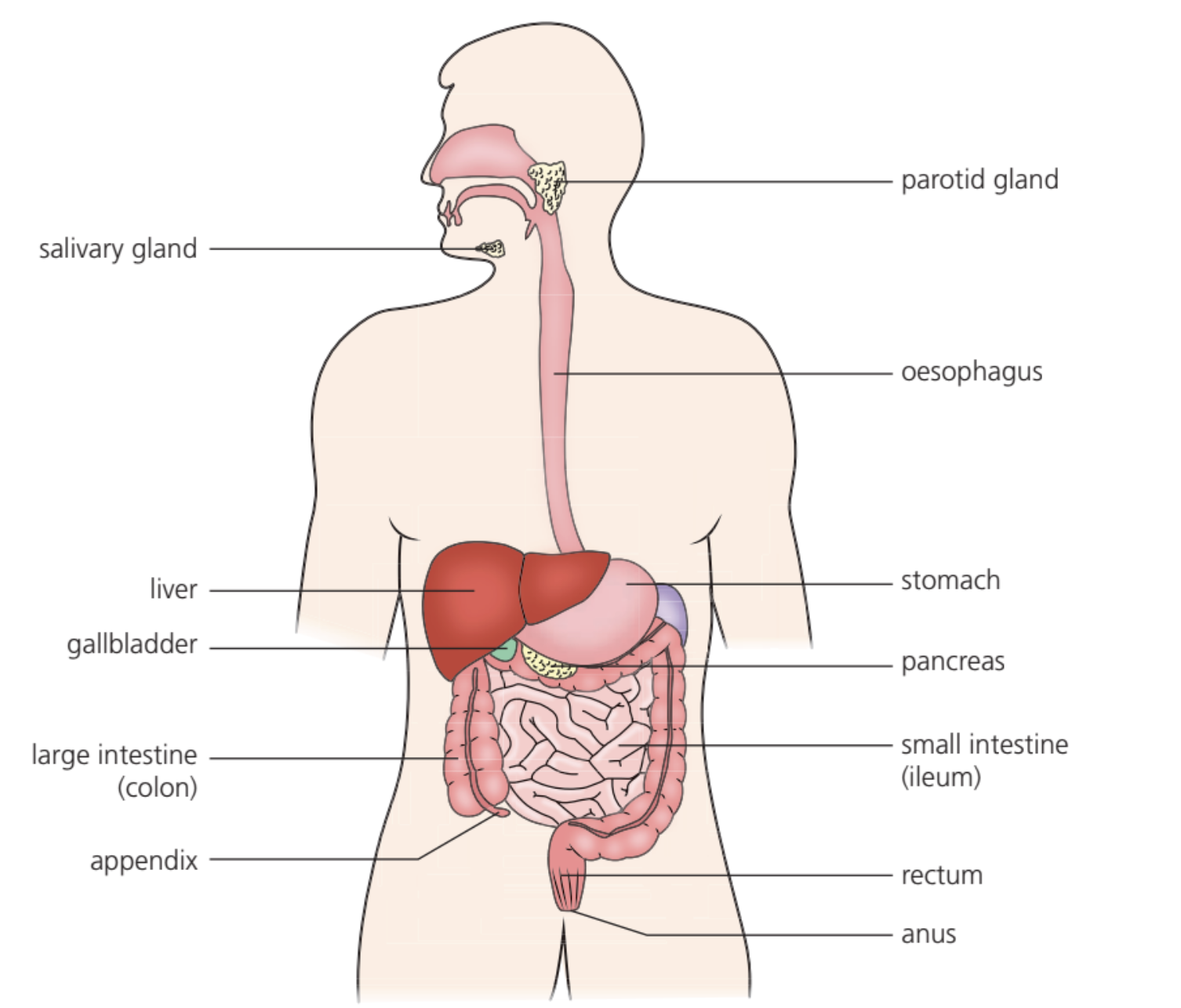
The human digestive system consists of a long muscular tube with associated glands that produce enzymes. These enzymes break down large molecules into smaller ones through hydrolysis, making them suitable for absorption. The digestive system functions as an exchange surface where nutrients pass from food into the bloodstream.
Note
The digestive system acts as a crucial exchange surface, similar to other biological exchange surfaces like the lungs and kidneys. This allows for efficient transfer of nutrients from the external environment (food) into the body's internal transport system (bloodstream).
Structure of the digestive system
Major components and their roles
Oesophagus - This muscular tube transports food from the mouth down to the stomach through coordinated muscle contractions.
Stomach - A muscular sac containing an inner layer that secretes enzymes. Its primary functions include storing food and beginning protein digestion. The stomach produces proteases that start breaking down proteins into smaller peptide chains.
Ileum - This long, coiled section of the small intestine completes food digestion using enzymes from intestinal walls and pancreatic secretions. The ileum is specially adapted for absorption with:
- Inner walls folded into villi to maximise surface area
- Microvilli on epithelial cells providing additional surface area
- This structure allows efficient absorption of digested nutrients into the bloodstream
Important
The ileum's folded structure is a perfect example of how biological systems maximise efficiency. The combination of folds, villi, and microvilli can increase the surface area for absorption by up to 600 times compared to a smooth tube of the same length.
Large intestine - Primarily absorbs water from undigested material. Most absorbed water comes from digestive gland secretions rather than consumed fluids.
Rectum - The final section where waste matter (faeces) is stored before removal through the anus via egestion.
Associated digestive glands
Salivary glands - Located near the mouth, these glands secrete saliva containing amylase enzyme, which begins starch breakdown by hydrolysing it into maltose.
Pancreas - This large gland produces pancreatic juice containing multiple enzymes:
- Proteases for protein hydrolysis
- Lipase for lipid breakdown
- Amylase for continued starch digestion
Summary
Key Points to Remember:
- Digestion involves both physical breakdown and chemical hydrolysis working together
- Three main enzyme types target carbohydrates, lipids, and proteins specifically
- Hydrolysis uses water to split chemical bonds in large molecules
- The ileum's folded structure with villi and microvilli maximises absorption surface area
- Enzymes must be added to food in the correct sequence for effective digestion