Epigenetic Control of Gene Expression (AQA A-Level Biology): Revision Notes
📚Revision Notes
Epigenetic Control of Gene Expression
What is epigenetics?
Epigenetics describes how environmental factors can cause heritable changes in gene function without altering the base sequence of DNA itself. This field explains how factors such as diet, stress, and toxins can influence which genes are switched on or off, and how these changes can sometimes be passed to future generations.
Unlike the fixed DNA code, epigenetic changes are reversible and respond to environmental conditions. This flexibility allows organisms to adapt gene expression patterns based on their experiences and surroundings.
Note
The reversible nature of epigenetic changes makes them fundamentally different from genetic mutations, which are permanent alterations to the DNA sequence itself.
The epigenome
The epigenome consists of chemical modifications that cover both DNA and the histone proteins around which DNA is wrapped. These chemical 'tags' form a second layer of information that determines the shape and accessibility of the DNA-histone complex.
The epigenome acts like cellular memory - it accumulates signals received throughout a cell's lifetime. During early development, maternal nutrition and foetal environment shape the initial epigenome. After birth, hormones and environmental factors continue to modify these patterns, activating or silencing specific sets of genes.
This system allows cells to:
- Keep inactive genes tightly packed and inaccessible (switched off)
- Unwrap active genes so they can be easily transcribed (switched on)
The DNA-histone complex (chromatin)
DNA exists in two main chromatin states that determine gene accessibility:
Loosely packed chromatin (euchromatin):
- Weak association between histones and DNA
- DNA accessible to transcription factors
- Genes can be transcribed - switched on
Tightly packed chromatin (heterochromatin):
- Strong association between histones and DNA
- DNA inaccessible to transcription factors
- Genes cannot be transcribed - switched off
Important
The transition between these states is controlled by two key epigenetic mechanisms: histone acetylation and DNA methylation. Understanding these mechanisms is essential for grasping how environmental factors influence gene expression.
Decreased acetylation of histones
Acetylation involves adding an acetyl group to histone proteins. Deacetylation removes these groups.
When acetyl groups are removed from histones:
- Histones become more positively charged
- Stronger attraction to negatively charged phosphate groups in DNA
- DNA-histone complex becomes more condensed
- Transcription factors cannot access the DNA
- Gene expression is inhibited
Note
This process links to respiration through acetyl coenzyme A, which donates acetyl groups during acetylation reactions, connecting epigenetic regulation to cellular metabolism.
Increased methylation of DNA
Methylation adds methyl groups () to cytosine bases in DNA, typically near gene promoter regions.
DNA methylation inhibits transcription through two mechanisms:
- Preventing transcription factors from binding directly to DNA sequences
- Attracting proteins that promote histone deacetylation, further condensing the chromatin structure
This creates a reinforcing cycle where methylation leads to deacetylation, making genes even more inaccessible.
Effects of epigenetic modifications
| Factor | Gene Inaccessible | Gene Accessible |
|---|---|---|
| Histone acetylation | Decreased | Increased |
| DNA methylation | Increased | Decreased |
| Chromatin structure | Tightly packed | Loosely packed |
| Chromatin type | Heterochromatin | Euchromatin |
| Transcription factors | No access | Access |
| Gene activity | Inactive | Active |
Note
This table summarises the key relationships between epigenetic modifications and gene accessibility. Notice how decreased acetylation and increased methylation both lead to the same outcome: gene silencing.
Epigenetics and inheritance
Epigenetic inheritance occurs when environmental influences on parents affect their offspring's gene expression patterns. Research demonstrates this phenomenon across species:
Example
Worked Example: Maternal Care in Rats
Observation: Female rats receiving good maternal care show better stress responses and parenting behaviour.
Mechanism: This improved maternal behaviour becomes encoded in the offspring's epigenome through specific methylation patterns.
Result: The enhanced parenting skills pass to subsequent generations without involving genetic changes, demonstrating pure epigenetic inheritance.
Example
Human Example: Gestational Diabetes
Condition: When mothers develop diabetes during pregnancy, high glucose concentrations trigger epigenetic changes in the developing foetus.
Inheritance pattern: These modifications increase the daughter's likelihood of developing gestational diabetes herself.
Significance: This shows how maternal environmental conditions can influence disease susceptibility across generations.
During reproduction, most epigenetic tags are normally erased and reset. However, some modifications escape this 'cleaning' process and pass unchanged to offspring, creating inherited environmental effects.
Epigenetics and disease
Epigenetic changes play significant roles in disease development, particularly cancer. While these modifications are part of normal development, abnormal patterns can activate oncogenes or silence tumour suppressor genes.
Cancer development:
- Decreased DNA methylation in cancer tissue compared to normal tissue suggests widespread gene activation
- Hypermethylation of promoter regions silences genes that normally prevent cancer
- Early cancer development involves switching off protective genes through increased methylation
Inherited cancer risk: Some individuals inherit increased methylation of DNA repair genes. When these protective genes are silenced, damaged DNA cannot be repaired effectively, leading to cancer-causing mutations.
Important
Epigenetic changes differ from genetic mutations because they don't alter the DNA sequence itself but still influence cancer development and progression. This distinction is crucial for understanding treatment approaches.
Treating diseases with epigenetic therapy
Since epigenetic modifications are reversible, they present therapeutic opportunities that genetic mutations do not offer.
Treatment strategies:
- Demethylating drugs remove methyl groups from DNA, reactivating silenced genes
- Histone deacetylase inhibitors prevent removal of acetyl groups, keeping chromatin loose and genes accessible
Important
These treatments must be precisely targeted to cancer cells. Affecting normal cells could inappropriately activate oncogenes, potentially causing the very diseases these therapies aim to treat.
Diagnostic applications: Tests can detect abnormal DNA methylation and histone acetylation patterns in early disease stages, particularly for cancer, brain disorders, and arthritis. Early detection enables prompt treatment and improves patient outcomes.
RNA interference and gene expression
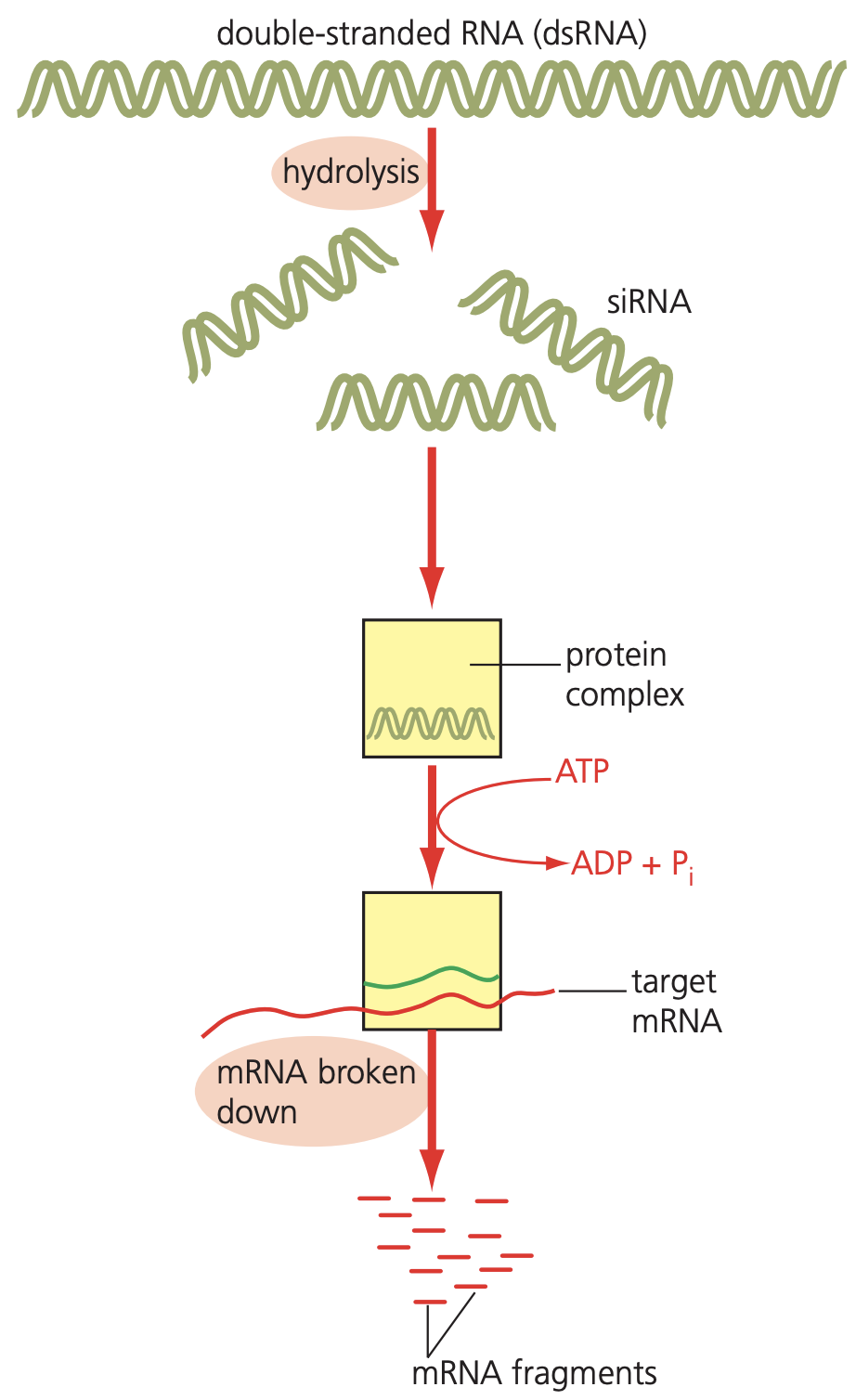
RNA interference (RNAi) provides an additional mechanism for controlling gene expression in eukaryotes and some prokaryotes. This process uses small interfering RNA (siRNA) molecules to break down specific mRNA molecules before translation.
The RNAi mechanism:
- Enzymes cut large double-stranded RNA molecules into smaller siRNA sections
- One siRNA strand combines with an enzyme complex
- This siRNA-enzyme complex finds complementary mRNA molecules by base pairing
- The enzyme cuts the target mRNA into smaller sections
- Broken mRNA cannot be translated into protein
- Gene expression is effectively blocked
This system allows precise control over which genes produce proteins, even after transcription has occurred.
Applications of RNAi:
- Research tools for studying gene function in biological pathways
- Potential treatments for preventing specific diseases by silencing harmful genes
Summary
- Epigenetics involves heritable changes in gene expression without altering DNA sequence, caused by environmental factors
- The epigenome consists of chemical modifications on DNA and histones that determine gene accessibility
- Decreased acetylation and increased methylation both silence genes by condensing chromatin structure
- Epigenetic changes can be inherited and contribute to diseases like cancer, but are potentially reversible through targeted therapies
- RNA interference provides an additional post-transcriptional mechanism for controlling gene expression using siRNA molecules