Behavioural Economics and Economic Policy (AQA A-Level Economics): Revision Notes
📚Revision Notes
Behavioural Economics and Economic Policy
Introduction
Governments in the UK and US have increasingly recognised the value of behavioural economics in shaping effective public policy. Rather than viewing traditional and behavioural economics as competing theories, it's more helpful to see them as complementary approaches. Behavioural economics enhances traditional economic thinking by providing policymakers with additional tools to design interventions that help people achieve better outcomes.
Note
Traditional and behavioural economics work together rather than compete. Traditional economics provides the foundation, whilst behavioural economics adds insights about real human decision-making patterns to create more effective policies.
Traditional economic theory assumes individuals are fully rational decision-makers. However, behavioural economics recognises that people often struggle with cognitive biases and may not always act in their own best interests. This creates an opportunity for government intervention that aims to support individuals in making choices that genuinely benefit them in the long term, whether in areas like healthcare, pensions, or consumer decisions.
Choice architecture and framing
Choice architecture
Choice architecture refers to the deliberate design of how choices are presented to people, and understanding how this presentation influences their decision-making. Policymakers can use insights from behavioural economics to create choice architectures that gently guide citizens toward decisions that serve their best interests and promote socially beneficial outcomes.
The key principle is nudging - subtly encouraging better choices without restricting freedom or imposing mandates. For instance, research on cafeteria layouts demonstrates that when healthier food options like fruit and salads are positioned at the front of a canteen display, customers purchase more of these items compared to when they're placed at the back. People remain free to select any meal they wish, but the choice architecture nudges them toward healthier eating patterns.
Example
Worked Example: Choice Architecture in Cafeterias
When healthier food options (fruit and salads) are placed at the front of a canteen display, customers purchase significantly more of these items.
When the same healthy options are placed at the back, purchase rates decrease substantially.
Key insight: The physical positioning changes behaviour, yet customers retain complete freedom to choose any food they want. This demonstrates how choice architecture guides without restricting.
Exam tip: When discussing choice architecture in essays, emphasise that it preserves consumer freedom whilst guiding behaviour - this distinguishes it from more restrictive government interventions.
Default choice
A default choice is an option that becomes automatically selected unless someone actively chooses an alternative. This seemingly simple design feature can have profound effects on outcomes, particularly when combined with insights about human behaviour and decision-making patterns.
Consider organ donation policy. Countries structure their organ donation systems in two main ways:
-
Opt-in systems: Individuals must actively indicate (typically by ticking a box) that they wish to donate their organs after death. If they don't complete this action, healthcare organisations cannot use their organs for transplantation.
-
Opt-out systems: Individuals are presumed to consent to organ donation unless they actively register their objection by indicating they don't want their organs used after death.
Important
From a behavioural economics perspective, opt-out systems are significantly more effective. England adopted an opt-out approach in 2020. Evidence shows that countries requiring people to opt out of organ donation consistently achieve much higher proportions of their population registered as donors compared to opt-in countries. The supply of donated organs increases to better match demand, improving public health outcomes overall.

Policymakers can enhance social welfare by implementing programmes that establish a default choice aligned with individuals' genuine long-term interests. The UK government's Behavioural Insights Team has successfully trialled several such approaches, including automatic pension enrolment schemes.
Framing
Framing describes how the way information is presented (its 'frame') shapes the choices people ultimately make. Advertisers have long understood this principle, presenting their products in the most appealing light possible to consumers.
Example
Worked Example: Food Labeling and Framing
Would you be more likely to purchase a product labeled "90% fat-free" or one labeled "10% fat"?
Analysis: Both statements convey identical nutritional information, yet the first frame presents it in a more attractive way that encourages sales. The "90% fat-free" label emphasises the positive attribute (what the product doesn't contain), whilst "10% fat" emphasises the negative.
This demonstrates how framing influences consumer choices even when the underlying facts are the same.
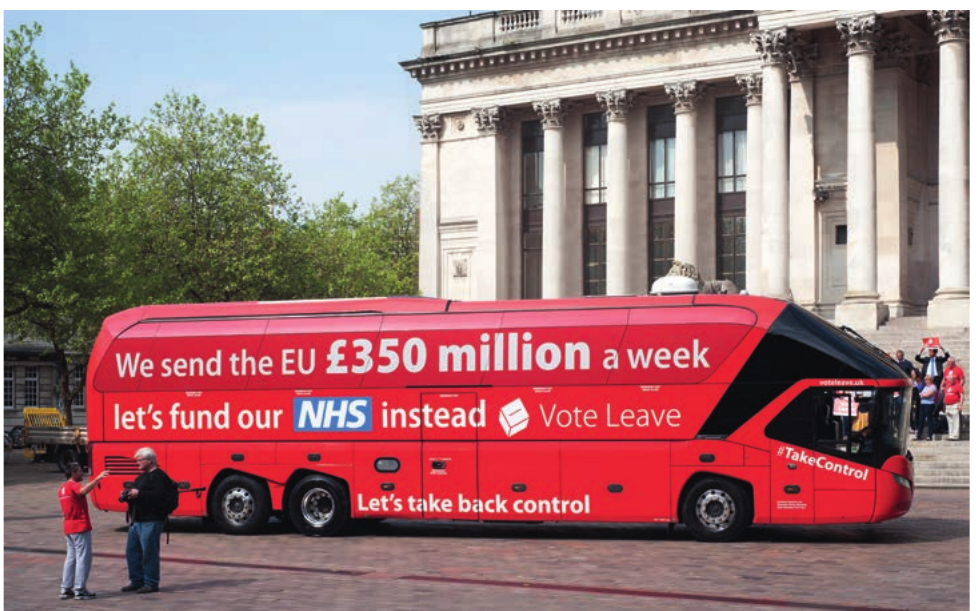
Politicians frequently employ framing techniques (sometimes called 'spinning') when communicating economic statements and policy positions. During the 2016 EU Referendum campaign (often called 'Brexit'), Vote Leave campaigners presented statistics in ways that portrayed UK membership of the European Union as significantly disadvantageous. One prominent claim stated that the UK sent £350 million weekly to the EU, money that could instead fund the National Health Service. Critics highlighted that this figure failed to account for the substantial financial support the UK received from the EU through regional development aid and agricultural subsidies.
Mandated choices
Mandated choice occurs when people are required, often through legal requirements, to make an explicit decision rather than simply accepting a default position. This approach works effectively for straightforward yes/no decisions but proves less suitable when choices involve considerable complexity.
A common everyday example appears in computer software installation. Microsoft's installation processes require users to actively select various options and settings before progressing to the next stage. The software mandates that users make choices rather than automatically proceeding with predetermined defaults. Most people select the recommended settings, but the system ensures they make an active decision.
Note
Mandated choices perform well with simple decisions but can overwhelm people when the choices are too complex. Policymakers must carefully consider whether forcing a decision will genuinely help people or simply create decision paralysis.
Restricted choice
Restricted choice involves deliberately offering people a limited number of options, based on the understanding that presenting too many alternatives can be unhelpful and lead to poor decision-making or decision paralysis. Most people cannot effectively evaluate or feel comfortable with a very large number of choices.
Government policy requiring energy companies to simplify their pricing structures and restrict the number of tariff options offered to consumers provides a practical example of restricted choice in action. This helps consumers more easily compare options and make informed decisions.
Note
When designing systems for public services, policymakers should incorporate behavioural insights to make processes user-friendly. Well-designed systems enable citizens to pay for government services more easily through mechanisms such as:
- Direct debit arrangements
- Using accessible language
- Sending text message or email reminders to prompt people to complete required actions
Evidence from the Behavioural Insights Team demonstrates that personalised communications increase response rates, whilst positioning signature boxes at the top of forms rather than the bottom yields more honest answers.
Revisiting nudge theory
A nudge attempts to influence people's behaviour in predictable ways without prohibiting any options or significantly altering economic incentives. Crucially, a nudge is neither a legal requirement nor an economic sanction. Fines, taxes, and subsidies do not constitute nudges.
Important
When governments employ nudges as policy tools, these interventions must be open and transparent to the public. Governments should be honest about why they have introduced a particular nudge, explaining their rationale clearly whilst still allowing individuals to make their own choices.
Exam tip: In exam questions about government intervention, clearly distinguish between nudges (which guide) and traditional policies like taxes or regulations (which compel or incentivise through financial means).
Nudges versus shoves
'Nudge' policies seek to guide people by providing helpful information and structuring choices in ways that enable them to make informed decisions. By contrast, 'shove' policies instruct people to behave in specific ways, often by implementing financial incentives and disincentives that reward or punish different decisions.
| Nudge | Shove |
|---|---|
| Provides information for people to respond to | Uses taxation and subsidies to alter incentives and on occasion, in the case of taxes, to punish people |
| Creates positive social norms | Uses fines, laws banning activities and regulations |
| Opt-out schemes rather than opt-in schemes and default choices | |
| Active choosing by individuals |
Note
The key distinction: Nudges guide, whilst shoves force. Nudges preserve freedom of choice and rely on information and choice architecture, whilst shoves use legal and financial mechanisms to compel or prohibit behaviour.
Government policies based on traditional economic theories have generally attempted to shove people into altering their behaviour rather than nudging them toward desired outcomes.
Example
Worked Example: Reducing Vehicle Speeds
Traditional 'shove' approach:
- Impose fines and penalties for speeding violations
- Use speed cameras and enforcement
- Punish non-compliance financially
'Nudge' approach:
- Provide information about accident rates on specific roads
- Use visual cues like road markings that make drivers feel they're traveling faster than they actually are
- Display signs showing drivers their current speed
- Create social norms by showing average speeds of other drivers
Key difference: The shove approach uses punishment, whilst the nudge approach uses information and perception to influence behaviour. Both aim to reduce speeds, but through fundamentally different mechanisms.
Case study: Applying behavioural insights to charitable giving
The UK government's Behavioural Insights Team published research in 2013 exploring new and innovative approaches to encourage greater charitable giving. The study recognised the important indirect benefits of charitable donations, which research demonstrates can significantly enhance the well-being of both givers and recipients. Evidence shows that donating time and money produces substantial benefits for donors' life satisfaction, not only amongst volunteers themselves but also in wider communities. Charitable giving benefits society as a whole.
Four behavioural insights
The research identified four key behavioural insights that can increase charitable donations:
Insight 1: Make it easy
One of the most effective ways to encourage people to give to charity is removing barriers and making the donation process as straightforward as possible. This might involve:
- Providing people with options to increase their future payments automatically to prevent donations being eroded by inflation over time
- Establishing defaults that automatically enrol new employees into workplace giving schemes, with a clear option to opt out if they choose
- Using prompted choice to encourage people to become charitable donors actively
Note
Why it works: People often want to donate but face practical obstacles. By removing these barriers and making the process effortless, donation rates increase significantly. This applies the principle of reducing friction in decision-making.
Insight 2: Attract attention
Making charitable giving more attractive and appealing to individuals can powerfully increase donations. Effective strategies include:
- Drawing people's attention through personalised messages that speak directly to them
- Rewarding the behaviour you want to encourage, for example through matched funding schemes where donations are doubled
Note
Why it works: Personalisation makes people feel directly addressed and valued, whilst matched funding creates a sense that donations have greater impact. Both strategies make giving feel more rewarding and meaningful.
Insight 3: Focus on the social
We are all influenced by the actions of those around us, which means we're more likely to give to charity if we perceive it as the 'social norm'. Creating focus on the social dimension involves:
- Using prominent individuals to send out strong social signals about giving
- Drawing on peer effects by making acts of charitable giving visible to others within one's social group
- Establishing group norms through which subsequent donors 'anchor' their own contributions on what others have given
Note
Why it works: Humans are fundamentally social beings who look to others for cues about appropriate behaviour. When giving is visible and normalised within a social group, individuals are significantly more likely to participate.
Insight 4: Timing matters
Getting your timing right can significantly help increase charitable donations. This includes:
- Ensuring charitable appeals are made at moments when they're likely to be most effective - for example, people are more likely to make donations in December than January
- Understanding that people may be more willing to commit to future increases in donations rather than equivalent sums given today
Note
Why it works: Timing aligns donation requests with moments when people are most receptive. December coincides with the holiday season when people feel more generous, whilst commitments to future giving feel less financially constraining than immediate requests.
Remember!
Summary
Key Points to Remember:
-
Choice architecture involves designing how choices are presented to guide people toward better decisions without removing their freedom to choose
-
Default choices can dramatically improve outcomes - opt-out systems for organ donation achieve much higher registration rates than opt-in systems
-
Framing matters - how information is presented significantly influences people's decisions, as seen in food labeling and political campaigns
-
Nudge policies guide behaviour through information and choice design, whilst shove policies use laws, taxes, and regulations to compel behaviour
-
Government interventions using behavioural insights should always be transparent and maintain individual choice
-
The four key insights for effective behavioural policy are: make it easy, attract attention, focus on the social, and get the timing right