Technological Change (AQA A-Level Economics): Revision Notes
📚Revision Notes
Technological Change
What is technological change?
Most people have a general understanding of what technology means, but providing a precise definition can be challenging. The key distinction is between science and technology. Science focuses on understanding how and why things happen, seeking to explain the natural world. Technology, on the other hand, focuses on making things happen. It involves applying knowledge in practical ways to solve problems facing human societies.
Note
Technological change describes the overall effect of invention, innovation, and the diffusion (spread) of technology throughout the economy. It involves both changing existing technologies for the better and developing completely new technologies. These improvements can apply to products themselves and to the processes used to make them.
When technological change occurs, it can lead to the development of completely new markets, changes in existing market structures, and sometimes the destruction of older markets that become obsolete.
Technological change and technical progress
The term 'technology' is closely associated with technical progress, but 'technical progress' can have two quite different meanings depending on the context.
Important
Technical progress has two distinct meanings:
In a value-judgement context, technical progress implies that technological change fundamentally improves economic welfare and makes people happier. For example, the development and widespread use of motor cars has brought significant drawbacks, including road accidents and environmental pollution. However, for most people, cars and buses have made travel much easier and more accessible, significantly improving human welfare overall.
In a narrower sense, unrelated to welfare considerations, technical progress simply means applying scientific and engineering knowledge as it develops to produce goods that are more efficient and work better. This definition makes no judgement about whether these goods are beneficial for society. In this narrower meaning, technical progress could include the development of harmful products such as chemical weapons, which work efficiently but have devastating effects on human welfare.
The difference between invention and innovation
Understanding the distinction between invention and innovation is crucial for analysing technological change in economics.
Important
Key Distinction:
Invention refers to making something entirely new - something that did not exist before at all. It is about creating new ideas for products or processes. Many inventions never become commercially successful because they have no practical use or market demand. The key point is that invention is the initial creation stage.
Innovation, by contrast, takes the results of inventions and turns them into marketable products or services. It improves on or makes a significant contribution to something that has already been invented. Innovation is what really matters for the success of firms and for economic growth. It is innovation, rather than invention alone, that drives economic progress.
The microprocessor and iPod examples
An American entrepreneur writing in an article in 2017 illustrated this distinction clearly. Someone invented the microprocessor, which was a groundbreaking invention. However, by itself, the microprocessor was just another component on a circuit board. The real economic impact came from what was done with that invention. The hundreds of thousands of products, processes, and services that evolved from the invention of the microprocessor required innovation.
Example
Worked Example: The Apple iPod as Innovation
The Apple iPod provides an excellent case study of innovation. Consider what Apple did NOT invent:
- The iPod was not the first portable music device - Sony had popularised portable music 22 years earlier with the Walkman
- The iPod was not the first device to store hundreds of songs in a pocket - dozens of MP3 device manufacturers had achieved this before Apple entered the market in 2001
- Apple was also late in providing an online music-sharing platform, as services like Napster, Grokster, and Kazaa had already established this concept
So what made the iPod innovative?
Apple did not invent any of the core technologies. Instead, Apple's innovation lay in how it combined existing elements - design, ergonomics, and ease of use - into a single device. The company then tied this device directly to a platform that effortlessly kept it updated with music. Apple created an easy-to-use ecosystem that unified music discovery, delivery, and device. In doing so, they revolutionised the music industry.
Key lesson: This is a perfect example of innovation building on existing inventions to create something that transforms a market.
The effect of technological change on economic performance
Technological change affects the economy in several important ways. When technology diffuses through the economy, it impacts methods of production, productivity levels, efficiency, and firms' costs of production.
Methods of production
Throughout human history, technological change has continuously affected how goods and services are produced. We are now living in what many call the 'computer age'. Computers, first developed in the 1940s, are now widely used in manufacturing processes. For example, computer-controlled robots build cars on production lines. Computers are also extensively used in distribution, such as for online book sales through Amazon, and as consumer goods in themselves. Many products that do not appear to be computers, such as washing machines and cars, contain microprocessors that control how they function.
Note
From Mechanisation to Automation:
An important recent change in production methods has been the shift from mechanisation to automation.
- Mechanisation means that human beings operate the machines used to produce goods
- Automation means that machines operate other machines
For example, a computer-controlled robot might operate a welding tool to join together car body panels. Both mechanisation and automation often involve assembly-line production methods, which were first introduced by Henry Ford in 1908.
Productivity
When economists discuss output per unit of input, they are referring to productivity. While productivity can be measured as output per unit of any input factor, when economists talk about productivity, they usually mean labour productivity - output per worker or output per hour worked.
Technological change generally increases labour productivity. This has typically occurred following the introduction of both mechanised and automated production methods. However, it is important to note that productivity gains are not automatic. In some cases, particularly with automation and computerised production systems, there have been well-publicised examples of expensive systems failing. For instance, some organisations like the National Health Service have invested in computer systems that did not work properly and had to be scrapped in extreme cases. In these situations, labour productivity may actually fall rather than increase, at least until the system can be fixed and made to work properly.
Note
Study tip: Make sure you do not confuse production with productivity. These are closely related concepts, but production refers to total output, whereas productivity is output per unit of input.
Efficiency
Economists recognise several types of economic efficiency, with two particularly relevant to technological change: productive efficiency and dynamic efficiency.
Note
Two Key Types of Efficiency:
Productive efficiency occurs when it is impossible to produce more of one good without producing less of another good (at the economy-wide level), or when the average total cost of production is minimised (at the firm level). Productive efficiency focuses on minimising average costs of production.
Dynamic efficiency measures improvements in productive efficiency that occur over time in the long run. Dynamic efficiency results from improvements in products and services, innovation, and the process of creative destruction (which we explain later in this note).
Technological change generally improves both productive efficiency and dynamic efficiency. As a general principle, technological change leads to improvements in both productive and dynamic efficiency. By increasing productivity, technological changes shift both short-run and long-run cost curves downwards, thereby improving both productive and dynamic efficiency over time.
Costs of production
It follows logically that if technological change generally improves both productivity and efficiency, it also reduces costs of production. This is particularly true in the long run. The long run is the time period in which firms can invest in new capital equipment and technology, which they hope will reduce their costs of production. In the short run, costs may initially increase as firms invest in and implement new technologies, but the long-run effect is typically cost reduction.
Some other effects of technological change
A key theme in understanding technological change in recent years is that it has been highly significant in developing new products and new markets, whilst also destroying existing markets. To understand this better, it is useful to distinguish between disruptive innovation and sustaining innovation.
Disruptive and sustaining innovation
Important
Disruptive vs Sustaining Innovation:
A disruptive innovation is an innovation that helps create a new market. In doing so, it eventually disrupts an existing market over a period of several years or even decades, thereby displacing an earlier technology. Disruptive innovation often improves a product or service in ways that the existing market did not initially expect. It creates new goods or services for a different set of consumers in a new market, which then competes with the established market. By doing this, it eventually lowers prices in the existing market.
By contrast, a sustaining innovation does not create new markets but develops existing markets. It enables firms within those markets to offer better value and often to compete more effectively against each other, leading to ongoing improvements.
According to Harvard University business professors Joseph Bower and Clayton Christensen, one of the most consistent patterns in business is the failure of leading companies to maintain their position when technologies or markets change. Writing in the 1990s, they examined the photocopier company Xerox, which at that time had dominated the photocopier market but was losing market share to the Japanese company Canon in the small office photocopier market.
Note
Why Dominant Companies Fail with Disruptive Innovation:
The professors asked why companies like Xerox invest heavily and successfully in technologies necessary to retain their current customers, but then fail to make certain other technological investments that future customers will demand. Their explanation is that companies dominating an existing technology are in danger when disruptive innovation occurs. These dominant firms often remain too focused on their existing customer base.
The problem is that existing customers often reject goods produced using new technology because it does not address their current needs as effectively as the company's existing products. For example, the large photocopying centres that formed the core of Xerox's customer base initially had little use for the small, table-top copiers produced by Xerox's new technology. As a result, Canon entered the market, quickly increased the speed and efficiency of the copiers, and eventually took significant market share from Xerox.
Case study: The impact of the smartphone on Kodak and the traditional camera industry
Example
Case Study: Kodak and Disruptive Innovation
The Kodak company provides a striking example of how disruptive digital technology can destroy established business models. In September 2013, Kodak emerged from bankruptcy after nearly two years in administration. Since 2000, demand for Kodak's most successful product - camera film - had been in rapid decline. Kodak's management had seriously underestimated the speed of this collapse.
The disruption: The decline was caused by the development of digital cameras and later smartphones. Global sales of traditional photographic film and paper dropped dramatically. Before this technological shift, the film boxes that Kodak produced had been highly profitable. New entrants to the capital-intensive camera film market were deterred by high entry costs, and Kodak enjoyed profit margins that were sometimes as high as 50%.
The transformation: However, in the first few months of the twenty-first century, a technology change began that would devastate one of the most successful business models of the previous century and threaten Kodak's very existence. In 1999, only 5% of new cameras sold in the USA were digital. By the end of 2000, this had changed dramatically. By 2003, consumers were buying digital cameras in large numbers, but by ignoring the revolution until it was too late, Kodak lost tens of thousands of jobs at its capital-intensive film factories and had to announce a new digital strategy.
Failed comeback attempt: In 2016, Kodak attempted to enter the smartphone market with the Ektra, a device with a design based on the iconic 1941 Kodak Ektra 35mm camera. Kodak was aiming to establish a nostalgic niche in a highly competitive market dominated by Apple's iPhone and Samsung smartphones. However, Kodak's Ektra smartphone was marketed to people with artistic interests and hobbies. Despite significant price reductions and upgrades, sales were poor. So far, Kodak has failed to establish its niche in the smartphone market.
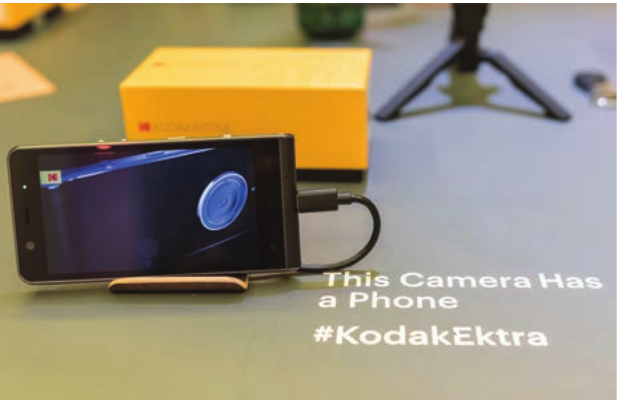
The lesson: Disruptive digital technology has caused the collapse of many business models since 1999, though few as rapidly as Kodak's fate. Within a matter of months, the once hugely profitable camera film market gave way to the surge of digital cameras and smartphones.
The influence of technological change on the structure of markets
The Kodak example provides a useful illustration of how technological change influences market structure. When cameras transmitted images onto chemical film, very high entry barriers existed in the chemical film market, leading to Kodak's market dominance. By contrast, entry into the digital camera market is relatively easy. Hence, the camera film market dominated by Kodak was close to a monopoly structure, whereas the digital camera and smartphone markets are closer to a much more competitive form of market called monopolistic competition. In monopolistic competition, firms have many competitors, but each one sells a slightly different product.
Note
How Technological Change Can Lead to Concentrated Markets:
Technological change does not always lead to more competitive market structures, however. In some industries, technological change has led to outcomes where very large firms dominate. This occurs when technological change leads to capital indivisibilities.
Capital indivisibilities occur when very large quantities of capital equipment are required to produce one unit of a good. This makes it economically unfeasible for firms to use smaller units of capital to produce their goods. Small firms simply cannot compete in the market under these conditions.
Example: A prime example is the jumbo jet industry. The technological change that enabled very large jet airliners to be produced led to an outcome where, in the western world, the American Boeing Corporation and the European Airbus consortium are the only two jumbo jet manufacturers. This market structure, with only two firms, is called a duopoly.
How the process of creative destruction is linked to technological change
Important
Creative Destruction:
The term creative destruction was first introduced in 1942 by the Austrian economist Joseph Schumpeter. It describes how capitalism, the economic system in which we live, evolves and renews itself over time. (Capitalism refers to the parts of the economy where the means of production or capital are privately owned. In the UK, public limited companies or PLCs are the dominant form of capitalist business enterprise.)
In his influential book Capitalism, Socialism, and Democracy, Schumpeter wrote: 'The opening up of new markets, foreign or domestic ... incessantly revolutionises the economic structure from within, incessantly destroying the old one, incessantly creating a new one. This process of Creative Destruction is the essential fact about capitalism.' Schumpeter emphasised that capitalism should be understood as 'an evolutionary process', constantly changing and developing.
Creative destruction is fundamentally linked to technological change and innovation. It describes a process in which economic growth occurs as a result of new innovations creating more economic value than is being destroyed by the replacement of older technologies. Over time, societies that allow creative destruction to operate grow more productive and wealthier. Their citizens benefit from improved products, better services, and higher living standards. Creative destruction is central to understanding how free-market economies and mixed economies develop and change over time.
Case study: Apple and creative destruction
Example
Case Study: Apple's Impact Through Creative Destruction
Apple Computer Inc. was founded on 1 April 1976 by Steve Jobs, Steve Wozniak, and Ronald Wayne. Twenty-one years later, in 1997, Steve Jobs (who had left Apple following business disputes) rejoined the company and remained in charge until his death in 2011. In 2007, Jobs renamed the company Apple Inc. to reflect how Apple had diversified beyond computers into products like the iPod, the iPhone, and the iPad (and later iTunes).
The transformation: After 2001, when the iPod was first marketed, Apple had a devastating effect on its competitors. According to business writer Barry Ritholtz, writing shortly after Jobs' death, Jobs' vision remade entire industries on a massive scale. From music to film, mobile phones to media publishing and computing, Jobs' impact was enormous.
Companies affected: The combined impact of iPod, iPhone, and iPad left behind a trail of overwhelmed business models, struggling competitors, and disappointed shareholders. Businesses that were destroyed or severely damaged - or at least became hollow versions of their former strength - include:
-
Hewlett-Packard (HP): HP's printer business might survive, and its PC operations were struggling due to competition from the iPad. HP's tablet entry, the TouchPad, was a complete disaster, unable to compete with the iPad.
-
Nokia: In 2007, the Finnish company Nokia totally dominated the mobile phone market. Many observers thought Nokia's lead was unassailable. However, what has happened since is a stark reminder of how quickly the market power of a previously dominant technology firm can disappear. Following the introduction of Apple's iPhone in 2007, Nokia began a rapid decline.
-
Blackberry: Blackberry, an early leader in the high-end mobile phone market, lost market share mainly to Apple's iPhone and to smartphones powered by Google's Android operating system. While Blackberry was once considered perhaps the trendiest mobile phone maker several years ago, the company quickly lost momentum as it failed to keep pace with innovations from rivals. A technology analyst at Compass Intelligence noted that 'The one gigantic issue facing Blackberry was the delay in getting into the smartphone market. And that was three years after the iPhone was released. So that's six years. The market was moving too fast.' Blackberry became complacent, having become 'blinded' to competitive threats.
-
Microsoft: Even software giant Microsoft has suffered from Apple's innovation and marketing success. Once Apple's main competitor in computer manufacturing and software, Microsoft has become vulnerable on multiple fronts. It has missed nearly every major trend in technology in recent years. Microsoft still has its highly profitable Windows operating system and Office suite of products, but the company could lose significant ground to Apple in the next few years.
Remember!
Summary
Key Points to Remember:
-
Technological change encompasses invention, innovation, and the diffusion of technology throughout the economy. It differs from technology itself, which is about making things happen to solve practical problems.
-
Invention creates something entirely new, whilst innovation turns inventions into marketable products or services. Innovation is more important than invention for firm success and economic growth. The iPod example shows how Apple innovated by combining existing technologies in a revolutionary way.
-
Technological change improves economic performance by affecting methods of production (mechanisation and automation), increasing productivity (output per unit of input), improving both productive and dynamic efficiency, and reducing costs of production, especially in the long run.
-
Disruptive innovation creates new markets and eventually destroys existing ones, whilst sustaining innovation improves existing markets. Companies dominating existing technologies can fail when they focus too much on current customers and miss disruptive changes, as happened with Kodak and the digital camera revolution.
-
Technological change influences market structure in different ways. It can create more competitive markets (digital cameras) or lead to concentrated markets when capital indivisibilities exist (jumbo jets). The Kodak case shows how the market shifted from near-monopoly to monopolistic competition.
-
Creative destruction, a concept developed by economist Joseph Schumpeter, describes how capitalism evolves through new technologies and innovations replacing older ones. This process creates more economic value than it destroys, leading to higher productivity and living standards. Apple's impact on companies like Nokia, Blackberry, and Microsoft demonstrates creative destruction in action.