Low Energy and High Energy Coasts (AQA A-Level Geography): Revision Notes
📚Revision Notes
Low energy and high energy coasts
Introduction to coastal energy systems
Coastlines around the world experience different levels of wave energy depending on their exposure to winds and waves. This variation in energy creates two distinct types of coastal environments: low energy coasts and high energy coasts. Understanding these different coast types helps us predict what landforms will develop and how coastal landscapes change over time.
The key factor determining whether a coast is classified as high or low energy is the balance between two competing processes: erosion (the wearing away and removal of material) and deposition (the addition of sediment). This balance is influenced by wave power, which itself depends on wind strength and fetch.
Note
The concept of balance between erosion and deposition is central to understanding coastal systems. Think of it like a tug-of-war between these two processes – whichever force dominates will shape the coastline's character and determine what landforms develop.
Understanding tidal influences
Before exploring the two main coast types, it's helpful to understand how tides affect coastal systems. Tides create regular changes in water level, and the size of this change varies between locations.

Coastlines can be classified based on their tidal range (the vertical distance between high and low tide). Macrotidal coasts have the largest tidal ranges (over 4 metres), mesotidal coasts have moderate ranges (2 to 4 metres), and microtidal coasts have the smallest ranges (less than 2 metres). These differences affect how waves interact with the coast and where coastal processes operate.
Tidal surges
Sometimes, extreme weather conditions can cause water levels to rise far higher than normal tides. When low pressure weather systems combine with strong winds, they can create storm surges (also called tidal surges). These occur when powerful winds push seawater towards the coastline, causing it to "pile up" against the shore. This effect is particularly strong during high tides, creating dangerously elevated water levels.
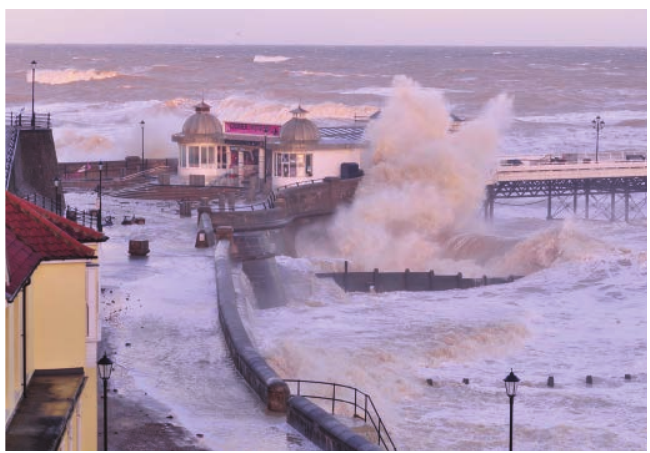
The North Sea is particularly vulnerable to storm surges because of its shape. Water can become concentrated into an increasingly narrow space (a funneling effect), intensifying the surge impact. In December 2013, a significant storm surge affected the east coast of England, with powerful waves overwhelming coastal defences in places like Cromer, Norfolk.
Example
Real-World Case: December 2013 Cromer Storm Surge
During December 2013, the east coast of England experienced a significant storm surge event that demonstrated the power of high energy coastal conditions. At Cromer in Norfolk, the combination of:
- Low pressure weather system
- Strong winds pushing water towards the coast
- High tide conditions
- Funneling effect in the North Sea
resulted in water levels rising dramatically above normal, with powerful waves overwhelming coastal defences and flooding parts of the town.
These extreme events demonstrate the power that coastal systems can unleash, particularly along high energy coastlines.
Low energy coasts
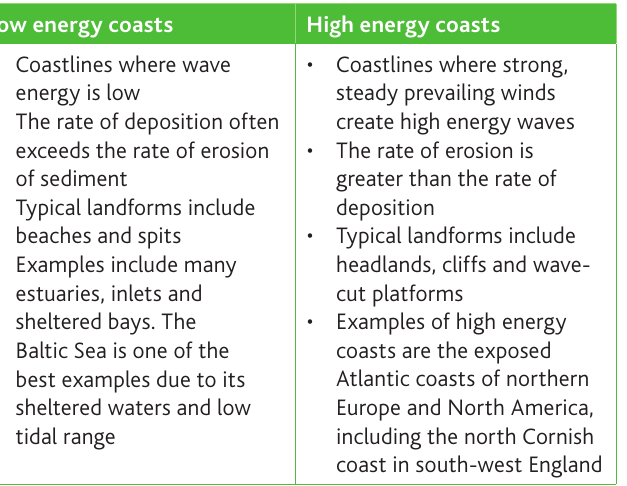
Low energy coast – A coastline where wave energy is low and the rate of deposition often exceeds the rate of erosion of sediment.
Low energy coasts develop in locations sheltered from strong winds and large waves. These are typically found in enclosed seas, bays, or areas protected by headlands or islands.
Characteristics of low energy coasts
Along low energy coastlines, wave action is relatively gentle. Waves arriving at the shore carry limited energy, meaning they lack the power to erode coastal materials effectively. Instead, these weak waves tend to drop the sediment they're carrying, leading to deposition becoming the dominant coastal process.
Important
On low energy coasts, deposition exceeds erosion. This is the defining characteristic that separates them from high energy coasts. Remember: low energy = low erosion, high deposition.
Because deposition exceeds erosion, low energy coasts gradually build up over time. Sediment accumulates to create distinctive depositional landforms. The most common features include:
- Beaches – Gently sloping accumulations of sand or shingle
- Spits – Long, narrow ridges of deposited material extending from the coast
- Bars and tombolos – Other depositional features formed from accumulated sediment
Examples of low energy coasts
The Baltic Sea provides an excellent example of a low energy coastal environment. This semi-enclosed sea is largely sheltered from the powerful Atlantic storms that affect other European coasts. Its sheltered waters and limited tidal range create ideal conditions for sediment deposition, resulting in extensive beaches and coastal accumulation features.
Example
Case Study: The Baltic Sea
The Baltic Sea exemplifies low energy coastal conditions because:
- It is a semi-enclosed sea, sheltered from major ocean storms
- Limited exposure to powerful Atlantic weather systems
- Restricted tidal range
- Protected by surrounding landmasses
Result: Extensive depositional features including long sandy beaches, spits, and other accumulation landforms characterize much of the Baltic coastline.
Other examples include:
- Sheltered bays protected by headlands
- Estuaries and inlets
- Areas behind barrier islands
- Coasts in enclosed seas or lakes
High energy coasts
High energy coast – A coastline where strong, steady prevailing winds create high energy waves and the rate of erosion is greater than the rate of deposition.
High energy coasts are found in locations exposed to strong winds, long fetch distances, and powerful wave action. These coasts face the full force of ocean waves, resulting in dramatic and dynamic coastal environments.
Characteristics of high energy coasts
Strong, steady prevailing winds (winds that blow consistently from one direction) generate powerful waves that continuously attack high energy coastlines. These high energy waves possess considerable force, enabling them to erode coastal rock and carry away large quantities of material.
Important
On high energy coasts, erosion significantly exceeds deposition. This is the fundamental difference from low energy coasts. The dominant process is destruction rather than construction – the coastline is actively worn away rather than built up.
Because erosion significantly exceeds deposition, high energy coasts are shaped primarily by destructive processes. Rather than building up like low energy coasts, these coastlines are actively worn away, creating distinctive erosional landforms:
- Headlands – Projecting sections of harder rock that resist erosion
- Cliffs – Steep rock faces cut by wave action
- Wave-cut platforms – Flat rocky surfaces exposed at low tide, created by cliff retreat
These dramatic features give high energy coasts their rugged, imposing character.
Note
The power of waves on high energy coasts is directly related to fetch – the distance over which wind blows across open water. Longer fetch distances allow waves to build up more energy, which is why Atlantic-facing coasts experience such powerful wave action after winds blow across thousands of kilometres of ocean.
Examples of high energy coasts
The exposed Atlantic coasts of northern Europe and North America exemplify high energy coastal environments. These coastlines face persistent westerly winds that blow across thousands of kilometres of open ocean, generating powerful waves that relentlessly pound the shore.
The north Cornish coast in south-west England provides an excellent UK example. Here, Atlantic waves crash against resistant granite and slate cliffs, creating spectacular coastal scenery with towering headlands, deep coves, and extensive wave-cut platforms.
Example
Case Study: North Cornwall Coast
The north Cornwall coast demonstrates classic high energy coastal characteristics:
- Direct exposure to Atlantic Ocean
- Prevailing westerly winds blow across thousands of kilometres of fetch
- Powerful waves continuously attack the coastline
- Resistant granite and slate rocks
Result: Dramatic erosional landforms including:
- Towering cliffs up to 130 metres high in places
- Prominent headlands jutting into the sea
- Extensive wave-cut platforms exposed at low tide
- Deep coves carved between headlands
Coastal sediment budget and sediment cells
The classification of coasts into low and high energy types relates directly to the concept of the coastal sediment budget.
Coastal sediment budget – The balance between sediment being added to and removed from the coastal system, that system being defined within each individual sediment cell.
Note
Think of the sediment budget like a bank account for sediment. "Inputs" include material added through deposition, whilst "outputs" include material removed through erosion. When inputs exceed outputs, you have a positive budget (typical of low energy coasts). When outputs exceed inputs, you have a negative budget (typical of high energy coasts).
Sediment cell – A distinct area of coastline separated from other areas by well-defined boundaries, such as headlands and stretches of deep water.
Sediment cells are relatively self-contained stretches of coastline where sediment movement occurs largely independently from adjacent cells. Natural barriers like headlands or deep water channels prevent significant sediment transfer between cells. Understanding sediment cells helps coastal managers predict where erosion and deposition will occur and plan appropriate coastal defence strategies.
Important
Sediment cells are crucial for coastal management because they define natural units where sediment movement operates as a system. Any human intervention (such as building groynes or sea walls) in one part of a sediment cell can have knock-on effects elsewhere within that same cell, but typically won't affect adjacent cells.
Remember!
Summary
Key Points to Remember:
-
Low energy coasts have gentle wave action where deposition exceeds erosion, creating beaches, spits and other depositional features. The Baltic Sea exemplifies this coast type.
-
High energy coasts experience powerful waves driven by strong prevailing winds, where erosion exceeds deposition, forming cliffs, headlands and wave-cut platforms. Atlantic-facing coasts, like Cornwall, are classic examples.
-
The coastal sediment budget represents the balance between sediment inputs and outputs within a sediment cell, determining whether a coast is building up or wearing away.
-
Storm surges can temporarily create extreme high energy conditions even along normally lower energy coasts, demonstrating the dynamic nature of coastal systems.
-
Understanding whether a coast is high or low energy helps predict what landforms will develop and how the coastline will change over time.
Quick Memory Aid: Think "LED" (Low Energy = Deposition) and "HEE" (High Energy = Erosion) to remember which process dominates each coast type.