Prime Minister vs President (AQA A-Level Politics): Revision Notes
📚Revision Notes
Prime Minister vs President
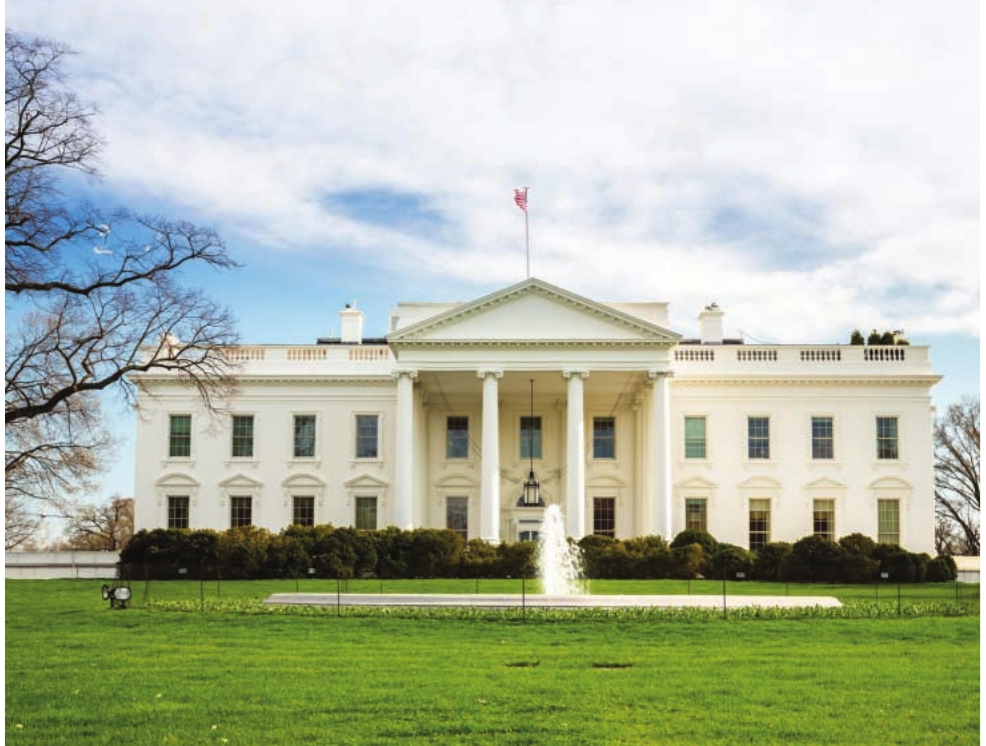
The US president and UK prime minister are the chief executives of their respective countries, but they operate within very different political systems. The USA has a presidential democracy where the president is directly elected and holds sole executive authority. The UK has a parliamentary democracy where the prime minister is not directly elected but leads the government based on support from the House of Commons.
Note
Despite the president's greater ceremonial trappings and security, a prime minister with strong party support and a sizeable Commons majority can often wield more practical power over the legislature than most presidents.

Types of executive power
Presidential democracy: A system where the president is directly elected and holds sole executive authority once inaugurated.
Parliamentary democracy: A system where the prime minister is not directly elected but holds their position based on the support of a majority in the House of Commons.
Singular vs collective executive
The most fundamental difference between the two leaders lies in the nature of their executive power.
Singular executive: An individual who has sole authority over the government, as is the case with the US president. Also known as a sole executive.
The president is a singular executive, meaning they have complete personal authority over the executive branch. They make decisions independently and bear sole responsibility for executive actions. This includes the power to issue executive orders, executive agreements and signing statements.
Collective executive: Authority over the government is shared. In the UK's system of cabinet government, members of the cabinet share power and take collective responsibility for decisions.
Important
The prime minister heads a collective executive under the system of cabinet government. The PM is described as primus inter pares (first among equals), sharing power with cabinet members who hold collective responsibility for all cabinet decisions. This means cabinet ministers must publicly support all government decisions or resign.
Head of state
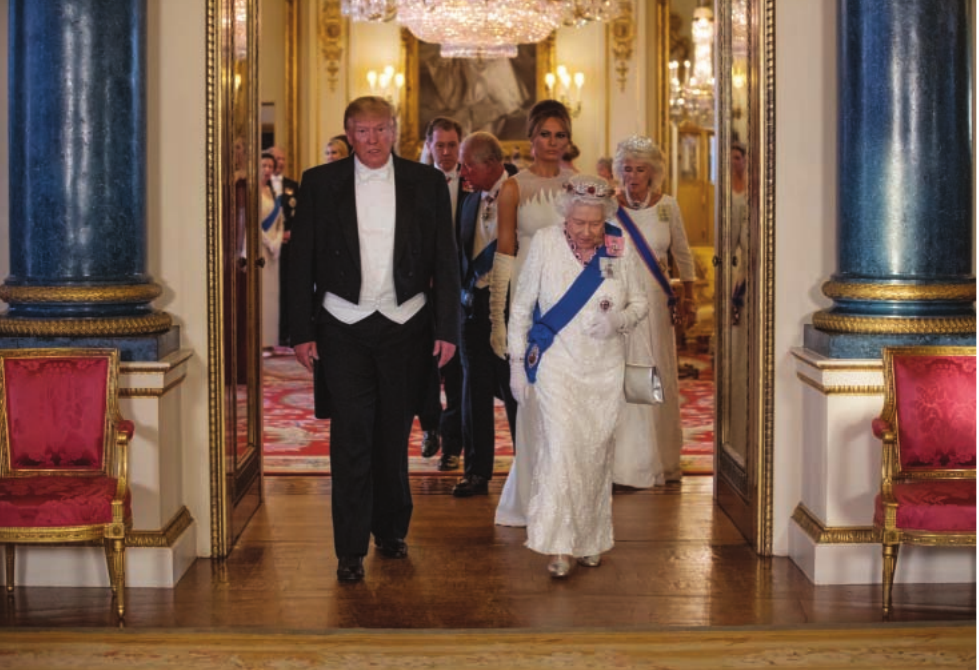
In the USA, the president serves as both head of state and head of government, receiving the full ceremony and pageantry that comes with representing the nation. In the UK, these roles are split: the monarch is head of state, whilst the prime minister is head of government.
Note
This distinction means the president receives state honours and ceremonial functions that in the UK are reserved for the monarch. When foreign leaders visit, they meet the Queen as head of state, not the prime minister.
Legislative powers
Both leaders initiate legislation within their respective legislatures, but the separation of powers in the USA significantly limits the president's legislative influence compared to the prime minister.
How legislation works
In the UK, the fusion of powers means the executive is part of the legislature. The government's legislative programme receives the vast majority of parliamentary time. A prime minister with a Commons majority can use several tools to ensure their legislation passes:
- Party leadership to influence MPs from their party
- Powers of patronage to offer government jobs as inducements to vote for legislation
- The whip system to ensure party discipline
Whip system: A system where party officials (whips) enforce party discipline, encouraging or pressuring MPs to vote according to the party line.
Patronage: The power to make appointments to government positions, which can be used to reward supporters and influence voting behaviour.
Payroll vote: MPs who hold government positions and are therefore expected to support the government in votes.
Important
In contrast, Congress is separate from the executive and develops its own legislative programme. The president can suggest legislation but cannot guarantee it will be accepted. The separation of powers limits the president's control of party discipline, as House and Senate whips work for the party leadership of those chambers, not the president. The president cannot offer government jobs to members of Congress as inducements.
Checks and balances
Elective dictatorship: Describes the great power wielded by a prime minister with a firm majority in the House of Commons.
A prime minister with a sizeable majority and strong party support enjoys a position so powerful it has been described as an 'elective dictatorship'. There are few checks and balances on the UK government's ability to pass legislation:
- Parliament is sovereign, so the UK Supreme Court cannot strike down its laws
- The House of Lords can only delay legislation for up to a year
Note
In the USA, the Supreme Court can rule laws unconstitutional, and the Senate can block legislation entirely.
However, the president does possess the veto power - the ability to reject legislation passed by Congress. The prime minister has no such power. If parliament passes legislation the PM disapproves of, it becomes law regardless.
Example
Worked Example: Parliament Overruling the Prime Minister
In September 2019, the European Union (Withdrawal) (No. 2) Act 2019 forced Boris Johnson's government to seek a Brexit extension, despite his strong opposition. This demonstrates that even a prime minister cannot veto legislation once parliament has passed it.
Congress can override a presidential veto, but this requires a two-thirds supermajority in both houses, which is difficult to achieve. Presidents often use the threat of a veto to pressure Congress to modify legislation.
Divided vs united government
Divided government: When the presidency is controlled by one party whilst one or both houses of Congress are controlled by another party.
United government: When the same party controls both the presidency and both houses of Congress.
Presidents face particular challenges during periods of divided government, when their party does not control both houses of Congress. Members of Congress are less subservient to party leadership than MPs, and more critical of legislation, which often leads to gridlock (political deadlock).
Example
Worked Example: Failure During United Government
In 2017, Donald Trump failed to repeal Obamacare despite Republican control of both houses, when four Republican senators voted against it. This illustrates that even united government does not guarantee legislative success for US presidents.
UK prime ministers rarely face divided government, as they typically command a majority in the Commons. However, minority governments do occur.
Example
Worked Example: Minority Government Challenges
Theresa May struggled to pass her EU withdrawal bill through parliament without a majority, ultimately leading to her resignation. This demonstrates the difficulties prime ministers face without a Commons majority.
Financial powers
Congress must approve the president's budget each year. Agreement often requires significant compromises, and occasional government shutdowns dramatically illustrate the limits of presidential power when Congress refuses to pass spending bills.
Note
In the UK, government shutdowns do not happen. UK governments usually hold a Commons majority and can pass their budget. Even minority governments generally receive enough votes from other parties, or make necessary changes to avoid rejection and a vote of no confidence.
Military powers
The president is commander-in-chief of the armed forces. In the UK, the monarch formally holds this role, but the prime minister acts as the actual military decision-maker.
Unlike the prime minister, the president cannot declare war - this power belongs to Congress. However, neither country has made a formal declaration of war since the Second World War, so their use of military action without formal declaration is more significant.
The War Powers Act 1973 places a legal requirement on the president to seek Congressional approval for military action, though presidents do not always adhere to this.
Important
In contrast, there is no legal requirement for the prime minister to consult parliament before committing troops. The prime minister can declare war using royal prerogative power (the power to take action using royal authority, formally exercised by the monarch).
Some argue a constitutional convention of parliamentary approval has emerged since 2003 when parliament supported UK involvement in the Iraq War. In 2013, parliament voted against David Cameron's planned military action in Syria. However, military action was taken in Libya in 2011 and Mali in 2013 without preceding votes, suggesting no firm convention exists.
Appointments
The president's appointments to executive branch positions require Senate confirmation. This creates a check on presidential power. However, the president has the right to nominate federal judges, which (with Senate approval) gives the president influence over the judiciary that the UK prime minister lacks.
Note
The UK prime minister can appoint whomever they choose to government positions without any approval process.
Election and mandate
The US president is directly elected, giving them a personal mandate from the voters. The UK prime minister is the leader of whichever political party is able to form a government. Their authority comes from leading the largest party in the House of Commons, which has a mandate from the last general election.
Note
Prime ministers therefore do not need an individual mandate. A prime minister who takes over between general elections has not faced the electorate as a potential prime minister. Boris Johnson took office in July 2019 but did not face voters until the December 2019 general election.
Term limits
The US Constitution prevents the president from being elected for more than two terms. This weakens presidential power in the final years of their second term, potentially making them a lame duck president (a president with diminished power and influence due to nearing the end of their final term).
Note
The prime minister has no term limits. The longest-serving modern prime ministers were Margaret Thatcher (11 years, 208 days) and Tony Blair (10 years, 56 days). Prime ministerial power tends to decrease towards the end of their time in office, particularly if party and public support wanes, but they do not have the clear end point that US presidents face.
Succession
The US Constitution establishes a clear line of succession. The vice president automatically succeeds the president if they die, resign or are removed from office. Presidential candidates choose a 'running mate' for the election, and the successful pair are elected together.
In the UK, the prime minister may appoint a deputy, but this is not a constitutional requirement. When Boris Johnson was hospitalised with coronavirus in 2020, first secretary of state Dominic Raab deputised for him as there was no deputy PM. A deputy prime minister may stand in for the PM (for example at Prime Minister's Questions), but is unlikely to succeed them as leader.
Important
The prime minister is succeeded by whoever leads the party with most support in the House of Commons, following either an internal leadership election or a general election. The deputy PM has not succeeded since 1955. The office of UK prime minister therefore lacks the clear line of succession that exists for the US presidency.
Patronage powers
Both the prime minister and president can reward supporters with cabinet or government positions. This power of patronage is more useful to the prime minister, as it increases their influence over parliament through the payroll vote - MPs who hold government positions and are therefore expected to support the government.
Note
The separation of powers prevents the president from offering government jobs to members of Congress, limiting this form of influence.
The prime minister can also recommend supporters for life peerages or honours. Life peerages allow prime ministers to directly influence the composition of the House of Lords, though appointees may act independently if they choose. Honours include knighthoods or admission to various 'orders of chivalry' (such as an MBE), similar to presidential awards like the Presidential Medal of Freedom.
Pardon powers
The president holds the power of pardon and uses it widely. In the UK, the monarch can issue a royal pardon on the advice of the justice secretary, though this is rare.
Example
Worked Example: Royal Pardon
A notable example was the 2013 posthumous pardon of Second World War codebreaker Alan Turing for homosexual 'indecency' in 1952. This demonstrates the rarity and special circumstances under which royal pardons are issued in the UK.
Accountability to the legislatures
Both leaders are accountable to their legislatures, but the mechanisms and effectiveness of this accountability differ significantly.
Passing legislation
Both leaders introduce their annual legislative agenda to their legislatures. The president delivers a State of the Union Address to Congress, whilst the monarch delivers the Queen's Speech on behalf of the government at the state opening of parliament.
Presidents generally find it more difficult to pass legislation through Congress, particularly during divided government. Members of Congress are less subservient to party leadership than MPs and more critical of legislation, often leading to gridlock. The president's relationship with Congress can be challenging even during united government.
Important
However, the president can veto legislation passed by Congress, and it is difficult for Congress to achieve the two-thirds supermajority in both houses required to override the veto. Presidents use the threat of a veto to pressure Congress to modify legislation.
The prime minister has no veto power but is less likely to face legislation they oppose. The vast majority of parliamentary time goes to government bills. The prime minister only needs to convince one chamber - the House of Commons - where they generally have a majority.
Prime ministers can use the whip system to ensure party discipline on government legislation. MPs face pressure to 'toe the party line' through threats of deselection or career stagnation. Presidents must make more deals and work harder to convince Congress members to support them.
During minority government, however, prime ministers may also struggle. Theresa May's failure to pass her EU withdrawal bill led to her resignation. Even prime ministers with a majority can face difficulties without tight party discipline. John Major's premiership was hampered by divisions and rebellions over Europe. However, these situations occur less frequently in UK politics than in the USA.
Scrutiny of the executive
Both legislatures use the committee system to scrutinise government. However, the prime minister is personally held to account by the House of Commons at weekly Prime Minister's Questions (PMQs) and also speaks at key Commons debates.
Note
The separation of powers means the president does not address Congress except during the annual State of the Union speech and occasional special joint sessions relating to specific issues of national importance.
Removal from office
Vote of no confidence: A vote in the House of Commons on whether the government retains the confidence of parliament. If the government loses, it must resign or call a general election.
The House of Commons can call a vote of no confidence in the government at any time, for any reason, including simply that the prime minister and government are not performing well. A simple majority vote is enough to remove the prime minister and government from office.
Prime ministers may also be forced to resign by their party when it becomes clear they do not command enough Commons support to govern effectively, even before a vote of no confidence is called.
Important
It is much more difficult for Congress to remove the president from office. Congress must navigate the complex process of impeachment for wrongdoing. No president has ever been found guilty by the Senate and removed from office, although three have been impeached by the House (twice in Donald Trump's case).
Relationship to other institutions of government
Cabinet relationships
Both the prime minister and president select their cabinet members, but their relationships with their cabinets differ significantly.
| US cabinet | UK cabinet |
|---|---|
| Cabinet nominees need Senate confirmation | Prime ministers can appoint whomever they like |
| President does not share executive authority with cabinet officers | Prime minister is primus inter pares in a system of collective cabinet government |
| Cabinet officers only responsible for running their own department | Cabinet is the ultimate decision-making body: under collective cabinet responsibility ministers must publicly support government policy or resign |
| Cabinet officers are not political rivals of the president | Cabinet ministers are often the PM's political rivals |
| Cabinet officers tend to be policy specialists | Cabinet ministers generally are not policy specialists |
| Cabinet officers tend to stay in the same department | Cabinet ministers often move from one department to another |
| Cabinet reshuffles not used to increase presidential control | Cabinet reshuffles used as patronage and control |
| US cabinet cannot threaten the president's position (except via Twenty-Fifth Amendment, never invoked) | Prime minister can fall from power if they lose cabinet support |
| President may call only a handful of cabinet meetings per year | Cabinet meetings held frequently (usually weekly) |
Executive administration
Both leaders receive considerable administrative support. The Executive Office of the President (EXOP) is much more extensive in scale and scope than the Prime Minister's Office and Cabinet Office.
Wider bureaucracy
Both leaders act as chief executive for the whole government bureaucracy. The president heads the federal government and federal agencies; the prime minister controls the civil service and government agencies.
Note
The vast majority of top UK civil service officials do not change from one government to the next, though special advisers (important political appointees) do. In contrast, a new US administration needs to fill around 4,000 government positions. The character of the federal government's senior staff fundamentally changes from one administration to the next, with a steep learning curve for many staff appointed at the start of a president's first term.
Remember!
Summary
Key Points to Remember:
- The president is a singular executive with sole authority; the prime minister heads a collective executive and is primus inter pares
- The president is both head of state and head of government; in the UK these roles are split between the monarch and prime minister
- A prime minister with a strong Commons majority can often influence legislation more effectively than a president, due to the fusion of powers and tools like the whip system and patronage
- The president has veto power but cannot guarantee legislation will pass; the prime minister has no veto but usually controls the legislative agenda
- The president is directly elected with a personal mandate and has two-term limits; the prime minister has no individual mandate or term limits
- The House of Commons can remove a prime minister through a vote of no confidence at any time; Congress can only remove a president through the difficult impeachment process
- The UK system can resemble an 'elective dictatorship' when a prime minister has strong party support, whilst the US separation of powers creates more checks and balances on presidential authority