Theoretical frameworks: predication, impact and management of tectonic hazards (Edexcel A-Level Geography): Revision Notes
📚Revision Notes
Theoretical frameworks: predication, impact and management of tectonic hazards
🔗 Accuracy of predicting and forecasting depends on the type and location of the tectonic hazard
| Tectonic Hazard | Method of Prediction and Forecasting |
|---|---|
| Earthquakes | • Some evidence suggests that animals and birds can detect seismic activity before humans, but only just before seismic waves reach the location. • Modern seismic monitoring and communication systems allow warnings to be issued up to a minute before shockwaves arrive. • Foreshocks can indicate a larger event. • The absence of earthquakes along a known fault is a concern, as it suggests stress and strain are building. • Predicting the exact timing of earthquakes remains impossible. • Earthquakes may travel along fault lines, but it is difficult to predict which section of the fault will move next. • Some faults remain unknown. |
| Volcanoes | • Volcanoes have a fixed location and can be constantly monitored. • Monitoring volcanoes requires advanced technology and is costly; therefore, many volcanoes in developing countries remain unmonitored. • Geological evidence of past eruptions provides insights into the type and magnitude of future eruptions. • Measurements such as gas emissions, harmonic tremors, bulging of the volcano's flanks, and magma composition offer important data. • There are usually changes before an eruption, making monitoring relatively accurate, but predicting the exact magnitude remains challenging. |
| Tsunamis | • Any submarine earthquake, especially those of significant magnitude on subduction zones, may trigger a tsunami. • Tsunami warning systems are operational in the Pacific and Indian Oceans, with seismographs and buoys monitoring sea movement. • Based on seismograph data of epicentres and the movement of the sea, warnings can be issued. • Computer modelling helps predict arrival times and wave heights, but does not always accurately account for ocean depth and sea floor topography. |
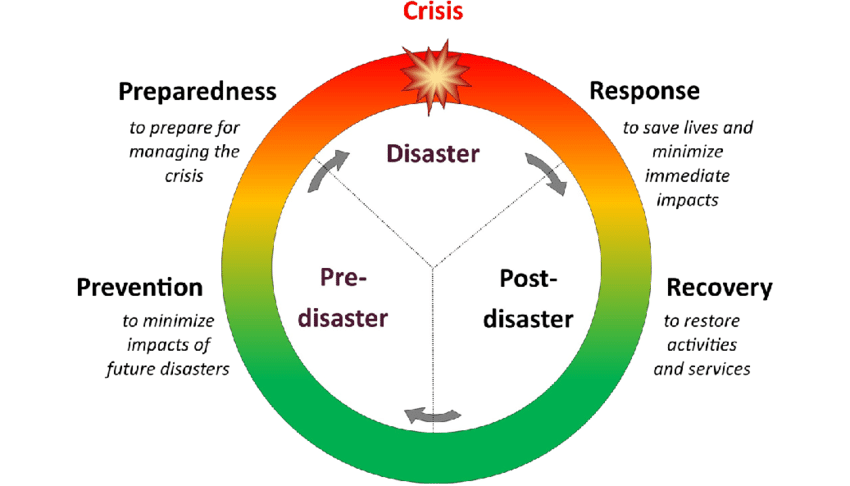
The hazard management stages
- Mitigation: Actions & interventions to decrease ↓ vulnerability before a natural hazard
- Preparedness: Ways in which communities can adapt to live with a natural hazard
- Resilience: Ability to resist, cope with, adapt to and recover from a natural hazard
- Response: Actions taken during and after a natural hazard to decrease ↓ impacts (eg. Evacuation)
- Recovery: Rehabilitation and reconstruction through restoring infrastructure, temporary housing, relocation and new risk assessment
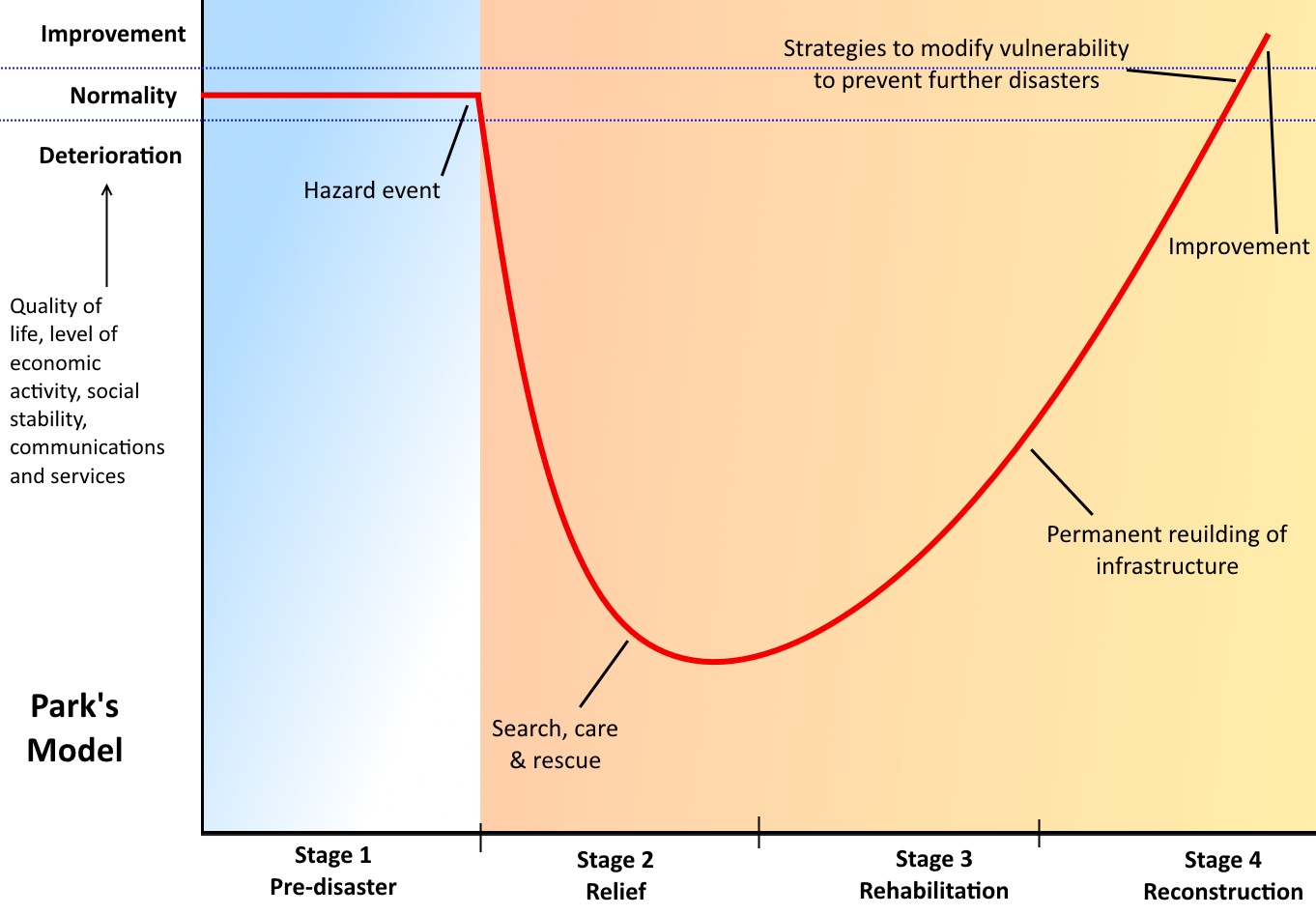
| Stage | Description |
|---|---|
| Pre-disaster | • Quality of Life (QOL) is normal before the disaster occurs. • People prepare for potential events (e.g., education on how to react to different disaster types, planning, etc.). |
| Relief | The hazard has occurred • Immediate relief is the priority, focusing on medical attention, rescues, and urgent needs. • Can last from hours to weeks. • QOL drops to its lowest but begins to improve as relief efforts are made. |
| Rehabilitation | • Organisations (e.g., government) work to restore normalcy by providing essential services to those affected and planning the rebuilding process. |
| Reconstruction | • Long-term recovery focuses on infrastructure and property investment to repair or rebuild. • During this phase, organisations may use lessons learned to improve preparedness and prevention for future disasters. |