Geological structure and the development of coastal landscapes (Edexcel A-Level Geography): Revision Notes
📚Revision Notes
Geological structure and the development of coastal landscapes
Three Elements to Geological Structure
- Strata → 🔗 The different layers of rock within an area and how they relate to each other
- Deformation → 🔗 The regress to which rocks have been deformed by tectonic activity
- Faulting → 🔗 The presence of major fractures that have moved rocks from their original positions Results in the following types of coastlines being formed:
Concordant → Rock strata running parallel to the coastline (eg. The Dalmatian Coast in the Adriatic Sea)
- Haff coastlines
- Long sediment ridges topped by sand dunes run parallel to the coast just offshore
- Lagoons (haffs) are created between the ridges and the shoreline
Discordant → Alternating bands of hard and soft rock at right angles to the coastline
- Less resistant rocks are eroded to form bays, whereas more resistant rocks remain as headlands
- Headlands are eroded more than bays because…
- In deep water, crests are parallel
- As water shallows towards the coast, waves slow down & wave height increases ↑
- In bays, wave crests curve to reflect their shape and wave height decreases ↓
- Wave action is concentrated on headlands
Cliff profiles
Influenced by…
-
The resistance of the rock to erosion
-
The dip of the rock strata
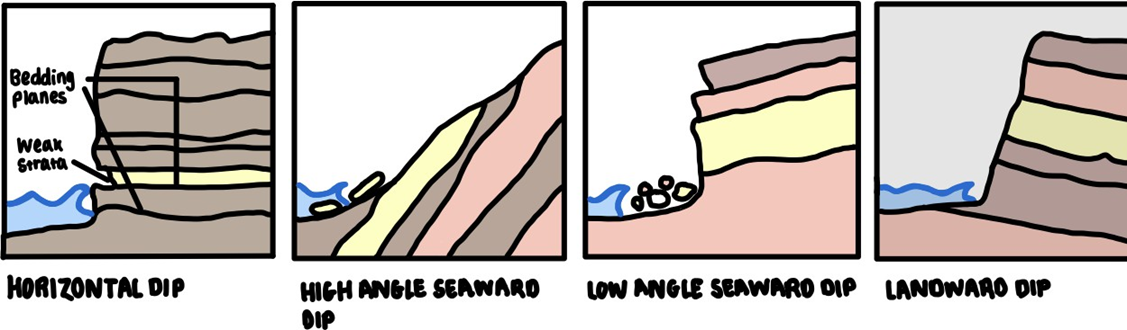
-
Faulting → Major fractures in rocks produced by tectonic forces and involving the displacement of rocks on either side of the fault line
-
Natural cracks - jointing and fissures → joints occur in most rocks, dividing the rock strata up into blocks with a regular Fissures often only occur a few cm/mm long ↳ The location of micro features within cells, such as caves, are often controlled by the location of faults and/or strata which have a particular high density of joints & fissures