Marine erosion creates coastal landforms and landscapes (Edexcel A-Level Geography): Revision Notes
📚Revision Notes
Marine erosion creates coastal landforms and landscapes
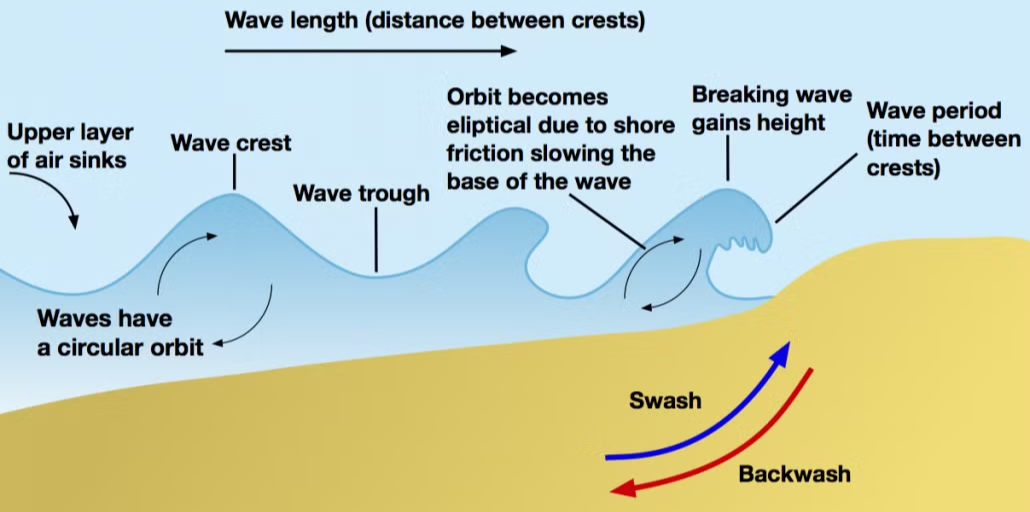
Waves
↳ Result from direction between the wind and the sea surface
↳ Potential energy of a wave is proportional to its height, direction, duration of wind and fetch
Constructive and destructive waves
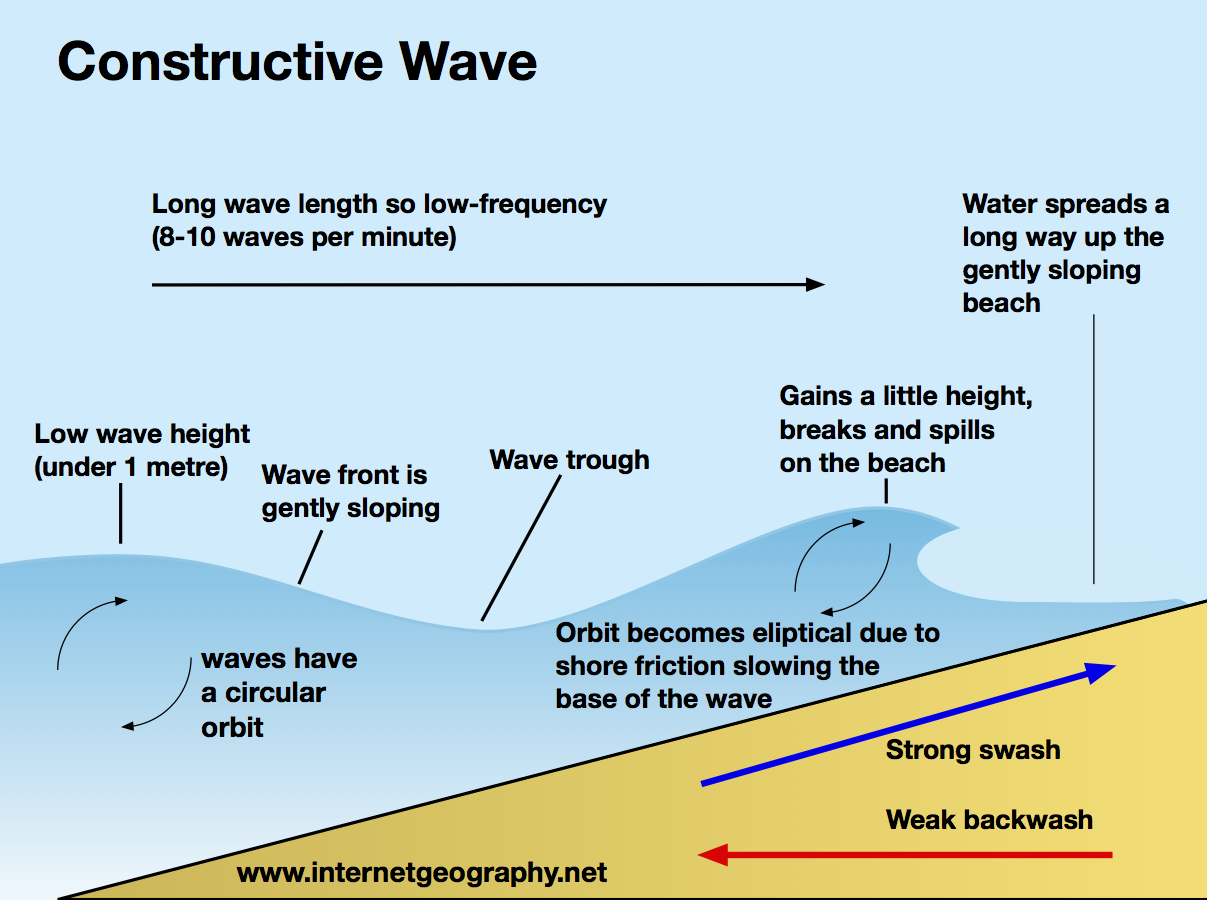
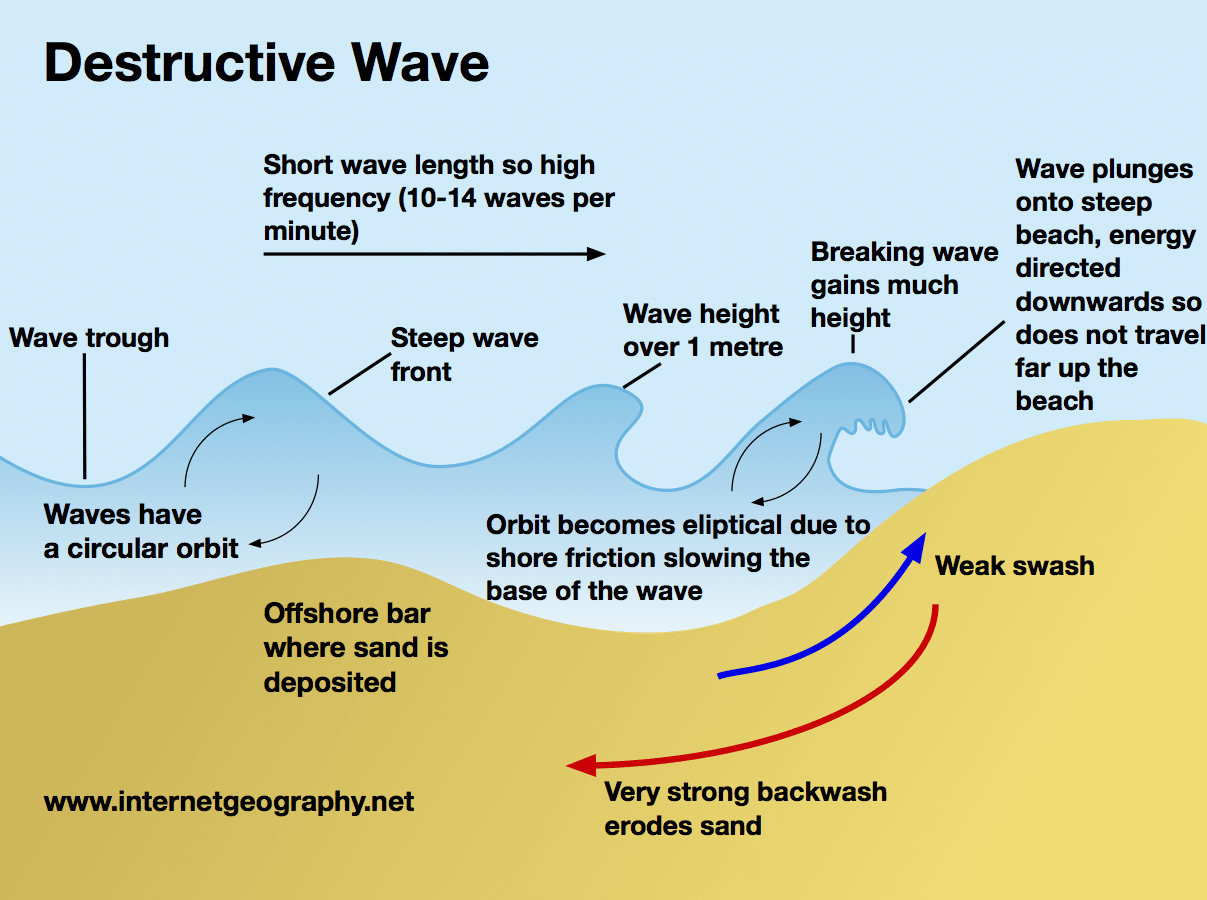
Beaches can experience both constructive and destructive waves. This can change:
- Daily (storms)
- Seasonally (summer vs winter)
- Long term (climate change)
| Constructive waves | Destructive waves |
|---|---|
| • Build beaches
• Have longer wavelengths and lower in height
• Less frequent
• Swash is greater than backwash so beach materials are added meaning a gentle sloping beach
• Upper part of beach has berms (small ridges) • each represents the highest point the wave reached at the previous high tide | • Backwash is greater than swash so sediment is dragged offshore
• Create a steeper beach profile initially, but over time the beach flattens as material is drawn backwards
• Storms create storm beaches (shingle ridges at the back of the beach) |
Erosional processes
↳ Erosion is not a constant process Most erosion occurs when:
- Waves are at their largest (influenced by wind speed and fetch)
- Waves approach the coast at 90° to the cliff face
- High tide
- Heavy rainfall = ↑ increase in percolation through strata and surface runoff = weaker cliff
- Debris from previous erosion as been removed from the cliff base
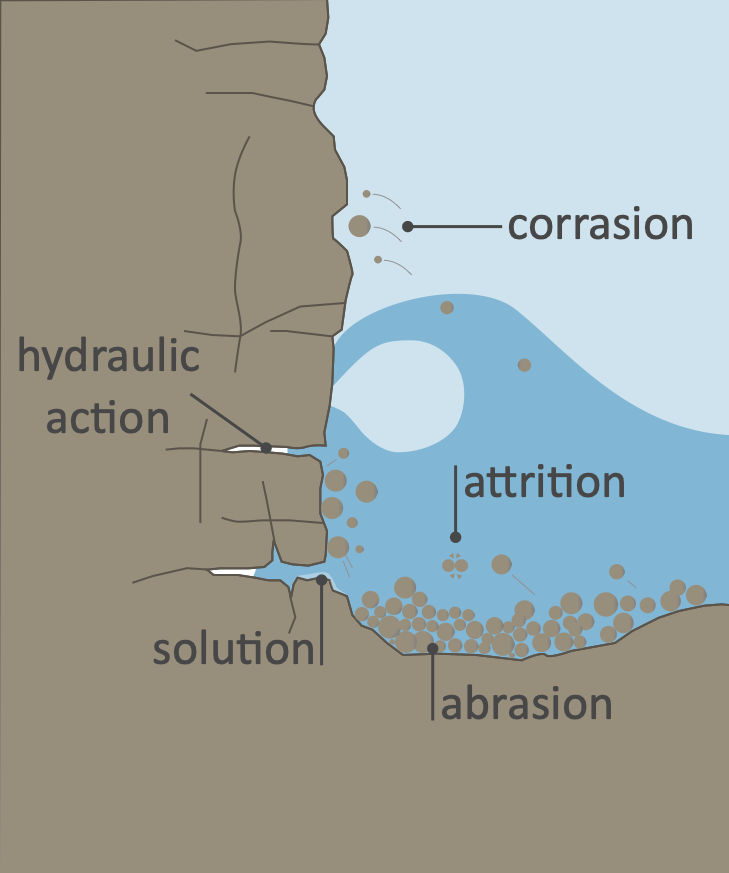
| PROCESS | EXPLANATION | INFLUENCE OF LITHOLOGY |
|---|---|---|
| Hydraulic action | • Air trapped in cracks is compressed by waves crashing against the cliff face • Pressure forces cracks open so more air is trapped & greater force experienced each time | Heavily jointed rocks so very vulnerable |
| Abrasion | • Sediment picked up by breaking waves is thrown against the cliff face • Over time, the cliff face is gradually worn down | For abrasion to occur loose sediment has to be available ↳ Softer sedimentary rocks are more available than hard igneous ones |
| Attrition | • Acts on already eroded sediment • As sediment moved around by waves, numerous collisions between particles slowly chip fragments off the sediment • So over time the sediment becomes smaller & more rounded | Softer rocks = rapidly reduced in size by attrition |
| Corrosion /solution | • Carbonate rocks are vulnerable to corrosion by rainwater and seawater • Visors (overhangs) on tropical coastlines often indicate where limestone has been dissolved | Mainly affects limestone which is vulnerable to solution by weak acids |
Coastal landforms
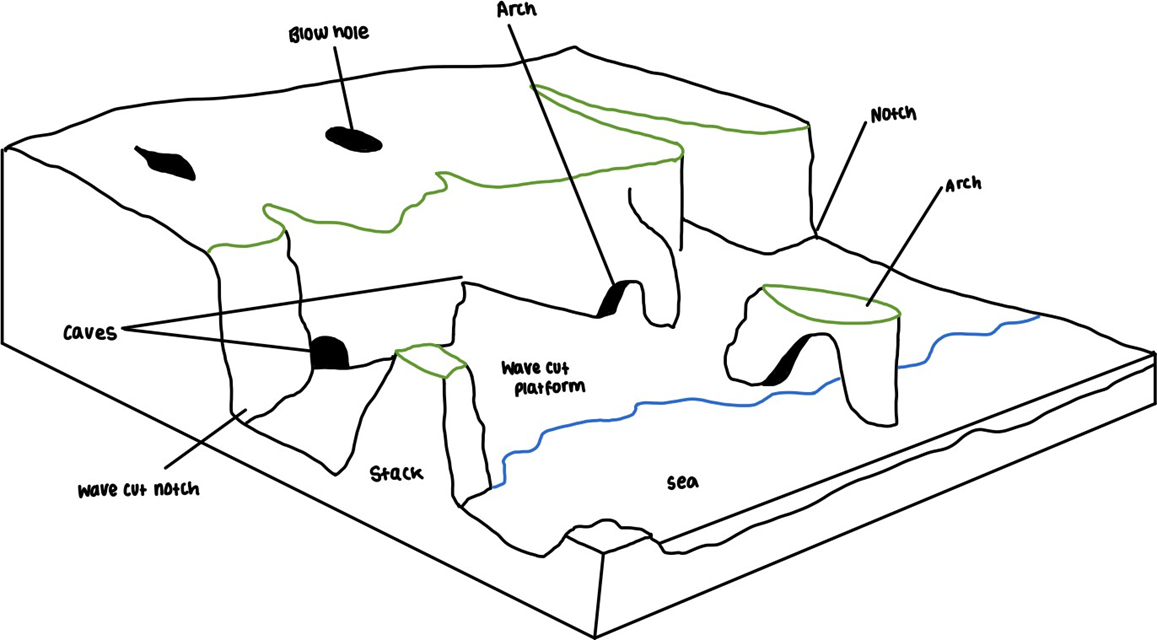
Wave-cut notches
- At high tide, destructive waves can reach the base of a cliff
- Abrasion & hydraulic action erode the rock at the cliff base
- A curved, wave-cut notch forms along the length of the cliff Caves can also form at weaker points along the wave-cut notch
Wave-cut platform
- Above the wave-cut notch, an overhang of unsupported rock is formed
- As the overhang is further undercut, less support for the overhang, eventual mass movement
- Leads to cliff retreat
- As the cliff retreats, a flat platform is left behind
Cave → arch → stack → stump
- Mainly hydraulic action & abrasion form caves & eventually meet in the middle forming an arch
- Weathering causes the centre of the arch to eventually collapse
- Leaves a stack which is then further eroded into a stump