Sea Level Change Influences the Coastline Over Time (Edexcel A-Level Geography): Revision Notes
📚Revision Notes
Sea Level Change Influences the Coastline Over Time
Note
Short Term
- High & low tide
- Atmospheric air pressure (low pressure = slight rise in sea level)
- Winds can result in different wave heights
Note
Long Term
- Sea temperatures changing
- Relative changes in levels of land
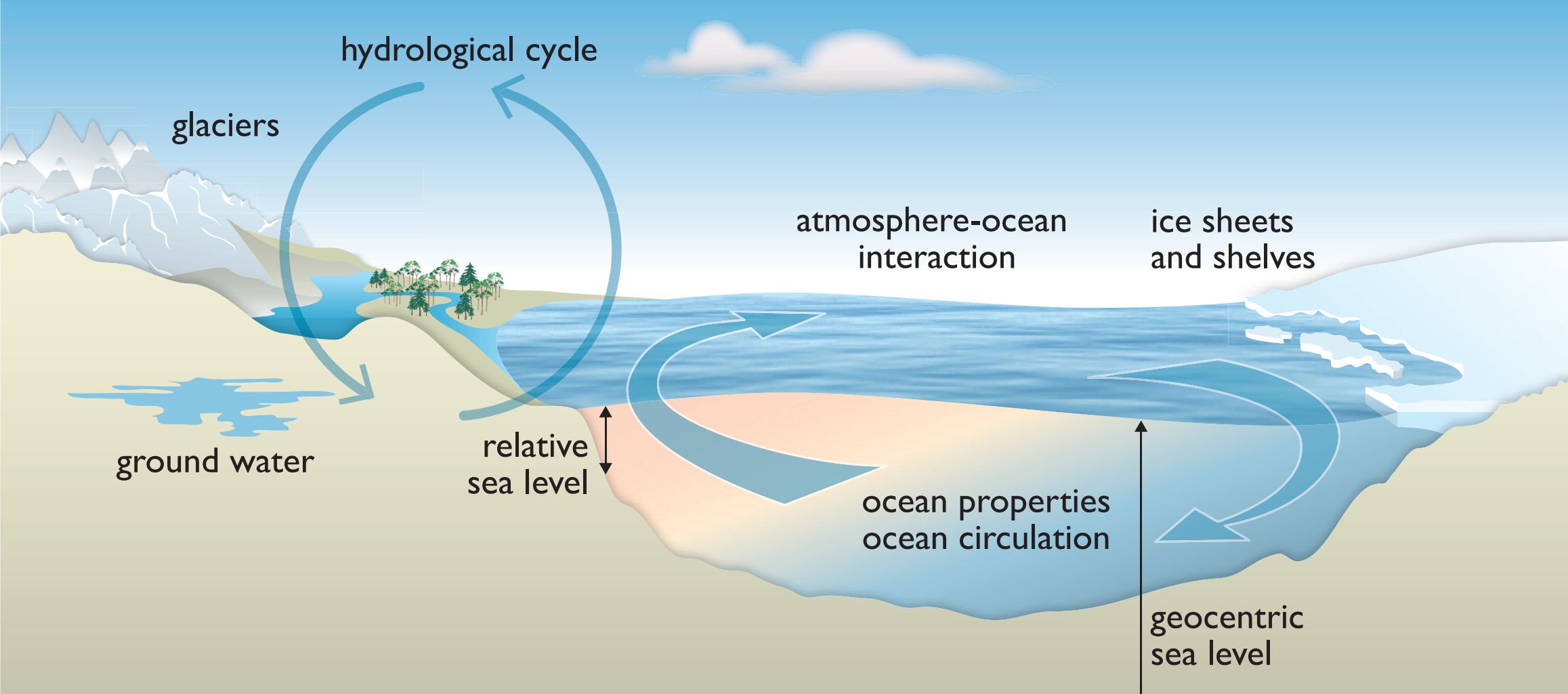
Longer-Term Sea Level Changes
Eustatic & Isostatic
-
Eustatic → Change in sea level
-
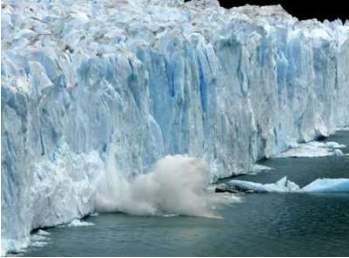
Melting ice causes more water in sea so sea level rises
-
In glacial periods, much more water stored on land in form of ice so sea levels lower
-
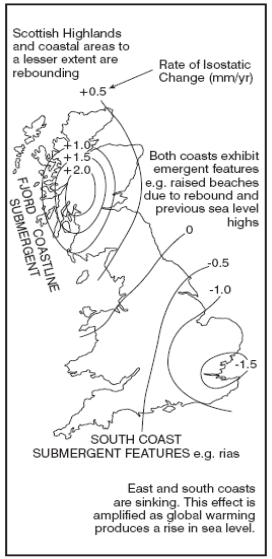
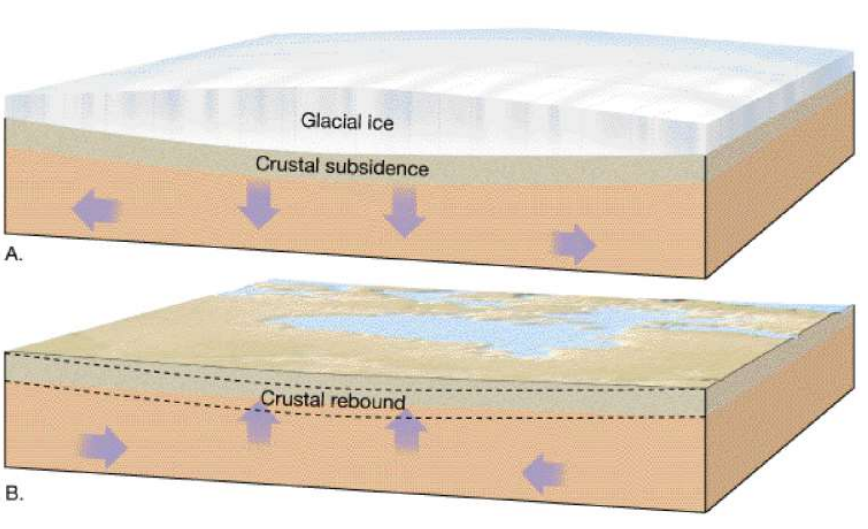
Isostatic → Change in land level (often linked to ice on land)
- Glaciers can be kms thick so weight forces the land downwards
- When glaciers melt - isostatic rebound as less weight on land so land rises again
Tectonic
- As tectonic plates move & collide, some continental shelves & areas of land are either pushed upwards or sink downwards
- Tends to be a localised event
Emergent Coastlines
🔗 Often a result of isostatic rebound
-
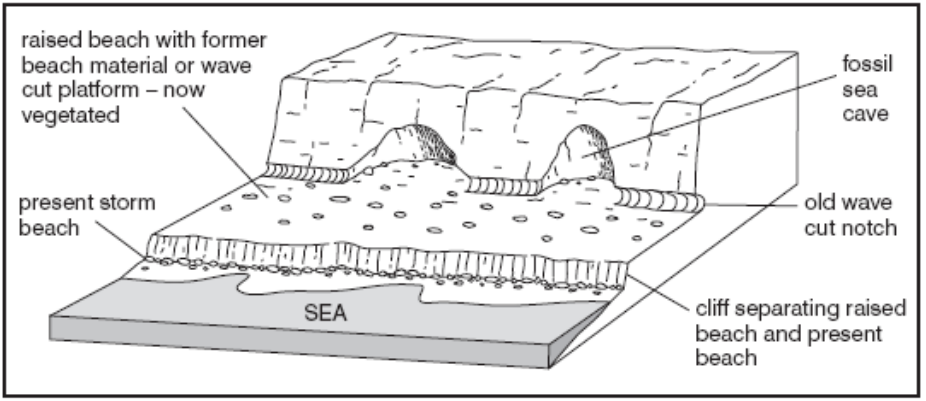
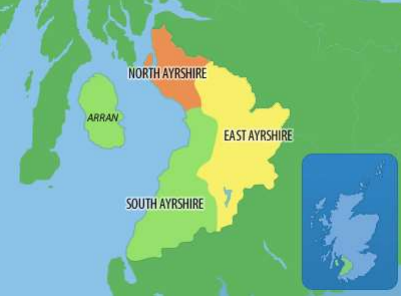
Raised beach → A former beach that is now above the high tideline (eg. on the Isle of Arran, Scotland)
- Some of these have different levels ∴ indicating different stages of uplift
- Some of these have different levels ∴ indicating different stages of uplift
-
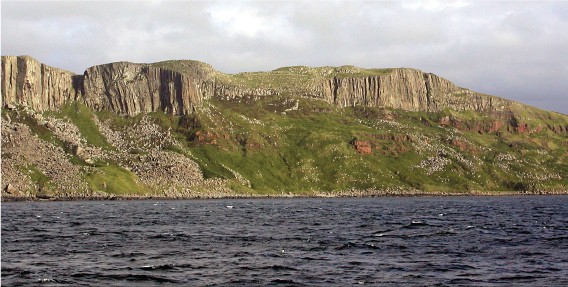
Fossil cliffs → Cliffs no longer being eroded as isolated from the sea
- Fossil features such as former cave & stacks are left above on raised marine platforms
- Fossil features such as former cave & stacks are left above on raised marine platforms
Submergent Coastlines
🔗 Often as a result of sea level rise (eustatic rise) or isostatic sinking
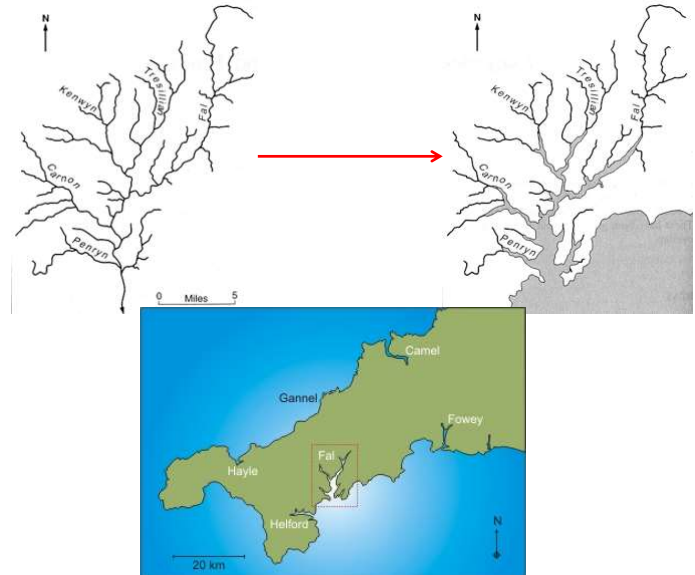
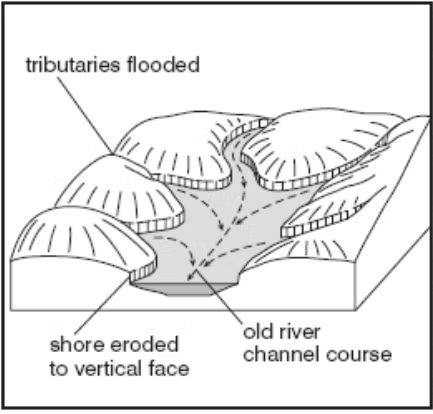
- Ria → Frowned winding river valley w/ offshoots of water stretching inland
- Widest & deepest nearest the sea, gets narrower & shallower inland
- Widest & deepest nearest the sea, gets narrower & shallower inland
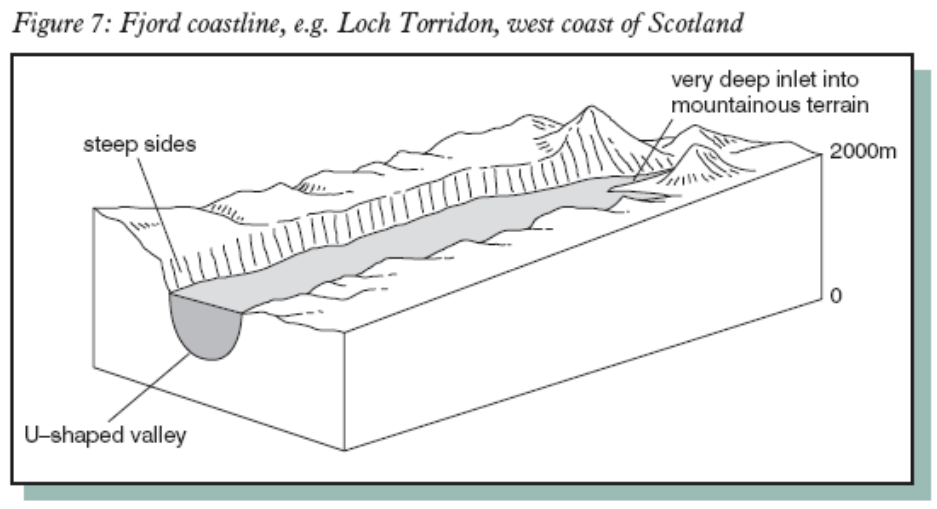
- Fjord → Straight, glaciated valleys that were drowned by rising sea levels at the end of the ice ages (eg. in Norway)
- Has very deep water with steep sides
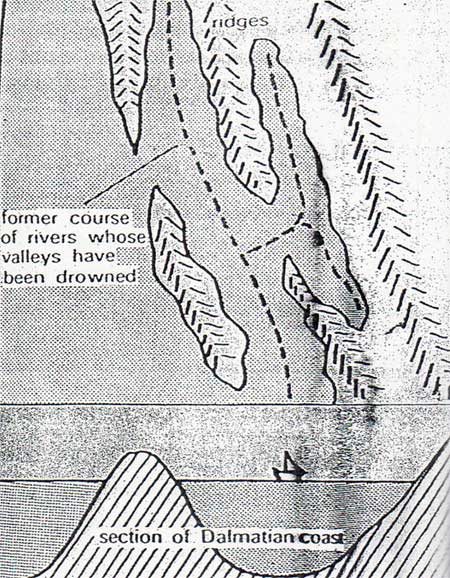
- Dalmatian coasts → Concordant coasts where the sea has flooded the landscape of alternating hills and valleys to create long bays and parallel hilly islands
Note
Coastal Impacts of Global Warming
- Low lying islands and ecosystems will disappear
- Wave heights will increase in the Arctic as sea ice disappears, leading to accelerated erosion rates
- Stronger storms will create larger destructive waves, leading to accelerated erosion rates