Biological Carbon Sequestration on Land and in Oceans (Edexcel A-Level Geography): Revision Notes
📚Revision Notes
Biological Carbon Sequestration on Land and in Oceans
Carbon Cycle Pumps
🔗 The processes operating in oceans to circulate and store carbon. There are three sorts:
• Biological • Carbonate • Physical.
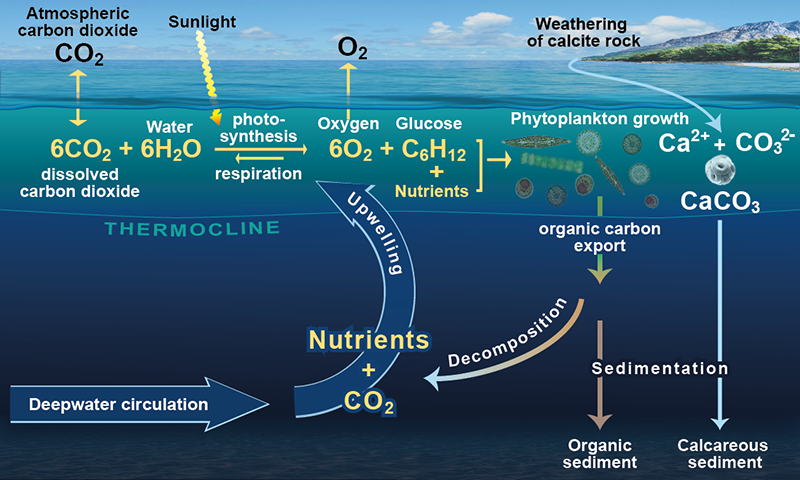
Carbon Cycle Pumps
| Biological Pump | The organic sequestration of CO2 to oceans by phytoplankton → Microscopic, usually single-celled, marine plants float near the surface (allows them to access sunlight for photosynthesis) • known as the base of the marine food web ● Phytoplankton have rapid growth rates (NPP) • especially in shallow water of continental shelves where rivers carry nutrients far out to sea ● C then passed up the food chain by consumer fish and zooplankton, which release CO2 back into the water and atmosphere ● Most is recycled in surface waters ↳ Only 0.1% reaches the sea floor after the dead phytoplankton sink, where they decompose or are turned into sediment |
|---|---|
| Carbonate Pump | Relies on inorganic carbon sedimentation ● Marine organisms utilise CaCO3 to make hard outer shells and inner skeletons ● When organisms die and sink, majority of shells dissolve before reaching the sea floor sediments ● The C becomes part of the deep ocean currents ● Shells that do not dissolve build up slowly on the seafloor, forming limestone sediments |
| Physical Pump | Based on the oceanic circulation of water including upwelling, downwelling and the thermohaline current → The global system of surface and deep water ocean currents is driven by temp and salinity differences between areas of oceans ● CO2 in oceans mixed up more slowly than in the atmosphere ∴ there are large spatial differences in CO2 conc ○ Colder the water, the more potential for CO2 to be absorbed ↳ Warm tropical waters release CO2 to the atmosphere but colder high lat oceans take in CO2 from the atmosphere |
Terrestrial Sequestration
- Plants take C out of the atmosphere through photosynthesis and release CO back into the atmosphere through respiration
- When consumers animals eat plants, carbon from the plant becomes part of the consumer's fats and proteins
- Microorganisms and detritus feed on waste material from animals, this becomes part of the microorganisms
- After plants/animals die, tissues such as leaves decay faster than more resistant structures such as wood ↳ Faster process in warmer environments
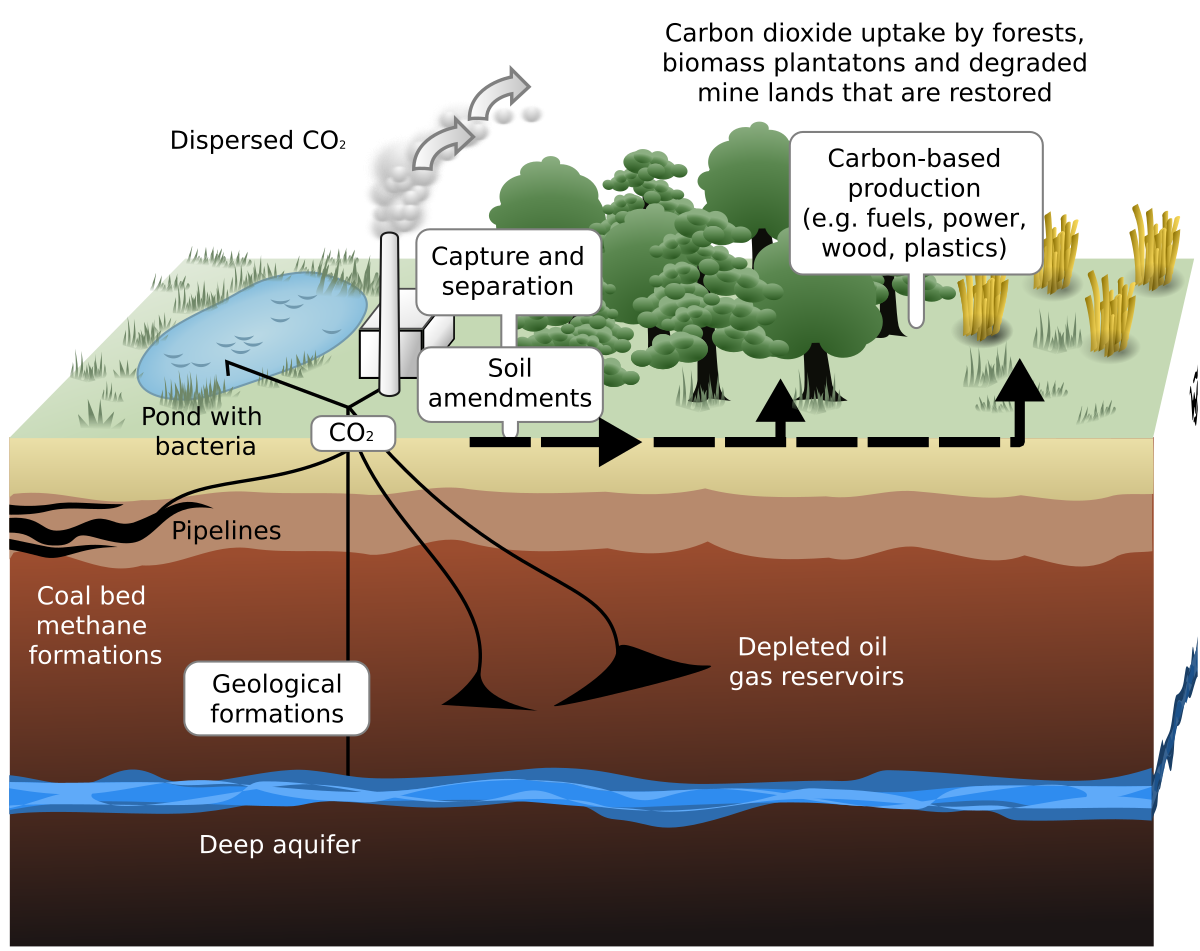
Terrestrial Sequestration
Biological Carbon
-
Can be stored in soil or returned to atmosphere through biological decomposition
-
Soils store a large amount of global carbon ↳ The capacity of soil to store organic carbon is determined by
-
Climate
-
Soil type
-
Management and use of soil