Body Plan Development (OCR A-Level Biology A): Revision Notes
📚Revision Notes
Body Plan Development
Genetic control of development
During embryonic development, cells must differentiate and specialize for different roles. This process requires precise control over which genes are expressed and when. Cell specialization depends on switching specific genes on or off in a carefully coordinated sequence.
Note
Transcription factors are proteins that bind to specific DNA sequences and control the rate at which particular genes are transcribed into mRNA. These proteins determine the sequence of gene activation needed for proper development.
Homeobox genes
Homeobox refers to a DNA sequence of 180 bases that codes for 60 amino acids. This sequence forms part of a transcription factor protein. The protein produced binds to DNA at specific sites and regulates the transcription of other genes, particularly those controlling early development in eukaryotic organisms.
Homeobox genes function by switching specific genes on and off in the correct developmental sequence. They control fundamental developmental processes in animals, plants, and fungi, ensuring genes are expressed in the proper order. These genes establish the basic body pattern and control segmentation in insects and mammals, as well as the development of structures like wings and limbs.
Important
The homeobox sequences show remarkable similarity across different species because they all code for the DNA-binding regions of transcription factors. This DNA-binding domain must maintain the same shape to function properly. Any mutations in these sequences typically produce non-viable organisms or individuals that are rapidly eliminated by natural selection. This represents strong negative selection pressure.
Conservation across species
Homeobox genes regulate development in many organisms through similar mechanisms. They determine:
- The polarity of the whole organism (anterior-posterior, or head-to-tail, axis)
- The division of the body into sections
- The identity of each section (which structures and organs will form)
These genes act as master regulators, controlling which genes function at each developmental stage.
Mutations and developmental abnormalities
When homeobox genes malfunction, the developmental sequence becomes disrupted.
Example
Classic Mutation: Antennapedia in Drosophila
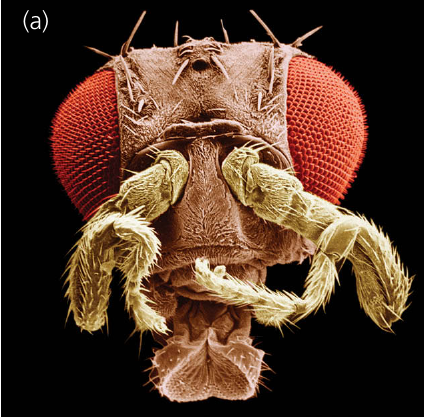
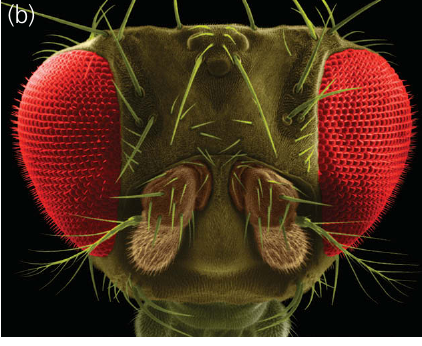
In the fruit fly Drosophila melanogaster, a mutation in the antennapedia homeobox gene causes legs to grow in place of antennae on the insect's head. This dramatic developmental error demonstrates how a single homeobox gene mutation can completely alter body plan structures, causing one body part to develop with the identity of another.
Hox genes
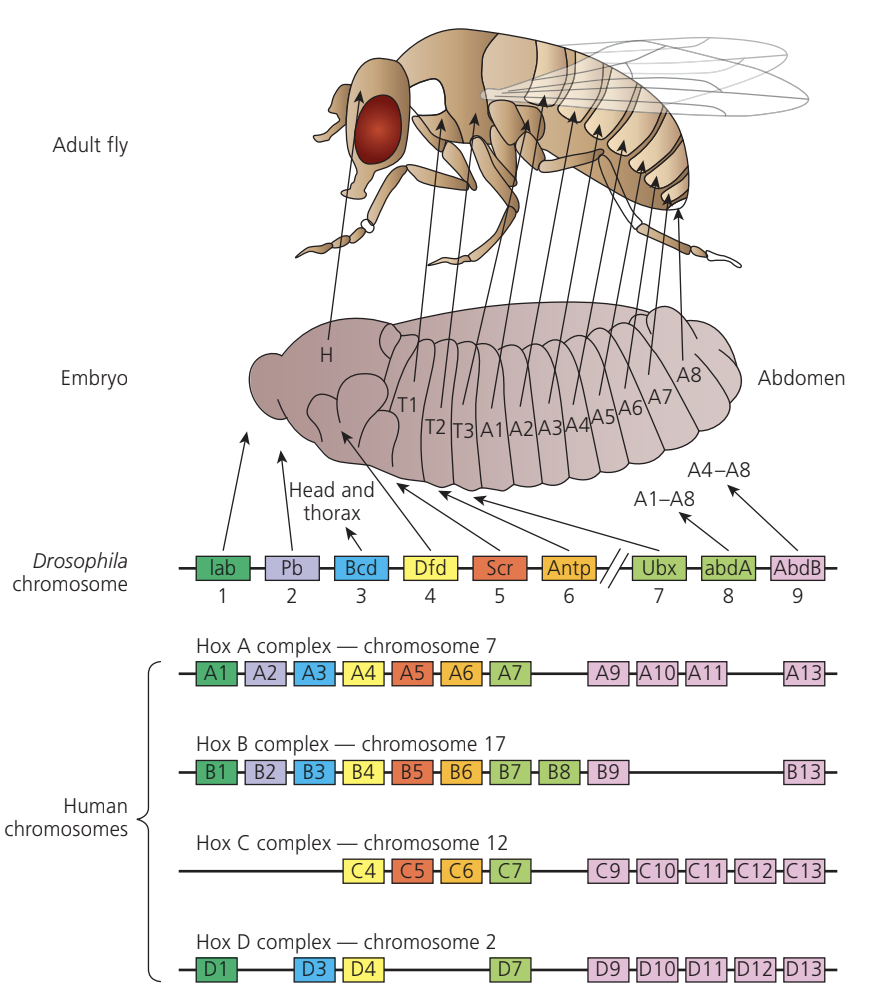
Hox genes are a related group of genes that control the body plan of an embryo along the head-tail axis. They later determine which structures will form and where they will be located. Importantly, Hox genes do not directly code for the proteins that build these structures; rather, they regulate other genes that do.
Organization in Hox clusters
Homeobox genes are organized into groups called Hox clusters. The number and arrangement of these clusters varies between organisms:
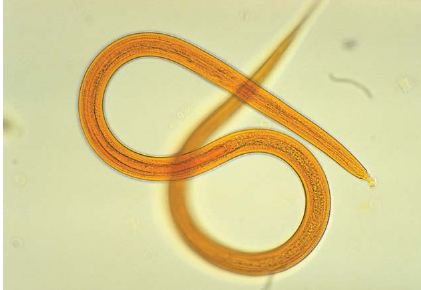
- Simple organisms (e.g., nematode roundworms like Caenorhabditis elegans): Hox cluster
- Drosophila melanogaster: homeobox genes in cluster
- Vertebrates: clusters, each containing - genes, located on different chromosomes
Linear organization principle
Important
Gene Order = Body Region Order
There is a direct relationship between:
- The linear order of genes within each Hox cluster
- The order of body regions they affect
- The timing of when they are expressed
For example, the head-tail axis develops first, followed by segmentation patterns that determine where structures such as legs, antennae, and wings will form.
Hox genes and apoptosis
Some Hox genes activate other genes that initiate apoptosis (programmed cell death), allowing development to proceed through selective cell removal. In Drosophila, one Hox gene activates the Rpr (reaper) gene, which triggers cell death in head lobes. This process separates the maxillary and mandibular regions of the head.
The balance between mitosis and apoptosis
Proper body plan development requires a carefully regulated balance between cell division and cell death.
Mitosis in development
Mitosis is the form of cell division that produces genetically identical daughter cells. These new cells are required for:
- Growth
- Cell replacement
- Tissue repair
Note
Mitosis is tightly controlled by proteins called cyclins and occurs a limited number of times (typically around 50 divisions, depending on cell type).
Apoptosis: programmed cell death
Apoptosis is programmed cell death, distinct from necrosis (uncontrolled cell death and tissue loss). Cells that have undergone approximately mitotic divisions are systematically taken through a series of processes leading to death.
Example
The Four-Stage Process of Apoptosis
Stage 1: DNA becomes denser and more tightly packed
Stage 2: Nuclear envelope breaks down and chromatin condenses
Stage 3: Biochemical changes occur and vesicles containing hydrolytic enzymes form
Stage 4: Phagocytes engulf and destroy the cell debris
Developmental importance
The coordinated action of mitosis and apoptosis is essential for proper development:
- Apoptosis destroys harmful self T lymphocytes during immune system development, preventing autoimmune responses
- Apoptosis separates initially fused structures, such as fingers and toes, which develop as a single unit before being separated
- Cells are constantly replaced and destroyed throughout life
Control of mitosis and apoptosis
Gene regulation of cell division
Mitosis is controlled by two categories of genes:
- Proto-oncogenes: stimulate cell division
- Tumour-suppressor genes: reduce cell division and stimulate apoptosis in cells with irreparable DNA damage
Note
Tumour-suppressor genes act as a protective mechanism by destroying potentially cancerous cells with genetic damage, in addition to their roles in embryonic development and adult tissue maintenance.
Cell cycle checkpoints
During the cell cycle, several checkpoints prevent the production of damaged cells:
- Checkpoints ensure the cell is ready for mitosis
- DNA damage is identified and repaired
- A final checkpoint during metaphase confirms chromosomes and DNA can complete mitosis successfully
- Only healthy cells proceed through division
Important
Critical Quality Control
Cell cycle checkpoints act as critical quality control mechanisms, ensuring that only cells with intact, undamaged DNA can proceed through division. This prevents the production and propagation of genetically compromised cells that could lead to disease.
Cyclins and cyclin-dependent kinases
The cell cycle is regulated by two groups of protein molecules:
Cyclins act as regulators, whilst cyclin-dependent kinases (CDKs) function as catalysts once activated by cyclins.
When cyclins activate CDKs, the CDKs catalyze phosphorylation of specific target proteins. This phosphorylation activates or inactivates these proteins, moving the cell from one phase of the cycle to the next.
Different cyclin-CDK combinations act on different target proteins. Cyclins are produced at specific stages of the cell cycle in response to changing internal molecular signals.
Factors affecting the mitosis/apoptosis balance
The genes regulating the cell cycle and apoptosis respond to various internal and external stimuli.
Internal factors
Within the cell, apoptosis begins with enzymic breakdown of the cytoskeleton. The cytoplasm becomes increasingly dense as organelles and chromatin condense. The cell then fragments into vesicles that are phagocytosed and destroyed without damaging surrounding cells.
Internal factors that trigger apoptosis include:
- Irreparable genetic damage
- RNA decay
- Internal biochemical changes (e.g., oxidative reactions leading to cellular injury)
- Production of cyclin D
These factors initiate apoptosis in cells experiencing cellular stress.
External factors
Multiple cell signalling molecules control apoptosis and mitosis:
- Cytokines from the immune system
- Hormones
- Growth factors
- Chemicals such as nitric oxide (which can both induce and inhibit apoptosis)
Important
Imbalances in Control Have Serious Consequences:
- Too little apoptosis + uncontrolled division = tumour formation
- Too much apoptosis = tissue degeneration
External factors that disrupt the mitosis/apoptosis balance include:
- Viruses and bacteria
- Harmful pollutants
- Ultraviolet light
These agents damage cells faster than they can be replaced or repaired, resulting in insufficient cell death.
Cyclin D and the enzyme cascade
When cells are affected by external growth factors, they produce cyclin D. This initiates an enzyme cascade that activates genes needed to produce cyclins A and B. All three cyclins must be present for the cell cycle to proceed.
Cellular stress responses
Stress disrupts the cell signaling necessary for controlling the mitosis/apoptosis balance. The type of stress determines how cells respond.
Note
Initial Cellular Defence:
- Cells first attempt to defend themselves and recover from stress
- The heat shock response helps ensure correct folding of newly-synthesized polypeptides
- Special proteins are produced to counteract damage and increase survival chances
- This response is conserved evolutionarily across organisms, demonstrating its importance
Continued Stress:
If stressful conditions persist, cell death pathways are inevitably activated.
Summary
Key Points to Remember:
-
Homeobox genes contain a 180-base sequence coding for transcription factors that control developmental gene expression in the correct sequence
-
Hox genes are organized clusters of homeobox genes; their linear order corresponds to the body regions they control along the anterior-posterior axis
-
Proper development requires a balance between mitosis (cell division for growth) and apoptosis (programmed cell death for removing unwanted cells)
-
Cyclins and CDKs regulate progression through the cell cycle via checkpoints that prevent damaged cell production
-
Proto-oncogenes promote division whilst tumour-suppressor genes inhibit division and trigger apoptosis in damaged cells, protecting against cancer development