Cloning and Biotechnology (OCR A-Level Biology A): Revision Notes
📚Revision Notes
Cloning in Plants
Introduction to plant cloning
Cloning is a biological process that produces a group of genetically identical individuals from a single parent organism. In plants, cloning occurs both naturally through vegetative reproduction and artificially through horticultural techniques. This asexual form of reproduction relies entirely on mitotic cell division, producing offspring with identical genetic material to the parent plant.
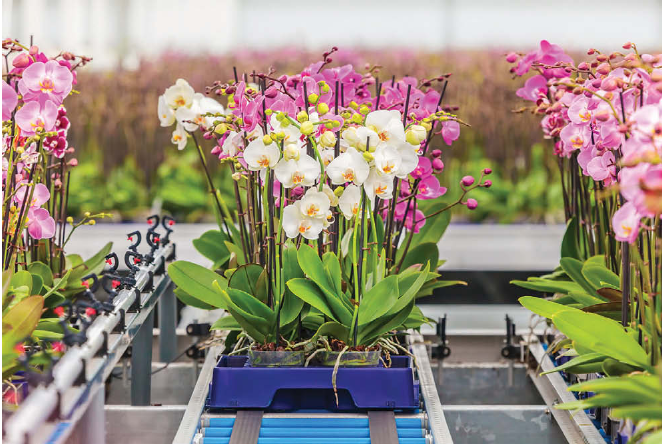
Many commercially important plants, including orchids, are propagated through cloning methods. Orchids present particular challenges when grown from seed, as their seeds are very small and require associations with mycorrhizal fungi to germinate successfully. The development of tissue culture techniques in the twentieth century revolutionised orchid production, making these once-expensive plants widely available to consumers.
Natural cloning in plants
Vegetative reproduction
Vegetative propagation is a form of asexual reproduction in which new plants develop from meristematic regions within vegetative organs – the stems, roots and leaves of the parent plant. These new plants are called plantlets and remain attached to the parent initially, receiving energy through the phloem.
Note
Meristems are plant tissues where growth occurs. Meristematic cells are stem cells that divide by mitosis to produce daughter cells, some of which differentiate into specialised cell types. These cells are characterised by their small size, large nucleus-to-cytoplasm ratio, thin cell walls, small vacuoles, and absence of a large central vacuole.
The main meristematic regions in plants include:
- Apical buds located at the tips of shoots and roots
- Axillary buds positioned in the angle between leaves and stems
- Vascular cambium tissue that produces xylem and phloem
- Cork cambium cylindrical tissue that produces bark in woody plants
Types of natural vegetative propagation
Horizontal stems and runners
Runners are horizontal stems that grow along the soil surface. At nodes along these runners, adventitious roots develop – these are roots that form on structures other than the main root system. The nodes also produce leaves, buds and potentially stems, creating new plantlets.
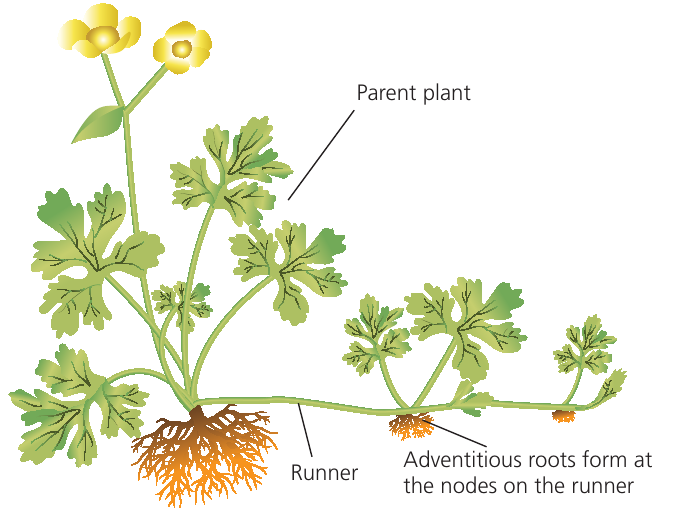
Eventually, as the connecting runner dies and decomposes, the plantlets become independent plants. This creates a clump of genetically identical individuals spaced close enough to share resources without direct competition. Creeping buttercup (Ranunculus repens) is a common example of this propagation method.
Underground stems
Lateral stems or suckers develop below ground level or at the base of upright stems, eventually becoming independent plants. Banana plants commonly produce suckers that can be separated for propagation.
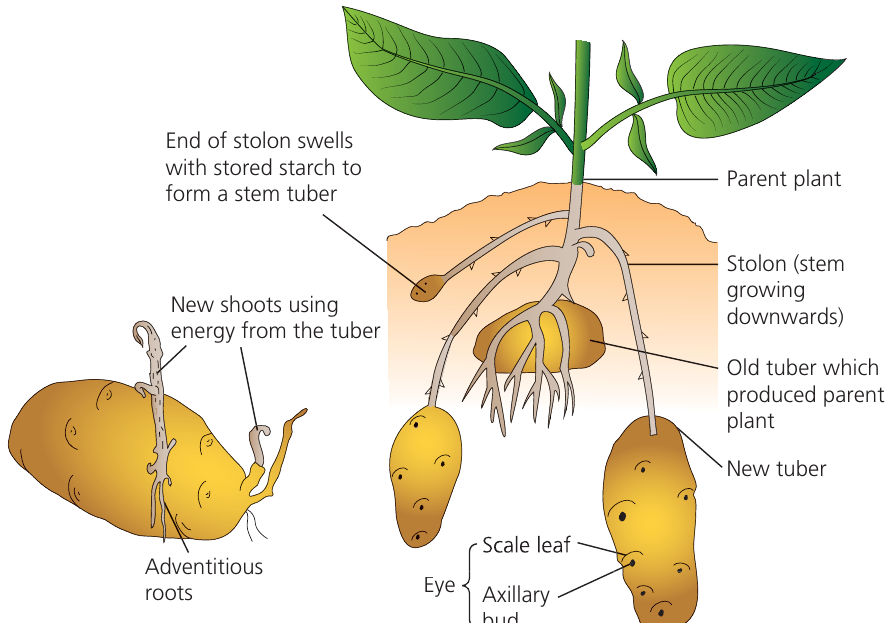
Stolons are underground stems that grow horizontally. In potatoes, these stolons can also grow downwards and swell with starch reserves to form stem tubers.
Example
Example: Potato Propagation
The potato (Solanum tuberosum) demonstrates this process clearly. The 'eyes' visible on potato tubers are actually axillary buds covered by scale leaves. When conditions are favourable, these buds use stored energy to produce new shoots and adventitious roots, creating new plants.
Rhizomes are thick horizontal stems that send out shoots at intervals and branch extensively. Ginger (Zingiber officinale) is harvested as a rhizome.
Bulbs and corms
Short, swollen upright stems can grow buds that develop into separate plants. Bulbs (found in onions, daffodils, tulips and garlic) and corms (found in crocus) are examples of this structure. Garlic (Allium sativum) reproduces almost exclusively through asexual means, with each clove of a garlic bulb capable of growing into a new plant.
Root tubers and specialised leaves
Dahlias produce swollen roots called root tubers which, when left in the ground, generate new shoots and adventitious roots during favourable growing conditions.
Note
Some plants, such as Kalanchoe daigremontianum, develop small plantlets around the margins of their leaves. Bluebells (Hyacinthoides non-scripta) can reproduce both sexually through seeds and asexually by producing daughter bulbs, allowing them to compete effectively in woodland environments.
Artificial cloning in plants
Taking cuttings
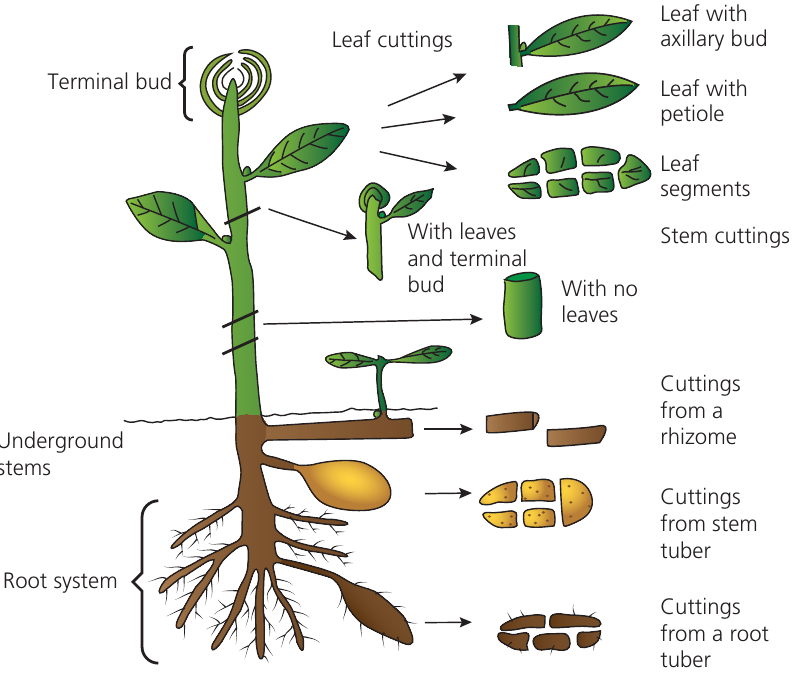
Gardeners and horticulturalists exploit natural vegetative reproduction by taking cuttings from parent plants with desirable characteristics. Cuttings can be taken from stems, roots or leaves, depending on the plant species.
Important
The type of cutting determines what structures must develop:
- Stem cuttings already possess shoots, so they must form adventitious roots
- Root cuttings already have roots, so they must form adventitious shoots
- Leaf cuttings require both adventitious roots and shoots to develop
Hormone treatment and care
Stem cuttings are often treated with synthetic auxins such as indolyl butyric acid (IBA) or 1-naphthaleneacetic acid (NAA) before being placed in suitable soil or compost. These plant hormones stimulate the formation of adventitious roots at the base of the cutting.
Since cuttings are disconnected from the parent's water supply and initially lack roots to absorb water, they require careful management to prevent water loss. Methods include:
- Reducing light intensity and temperature
- Increasing humidity around the cutting
- Using polythene bags for individual pots
- Employing fine mist spray systems in commercial settings
- Providing shade
Once adventitious roots have developed and the plant can support itself, a period of 'hardening off' gradually acclimatises the new plants to unprotected environmental conditions before they are planted out.
Division
Division is a propagation method where clumps of plants are dug up, separated into smaller units, and replanted at greater distances apart. This technique is most commonly used for plants that naturally form clumps.
Example
Example: Banana Plant Division
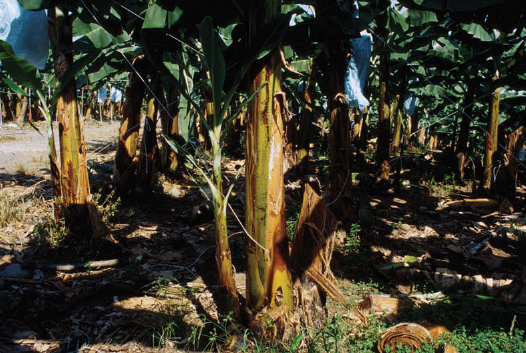
Banana plants provide a clear example of division. Suckers developing at the base of mature plants can be removed and replanted. For cultivated bananas, which are triploid and therefore sterile, this represents the only viable propagation method.
Tissue culture and micropropagation
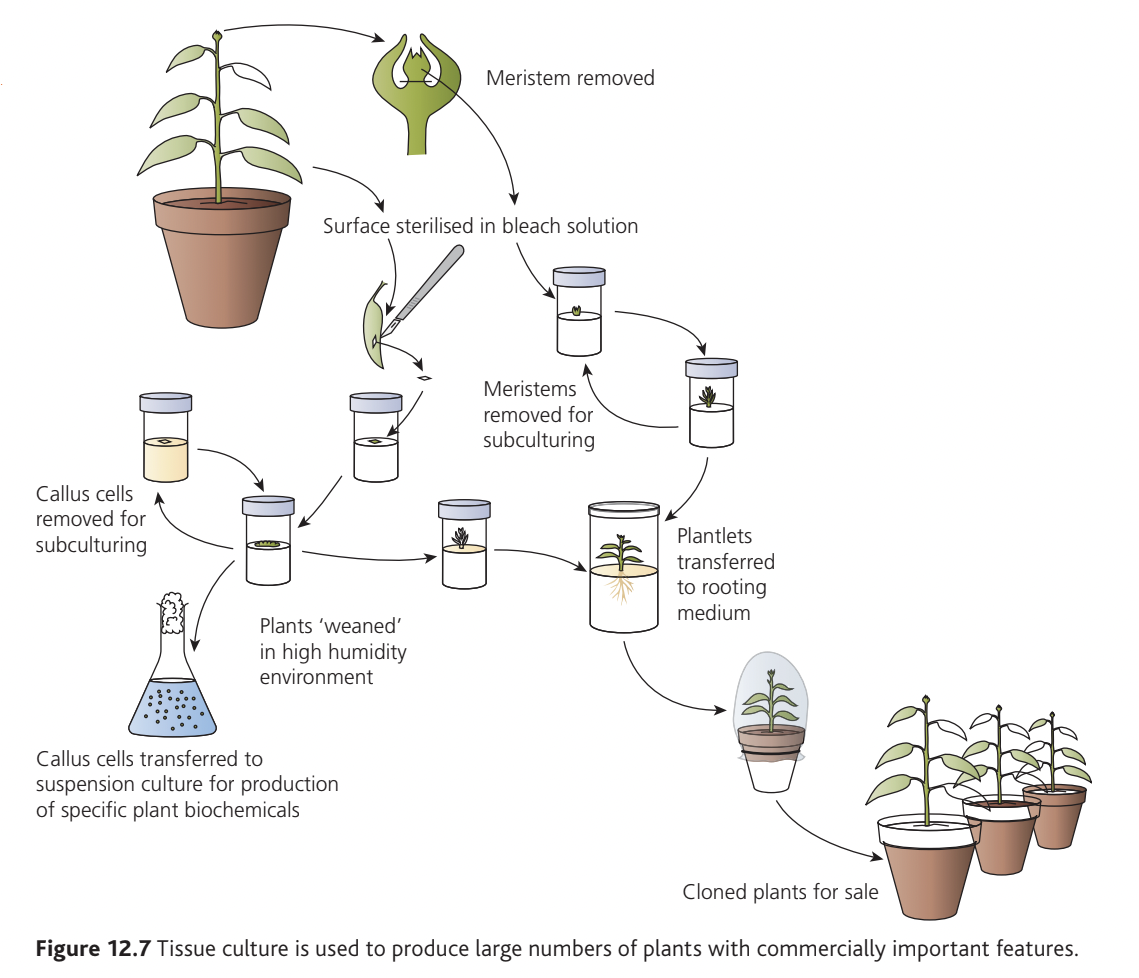
Tissue culture, also known as micropropagation, involves removing small pieces of tissue from a plant and culturing them in liquid or solid growth media. This technique enables the production of large numbers of genetically identical plants from a single parent.
The culture media contains:
- Sucrose as a carbon source and energy supply
- Mineral nutrients enabling cells to synthesise all required biological molecules
- Plant hormones to regulate growth patterns
Initially, hormones stimulate cell division. Later, different hormone concentrations promote cell differentiation into specialised tissues forming stems, roots and leaves.
Callus culture
In callus culture, small tissue pieces called explants are removed from leaves, stems or roots. These explants undergo surface sterilisation to eliminate microorganisms before being placed into or onto culture medium.
Differentiated cells within the explants begin dividing to form a callus – a mass of undifferentiated cells that plants naturally produce for wound healing. This callus can be subdivided to increase the number of plantlets produced.
Note
The callus is then transferred to medium containing a different ratio of plant hormones to encourage differentiation:
- Auxins stimulate root growth
- Cytokinins stimulate shoot growth
- Equal concentrations of both hormones encourage callus growth
Finally, plantlets are potted into soil under sterile and highly humid conditions.
Meristem culture
In meristem culture, meristems are excised from the stem apex and axillary buds, then placed onto agar medium following similar procedures to callus culture.
Important
The key advantage of using meristematic tissue is that it remains free of viruses. Meristems can also be subdivided repeatedly to generate substantial quantities of virus-free plant stock.
Aseptic technique
Tissue culture must be conducted under sterile conditions to prevent contamination by bacteria and fungi from the atmosphere. Aseptic technique ensures no contaminants compromise the plant stock.
This involves:
- Sterilising media, containers and implements
- Using chambers that blow filtered air over work surfaces
- Staff wearing appropriate sterilised clothing, masks and gloves
- Surface sterilisation of all plant material
Note
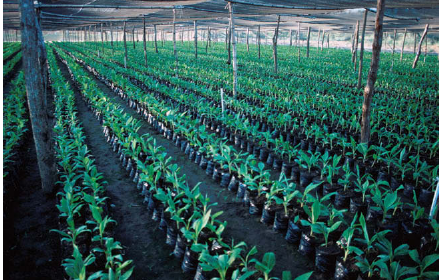
Commercial facilities can produce enormous numbers of plants through tissue culture. For example, one chrysanthemum apex placed in tissue culture could potentially generate up to one million new plantlets in a single year.
Advantages and disadvantages of vegetative propagation
Advantages
Plants propagated vegetatively through cuttings or division establish more reliably in the ground compared to seed-grown plants. Seeds may fail to germinate due to poor viability, and young seedlings face high susceptibility to diseases, pests, cold, wind and drought.
Genetic uniformity in cloned plants provides several commercial benefits:
- Uniform appearance ensures reliable quality control
- Growers can provide consistent supply to consumers
- Uniform size aids harvesting and packing operations
- Fixed growth periods enable accurate prediction of time between planting and harvesting
- These factors collectively reduce production costs
Note
Plants grown from seeds, particularly F₁ hybrids formed by crossing two varieties, do not always 'breed true'. The only methods to ensure uniform plants are repeatedly crossing parent varieties or propagating hybrids asexually. Cultivars that can be propagated vegetatively prove much cheaper to produce than those requiring repeated crossing.
Tissue culture facilities can be established anywhere globally, as clone and plantlet production is independent of climate or weather conditions. Plants can be produced year-round to meet grower demand.
Disadvantages
Important
The primary disadvantage of vegetative propagation is that all plants in a genetically uniform crop face equal risk from pests and diseases. If the plants lack resistance to a particular pathogen, an epidemic could eliminate the entire crop.
Example
Example: Banana Disease Epidemics
This occurred with the Gros Michel banana cultivar, which was devastated by Panama disease (caused by Fusarium oxysporum) in the 1950s. The replacement Cavendish cultivar, now grown in plantations throughout the tropics, faces threat from a new strain of Panama disease (tropical race four) that has emerged in South-east Asia. If growers cultivated diverse cultivars with resistance to different diseases, the risk of worldwide epidemics and widespread farmer income loss would decrease significantly.
Large-scale cloning of agricultural and horticultural crops has led to loss of variation and genetic diversity in cultivated species. This places these species at risk of failing to adapt to future environmental changes, such as global temperature shifts. While mutation occurs in all plants, without meiosis and fertilisation, new mutations have reduced opportunity for expression, keeping their frequency in populations low.
Important
Planting stock regenerated through cloning frequently suffers from accumulation of pests and diseases. Most garlic cultivars, for example, carry some degree of virus infection transmitted during asexual reproduction. This can only be addressed by encouraging garlic to produce seeds and using these to breed virus-free stock.
Remember!
Summary
Key Points to Remember:
-
Vegetative propagation is asexual reproduction in plants involving meristematic regions in stems, roots and leaves – producing genetically identical offspring through mitosis alone.
-
Natural methods include runners, stolons, tubers, bulbs, corms and specialised leaves – each involving adventitious root or shoot formation.
-
Artificial methods include taking cuttings (treated with auxins like IBA or NAA), division of clumps, and tissue culture (callus and meristem culture).
-
Tissue culture requires aseptic technique and uses media containing sucrose, minerals and plant hormones (auxins for roots, cytokinins for shoots) to produce large numbers of plants.
-
Advantages include ease of establishment, genetic uniformity, reliable quality control, predictable harvest times and independence from climate conditions.
-
Disadvantages include vulnerability to disease epidemics, loss of genetic diversity, reduced adaptive potential and accumulation of pathogens in cloned stock.