Ecosystems (OCR A-Level Biology A): Revision Notes
📚Revision Notes
Characteristics of Ecosystems
Understanding ecosystems
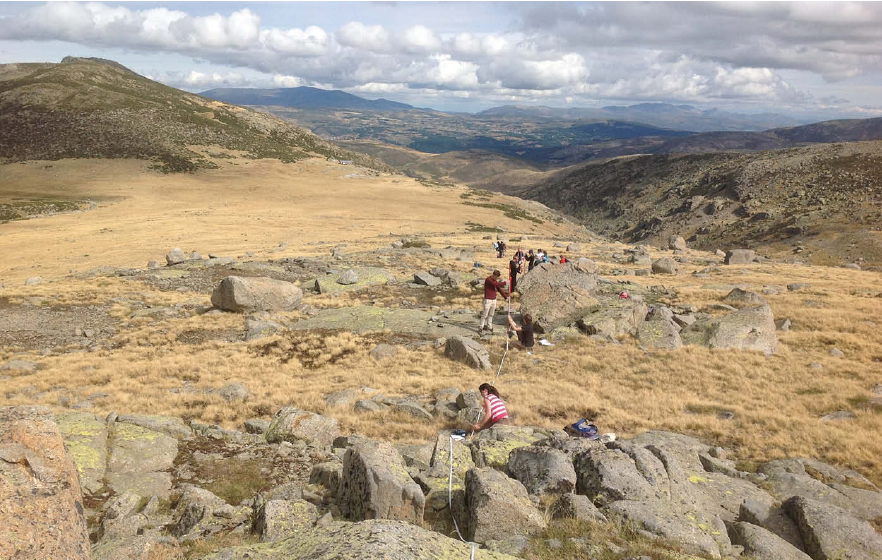
An ecosystem consists of a community of different species that depend on each other, together with the non-living environment of a relatively self-contained area. Ecosystems can vary dramatically in size, from vast biomes such as the East African savanna to small habitats like garden ponds or rock pools. Each ecosystem contains distinct physical and geographical features alongside the species that inhabit it, either permanently or temporarily.
Note
Key Definitions:
Within an ecosystem, individual populations of each species interact to form a community. A population includes all members of the same species living in a particular area at the same time; in sexually reproducing species, there is interbreeding between males and females. The community comprises all organisms from all populations that live in a particular area at the same time. These communities then interact with the non-living environment.
Dynamic nature of ecosystems
Ecosystems are described as dynamic because they constantly change. Energy flows continuously through organisms, population sizes fluctuate over time, and ecosystems respond to both external changes (such as natural catastrophes) and internal changes (such as human pollution). Species within an ecosystem can be divided into those that are autotrophic (capable of using light or chemical energy to fix carbon) and those that are heterotrophic (unable to fix carbon and requiring complex carbon compounds as an energy source).
Most ecosystems are classified as open ecosystems because some species move between different ecosystems. For example, many fish species visit rocky shores at high tide to feed but retreat to deeper water when the tide recedes. Few ecosystems are completely isolated, though oceanic islands and undersea vent communities represent examples with minimal interaction with other ecosystems.
Sampling ecosystems
Scientists study ecosystems by sampling habitats to determine the distribution and abundance of species. This approach applies to both terrestrial and aquatic environments, though sampling methods may need adaptation for different conditions.
Marine environment sampling
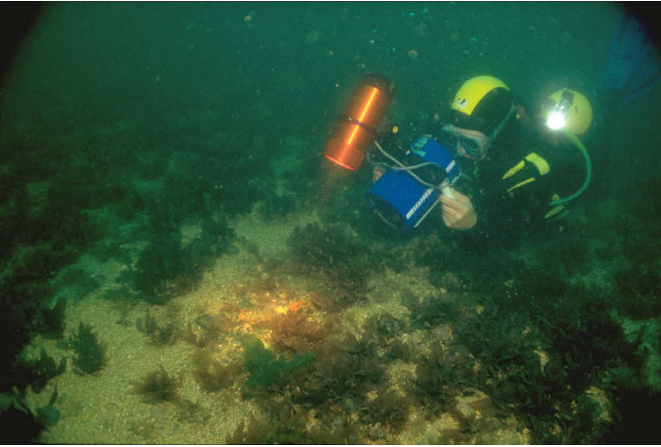
Around the British coast, environmentally important areas require regular monitoring to track biodiversity. Divers working in pairs or teams use quadrats and transects to sample marine habitats, just as ecologists do on land. Quadrat sampling underwater involves either searching each area by hand to identify and record organisms, or taking photographs for later analysis. This provides data on abundance, distribution, and biodiversity.
Important
Repeated sampling at intervals allows scientists to track changes in communities and assess the effects of human influences such as pollution and fishing. This temporal approach is crucial for understanding ecosystem dynamics and detecting environmental changes.
Measuring abundance
Studies of species abundance rely on sampling habitats, often using quadrats. Abundance can be measured in several ways:
- Species density: counting individuals directly and calculating numbers per unit area
- Percentage cover: estimating what percentage of a quadrat is occupied by an organism (useful when counting individuals is difficult)
- Abundance scales: providing quicker assessments using categories
Common abundance scales include:
- DAFOR: Dominant, Abundant, Frequent, Occasional, Rare
- ACFOR: Abundant, Common, Frequent, Occasional, Rare
- Braun-Blanquet scale: specifically designed for plant cover assessment
| Description | Rating |
|---|---|
| Very few plants, cover less than | + |
| Many plants, cover between and | |
| Very many plants or cover | |
| Any number of plants; cover | |
| Any number of plants; cover |
Mini-ecosystems for study
Several accessible ecosystems provide excellent opportunities for ecological investigation:
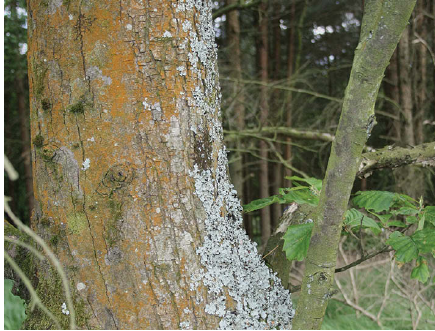
Large tree trunks and branches create habitats for mosses, lichens, and numerous insects living in bark or boring into wood. These insects provide food for specialist feeders such as tree creepers and nuthatches.
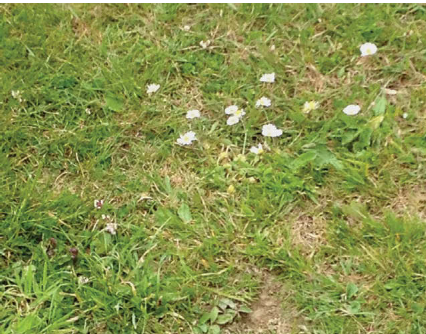
Lawns and playing fields represent relatively uniform ecosystems suitable for random sampling. The effect of trampling can be assessed using belt transects to observe changes in species composition.
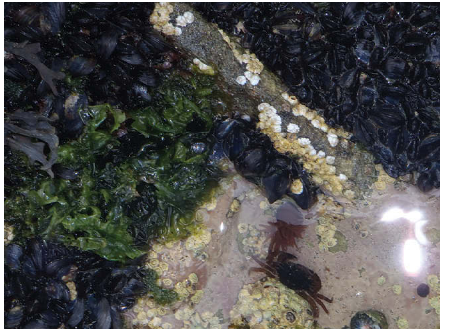
Rock pools support communities including crabs, sea anemones, barnacles, limpets, and various algae species. Physical conditions in rock pools change dramatically during tidal cycles, affecting the organisms that can survive there.
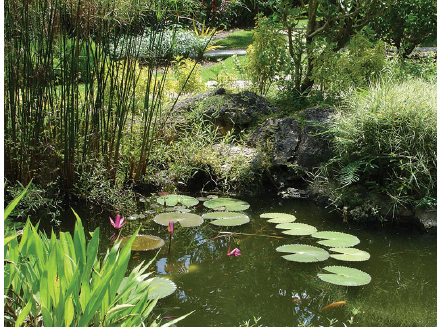
Pond margins represent areas where open ecosystems interact with surrounding terrestrial ecosystems, creating transitional zones with characteristic species assemblages.
Biotic factors
Biotic factors are all influences on populations that result from the activities of organisms. These biological interactions shape community structure and determine which species can successfully inhabit an ecosystem.
Competition
Organisms compete for limited resources including space, water, energy, nutrients, mates, shelter, and light. Competition occurs in two forms:
- Interspecific competition: competition between different species for the same resources
- Intraspecific competition: competition between members of the same species
Important
Intraspecific competition tends to be more intense than interspecific competition because members of the same species require identical resources and occupy the same ecological niche. This has significant implications for population regulation and species survival.
Cooperation and mutualism
Cooperation exists at various levels within ecosystems. Social insects such as ants, termites, and honey bees demonstrate cooperation within species, where individuals work together for colony benefit even when this prevents them from breeding. This cooperative behaviour is termed altruism. Mole rats provide a mammalian example of social cooperation.
Mutualism describes associations between two or more different species where all partners benefit.
Example
Worked Example: Mutualistic Relationships
Lichens exemplify mutualism between algae and fungi:
- Fungi provide a protective habitat for algae
- Algae receive protection from the environment
- Fungi receive sugars and other nutrients from algae
- Both organisms benefit from the association
Coral and zooxanthellae:
- Coral polyps contain single-celled algae called zooxanthellae which photosynthesise
- The algae receive protection, carbon dioxide, and nitrogenous waste from polyps
- The polyps receive carbohydrates in the form of sugars from the algae
- Coral grows near the water surface, ensuring algae receive sufficient light for photosynthesis
Many plants form associations with fungi called mycorrhizae (meaning 'fungus' and 'root'). Fungi grow into roots and extend into soil, absorbing mineral ions for plants, which provide fungi with sugars.
Predation
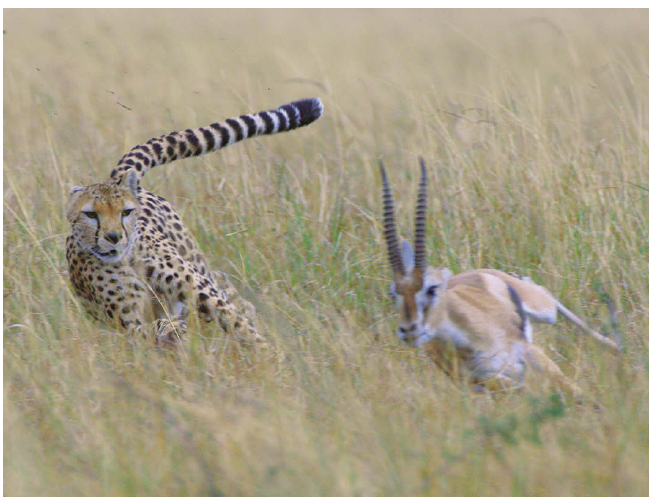
Predators possess various adaptations for finding and catching prey, a process called predation. Populations of carnivores depend on the presence of prey species. Predators typically take young, sick, and old individuals from prey populations. Most predators rarely control prey populations; more often, prey availability limits predator numbers.
Note
Grazing represents a form of predation. On coral reefs, butterflyfish and parrotfish act as 'predators' of algae growing on bare rock. Without grazing, algae would occupy much available space, potentially affecting the entire reef ecosystem.
Parasites and disease
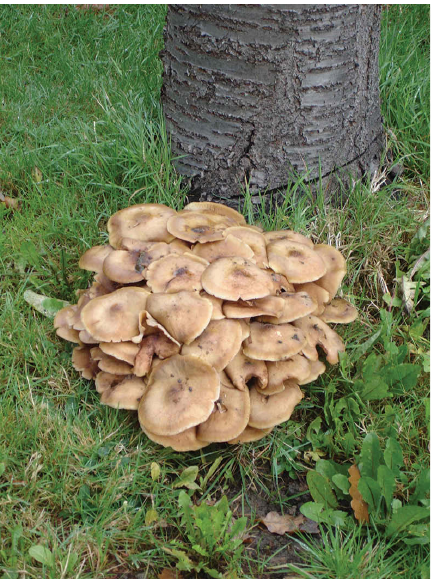
Almost all plant and animal species harbour parasites. Hosts gain no benefit from these associations, though parasites generally avoid causing sufficient harm to kill their hosts. Parasites and hosts often develop relationships where hosts tolerate parasite presence. Parasites causing harm are classified as pathogens. Diseases caused by pathogens may spread through populations, particularly when host populations reach high density.
Parasitoids are animals laying eggs inside hosts. Some ichneumon wasp species lay eggs inside other insects. Hatching larvae eat host tissues from inside, ultimately killing the host. These species serve as effective biological control agents in protected environments such as glasshouses.
Abiotic factors
Abiotic factors are all non-living physical or chemical factors influencing organisms within ecosystems. These can be grouped into three categories:
Climatic factors
Climatic factors include temperature range (maximum and minimum), precipitation, and exposure to wind. These factors vary temporally (hourly, daily, seasonally) and spatially across ecosystems.
Edaphic factors
Edaphic factors encompass all soil features, including:
- Soil depth
- Air content
- pH
- Texture
- Humus content
- Mineral ion content
- Temperature
- Moisture content
Note
Measuring Edaphic Factors:
The table below shows how different soil characteristics can be measured in ecological studies. These measurements help scientists understand why certain species thrive in specific locations.
| Edaphic factor | Measurement method |
|---|---|
| Soil texture | Pass dry soil through sieves of different mesh sizes to determine gravel, sand, and clay composition |
| Soil moisture content | Dry soil to constant mass |
| Mineral ion content | Measure conductivity of soil solution |
| Humus content | Determine mass lost by heating dry soil to burn off organic matter |
| Mineral matter content | Measure mass remaining after organic matter combustion |
| Soil pH | Use pH meter or universal indicator with soil water |
| Temperature | Use temperature probe |
| Air content | Add known volume of soil to water and measure displaced air volume |
| Depth | Cut soil profile with spade or use soil auger to extract core |
Physiographic factors
Physiographic factors relate to landscape features including altitude, topography (land shape), aspect (orientation such as north or south-facing), gradient, erosion degree, and drainage patterns.
Example
Worked Example: How Abiotic Factors Interact
Plant species at high altitude survive cold conditions but grow slowly. At lower altitudes, they face competition from species adapted to warmer temperatures. This demonstrates how multiple abiotic factors (temperature, altitude) interact with biotic factors (competition) to determine species distribution.
Measuring abiotic factors in aquatic ecosystems
Many abiotic factors influence freshwater stream communities:
| Abiotic factor | Effects on organisms | Measurement method |
|---|---|---|
| Temperature | Temperature range determines which species can survive | Thermometer or temperature probe |
| pH | Many species cannot survive in low pH waters | Universal indicator paper or pH probe |
| Water depth | Determines fish size that can survive | Metre rules |
| Flow rate | Some species prefer high flow rates; others are swept downstream | Flow meter or timing floating object over set distance |
| Oxygen concentration | Few species survive low oxygen concentrations | Oxygen probe |
| Turbidity | Makes vision difficult for predatory fish | Colorimeter or arbitrary scale () |
| Dissolved solids (ion concentration, e.g. ) | Provide ions for physiological processes | Conductivity meter |
| Light intensity | Influences photosynthesis rate of submerged plants | Light meter |
| Substrate type | Some species burrow into mud/sand; others have flattened bodies for living under stones | Visual description (rock, sand, mud) |
Energy and biomass transfer
Nutritional classification
Organisms obtain energy and carbon through different mechanisms, allowing classification into four groups:
| Carbon from (autotrophic) | Carbon from complex compounds (heterotrophic) | |
|---|---|---|
| Energy from light (phototrophic) | Photoautotrophic: photosynthetic bacteria, some protoctists including algae, plants | Photoheterotrophic: purple non-sulfur bacteria |
| Energy from chemical reactions (chemotrophic) | Chemoautotrophic: nitrifying bacteria | Chemoheterotrophic: many bacteria, many protoctists, all fungi, all animals |
Photoautotrophs use photosynthesis to absorb light energy, converting it into chemical energy in ATP and reduced hydrogen carriers. This drives carbon fixation reactions. Photoautotrophs produce much of the biomass entering food chains.
Note
Chemotrophs obtain energy from organic or inorganic chemical compounds rather than light. Chemoautotrophic organisms use energy released by oxidation of inorganic materials (such as nitrogen compounds) to fix carbon without using light. Chemoheterotrophic organisms, including humans, obtain both energy and carbon from complex organic compounds.
Energy flow through ecosystems
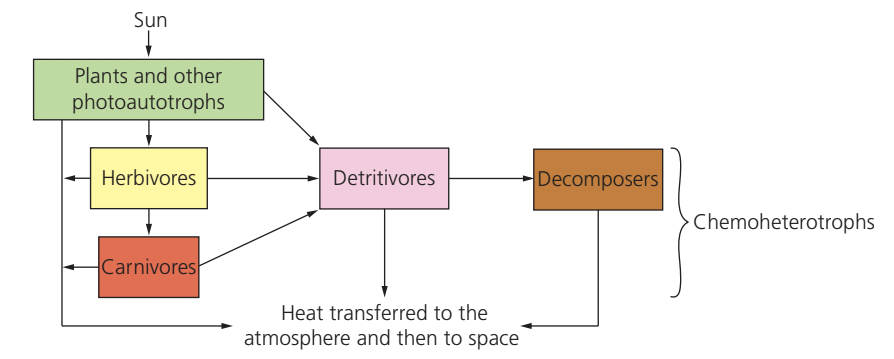
Energy flows through ecosystems in two main pathways:
- Grazing food chain: Energy captured by plants in biomass is consumed by herbivores, which may be eaten by carnivores at higher trophic levels
- Detritus food chain: Waste organic material (dead leaves, roots, branches, faeces, dead bodies) forms detritus, providing food for detritivores. Dead material and detritivore faeces provide energy for decomposers such as fungi and bacteria
Energy transfers from the grazing to detritus food chain through faeces production and organism death.
Important
Critical Concept:
Energy is not recycled—it leaves ecosystems as infrared radiation warming the atmosphere. This is a fundamental difference between energy flow and nutrient cycling in ecosystems.
Productivity
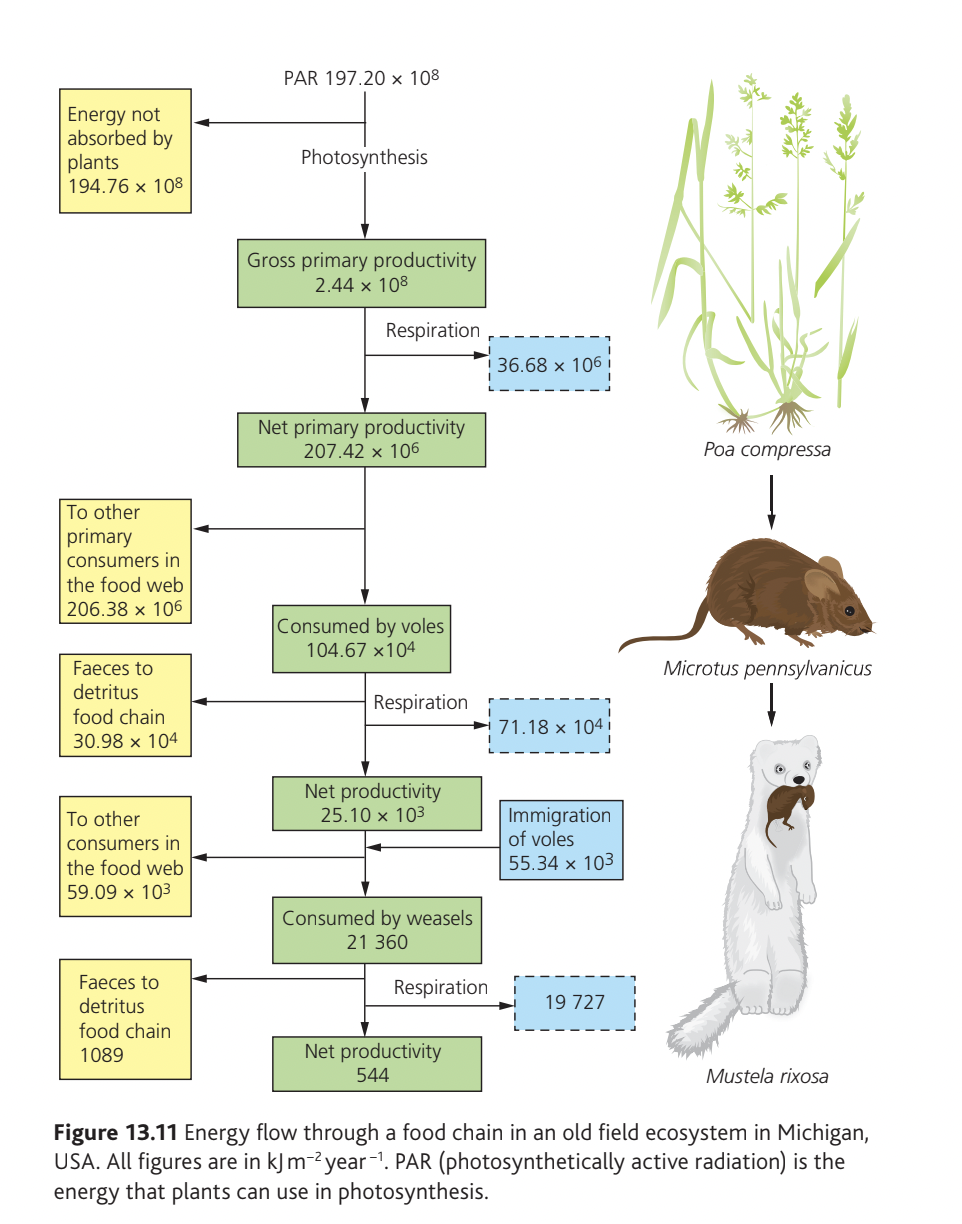
Gross primary productivity represents the total energy captured by producers through photosynthesis. However, producers use some energy in respiration, so:
Net primary productivity represents energy available to primary consumers. The amount of light energy plants can use for photosynthesis is termed photosynthetically active radiation (PAR).
Note
Why Is Photosynthesis So Inefficient?
Very little light energy striking plants is used in photosynthesis because:
- Plants lack pigments to absorb all visible light wavelengths
- Light reflects from leaf surfaces
- Light passes through leaves without absorption
- Environmental factors (low temperature, carbon dioxide shortage) limit photosynthesis
At best, crop plants may transfer 5% of light energy striking leaves to biomass. In natural ecosystems, this percentage is often as low as 1%.
Efficiency of energy transfer
Not all net plant productivity reaches primary consumers because:
- Some plant matter is not eaten
- Some material cannot be digested so is not assimilated
- Much plant material dies and decays, entering the detritus food chain
Energy transfer from plants to primary consumers averages approximately 10% of net producer productivity.
Much energy consumed by herbivores is unavailable to predators because:
- Herbivores use energy searching for food and moving
- Heat is lost during digestion
- Heat is lost during respiration
- Energy is used in reproduction
- Predators do not eat all herbivore body parts
- Predators do not digest all consumed herbivore tissue
Only energy in new herbivore tissue eaten by predators transfers to the next trophic level.
Example
Worked Example: Calculating Ecological Efficiency
Ecological efficiency is calculated as:
If a herbivore trophic level has a net productivity of 1000 kJ and the carnivore trophic level feeding on it has a net productivity of 150 kJ, then:
This represents a relatively high transfer efficiency compared to the typical 10% or less.
Transfer efficiency between trophic levels is variable and may reach , though it is often much lower.
Important
Why Are Food Chains Short?
This low efficiency explains why:
- Food chains tend to be short
- Energy is used by organisms at all trophic levels for maintenance and movement
- Only energy in new growth and reproduction is available to the next trophic level
- Energy transfers to surroundings as heat during respiration and movement
- Energy transfers to detritus food chains at all trophic levels limit energy available to consumers
Agricultural manipulation of energy flow
Farmers manipulate energy flow to maximize productivity:
| Method | Crop plants (producers) | Livestock (primary consumers) |
|---|---|---|
| Maximize energy input | Optimum planting distances; provide artificial light in greenhouses | Provide high-quality feed |
| Maximize growth | Irrigation; fertilizers containing NPK and other elements; selective breeding for fast growth | Food supplements (vitamins, minerals); selective breeding for fast growth |
| Control disease | Fungicides | Antibiotics and vaccines |
| Control predation | Fencing to exclude grazers (rabbits, deer); pesticides for insect pests, nematodes, slugs, snails | Control predators (wolves, foxes); keep animals in protected sheds |
| Reduce competition | Ploughing and herbicides kill weeds | Control competitors such as rabbits and deer |
| Reduce energy loss | Breed plants maximizing energy storage in edible products (seeds, fruits, tubers) | Keep animals in sheds: less energy lost in movement and maintaining body temperature |
Summary
Key Points to Remember:
- Ecosystems are dynamic systems where communities of different species interact with their non-living environment in relatively self-contained areas
- Biotic factors (competition, predation, mutualism, disease) result from organism activities, while abiotic factors (temperature, soil properties, light) are non-living influences
- Energy flows through ecosystems from producers to consumers to decomposers but is not recycled—it is ultimately lost as heat
- Net primary productivity equals gross primary productivity minus respiration, representing energy available to consumers
- Energy transfer between trophic levels is inefficient (often less than ), explaining why food chains are typically short with few trophic levels
- Agricultural practices aim to maximize energy transfer to crops and livestock by reducing competition, controlling predators, and minimizing energy losses