Recycling in Ecosystems (OCR A-Level Biology A): Revision Notes
📚Revision Notes
Recycling in Ecosystems
Introduction to nutrient recycling
Living organisms require specific chemical elements to construct organic molecules. Six essential elements — carbon, hydrogen, oxygen, nitrogen, sulfur and phosphorus — form the building blocks of biological compounds.
Autotrophic organisms obtain these elements in simple, inorganic forms:
- Carbon, oxygen and hydrogen: absorbed as carbon dioxide () and water (), the substrates for photosynthesis
- Nitrogen: absorbed as nitrate ions ()
- Sulfur: absorbed as sulfate ions ()
- Phosphorus: absorbed as phosphate ions ()
Note
Unlike energy, which flows through ecosystems and cannot be reused, these elements exist in finite quantities within the biosphere. Continuous recycling is essential — without it, life would cease.
This note examines how carbon and nitrogen cycle through ecosystems, ensuring their constant availability to autotrophs, consumers and decomposers.
Key terminology
Note
Reservoir: A location where an element is stored (e.g. the atmosphere is a reservoir of carbon and nitrogen).
Flux: The flow or movement of an element between different reservoirs.
Sink: A long-term reservoir where element recycling occurs very slowly. Fossil fuels have served as carbon sinks for millions of years.
Carbon recycling
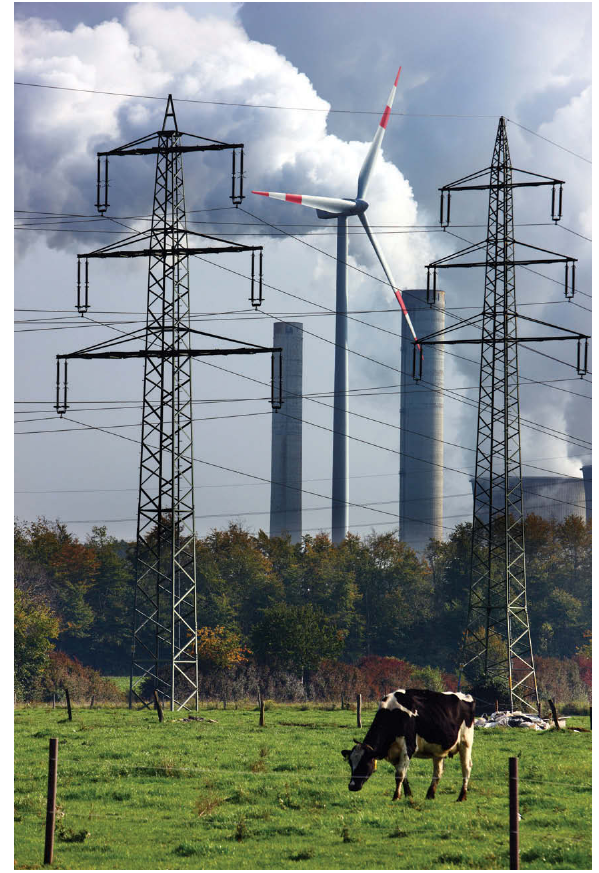
Carbon reservoirs
Despite atmospheric carbon dioxide representing only ppm ( of the atmosphere), this reservoir contains approximately 750,000 million tonnes of carbon. An even larger reservoir exists in the oceans, holding roughly 40 trillion tonnes of dissolved carbon dioxide. The largest carbon store exists in sedimentary rocks like limestone and chalk, formed from calcium carbonate shells of marine organisms, containing approximately 100,000 trillion tonnes.
The carbon cycle
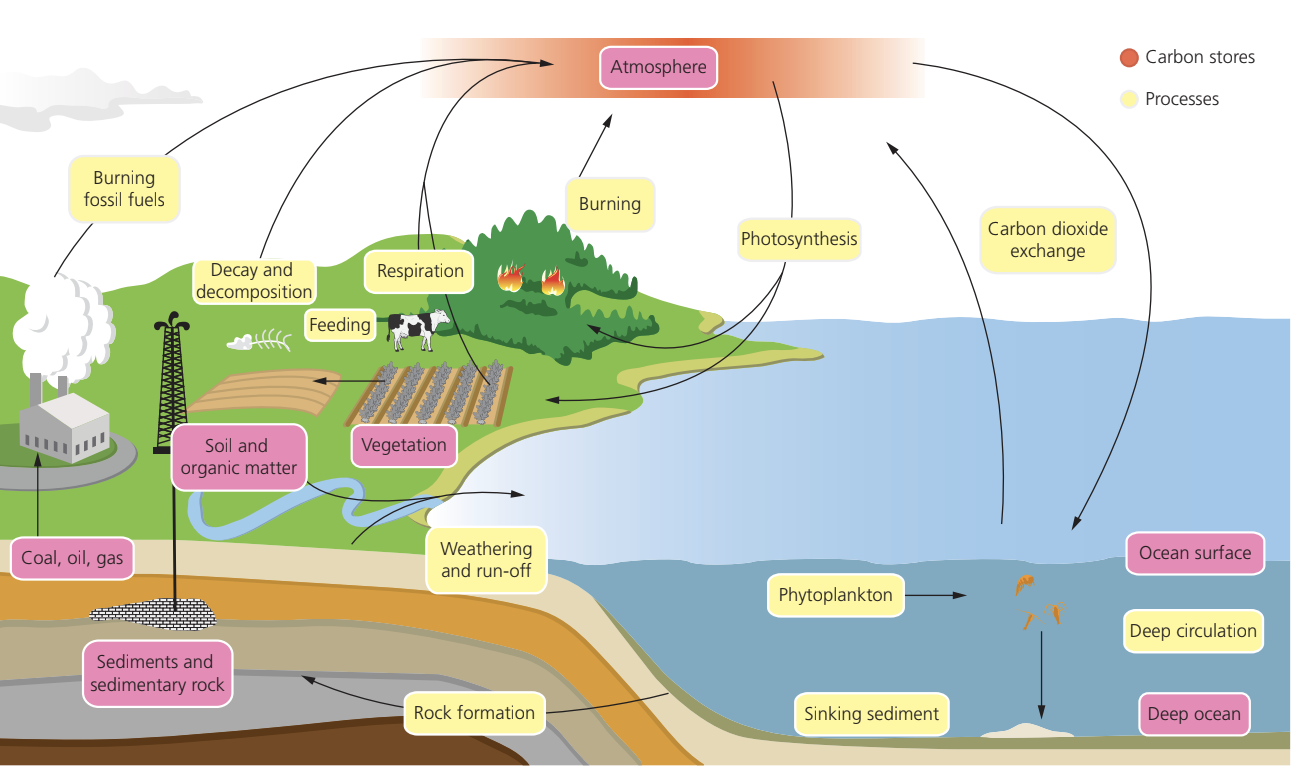
Carbon continuously moves through ecosystems via several interconnected processes.
Example
The Carbon Cycle: Key Processes
Carbon fixation: Autotrophs remove carbon dioxide from the atmosphere and aquatic environments. During photosynthesis, carbon dioxide is fixed in the Calvin cycle, forming organic carbon compounds including carbohydrates, lipids and proteins. These carbon-containing molecules then pass through grazing and detritus food chains.
Carbon release: All living organisms return carbon dioxide to the environment through respiration. Decarboxylation reactions occurring during respiration release back into the atmosphere and water. Additionally, combustion of wood and fossil fuels releases stored carbon as carbon dioxide.
Carbon storage: Not all carbon compounds undergo decomposition or combustion. Some accumulate in carbon sinks, particularly peat bogs. When undisturbed for millions of years, these undecomposed organic materials transform into fossil fuels.
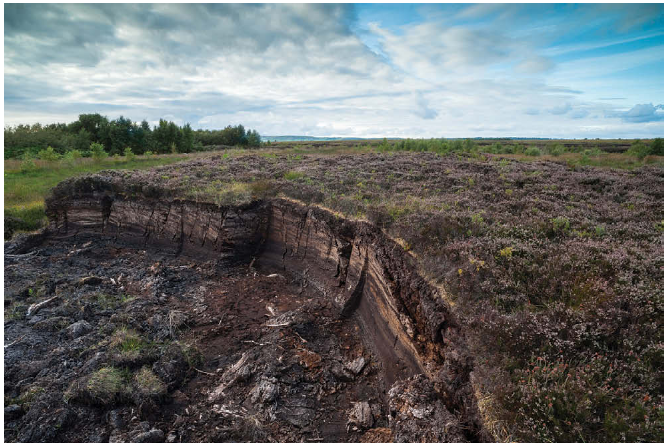
Carbon atoms absorbed from the atmosphere million years ago remain locked within fossil fuels. Similarly, sedimentary rocks formed from marine organism shells contain carbon stored over geological timescales. For instance, a massive peatland carbon sink the size of England was discovered in the Republic of the Congo in 2014.
Nitrogen recycling
Forms of nitrogen
Nitrogen appears in many organic molecules, especially proteins and nucleic acids (DNA and RNA). Although dinitrogen () comprises approximately of the atmosphere, most organisms cannot utilize it directly.
Important
The two nitrogen atoms in dinitrogen are joined by a triple covalent bond (), making the molecule highly unreactive. Breaking this bond requires substantial energy.
Fixed nitrogen describes nitrogen bonded to other atoms (such as oxygen, hydrogen or carbon), distinguishing it from atmospheric dinitrogen. Most nitrogen enters ecosystems as fixed nitrogen in the form of nitrate ions (), which autotrophs absorb and use to synthesize amino acids. Heterotrophs require fixed nitrogen in the form of amino acids.
Nitrogen use in autotrophs
Autotrophs convert nitrate ions to amino acids through energy-consuming reactions occurring primarily in chloroplasts:
Example
Nitrogen Conversion in Autotrophs
Step 1 — Reduction: Nitrate ions () are reduced to nitrite ions (), then to ammonium ions ()
Step 2 — Amination: Fixed nitrogen as combines with products from the Calvin cycle to form amino acids
These amino acids are exported from chloroplasts throughout the plant for protein synthesis. Autotrophs also utilize amine groups from amino acids to synthesize purines and pyrimidines for nucleic acid production.
Nitrogen in food chains
Fixed nitrogen within plant biomass enters food chains. Primary consumers digest plant proteins to amino acids, absorb them, and synthesize their own proteins. This process continues through secondary consumers and along both grazing and detritus food chains.
Consumers cannot store amino acids or proteins. Carnivores obtain most energy from proteins, breaking down amino acids not needed for biosynthesis. Deamination removes ammonia from excess amino acid molecules. The remaining carbon skeleton can be respired in the Krebs cycle or converted to glucose for glycogen storage. Aquatic animals typically excrete ammonia directly; mammals convert it to urea, while birds produce uric acid.
Decomposition and ammonification
Decomposers break down excreted and egested materials from animals, plus dead plant and animal bodies. They digest proteins to amino acids, absorb them for biosynthesis, and deaminate excess amino acids, excreting ammonia. Some bacteria utilize urea as an energy source, converting it to ammonia.
Note
Ammonification is the production of ammonia by microorganisms from organic nitrogen compounds. However, ammonia does not persist long in the environment due to bacterial activity.
Nitrification
Nitrification is the bacterial oxidation of ammonia to nitrate ions, occurring in two distinct stages by different bacteria.
Example
Nitrification: Two-Stage Process
Stage 1 — Nitrosomonas: These bacteria oxidize ammonia to nitrite ions:
Stage 2 — Nitrobacter: These bacteria oxidize nitrite ions to nitrate ions:
Both Nitrosomonas and Nitrobacter are nitrifying bacteria. They obtain energy from these oxidation reactions. Electrons from ammonia and nitrite ions enter the electron transfer chain, establishing a proton gradient for ATP synthesis via chemiosmosis. This specialized nutrition allows them to fix carbon using energy from these chemical reactions.
Nitrogen fixation
Nitrogen fixation is the conversion of atmospheric nitrogen gas () into ammonium ions. Only specialized bacteria possess this capability. Breaking the stable nitrogen-nitrogen triple bond requires substantial energy, so nitrogen-fixing bacteria need abundant carbohydrate supplies.
Note
Azotobacter inhabits soil around plant roots (the rhizosphere). This bacterium possesses a nitrogenase-protective protein that shields the enzyme nitrogenase from oxygen, as oxygen can occupy nitrogenase's active site.
Rhizobium forms a more complex relationship with legume plants (family Leguminosae/Fabaceae), stimulating root nodule formation. Inside these nodules, bacterial cells are surrounded by leghaemoglobin, a pink oxygen-binding protein maintaining anaerobic conditions around the bacteria.
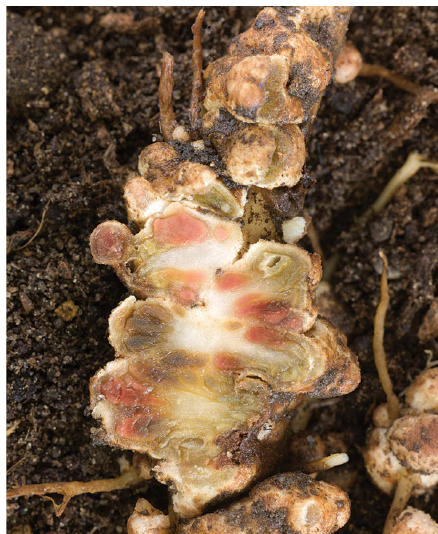
Both bacteria types participate in mutualism with their plant hosts. Host plants supply sugars as an energy source for splitting dinitrogen molecules. In return, bacteria provide fixed nitrogen as ammonium ions or amino acids.
Important
Anaerobic Requirements for Nitrogen Fixation
Nitrogen fixation requires anaerobic conditions because the nitrogenase enzyme is deactivated by oxygen. Azotobacter uses protective proteins, while Rhizobium relies on leghaemoglobin to bind oxygen and maintain an oxygen-free environment.
In natural habitats, legumes gain competitive advantage from root bacteria because they do not depend on soil nitrate. Cultivated legumes are grown in crop rotations; after harvest, plant remains are ploughed in to increase soil fixed nitrogen content.
Lightning also fixes nitrogen. During thunderstorms, high temperatures cause nitrogen and oxygen to react, forming nitrogen oxides that produce nitrate ions in soil.
Denitrification
Denitrification converts nitrate ions back to dinitrogen, occurring in anaerobic muds and waterlogged soils. Bacteria such as Pseudomonas survive low oxygen conditions by using nitrate ions as terminal electron acceptors in oxidative phosphorylation when oxygen is scarce. Nitrate is progressively reduced to dinitrogen, which escapes into the atmosphere:
Important
Nitrogen Loss Through Denitrification
Denitrification depletes soil fixed nitrogen, reducing nitrate availability for plant growth. Farmers avoid waterlogging to minimize this nitrogen loss.
Chemistry of nitrogen cycling
Nitrogen exists in nine oxidation states; four are relevant to biosphere cycling:
| Form | Oxidation state |
|---|---|
| Ammonia () and ammonium ions () | |
| Dinitrogen ( or ) | |
| Nitrite ions () | |
| Nitrate ions () |
During nitrification, and are oxidized aerobically by nitrifying bacteria. Electrons from these molecules enter the electron transfer chain, establishing a proton gradient for ATP synthesis via chemiosmosis.
Nitrogen fixation requires energy because nitrogen-nitrogen bonds are highly stable. Nitrogen-fixing bacteria therefore require plentiful carbohydrate, obtained by Azotobacter from the rhizosphere and by Rhizobium from within root nodules.
Summary
Key Points to Remember:
-
Elements are finite: Unlike energy, carbon, nitrogen and other elements exist in limited quantities and must be continuously recycled for life to continue.
-
Carbon cycle reservoirs: The atmosphere contains ~ million tonnes of carbon; oceans hold ~ trillion tonnes; sedimentary rocks store ~ trillion tonnes.
-
Nitrification is a two-step process: Nitrosomonas oxidizes ammonia () to nitrite (); Nitrobacter oxidizes nitrite to nitrate ().
-
Only specialized bacteria fix nitrogen: Azotobacter (free-living in rhizosphere) and Rhizobium (in legume root nodules) can convert atmospheric to usable ammonia, requiring anaerobic conditions and abundant energy.
-
Denitrification wastes fixed nitrogen: In waterlogged, anaerobic soils, bacteria like Pseudomonas convert valuable nitrate back to unreactive dinitrogen gas, depleting soil fertility.