Succession (OCR A-Level Biology A): Revision Notes
📚Revision Notes
Succession
What is succession?
Succession is the progressive change in ecological communities that occurs over time. This process takes place when new land becomes available for colonisation (primary succession) or when existing vegetation is cleared or disturbed (secondary succession). The development follows a predictable sequence as species composition and environmental conditions change.
Note
The key difference between primary and secondary succession is the starting point:
- Primary succession begins on land that has never supported life before (bare rock, new volcanic islands, glacial deposits)
- Secondary succession occurs on land where vegetation has been removed but soil remains (after forest fires, agricultural abandonment, floods)
In exposed environments such as high altitudes, cliff faces, or newly formed land, physical factors initially control which organisms can survive. Early colonisers gradually modify the environment, making conditions suitable for additional species. As the community develops, biological interactions between organisms become increasingly important in determining community structure.
Over extended periods, communities are progressively replaced until the ecosystem resembles others in the region experiencing similar climatic conditions. This series of changes occurs on previously uncolonised land and following natural disturbances like storms, floods, fires, or human activities including deforestation and agriculture.
Primary succession
Primary succession describes the colonisation of land that has never previously supported life, followed by progressive community development until a stable climax community becomes established.
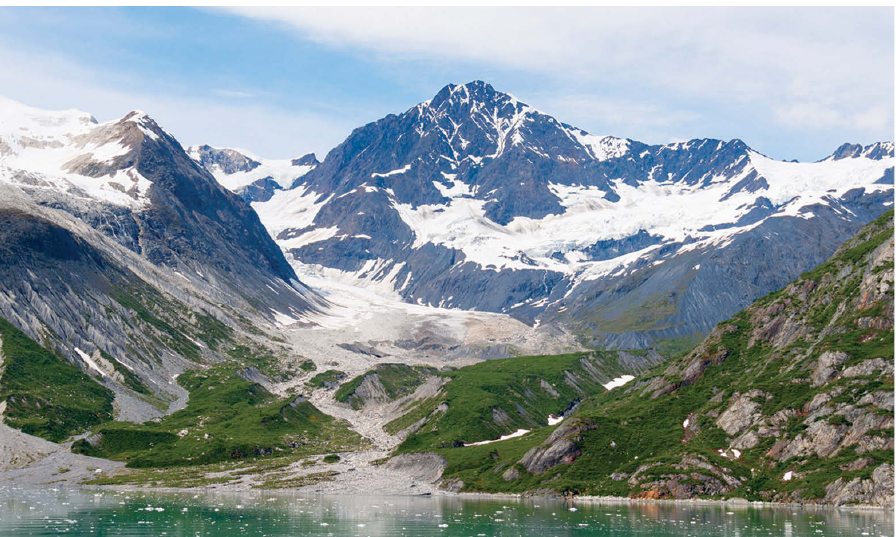
The image above shows glacial moraine in Glacier Bay, Alaska, where retreating ice exposes bare rock suitable for primary succession. This provides an excellent example of how succession proceeds in natural environments.
Pioneer community
The first organisms to colonise bare substrates are termed pioneer species. These organisms possess specific adaptations enabling survival in harsh, exposed conditions:
- Microorganisms including photosynthetic bacteria and algae establish first, representing the initial producers
- Lichens and mosses colonise surfaces requiring no soil development
- Small flowering plants produce numerous lightweight seeds easily dispersed by wind
- Many pioneer plants are self-pollinating, as pollinating insects may be scarce or absent
- These species can germinate and grow where soil is minimal or absent
Pioneer organisms begin modifying physical conditions through their presence and activity. Soil starts forming from wind-transported particles combined with decaying plant material. This soil development enables deeper-rooted plants such as grasses to become established.
The role of nitrogen fixation
Newly exposed substrates often contain almost no fixed nitrogen in forms plants can absorb. This nitrogen limitation restricts growth of most plant species. However, plants hosting nitrogen-fixing bacteria in their root systems can thrive despite nitrogen scarcity.
Important
Nitrogen-fixing plants are crucial to primary succession because:
- They can survive in nitrogen-poor environments where other plants cannot
- They enrich the soil with nitrogen as their leaves die and decompose
- They create conditions that allow more demanding species to establish later
- Without them, succession would progress much more slowly or not at all
Examples include:
- Dryas octopetala (mountain avens) - forms low-growing shrub carpets
- Alnus sinuata (alder trees) - develops into thickets
These nitrogen-fixing plants significantly modify environmental conditions, particularly by enriching soil nitrogen content as leaves die and decompose. Plant roots stabilise soil structure, and soil characteristics progressively change. Species from early seral stages become outcompeted and are replaced. Plants with more demanding nutrient requirements can now establish and, in turn, outcompete earlier colonisers like mountain avens and alder.
Seral stages and community development
Each distinct community during succession represents a seral stage. The progression through these stages follows a predictable pattern:
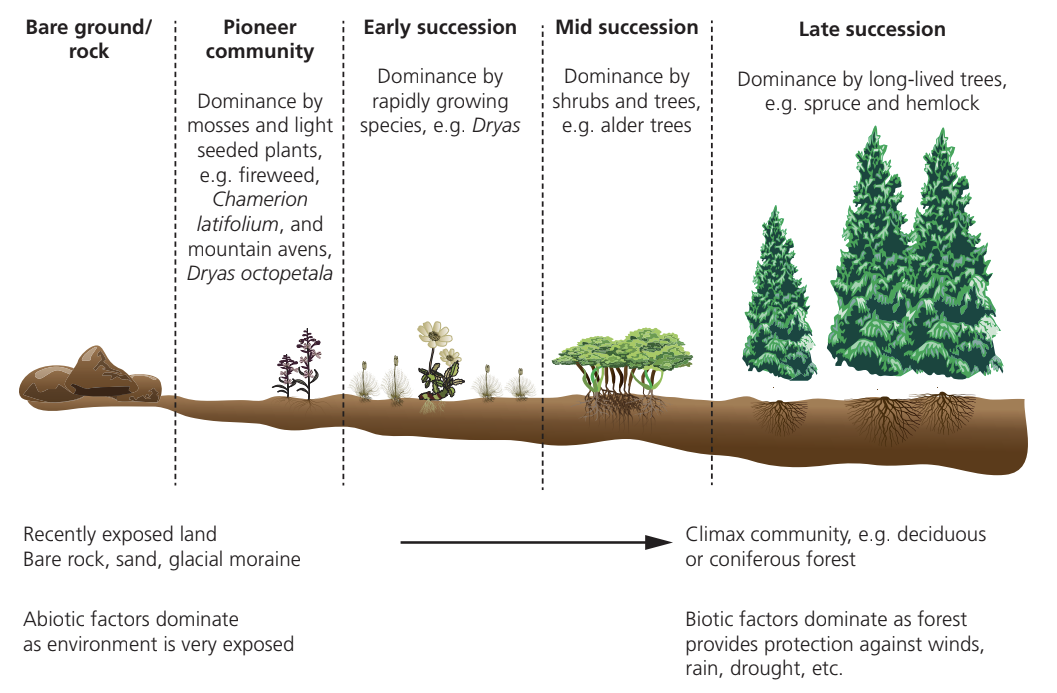
The diagram above illustrates the sequence of communities from bare ground through to climax forest. Each plant community creates conditions leading to its eventual replacement by species better adapted to the modified environment.
Environmental factors that change during succession include:
- Light availability (reduced as vegetation develops)
- Moisture retention (improved with organic matter accumulation)
- Soil organic content (humus)
- Mineral ion concentrations
Developing vegetation provides habitats for animal colonisation. Increasing varieties of microorganisms become established, particularly decomposers and nitrifying bacteria essential for carbon and nitrogen cycling.
Climax community
The climax community represents the final, stable stage of natural succession. At this point, no further directional changes occur - the community remains relatively constant in composition. In the Glacier Bay example, the climax community consists of long-lived coniferous trees including hemlock (Tsuga heterophylla) and spruce (Picea sitchensis), along with numerous coexisting species.
Example
Worked Example: Glacier Bay Succession Timeline
The progression from bare rock to climax forest in Glacier Bay demonstrates the complete primary succession sequence:
Stage 1 (Years 0-10): Bare rock exposed by glacial retreat
- Pioneer species: photosynthetic bacteria, algae, lichens, mosses
- Minimal soil development begins
Stage 2 (Years 10-30): Pioneer plant community
- Mountain avens (Dryas octopetala) colonises
- Nitrogen fixation begins enriching soil
- Soil depth increases to shallow layer
Stage 3 (Years 30-80): Alder thicket stage
- Alnus sinuata (alder trees) dominate
- Significant nitrogen enrichment occurs
- Soil depth and organic matter increase substantially
Stage 4 (Years 80-200): Spruce forest development
- Sitka spruce (Picea sitchensis) establishes and grows
- Alder becomes outcompeted and declines
- Forest structure develops with multiple layers
Stage 5 (200+ years): Climax community
- Hemlock-spruce forest dominates
- Maximum species diversity achieved
- Stable, self-maintaining community
Changes during succession
Several measurable ecosystem properties change predictably during succession:
| Feature | Pioneer | Early succession | Mid succession | Climax |
|---|---|---|---|---|
| Dominant plants | Mosses, lichens, herbs | Herb species, grasses | Shrubs, alder trees | Trees |
| Number of plant species | ||||
| Niches | Few | More | More | Most |
| Food chains | Very short | Short | Longer | Longest |
| Food webs | Simple | Becoming complex | Complex | Complex |
| Biomass | Very low | Increasing | Increasing | Very high |
| Primary productivity | Very low | Highest | High | High |
| Soil depth | None (rock/sand) | Shallow soil | Deep with layers | Deep with topsoil/subsoil |
| Soil pH | ||||
| Soil organic matter | None | Some | More | Large quantity |
| Soil nitrogen / | ||||
| Recycling rate | Rapid | Slower | Slow | Slow |
Key patterns include:
Biomass increases progressively until the climax community establishes, then remains relatively constant. This reflects accumulation of living material as larger, longer-lived organisms dominate.
Primary productivity increases to peak levels during early succession stages, then decreases slightly before stabilising. Early fast-growing species achieve maximum productivity, but this declines as slower-growing, longer-lived species dominate.
Species diversity increases throughout succession until reaching maximum levels in the climax community. Greater habitat complexity and resource availability support more species.
Soil development progresses from absent or minimal to deep, layered soil rich in organic matter and nutrients. This results from weathering processes and organic matter accumulation from dead organisms.
Note
Notice the pattern in the table: soil pH decreases from 7.2 to 3.5 during succession. This acidification occurs as:
- Organic acids are produced from decomposing plant material
- Leaching removes alkaline minerals from the topsoil
- Coniferous needle litter creates acidic conditions in climax forests
Meanwhile, soil nitrogen content increases dramatically from 3.8 to 53.3 g·m⁻², demonstrating the crucial importance of nitrogen accumulation throughout succession.
Types of primary succession
Primary succession type depends on the substrate being colonised. Four main categories are recognised:
| Type of new land | Name of succession |
|---|---|
| Wetland that is silting up | Hydrosere |
| Sand dunes | Psammosere |
| Mud deposits in estuaries | Halosere |
| Bare rock | Lithosere |
Note
Memory aid for succession types:
- Hydrosere = Hydro (water) - begins in wetlands
- Psammosere = Psammo (Greek for sand) - begins on sand dunes
- Halosere = Halo (salt) - begins in salty estuaries
- Lithosere = Litho (rock) - begins on bare rock
Each succession type follows similar principles but involves different pioneer species and seral communities adapted to specific substrate conditions. The Glacier Bay succession is a lithosere as it begins with bare rock exposed by glacial retreat.
Deflected succession
In many ecosystems, succession does not reach its natural climax community. Deflected succession occurs when factors prevent progression beyond early or mid-seral stages.
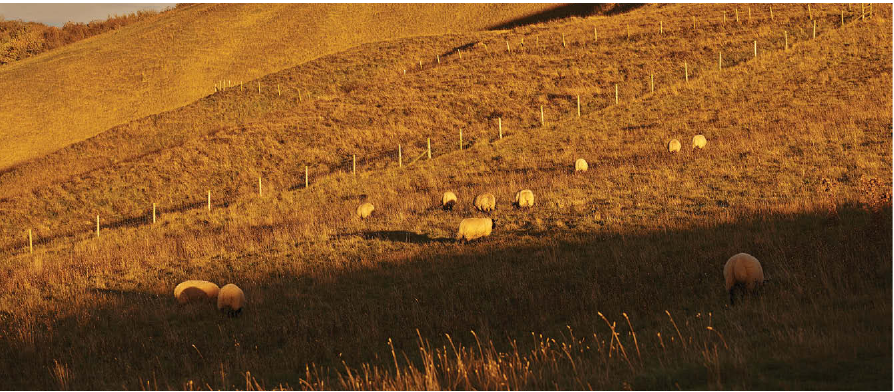
Approximately years ago, humans began extensively clearing forests across Britain for agriculture. Forest loss would naturally be followed by secondary succession, but farming activities maintain communities at early seral stages. The maintained seral stage is termed a plagioclimax.
Maintaining plagioclimax communities
Several factors prevent succession reaching climax:
Grazing by livestock reduces competition from fast-growing grass species, allowing many other plant species to survive. Grazing also prevents shrub and tree seedling establishment, blocking progression to later seral stages.
Mowing produces similar effects to grazing but is less selective in which species are removed. Regular mowing maintains grassland communities including lawns, playing fields, and some semi-natural habitats.
Burning (particularly in moorland management) removes woody vegetation and maintains heathland communities.
Important
Common Misconception to Avoid:
Plagioclimax communities are NOT natural climax communities! They are artificially maintained at early seral stages through human management. Without continued intervention (grazing, mowing, or burning), these ecosystems would eventually progress to woodland climax communities characteristic of the region's climate.
Examples of plagioclimax communities
In the UK, several important ecosystems are plagioclimax communities maintained by management:
- Moorland - maintained by grazing and burning
- Heathland - requires grazing or periodic clearance
- Chalk grassland - requires sheep grazing to prevent scrub development
- Lawns and playing fields - maintained by regular mowing
These deflected successions often exhibit higher productivity than climax communities would achieve, and support different species assemblages. Without continued management, these ecosystems would progress through remaining seral stages toward woodland climax communities.
Case study: Sand dune succession
Sand dunes demonstrate primary succession (psammosere) on coastal environments. Only species adapted to unstable, mobile sand can colonise areas where wind constantly deposits material.
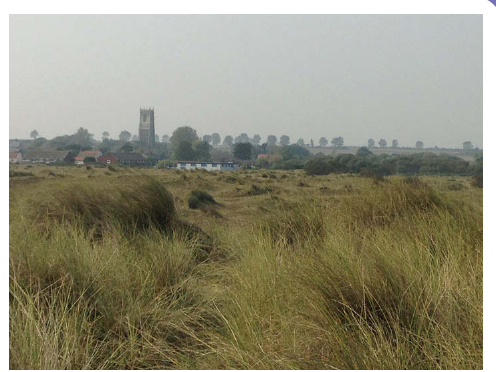
The image shows progression from mobile yellow dunes (foreground) to stabilised grey dunes (background), illustrating spatial representation of succession stages.
Species distribution across sand dune systems shows clear zonation:
| Distance / m | ||||||||||
|---|---|---|---|---|---|---|---|---|---|---|
| Marram grass | ||||||||||
| Sea couch grass | ||||||||||
| Lyme grass | ||||||||||
| Red fescue grass | ||||||||||
| Lesser hawksbit | ||||||||||
| Bell heather | ||||||||||
| Bramble |
Note
The zonation pattern in the table demonstrates the progression of succession:
- Sea couch grass dominates closest to the strand line (0-8 m), tolerating mobile sand and salt spray
- Marram grass achieves maximum abundance at intermediate distances (16-32 m), where it stabilises dunes through extensive root systems
- Red fescue grass and bell heather appear further inland (128-256 m) as dunes become more stable
- Bramble appears at the furthest distance (512 m), indicating progression toward scrubland/woodland climax
Sea couch grass dominates closest to the strand line, tolerating mobile sand and salt spray. Marram grass achieves maximum abundance at - m distance, where it stabilises dunes through extensive root systems. As dunes stabilise further, other species including red fescue grass, bell heather, and eventually bramble become established, indicating progression toward climax community.
Abiotic factors measured across the transect show:
| Distance / m | ||||||||||
|---|---|---|---|---|---|---|---|---|---|---|
| Soil pH | ||||||||||
| Wind speed / | ||||||||||
| Air temperature / °C | ||||||||||
| Vegetation height / m | ||||||||||
| Soil moisture (0-10 scale) |
The relatively constant pH reflects alkaline conditions from shell fragments in the sand. Wind exposure varies with vegetation development and dune topography. These abiotic factors interact with biotic factors to determine species distribution patterns across the dune system.
Summary
Key Points to Remember:
-
Succession is the progressive replacement of communities over time, beginning with colonisation of new land (primary) or cleared vegetation (secondary)
-
Pioneer species possess adaptations for harsh conditions including wind-dispersed seeds, self-pollination, and ability to grow with minimal soil
-
Nitrogen-fixing plants play crucial roles in primary succession by enriching soil nutrient content, enabling later species to establish
-
Biomass and species diversity increase throughout succession until stabilising at climax; productivity peaks early then declines slightly
-
Four types of primary succession based on substrate: Hydrosere (wetland), Psammosere (sand dunes), Halosere (estuaries), Lithosere (bare rock)
-
Deflected succession occurs when grazing, mowing, or burning maintains communities at early seral stages, creating plagioclimax communities like chalk grassland and moorland
-
The climax community represents the final, stable stage where no further directional changes occur