Variation (OCR A-Level Biology A): Revision Notes
📚Revision Notes
Variation
Introduction to variation
Variation describes the diverse range of differences observable between living organisms. These differences exist at all scales, from microscopic organisms to the largest animals and plants. For instance, while a shrew, elephant, and whale are all mammals, they display enormous variation in size and form. Similarly, a snowdrop and a giant redwood are both plants but differ vastly in appearance and scale.
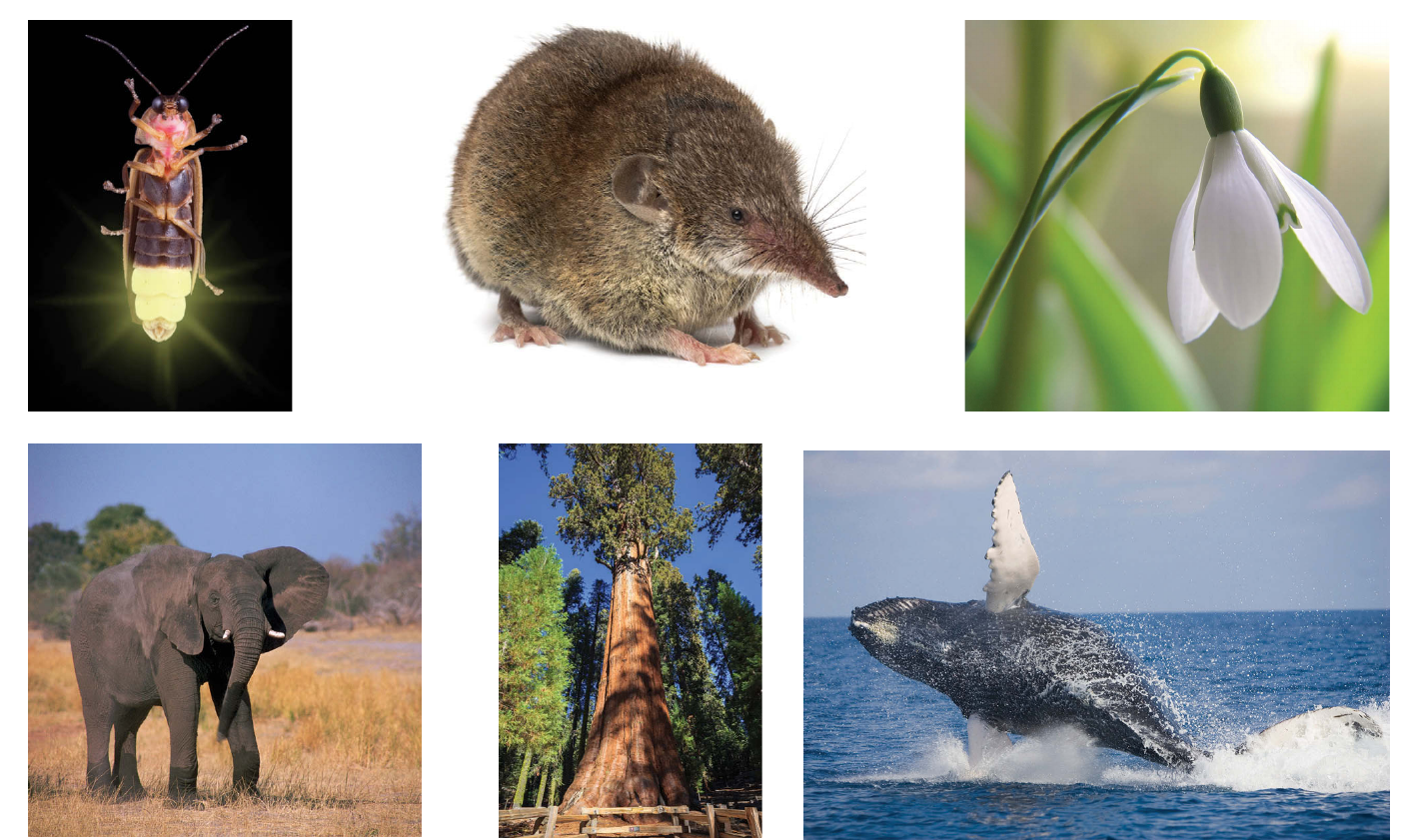
Variation occurs in two main forms:
- Intraspecific variation – differences that exist between individuals within the same species
- Interspecific variation – differences that exist between different species
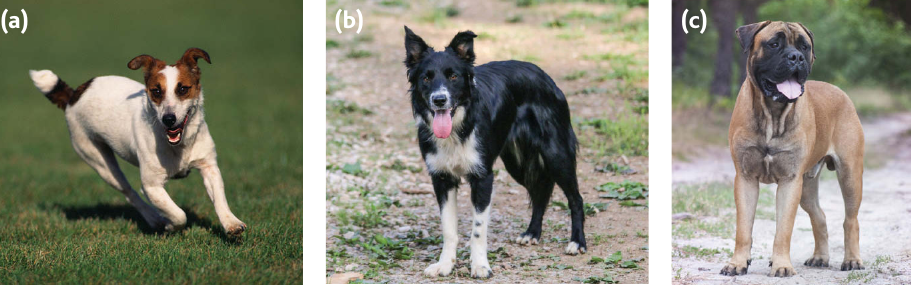
Understanding variation requires examining both genetic and environmental factors, as well as the processes of meiotic cell division and sexual reproduction. These mechanisms are essential for creating genetic diversity within species, enabling populations to adapt to changing environments.
Important
Without variation, the capacity for adaptation is lost, evolution cannot occur, and species face extinction.
Phenotypic variation
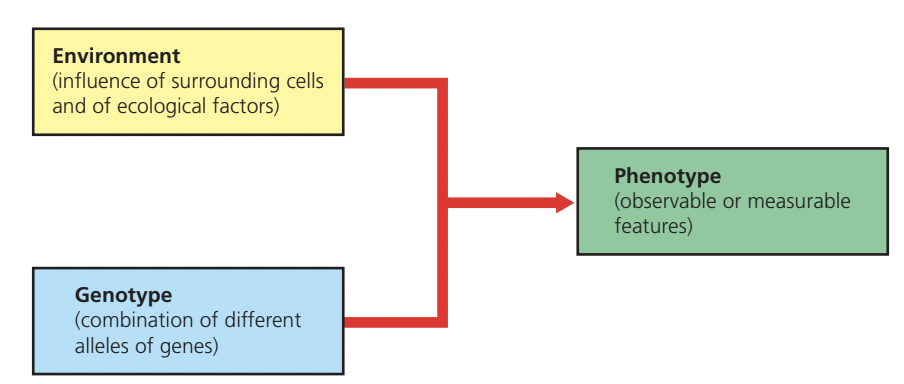
The phenotype encompasses all observable or measurable characteristics of an organism, excluding its genome. These features may be visible (such as eye color or hair color) or detected through biochemical tests (such as blood group or enzyme presence). Phenotypic variation arises from the expression of an organism's genotype – the particular combination of alleles it possesses.
A gene is a length of DNA that codes for a specific polypeptide and determines a particular characteristic. In diploid cells, which carry two copies of each chromosome, the pair of alleles present at a given locus may be identical (homozygous) or different (heterozygous). Each allele in a pair may be dominant (always expressed in the phenotype) or recessive (only expressed when present in the homozygous state).
The relationship between genotype, environment, and phenotype can be represented as follows:
Note
Some phenotypic features are determined solely by genotype (such as blood groups), others result from an interaction between genotype and environment, and some arise purely from environmental factors (such as scars from injuries).
Environmental influences can be so pronounced that two individuals with identical genotypes raised in different conditions may display considerably different phenotypes.
Environmental effects on variation
The environment can modify phenotype in ways that closely resemble genetic changes. This phenomenon is called phenocopy – when environmental conditions alter the phenotype to mimic the effects of genotypic change.
Examples of phenocopy
Example
Example: Tomato Plants
Certain varieties develop purple stems in cold temperatures but produce normal green stems in warmer conditions, becoming indistinguishable from genetically green-stemmed varieties. This demonstrates how temperature can modify phenotype without changing the underlying genotype.
Example
Example: Fruit Flies (Drosophila melanogaster)
Normal body color is grey with black stripes. A genetic mutant exists with yellow body color. However, when larvae of normal grey flies are fed a diet containing silver salts, they develop yellow bodies regardless of genotype, likely due to disruption of enzymes in the pigment production pathway.
Example
Example: Himalayan Rabbits
These rabbits typically have white coats with black points (tail, nose, and ears) in moderate climates. However, cold temperatures increase the areas and depth of dark markings. Baby Himalayans are particularly temperature-sensitive, developing dark bands in cold conditions.
How it works:
- The rabbits cannot produce pheomelanin
- They can only produce eumelanin when temperature falls below a certain threshold
- The enzyme determining black fur is temperature-dependent
- This causes the rabbits to resemble genetically black rabbits without any change to their genotype
Example
Example: Plants and Chlorophyll Production
Plants kept in darkness or deficient in magnesium develop chlorosis (yellowing due to halted chlorophyll synthesis). Seedlings grown in darkness show etiolation – long stems with small, curled yellow leaves.
Phenocopy vs. Genetic Inability:
- These plants possess the genetic potential to produce chlorophyll but cannot express it without adequate light
- When provided with light, they resume normal chlorophyll production and growth
- In contrast, albino plants (such as Arabidopsis thaliana mutant ppi2) lack the genetic capacity to produce chlorophyll and cannot synthesize it regardless of environmental conditions
Example
Example: Diet and Human Growth
A child's genetic potential for height may not be fully realized if their diet lacks adequate proteins and vitamins, demonstrating how nutrition influences the expression of genetically determined characteristics.
Types of variation
Phenotypic variation falls into two distinct categories: continuous variation and discontinuous variation. The distinction between these types results from the number of genes involved in determining a characteristic and how those genes are expressed.
Discontinuous variation
Discontinuous variation produces distinct categories or classes with no intermediates. Characteristics showing discontinuous variation are typically controlled by a single gene (monogenic inheritance) or a very small number of genes. Environmental factors have minimal influence on these traits.
Examples include:
- Ability to roll the tongue
- Human blood groups (A, B, AB, O)
- Presence or absence of a feature
Note
Data collected for discontinuous variation are qualitative (categorical), and differences between individuals are clear-cut – the feature is either present or absent.
Continuous variation
Continuous variation produces a range of phenotypes between two extremes, with many intermediate forms. These characteristics are controlled by multiple genes at different loci (polygenic inheritance), each contributing to the overall phenotype. Environmental factors significantly influence the final expression of these traits.
Examples include:
- Human height
- Cattle milk yield
- Skin color
- Body mass
Note
Data collected for continuous variation are quantitative (measurable), and individuals show gradual differences across the entire range.
Comparison of variation types
| Feature | Discontinuous variation | Continuous variation |
|---|---|---|
| Definition | Features form distinct classes or categories; discrete or categorical data (qualitative) | Features can be measured across a complete range from one extreme to the other; quantitative data |
| Gene locus | Usually only one, but there may be a very small number | Many loci, may be on different chromosomes |
| Number of alleles | Often just one pair of alleles (monogenic), but there may be a very small number | Many genes contribute to inheritance (polygenic); each has its own alleles |
| Effect on phenotype | The feature is either present or absent; differences are discrete categories | Many intermediates exist between the extremes (e.g., between tallest and shortest) |
| Environmental influence | Environment has little influence | Environmental factors have a significant effect |
| Examples | Ability to roll the tongue, human blood groups | Height in humans, milk yield in cattle |
Genetic variation from sexual reproduction
Genetic variation exists because genes have different versions called alleles. Sexual reproduction significantly increases variation by combining DNA from two different individuals during fertilization. For any variation to provide a selective advantage or disadvantage, it must be heritable – meaning offspring must be fertile, which requires parents to belong to the same species.
How meiosis generates variation
Meiosis creates genetic variation through several mechanisms:
- Crossing over between maternal and paternal chromosomes in meiosis I
- Independent assortment in meiosis I of maternal and paternal chromosomes in homologous pairs
- Random segregation of sister chromatids in meiosis II
- Halving the chromosome number to produce haploid gametes, which are then restored to diploid by fertilization with another gamete carrying different alleles
- Chromosome mutations that occur randomly
Crossing over
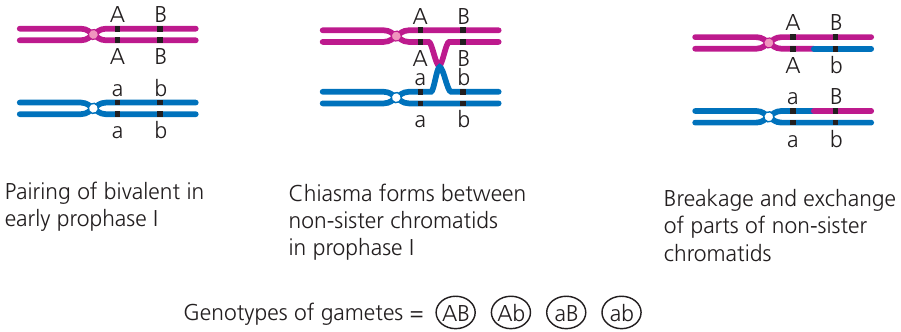
During prophase I of meiosis, crossing over occurs between non-sister chromatids of homologous chromosomes. Chromatids from opposing homologous chromosomes form attachments called chiasmata (singular: chiasma). These attachment points act as breaking points where chromosome segments are exchanged.
The process works as follows:
- Homologous chromosome pairs align to form a bivalent in early prophase I
- Chiasmata form between non-sister chromatids
- Chromosome segments break and exchange between non-sister chromatids
- New combinations of alleles are created on the recombined chromatids
Note
This recombination produces gametes with different combinations of alleles than were present on the original chromosomes, creating genetic diversity.
Random assortment and segregation
These processes occur at two distinct stages in meiosis:
At meiosis I:
- Homologous chromosome pairs align at the cell equator during metaphase I with random orientation
- Maternal and paternal chromosomes arrange independently, showing no relationship to their origins
- This is called random assortment
- During anaphase I, random segregation occurs when each chromosome separates from its homologous partner
At meiosis II:
- Chromatids line up independently at the equator
- They undergo random assortment and segregation
- Chromatids separate to opposite poles, creating four groups of chromosomes
- These four groups are contained in four haploid cells
- If crossing over occurred in meiosis I, none of the resulting chromatids are genetically identical
Mutations
Both gene and chromosome mutations occur randomly during DNA replication in interphase. These mutations permanently change the genotype, increasing variation in offspring. Mutations can arise during incorrect DNA copying and may occur in either mitosis or meiosis.
Fertilization
When a male gamete fertilizes a female gamete, the chromosome number is restored to the full diploid complement. The resulting zygote contains:
- Maternal chromosomes from the egg cell forming one half of each homologous pair
- Paternal chromosomes from the sperm forming the other half of each pair
This brings together two different sources of genetic material, further increasing variation. The random nature of fertilization – any one of millions of different sperm could fertilize the egg – provides another source of variation.
Important
The random nature of fertilization means that any one of millions of different sperm could fertilize the egg, providing yet another source of variation in offspring.
Remember!
Summary
Key Points to Remember:
- Variation describes the range of differences between organisms, including intraspecific variation (within species) and interspecific variation (between species)
- The phenotype results from an interaction between genotype and environment; environmental factors can significantly modify gene expression
- Discontinuous variation produces distinct categories controlled by single genes with minimal environmental influence, while continuous variation shows a range of values controlled by multiple genes with significant environmental effects
- Meiosis generates genetic variation through crossing over, random assortment, and random segregation of chromosomes
- Sexual reproduction and random fertilization combine genetic material from two parents, substantially increasing variation within populations