Populations and Sustainability (OCR A-Level Biology A): Revision Notes
📚Revision Notes
Factors That Influence Population Size
Introduction to population growth
When a species colonizes a new environment with abundant resources, population numbers typically increase rapidly. This growth pattern often follows an exponential trend initially, where the population size doubles at regular intervals. The rate and extent of population growth depend on various environmental factors that either promote or restrict population expansion.
Population growth can be studied effectively using microorganisms in controlled laboratory conditions, where environmental variables can be monitored precisely. These experimental models help us understand the fundamental principles that govern population dynamics in more complex natural ecosystems.
Note
Microorganisms like yeast and bacteria are ideal for population studies because they:
- Reproduce rapidly, allowing observation of multiple generations in short timeframes
- Require minimal space and resources for experimentation
- Can be easily controlled and manipulated in laboratory settings
- Display the same fundamental growth patterns as larger organisms
Logistic growth in yeast populations
Experimental demonstration
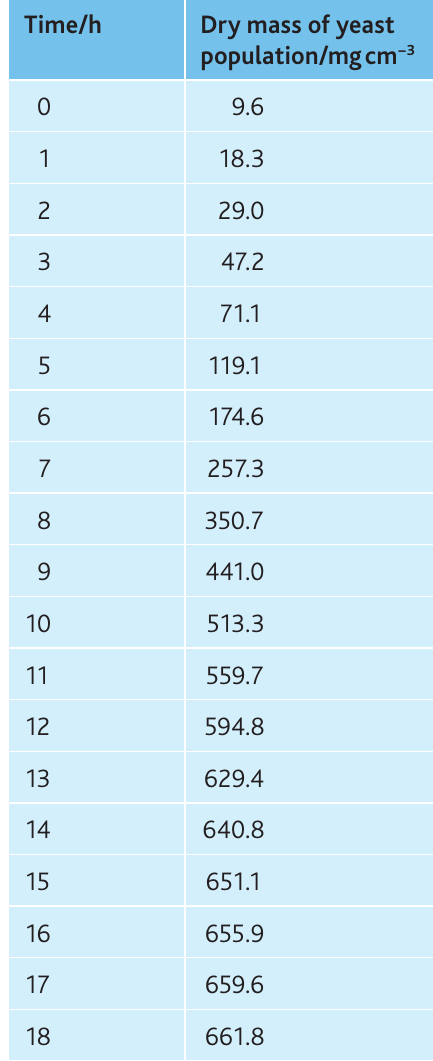
A classic demonstration of population growth uses yeast cultures grown in a fermenter. In this experiment, a small yeast sample is placed in a nutrient solution containing glucose or sucrose as a respiratory substrate, along with dissolved oxygen and mineral ions. The culture is maintained at constant temperature, and samples are removed at regular intervals to measure the dry mass of yeast cells.
The growth curve
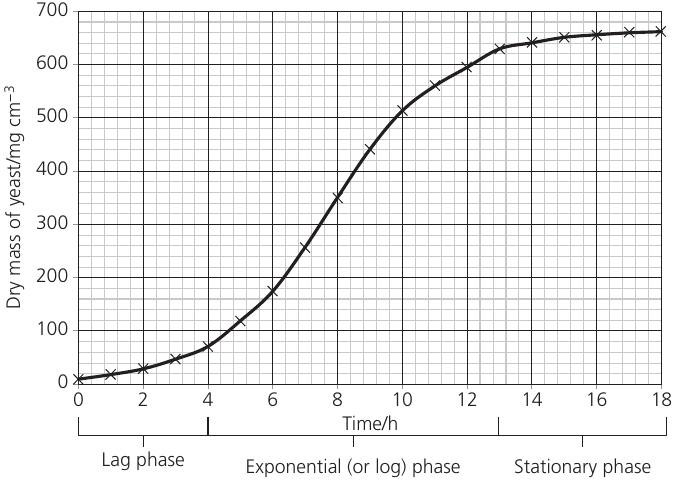
When the data from the yeast population experiment are plotted, they produce a characteristic S-shaped curve. This pattern is termed logistic growth.
Phases of logistic growth
The logistic growth curve consists of three distinct phases:
Lag phase – During the initial period (- hours in the yeast example), population growth is slow. Organisms are adapting to their new environment, synthesizing enzymes, and preparing for reproduction. Cell numbers remain relatively low as individuals acclimatize to the conditions.
Exponential (log) phase – After the lag phase, population growth accelerates dramatically (- hours). Resources are plentiful, and each generation reproduces successfully. The population size increases at an exponential rate, doubling at regular intervals. During this phase, the birth rate far exceeds the death rate.
Stationary phase – Eventually, growth rate slows and the population reaches a relatively stable size (- hours). The population has reached the maximum density the environment can sustain. Birth rate and death rate become approximately equal, resulting in little net change in population size.
Important
Common Misconception: The stationary phase does NOT mean that reproduction has stopped. Rather, the birth rate and death rate are in equilibrium, so the population size remains constant even though individuals are still being born and dying.
Factors limiting yeast population growth
As the yeast population grows, several factors become limiting:
Abiotic limiting factors:
- Depletion of respiratory substrate (glucose/sucrose)
- Reduction in dissolved oxygen concentration
- Accumulation of toxic waste products such as ethanol, which inhibits enzyme function
- Changes in pH due to metabolic waste
Biotic limiting factors:
- Intraspecific competition – competition between yeast cells of the same species for the limited resources available
In this single-species system, other biotic factors such as interspecific competition (with different species), predation, and disease are absent. The population is primarily limited by resource availability and waste accumulation.
Competition between individuals
Intraspecific competition
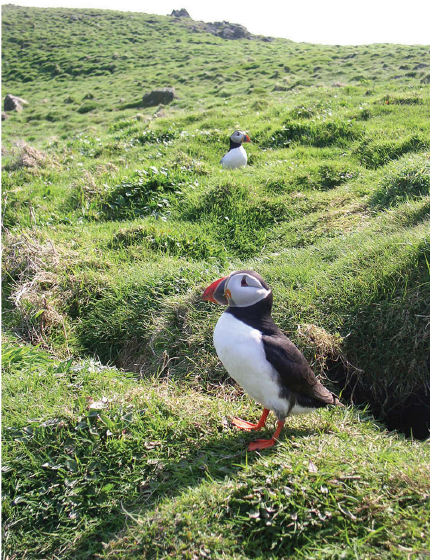
Intraspecific competition occurs when individuals of the same species compete for limited resources. This form of competition tends to be more intense than competition between different species because all individuals have identical resource requirements – they need exactly the same nutrients, habitat conditions, and breeding sites.
Competition can be either:
Indirect competition – Individuals compete for resources without direct confrontation. Those that are less successful in obtaining food grow more slowly, may fail to reproduce, or may be forced to migrate to new areas. In severe cases, individuals may starve.
Direct competition – Individuals engage in active contest, often for territories or mates. In many species, this competition is ritualized through displays and posturing rather than harmful physical combat, minimizing injury to both competitors.
Example
Worked Example: Intraspecific Competition in Red Deer
Red deer stags compete for territories during the breeding season. This competition follows a ritualized pattern:
Step 1: Rival males engage in roaring contests to assess each other's strength without physical contact.
Step 2: If neither backs down, they engage in parallel walking to compare body size.
Step 3: Only if the contest remains unresolved do they lock antlers in physical combat.
Result: This ritualized competition allows the stronger male to establish dominance while minimizing the risk of serious injury to both competitors. The winner gains access to breeding females, while the loser retreats to find another territory.
Interspecific competition
Interspecific competition occurs between individuals of different species competing for similar resources. This competition is typically less intense than intraspecific competition because different species have somewhat different requirements and occupy slightly different ecological niches.
Limiting factors
Limiting factors are any abiotic or biotic factors that restrict population growth once the population reaches a certain density.
Density-dependent factors
Biotic factors increase in intensity as population density rises:
- Intraspecific competition
- Interspecific competition
- Predation
- Disease transmission
- Parasitism
Note
Why are these density-dependent? As population density increases, individuals are in closer contact with each other. This means:
- More competition for the same resources
- Easier transmission of diseases between individuals
- Higher encounter rates with predators
- Greater likelihood of parasite spread
Density-independent factors
Abiotic factors affect populations regardless of their density:
- Temperature extremes (cold weather, heat waves)
- Drought
- Flooding
- Natural disasters
These factors remain constant in their impact whether the population is large or small.
Note
A severe drought will kill a similar proportion of individuals whether there are 100 or 10,000 organisms in the population – it doesn't become more severe as population density increases.
Environmental resistance and carrying capacity
Environmental resistance
As population numbers increase, organisms encounter various factors that prevent further growth. The combined effect of all these limiting factors is termed environmental resistance. Environmental resistance includes:
- Resource depletion (food, water, space)
- Waste accumulation
- Increased competition
- Higher predation rates
- Greater disease transmission
- Territorial limitations
Carrying capacity
The carrying capacity is the maximum population density that an ecosystem can support over extended periods without environmental degradation. It represents the point where the population reaches the stationary phase of logistic growth.
For plant populations, carrying capacity is determined by:
- Competition for light, water, and nutrients
- Available space for growth
- Grazing pressure
- Disease prevalence
For animal populations, carrying capacity depends on:
- Food availability
- Predation pressure
- Disease
- Competition for territories, nesting sites, and shelter
- Availability of breeding sites
Example
Worked Example: Analyzing the Sheep Population Graph
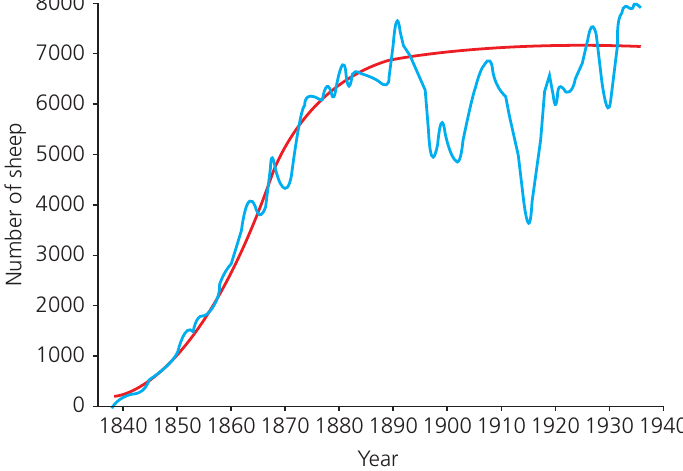
The graph demonstrates how populations fluctuate around the carrying capacity:
Exponential Growth Phase (1840-1890): The sheep population grew exponentially, reaching approximately sheep. During this period, resources were abundant and environmental resistance was low.
Fluctuations Around Carrying Capacity (1890 onwards): The population oscillated around a mean value rather than remaining constant at exactly sheep.
Explanation: These fluctuations result from:
- Year-to-year variations in rainfall affecting grass growth
- Seasonal changes in food availability
- Variations in disease prevalence
- Changes in predation pressure
The population demonstrates that carrying capacity is not a fixed number but rather a dynamic equilibrium that varies with environmental conditions.
Logistic growth in natural ecosystems
Invasive species
Logistic growth patterns occur in natural ecosystems when species invade new habitats, particularly through:
- Natural migration into previously unoccupied areas
- Human-mediated introduction of species to new regions
- Population recovery following disease epidemics or catastrophic events
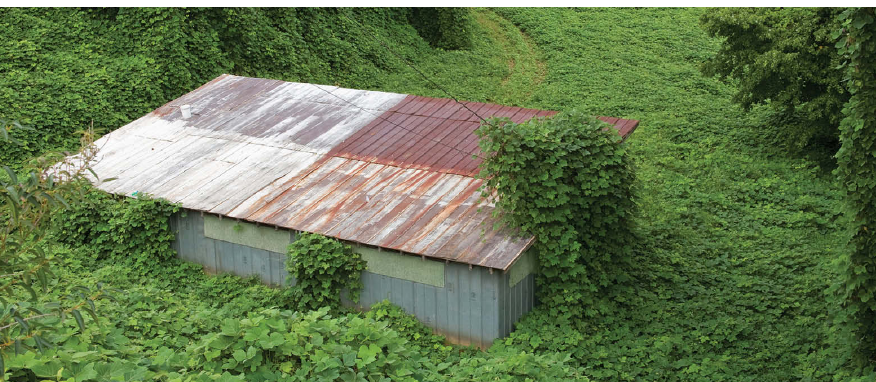
When an invasive species successfully establishes in a new environment, it may exhibit rapid logistic growth if suitable resources are available and natural predators or competitors are absent. However, many invaders fail to establish because:
- No suitable ecological niche exists
- Native species are better adapted to local conditions
- The environment lacks essential resources
Important
Why Invasive Species Can Be Dangerous:
Invasive species often show explosive population growth in new environments because they have been removed from their natural limiting factors (predators, diseases, competitors). Without these controls, they can:
- Outcompete native species for resources
- Alter ecosystem structure and function
- Cause economic damage to agriculture and infrastructure
- Disrupt food webs and ecological relationships
Population recovery
Logistic growth also occurs when populations recover from catastrophic events. For example, wildebeest populations in East Africa showed S-shaped recovery growth following a rinderpest epidemic in the early 1960s.
J-shaped population growth
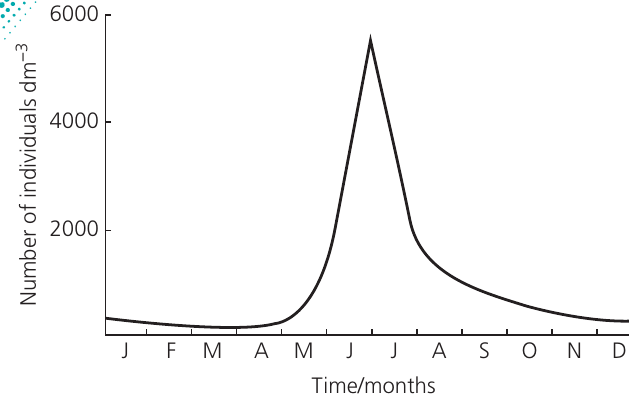
Not all populations exhibit S-shaped logistic growth. Some species display J-shaped growth curves, characterized by:
- Rapid exponential increase when resources become available
- Population crash before reaching carrying capacity
- No stable stationary phase
Note
Key Difference from Logistic Growth:
In logistic (S-shaped) growth, the population gradually slows as it approaches carrying capacity and then stabilizes. In J-shaped growth, the population crashes suddenly due to resource depletion or environmental change, often before reaching the theoretical carrying capacity.
Characteristics of J-shaped growth
Species showing J-shaped growth typically:
- Reproduce rapidly, often asexually
- Exploit temporary resource availability
- Are controlled primarily by abiotic rather than biotic factors
- Respond quickly to favorable environmental conditions
- Experience boom-and-bust population cycles
Examples of J-shaped growth
Planktonic algae – Marine phytoplankton populations increase dramatically in spring when:
- Light intensity increases with longer days
- Nutrients are brought to surface waters by currents
- Temperature conditions become favorable
The population crashes when nutrients are depleted or environmental conditions deteriorate.
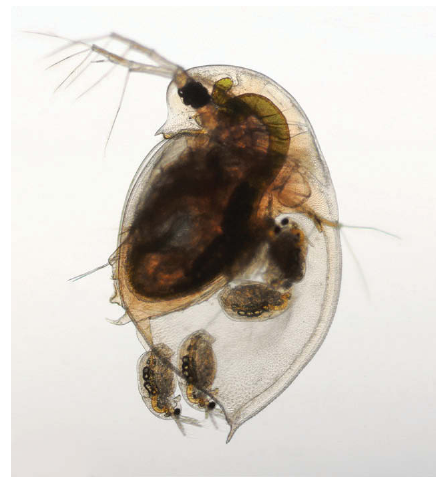
Daphnia (water fleas) – These small crustaceans reproduce by parthenogenesis (asexual reproduction), allowing extremely rapid population growth when food resources (algae and bacteria) are abundant.
Aphids – These insect pests can increase very rapidly through parthenogenesis when:
- Host plants reach suitable developmental stages
- Weather conditions are favorable
- Natural predators are absent or ineffective
Note
Advantage of Asexual Reproduction in J-shaped Growth:
Asexual reproduction allows populations to exploit resources that may only be available for short periods. Since no mate is required, every individual can reproduce, and population growth can be extremely rapid. This maximizes reproductive success before conditions deteriorate.
Migration and population size
Migration significantly influences population dynamics through two processes:
Emigration – When populations reach or exceed carrying capacity, some individuals may leave (emigrate) to find new food sources, breeding sites, or territories. This reduces the size of the original population and relieves pressure on limited resources.
Immigration – The arrival of individuals from other populations (immigration) increases population size in the receiving area. This can:
- Introduce genetic variation
- Occupy previously unused resources
- Establish new populations in suitable habitats
- Rescue declining populations (genetic rescue)
Note
Migration patterns help maintain metapopulations (networks of connected populations) and allow species to track changing environmental conditions across landscapes. This is particularly important in fragmented habitats where populations may become isolated without migration corridors.
Summary
Key Points to Remember:
-
Logistic growth produces an S-shaped curve with three phases: lag (slow initial growth), exponential (rapid increase), and stationary (population stabilizes at carrying capacity).
-
Intraspecific competition (within species) is typically more intense than interspecific competition (between species) because all individuals require identical resources.
-
Limiting factors can be density-dependent (biotic factors like competition and disease that intensify with population density) or density-independent (abiotic factors like weather extremes that affect populations regardless of size).
-
J-shaped growth occurs in species that reproduce rapidly (often asexually) to exploit temporary resources, followed by population crashes before reaching carrying capacity.
-
Environmental resistance is the combined effect of all factors that prevent further population increase, determining the carrying capacity of the ecosystem.
-
Carrying capacity is not a fixed value but fluctuates with environmental conditions and resource availability over time.
-
Species displaying J-shaped growth are typically controlled by abiotic factors and show boom-and-bust cycles, while those showing S-shaped growth are regulated by biotic factors and stabilize around carrying capacity.