Conservation of Biological Resources (OCR A-Level Biology A): Revision Notes
📚Revision Notes
Conservation of Biological Resources
Distinguishing conservation from preservation
Conservation and preservation represent different approaches to managing natural resources. Preservation maintains species and habitats in their current state, protecting them from future changes and prohibiting any human use. By contrast, conservation involves the active management of habitats and species, recognising that ecosystems change over time in response to environmental conditions and permitting controlled human use of wildlife and habitats.
Note
The key distinction: preservation seeks to keep nature unchanged and untouched, while conservation actively manages ecosystems while allowing sustainable human use. Think of preservation as "hands-off" and conservation as "hands-on management."
This section focuses on conserving biological resources harvested from the environment, such as fish from seas and lakes, and timber from forests. These resources are considered sustainable when they can continue to be harvested without depleting future stocks.
Why conserve biological resources?
Economic justifications
Conservation delivers several economic benefits:
Raw materials for industry: Natural and plantation forests supply timber products for construction and paper manufacturing. In the UK, the timber trade directly employs approximately 167,000 people.
Food security: Sustainable harvesting ensures continuous food supplies, particularly fish sourced from wild populations rather than aquaculture. Although the UK imports more timber and fish than it exports, fish exports (including shellfish) generate over £1 billion annually.
Employment opportunities: Conservation-based industries create jobs in:
- Processing and manufacturing raw materials
- Transport, marketing and retail sectors
- Ecotourism, particularly in biodiverse regions
Environmental services: Ecosystems provide climate regulation, water supply management, natural pest control and disease regulation. Forests and peat bogs store vast quantities of carbon, functioning as crucial carbon sinks.
Note
Economic Value of Ecosystem Services
The benefits ecosystems provide extend far beyond harvested resources. Natural pest control alone saves agriculture billions in pesticide costs, while forests acting as carbon sinks help mitigate climate change – services that would be impossible to replace artificially.
Social benefits
Rural communities with limited industrial or commercial development gain stability from employment in fishing and forestry. Forested areas managed by organisations like the Forestry Commission and private owners serve as recreational spaces, offering visual appeal, exercise opportunities and wildlife observation.
Ethical considerations
Conservation addresses two key ethical responsibilities:
- Intergenerational duty: We have an obligation to maintain resources for the livelihoods and wellbeing of future generations.
- Support for indigenous communities: Many traditional societies worldwide depend on specific biological resources. The Inuit peoples of the Arctic rely on seals and whales, whilst communities in Amazonian and Central African forests harvest foods from their forest environments.
Managing resources sustainably
A sustainable resource is renewed through biological activity, ensuring sufficient stocks remain available for harvesting without depletion. Survival on Earth requires maintaining food sources, raw materials and ecosystem services through sustainable practices. Sustainability extends beyond resource renewal to encompass protecting surrounding ecosystems and preserving biodiversity within harvested areas.
Important
True Sustainability Goes Beyond Resource Renewal
Sustainable management provides for growing human populations whilst safeguarding ecosystems and their capacity to deliver materials and services. It's not just about replacing what we take – it's about maintaining the entire ecosystem's health and function.
Managing fish stocks
Fish populations globally have experienced severe depletion, with some stocks collapsing entirely. Conservation requires regulating where, when and how fishing occurs. Regulatory bodies must determine the maximum sustainable yield (MSY) – the number or biomass of fish that can be caught annually without reducing the stock's regenerative capacity. A sustainable fish stock maintains reproduction levels that replace harvested fish and employs fishing methods that minimise environmental damage.
Fishing regulation methods
Multiple strategies work together to protect fish populations and ensure sustainability:
Spatial controls:
- Establishing exclusion zones where fishing is prohibited, often protecting spawning grounds where fish reproduce or nursery grounds where juveniles develop
- Limiting the number of vessels permitted to fish particular species or areas
- Creating 'no catch zones' where older, more fecund female fish can reproduce (these fat, older females are the most effective spawners)
Temporal restrictions:
- Banning fishing during specific periods, particularly spawning seasons
Technical regulations:
- Controlling fishing gear specifications, such as net mesh size and hook dimensions, ensuring small fish escape to survive and breed
- Issuing quotas limiting the annual catch by number or mass
Enforcement:
- Inspecting catches at ports
- Deploying fisheries protection vessels for at-sea monitoring
- Restocking with juvenile fish
Note
International Cooperation in Fisheries Management
Multiple international organisations regulate fishing and combat illegal, unreported and unregulated activities, including the International Commission for the Conservation of Atlantic Tuna (ICCAT), the European Union's Common Fisheries Policy, and the North Atlantic Fisheries Organization (NAFO). Effective conservation requires collaboration across national boundaries since fish don't respect political borders.
The ecosystem approach
Traditional fishing regulation focused on individual species' breeding success, aiming to harvest without causing extinction. A different strategy, pioneered in Antarctic waters, adopts an ecosystem perspective. This approach examines the entire ecosystem's structure and dynamics, including fish populations' positions within food webs and their interactions with supporting populations. It extends protection to seabed habitats at risk from trawling (dragging nets along the ocean floor).
Important
Why the Ecosystem Approach Matters
Managing single species in isolation ignores the complex web of interactions that sustain fish populations. Protecting one species while allowing damage to its food sources, predators, or habitat will ultimately fail. The ecosystem approach recognises that healthy fish stocks depend on healthy oceans.
Recovery outcomes
Some fish stocks have recovered substantially following regulation implementation. However, recovery remains incomplete for others.
Example
Case Study: George's Bank Recovery
Three zones totalling on George's Bank in the Gulf of Maine (North-West Atlantic) were closed to fishing in the mid-1990s. Five years later, all fish stocks except cod had recovered.
Young cod predation by other fish may explain this, though complex ecological interactions likely contribute. In other Atlantic regions, cod stocks currently show good condition and effective management, demonstrating that recovery is possible with proper management and time.
Managing timber resources
In the UK, approximately 13% of land is wooded – an increasing proportion. Heavy timber demands during the two World Wars reduced forest cover to below 5% by 1945. Restoration has been gradual. Woodlands can be managed sustainably to supply various industries.
Tree crop categories
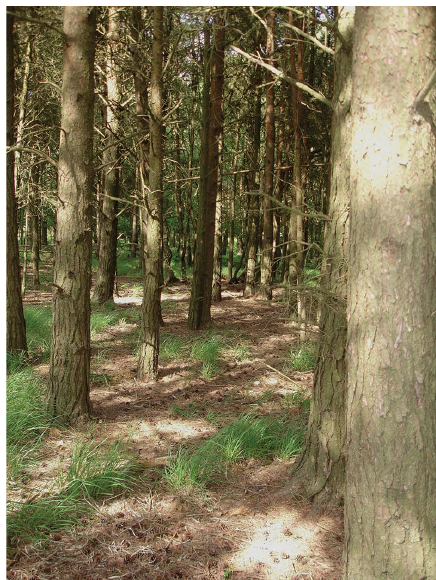
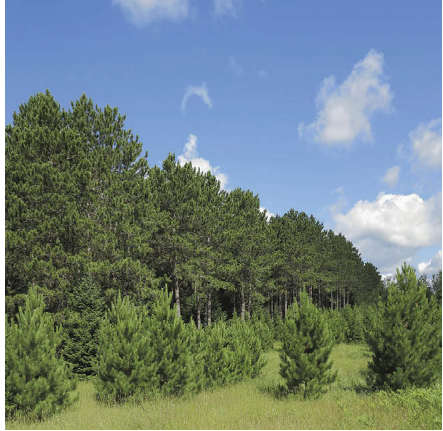
Fast-growing conifers: Species including Scots pine, Sitka spruce, Norway spruce, larch and Douglas fir support commercial processes like papermaking and construction.
Slower-growing broadleaves: Oak, beech, hazel, alder and sweet chestnut trees.
Timber harvesting methods
Different harvesting approaches balance economic efficiency with environmental protection:
Clear felling removes all trees across an area, typically of uniform age, leaving no canopy cover. This approach disrupts biodiversity and exposes soil to weathering, potentially causing erosion and nutrient loss (including nitrate ions). Its advantage lies in economic efficiency. In managed woodlands, clear felling is followed by replanting.
Selective felling minimises ecosystem damage by removing only certain mature trees, diseased specimens and unwanted species whilst leaving others standing. This creates space for natural regeneration from saplings or planting nursery-raised young trees. Removing individual trees inevitably causes some ecosystem disruption through machinery access, but allows premium trees time to reach maturity when they command higher economic value.
Strip felling clears small patches or strips whilst leaving adjacent forest intact. Cleared areas are replanted, and neighbouring sections are harvested after the new trees reach harvestable size. This prevents simultaneous felling of large areas, reducing disruption, minimising biodiversity impacts and preventing soil erosion.
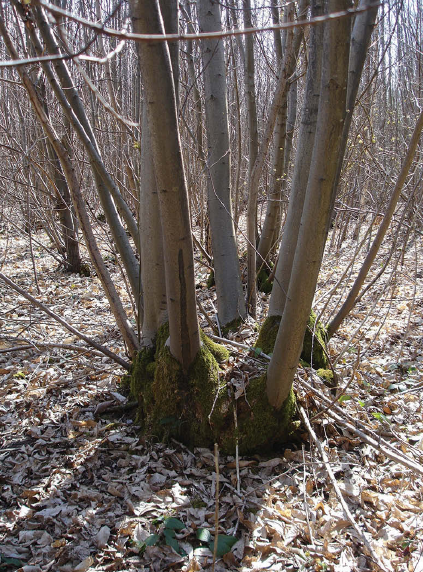
Coppicing manages broadleaved woodlands by cutting trees to ground level and leaving stumps to regrow. Multiple stems emerge from buds on the stump, growing faster than newly planted saplings due to well-developed root systems. After five or more years, shoots are cut back to stumps. The wood produces hurdles, poles, posts, firewood and charcoal. Suitable species include hazel, ash, sweet chestnut, oak, willow and alder.
Note
Coppicing: Ancient Practice, Modern Applications
Coppicing can continue indefinitely. Cutting small strips or patches in different years creates habitat variety and promotes high biodiversity. Renewed interest stems from willow's capacity to produce large wood quantities rapidly. Though unsuitable for construction, this wood excels in paper manufacture or processing into wood chips for domestic heating and power station electricity generation.
Many coppiced woodlands contain a mosaic of areas at different rotation stages. Oak, being slow-growing, follows a 50-year rotation cycle, exemplifying forestry's long-term planning perspective.
Carbon storage role
Growing trees extract carbon from the atmosphere and store it as wood. Faster growth correlates with faster carbon storage. Conifers generally grow fastest in the UK. When timber constructs durable goods, carbon storage continues without atmospheric release. Increasing wood and wood product manufacture and use contributes to expanding carbon sinks.
Effects of human activities on the environment
This topic addresses two key areas:
- How human activities affect plant and animal populations in environmentally sensitive ecosystems, and the controls applied to these activities
- Managing conflicts between species preservation and future conservation against demands from expanding human populations
Summary
Key Points to Remember:
-
Conservation permits controlled human use whilst managing habitats and species; preservation prohibits all human use and maintains current conditions.
-
Maximum sustainable yield (MSY) determines the fish catch level that maintains stock regeneration capacity – a crucial concept for sustainable fisheries.
-
Fishing regulation combines multiple approaches: exclusion zones, quotas, gear restrictions, timing bans and enforcement measures work together to protect stocks.
-
Timber harvesting methods balance economic needs with environmental impact: clear felling is efficient but disruptive; selective and strip felling reduce damage; coppicing promotes biodiversity.
-
Forests function as carbon sinks – the faster trees grow and the longer wood products remain in use, the more carbon is removed from the atmosphere.