The Equilibrium Constant Kp (OCR A-Level Chemistry A): Revision Notes
📚Revision Notes
The equilibrium constant Kp
Introduction to Kp
When working with gas-phase equilibria, it's more practical to measure pressure rather than concentration. The equilibrium constant uses partial pressures instead of concentrations, making calculations with gaseous systems much more straightforward. Understanding requires a solid grasp of two key concepts: mole fractions and partial pressures.
Note
While uses concentrations (measured in mol dm⁻³), uses partial pressures (measured in kPa, Pa, or atm). Both describe the same equilibrium position, but is particularly useful for gas-phase reactions where pressure measurements are easier to obtain.
Mole fraction
What is mole fraction?
The mole fraction represents the proportion of a particular gas in a mixture. Under identical temperature and pressure conditions, equal volumes of different gases contain the same number of molecules. This means the volume proportion of a gas equals its mole fraction.
For any gas A in a mixture, we can define its mole fraction as:
An important property of mole fractions is that they must sum to 1 for all components in the mixture:
Note
The mole fraction is a dimensionless quantity (it has no units) because it's a ratio of moles to moles. This makes it particularly useful for describing gas mixtures regardless of the total amount of gas present.
Calculating mole fractions - worked example
Example
Worked Example: Calculating Mole Fractions in Air
Let's consider air, which contains approximately 78% nitrogen gas, 21% oxygen gas, and 1% other gases. We can calculate the mole fraction of each component:
For nitrogen ():
For oxygen ():
For other gases:
Verification: ✓
Partial pressure
Understanding partial pressure
In a gas mixture, each component exerts its own pressure, called the partial pressure. The partial pressure of a gas represents its contribution to the total pressure of the mixture. The sum of all partial pressures equals the total pressure.
For gas A in a mixture, the partial pressure is calculated as:
where is the total pressure of the gas mixture.
Note
This relationship is based on Dalton's Law of Partial Pressures, which states that the total pressure of a gas mixture equals the sum of the partial pressures of its components. This law applies to ideal gases and is an excellent approximation for most real gases under normal conditions.
Calculating partial pressures - worked example
Example
Worked Example: Calculating Partial Pressures in Air
Using the mole fractions of gases in air calculated earlier, we can find their partial pressures at a total pressure of 100 kPa:
For nitrogen:
For oxygen:
For other gases:
Verification: kPa ✓
Writing expressions for Kp
The equilibrium constant in terms of partial pressure
The equilibrium constant has a similar form to , but uses partial pressures rather than concentrations. For a general equilibrium:
The expression for is:
where represents the equilibrium partial pressure of each gas.
Important points about Kp expressions
Note
Units: Partial pressures can be expressed in kilopascals (kPa), pascals (Pa), or atmospheres (atm). However, you must use the same unit consistently for all gases in a calculation. The units of depend on the equilibrium equation and can be calculated from the expression.
Note
Powers in the expression: Just like with , the power to which each partial pressure is raised equals the balancing number (stoichiometric coefficient) in the balanced equation.
Important
Only gases included: expressions only include gaseous species. Solids and liquids must be ignored in the expression because only gases have partial pressures.
Important
Common mistake to avoid: Never use square brackets [ ] when writing expressions. Square brackets indicate concentration, which is used for , not . Always use notation for partial pressures.
Calculating Kp for homogeneous equilibria
A homogeneous equilibrium involves all species in the same phase. When all reactants and products are gases, the equilibrium is homogeneous.
Example
Worked Example: Ammonia Synthesis
The industrial production of ammonia involves an important equilibrium:
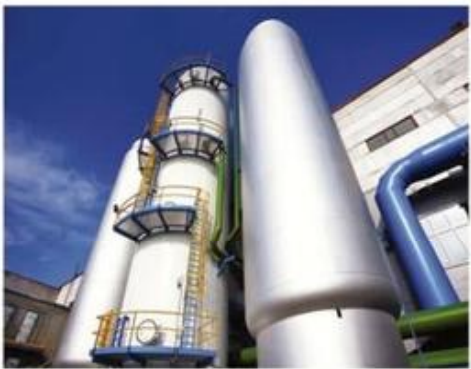
An equilibrium mixture at 400°C contains 18 mol of , 54 mol of , and 48 mol of . The total equilibrium pressure is 200 atm. Let's calculate .
Step 1: Calculate the mole fractions
Total moles = mol
Step 2: Calculate the partial pressures
Step 3: Write the expression and calculate
Note on units:
Calculating Kp for heterogeneous equilibria
A heterogeneous equilibrium contains species in different phases. When calculating for such equilibria, remember to include only the gaseous components.
Example
Worked Example: Calcium Carbonate Decomposition
When calcium carbonate is heated in a closed system, this heterogeneous equilibrium forms:
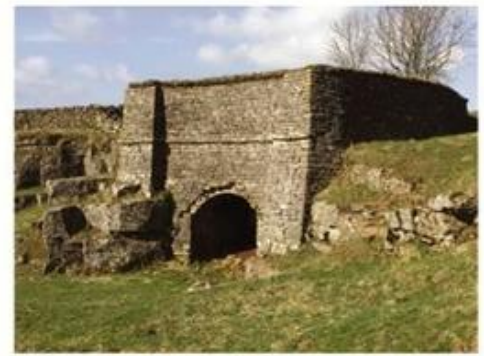
Both calcium carbonate and calcium oxide are solids, while carbon dioxide is a gas.
At equilibrium at 600°C, carbon dioxide has a partial pressure of atm.
Step 1: Write the expression for
Only gaseous species appear in the expression:
Step 2: Calculate
This is a simple example, but it illustrates an important principle: solids and liquids never appear in expressions.
Note
In heterogeneous equilibria, the expression can be remarkably simple. For the thermal decomposition of calcium carbonate, depends only on the partial pressure of carbon dioxide, regardless of how much solid calcium carbonate or calcium oxide is present (as long as some of each solid is present).
Real-world application: oxygen transport in blood
Partial pressure plays a crucial role in oxygen transport in the human body. The amount of oxygen that dissolves in blood depends on the partial pressure of oxygen in the lungs. At sea level, atmospheric pressure is approximately 101 kPa, and oxygen (which makes up 21% of air) has a partial pressure of about 21 kPa.
As altitude increases, atmospheric pressure decreases significantly:

Important
At high altitudes, the lower partial pressure of oxygen means less oxygen dissolves in the blood. This can cause altitude sickness. The body compensates by producing more haemoglobin, but at very high altitudes, the partial pressure of oxygen may become dangerously low.
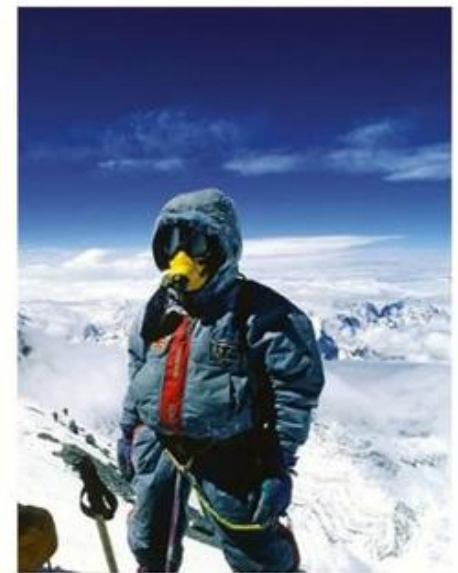
High-altitude mountaineers must use supplemental oxygen tanks to ensure adequate oxygen supply when climbing peaks like Mount Everest (8848 m above sea level), where atmospheric pressure is only about 29 kPa.
Note
Professional climbers often spend weeks at intermediate altitudes to allow their bodies to acclimatize—a process where the body increases red blood cell production to maximize oxygen uptake even at lower partial pressures. This physiological adaptation is essential for survival at extreme altitudes.
Key calculation tips
Summary
Key Points for Working with Calculations:
When working with calculations, always check:
- Mole fractions sum to 1: This verifies you haven't made errors in calculating proportions
- Partial pressures sum to total pressure: This confirms your partial pressure calculations are correct
- Only gases in Kp expression: Never include solids or liquids
- Consistent units: Use the same pressure unit (kPa, Pa, or atm) throughout
- Correct powers: Match the balancing numbers in the equation
Remember!
Summary
Essential Concepts to Remember:
- Mole fraction is the proportion of a gas in a mixture:
- Partial pressure is the pressure contribution of a gas:
- expressions use partial pressures with powers matching stoichiometric coefficients
- Only gaseous species appear in expressions; solids and liquids are excluded
- Units matter: Be consistent with pressure units (kPa, Pa, or atm) and calculate units from the expression
- The sum of all mole fractions equals 1, and the sum of all partial pressures equals the total pressure