Gender Bias & Cultural Bias (OCR A-Level Psychology): Revision Notes
📚Revision Notes
8.1.1 Gender Bias & Cultural bias
Gender bias
Gender bias: When the differences between men and women are misrepresented
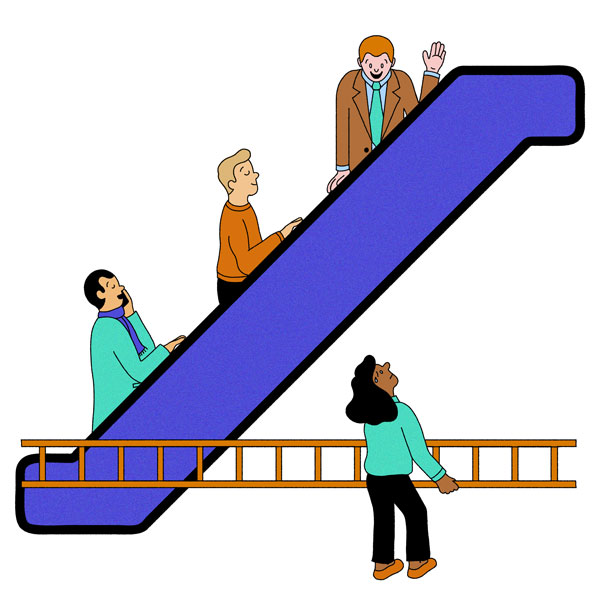
Types of gender bias:
Alpha bias: When a researcher exaggerates the differences between men and women
Example:
Note
P: Freud's psychodynamic theory suffers from androcentric alpha bias
Note
E: This is because his research focused on men and suggested that there were large, permanent psychological differences between men and women, without enough evidence to support this claim
Note
E: Therefore, he exaggerated the differences between men and women psychologically, demonstrating androcentric alpha bias
Beta bias: When a researcher minimises the differences between men and women
Example:
Note
P: The drug Stilnox was approved after being tested on male participants. However, when women took the drug, they experienced dangerous side effects such as falling asleep whilst driving
Note
E: This shows that the tests displayed androcentric beta bias as they assumed that women would react to the drug in the same way as men
Note
E: Therefore, the tests minimised the differences between their physiology, resulting in them lacking population validity and not generalising to women
Ways gender bias affects psychological research:
-
Biased observations This can occur when studies define their behavioural categories in an incomplete way
-
Biased conclusions This can occur when results are interpreted in different ways e.g. by researchers or by the media
-
Biased design This can occur when researchers include participants of only one gender, resulting in their sample not generalising to other genders
Androcentrism: When theories or studies focus on the male perspective
Androcentric bias: When research lacks validity because it focuses on male participants but tries to generalise the findings to other genders
Example:
Note
P: The fight or flight response has assumed a male view of the stress response
Note
E: As a result, it has minimised the view of women and ignored the fact that they may respond differently
Note
E: Therefore, it demonstrates an androcentric beta bias
Examples of androcentric bias in psychological research:
- Asch's line study
- Zimbardo Stanford prison experiment
- Milgram shock experiment
Cultural bias:
Universality: When a theory of behaviour applies to everyone
Cultural bias: When differences between cultures are misrepresented
Ethnocentrism: When someone interprets behaviour based on their cultural perspective, perhaps causing them to see the behaviours of other cultures as abnormal.
Ethnocentric bias: When research lacks validity because it focuses on one culture, but tries to generalise the findings to other cultures
- This can occur when researchers ignore other cultures in their study or study other cultures without understanding their cultural perspective

Consequences of ethnocentrism in research:
- Ethnocentrism in research can decrease the external validity and external reliability of research as the results may not generalise to other cultures
- Ethnocentrism in research can lead to other cultures being devalued due to being different, which can lead to harmful stereotypes
Evaluation:
(1)
Note
P: The deviation from social norms theory suffers from ethnocentrism
Note
E: This is because it ignores the fact that social norms can vary across cultures. For instance, ethnic minorities may be considered abnormal as they are being judged by social norms that are different to their culture.
Note
E: Therefore, this ethnocentrism may lead to them being misdiagnosed as having a mental disorder, when there are just cultural differences in behaviour.
(2)
Note
P: Ainsworth's strange situation suffers from ethnocentric bias
Note
E: This is because, Ainsworth concluded that secure attachments were the most common, whereas additional research has shown that babies from collectivist cultures are more likely to have an insecure-resistant attachment
Note
E: Therefore, there are cultural differences in attachment that Ainsworth doesn't account for, resulting in her research lacking external validity
(3)
Note
P: Asch's conformity research involves ethnocentric bias
Note
E: This is because it assumes that all other cultures would conform in the same way as Americans
Note
E: Therefore, it minimises the differences between cultures, resulting in it suffering from beta bias and lacking population validity
Cultural relativism:
Cultural relativism: The idea that a person's behaviour must be understood from their own culture's perspective
Evaluation:
(1)
Note
P: Cultural relativism prevents ethnocentric bias
Note
E: This is because it stops researchers from just focusing on their cultural perspective, which prevents prejudice and discrimination as it doesn't see other cultures as abnormal
Note
E: Therefore, this results in cultures being more equally valued
(2)
Note
P: Cultural relativism may exaggerate the differences between cultures
Note
E: This can prevent psychologists from proposing universal theories, even when people do have enough in common to claim universality
Note
E: Therefore, cultural relativism may lead to a cultural alpha bias
(3)
Note
P: Cultural relativism may ignore differences within the culture
Note
E: This is because different people from the same culture may still behave differently
Note
E: Therefore, this acts as a form of beta bias
- The risk of ethnocentric bias can be minimised by using cross-cultural research. This is when research is conducted in different cultures to see if theories generalise, or if there are cultural variations, increasing the external validity of the study