Christian teaching on the roles of women and men in the family and society (OCR A-Level Religious Studies): Revision Notes
📚Revision Notes
Christian teaching on the roles of women and men in the family and society
Gender roles: psychological traits, place in society, and place in home life that a culture associates with male and female.
The traditional view of gender roles is that men should be active in the world while women should be submissive to male authority and dedicated to homemaking and bringing up children.
Note
These gender roles were seen as natural and therefore good either because God designed human nature to flourish when following them, or evolution-designed males and females to be suited to different types of roles.
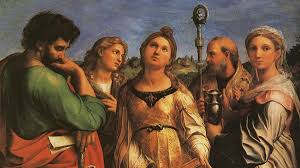
Traditional Christian Gender Roles
Genesis and Augustine's Interpretation
- In Genesis, Adam is created first, followed by Eve, who is made from a part of Adam.
- Eve is described as Adam's 'helper'.
- Augustine interprets this to mean that a man alone embodies the "imago Dei" (image of God), whereas a woman does not. According to Augustine, only when a woman combines with her husband as his helper does she reflect the image of God. Eve's Fall and Its Consequences Eve is the first to succumb to sin, leading to her punishment of pain in childbirth and subjugation to her husband, as stated in Genesis 3:16: "your husband will rule over you."
St. Paul's Teachings
Timothy 2:12:
"I do not permit a woman to teach or to assume authority over a man; she must be quiet. For Adam was formed first, then Eve. And Adam was not the one who was deceived; it was the woman who was deceived and became a sinner. But women will be saved through childbearing."
Ephesians 5:22-33:
Note
"Wives, submit to your own husbands as you do the Lord. For the husband is the head of the wife as Christ is the head of the church…."
Aquinas on Gender Roles
- Aquinas argues that the submission of wives to their husbands benefits both individuals and ensures good order in the family.
- He believes men are inherently wiser and more rational than women, justifying this hierarchy.
Mulieris Dignitatum
In his 1988 letter 'Mulieris Dignitatum' (On the Dignity of Women), Pope John Paul II defends Christianity against accusations of sexism.
He argues that men and women have different but complementary qualities and abilities designed by God. While they are different, they are equally valuable and need each other.
Motherhood as Telos
John Paul II contends that motherhood is a woman's natural purpose (telos), as women are physically and psychologically disposed to motherhood. He argues that motherhood fulfils the female personality, especially in terms of compassion and self-giving. This view is based on Natural Law reasoning about telos.
Important Women in Christianity
John Paul II highlights the significance of women in Christian history and theology, pointing to female saints and Mary, the mother of Jesus, to argue that Christianity values women highly.
Feminist Response
Feminists argue that embedding gender roles in telos is another form of biblical patriarchy. They point to the anthropological diversity of gender roles across cultures as evidence against a natural inclination towards specific gender roles. They contend that the idea of a divinely designed telos for women is a cultural invention to perpetuate male dominance.
Critique by Simone de Beauvoir
Simone de Beauvoir rejects the idea that motherhood is a woman's telos. As an existentialist, she argues that humans must define their own purpose, rejecting the notion of an objective, pre-defined purpose.
Feminist Biblical Criticism
Biblical Patriarchy
Feminist biblical criticism challenges the traditional view, arguing that the Bible was written by men to subjugate women. They contend that patriarchal passages in the Bible reflect the authors' self-interest rather than divine will. According to this perspective, the notion that men should be active in the world while women remain passive at home serves to perpetuate male dominance.
Liberal Feminist Theology
Liberal feminist theologians argue that the Bible is not the perfect word of God but a human product full of errors. They believe the scriptures reflect the cultural and historical contexts of their authors and thus require reinterpretation to remain relevant. This approach suggests that just as Jesus updated Old Testament laws, Christians should continuously evolve their theology and ethics.
Ruether's Feminist Theology
Inconsistency in the Bible
Ruether posits that while the Bible contains patriarchal verses, it also includes passages advocating for equality. She argues that the Bible is inconsistent on gender issues and cannot coherently support a traditional patriarchal view.
Post-Christian Feminist Theologians
Critique of Biblical Patriarchy
Post-Christian feminist theologians, such as Daly and Hampson, argue that the patriarchal elements of the Bible indicate that it is man-made. They assert that the Bible's portrayal of men in superior positions suggests that God is a human creation designed to justify male dominance.
Mulieris Dignitatum
Pope John Paul II's Defence
In his 1988 letter 'Mulieris Dignitatum' (On the Dignity of Women), Pope John Paul II defends Christianity against accusations of sexism. He argues that men and women have different but complementary qualities and abilities designed by God. While they are different, they are equally valuable and need each other. He suggests that a male saviour can indeed save women.
John Paul II contends that motherhood is a woman's natural purpose (telos), as women are physically and psychologically disposed to motherhood. He argues that motherhood fulfils the female personality, especially in terms of compassion and self-giving. This view is based on Natural Law reasoning about telos.
Feminist Response
Feminists argue that embedding gender roles in telos is another form of biblical patriarchy. They point to the anthropological diversity of gender roles across cultures as evidence against a natural inclination towards specific gender roles. They contend that the idea of a divinely designed telos for women is a cultural invention to perpetuate male dominance.
Critique by Simone de Beauvoir
Simone de Beauvoir rejects the idea that motherhood is a woman's telos. As an existentialist, she argues that humans must define their own purpose, rejecting the notion of an objective, pre-defined purpose.
Important Women in Christianity
John Paul II's Argument John Paul II highlights the significance of women in Christian history and theology, pointing to female saints and Mary, the mother of Jesus, to argue that Christianity values women highly.
Feminist Critique
Simone de Beauvoir and Mary Daly argue that the Christian idealisation of Mary serves to reinforce women's subservient roles. Daly goes further, suggesting that Mary's portrayal as passive and obedient encourages women to become the sexual property of men, likening this to a form of mental and spiritual subjugation.
This reformulated perspective offers a detailed examination of traditional Christian gender roles, feminist criticisms, and the ongoing debate over the interpretation and application of biblical texts regarding gender.