The metaphysics of consciousness: Materialism (OCR A-Level Religious Studies): Revision Notes
📚Revision Notes
The metaphysics of consciousness: Materialism
Materialism: the idea that the mind and consciousness can be fully explained by physical or material interactions and therefore rejects the idea that the soul is a spiritual substance.
Gilbert Ryle: For Ryle, dualism like that proposed by Descartes is a 'philosophers myth'.
He posits that all human functioning can be described as 'acts' and that there is no division between mental and physical acts – they are the same.
From this view, he mocks philosophers like Descates by saying that there is no "ghost in the machine" that is causing these acts and that the body is not controlled by some immaterial soul.
A Category Error
He argues that thinking of the mind and body as distinct elements or substances is a category error.
To illustrate the category error, Ryle used the example of a visitor to Oxford University:
The visitor, upon viewing the colleges and library, reportedly inquired "But where is the University?" The visitor's error is presuming that Oxford University is part of the category "physical building" rather than that of an "institution" they have been incorrectly categorised. Along the same vein, Ryle argues that this is the same type of error that people make when they incorrectly categorise the function of the brain as the function of an immaterial soul.
The Mind/Body distinction
Ryle held that the traditional mind/body distinction was a category mistake because traditionally, people believed the mind & body to be two separate categories that were somehow harnessed together, but, that is inconsistent with what we now know about psychology and neuroscience.
Ryle argues that historically, when people did not know better they categorised things like personality, behaviour, and character as the soul but, now we know more about neuroscience it is clear that a mischaracterization has been made and instead these things should be categorised as the brain.
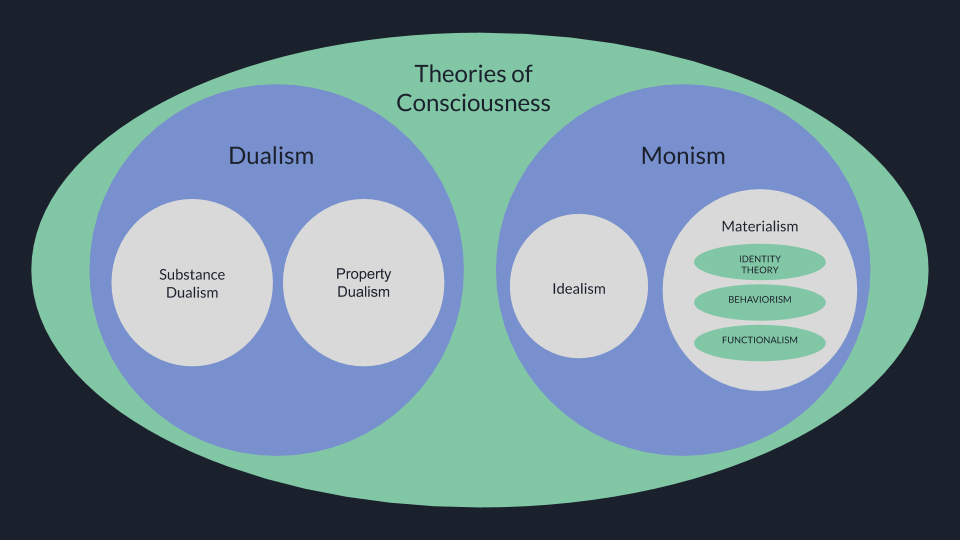
Ryle argues that people today who say that they have a soul are incorrect because they are employing a distinction that is a misuse of semantics.
Richard Dawkins:
Dawkins believes that there is no non-physical part of a person and that consciousness cannot be separated from the brain because matter is all that exists.
He argues that humans are nothing more than survival machines and are simply the vehicles of genes that are only interested in replicating themselves in order to survive into the next generation. Since he believed that consciousness, is nothing more than electro-chemical events in the brain he argues that religious belief in ideas such as the immortality of the soul has no sound basis. They are benefits for those who lack courage, fear death & cannot accept their mortality.
Dawkins wrote about soul one and soul two by which he meant two different ways of understanding the soul.
Soul one: the viewpoint that claims that the soul is a distinctive spiritual and supernatural part of a person, capable of knowing God and surviving bodily death.
Dawkins rejects Soul 1 because as a materialist, he does not believe in the existence of anything immaterial.
Soul 2: refers to a more Aristotelian understanding of the soul which refers to someone's personality and individuality.
Dawkins accepts Soul 2 which does not include any notion of life after death or religious grounding.
However, he believes that Soul 2 is ultimately a consequence of material processes in the body.
When using the term 'soul' metaphorically we are attempting to capture what it means to be human, the special importance of human life, and the impressiveness of human endeavours.
Note
For example, to say that somebody has a "pure soul" is speaking metaphorically of their character and not referring to a literal soul.