Meiosis (AQA GCSE Biology): Revision Notes
📚Revision Notes
6.1.2 Meiosis
Note
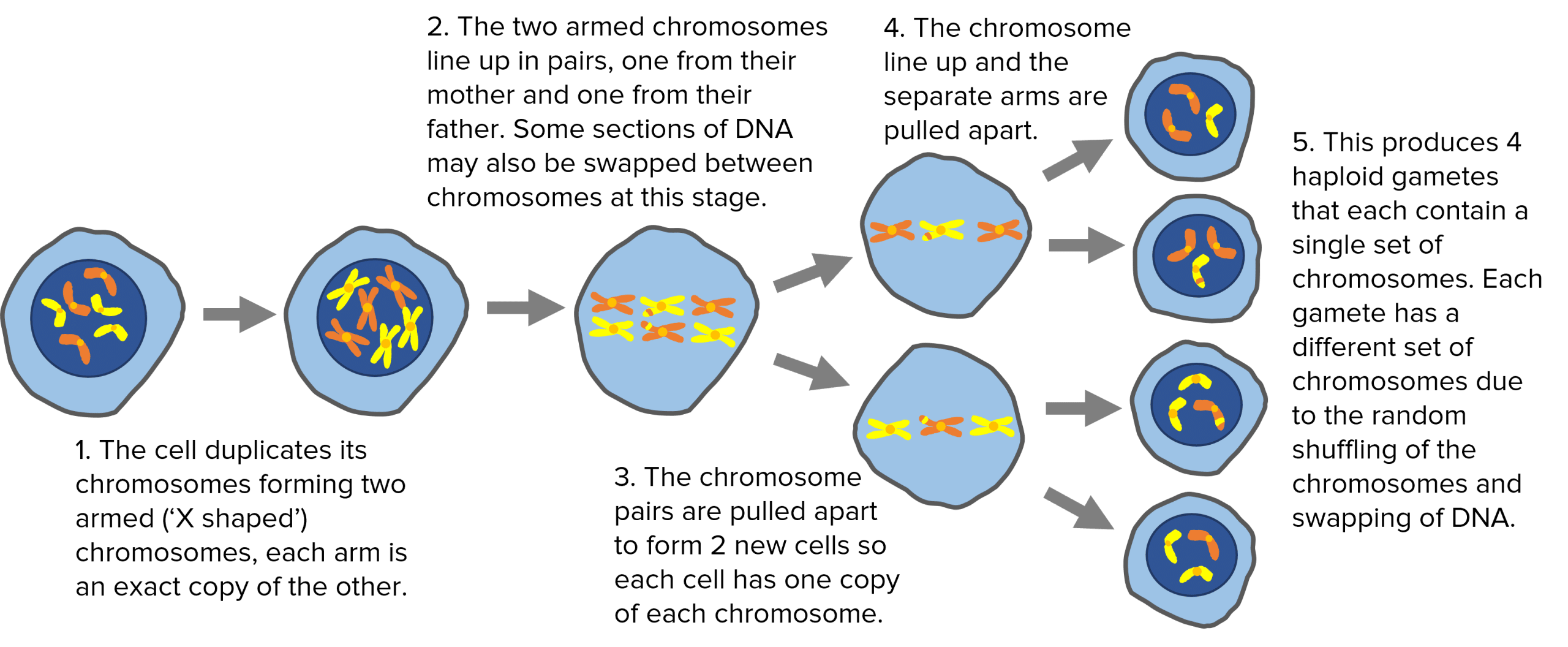
Meiosis is the formation of four non-identical cells from one cell. Cells in the reproductive organs divide by meiosis to form gametes. Gametes only have one copy of each chromosome.
- The cell makes copies of its chromosomes, so it has double the amount of genetic information.
- The cell divides into two cells, each with half the amount of chromosomes (46).
- The cell divides again producing four cells, each with a quarter the amount of chromosomes (23).
- These cells are called gametes and they are all genetically different from each other because the chromosomes are shuffled during the process, resulting in random chromosomes ending up in each of the four cells. These gametes with 23 chromosomes join at fertilisation to produce a cell with 46 chromosomes, the normal number.
- This cell divides by mitosis to produce many copies.
- More and more cells are produced, and an embryo forms.
- The cells begin to take on different roles after this stage (differentiation).