CHD: A Non-Communicable Disease (AQA GCSE Biology): Revision Notes
📚Revision Notes
2.3.1 CHD: A Non-Communicable Disease
Coronary Heart Disease and Treatments
Note
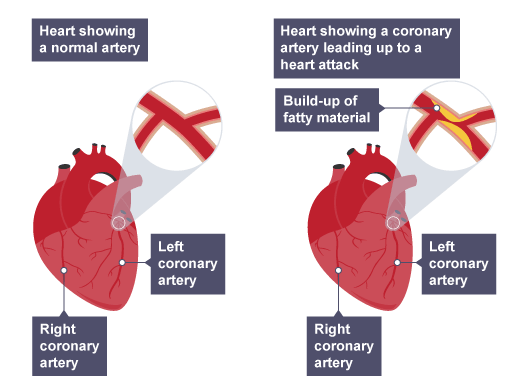
Coronary Heart Disease (CHD) occurs when the coronary arteries, which supply blood to the heart, become narrowed or blocked due to the build-up of fatty material (atherosclerosis). This reduces blood flow to the heart, leading to a decrease in oxygen supply, which can result in a heart attack. This condition is non-communicable, meaning it is not infectious.
Solutions:
Stents:
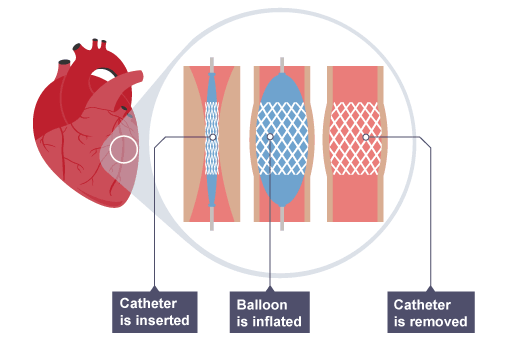
- Stents are metal mesh tubes inserted into the arteries to keep them open and allow blood to flow through.
- Advantages:
- Effective in lowering the risk of a heart attack.
- Quick recovery time from the procedure.
- Disadvantages:
- Risk of a heart attack during the procedure.
- Possibility of infection following the surgery.
- Blood clots (thrombosis) may form near the stent, which can be dangerous.
Statins:
- Statins are drugs that reduce levels of LDL (low-density lipoprotein) cholesterol, commonly known as "bad" cholesterol, which contributes to coronary heart disease.
- Advantages:
- Reduce the risk of strokes, coronary heart disease, and heart attacks.
- Increase levels of HDL (high-density lipoprotein) cholesterol, or "good" cholesterol.
- Disadvantages:
- Must be taken continuously, which can be inconvenient.
- Can cause side effects.
- Effects are not immediate; they slow down the build-up of cholesterol over time.
Other Heart Problems:
Faulty Heart Valves:
-
Heart valves may become stiff, preventing them from opening properly, or they may become damaged and start to leak, causing blood to flow in the wrong direction. This reduces the efficiency of the heart.
-
Solutions:
-
Biological Valve Replacement:
-
Valves from pigs or cattle are used to replace the faulty valve.
-
Advantages: Works very well.
-
Disadvantages: Typically lasts only 12-15 years.
-
Mechanical Valve Replacement:
-
Man-made valves can be used.
-
Advantages: Last for a long time.
-
Disadvantages: Requires lifelong medication to prevent blood clots from forming around the valve. Heart Failure:
-
Heart failure may be treated with a heart transplant.
-
Heart Transplant:
-
Requires a donor heart, which is often difficult to obtain as donors must be recently deceased.
-
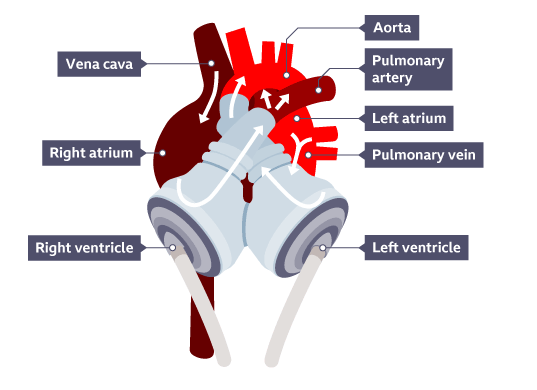
Artificial Heart:
-
Used as a temporary solution while waiting for a donor heart.
-
Advantages:
-
Less likely to be rejected by the immune system because materials like metal and plastic are not recognised as foreign.
-
Disadvantages:
-
Surgery exposes the body to a risk of infection.
-
Mechanical parts can wear out or fail.
-
Blood clots can form, leading to strokes.
-
To prevent clotting, patients must take blood-thinning medication, which can increase the risk of excessive bleeding.
Extreme Blood Loss:
- Artificial Blood:
- A saline solution can be used to keep patients alive even after losing up to two-thirds of their red blood cells.
- Advantages:
- Provides more time for the patient to produce new blood cells.
- Disadvantages:
- Can only be used for short periods; a blood transfusion is required eventually.
These treatments and interventions help manage and mitigate the effects of coronary heart disease and other heart-related conditions, although they come with their own risks and limitations.