Sampling and Storing Sound (AQA GCSE Computer Science): Revision Notes
📚Revision Notes
Representing sound: Sampling and storing sound
What is sound?
Sound consists of vibrations that travel through the air as waves. These sound waves are constantly changing - they can have any value at any moment in time. This makes sound an analogue signal because it varies continuously and smoothly.
However, computers can only work with discrete (individual distinct) digital values. This means we need to convert the smooth, continuously changing analogue sound waves into separate digital numbers that a computer can understand and store.
Important
Fundamental Concept: Sound waves are analogue (continuous) but computers only understand digital (discrete) data. This is why we need a conversion process.
The sampling process
To convert analogue sound into digital form, computers use a process called sampling. Think of sampling like taking regular snapshots of the sound wave at set time periods.
Example
Worked Example: How Sampling Works
Step 1: The computer measures the amplitude (height or strength) of the sound wave at regular time intervals
Step 2: Each measurement becomes a sample - a digital snapshot of the sound at that moment
Step 3: These sample values are then converted into binary numbers that the computer can store
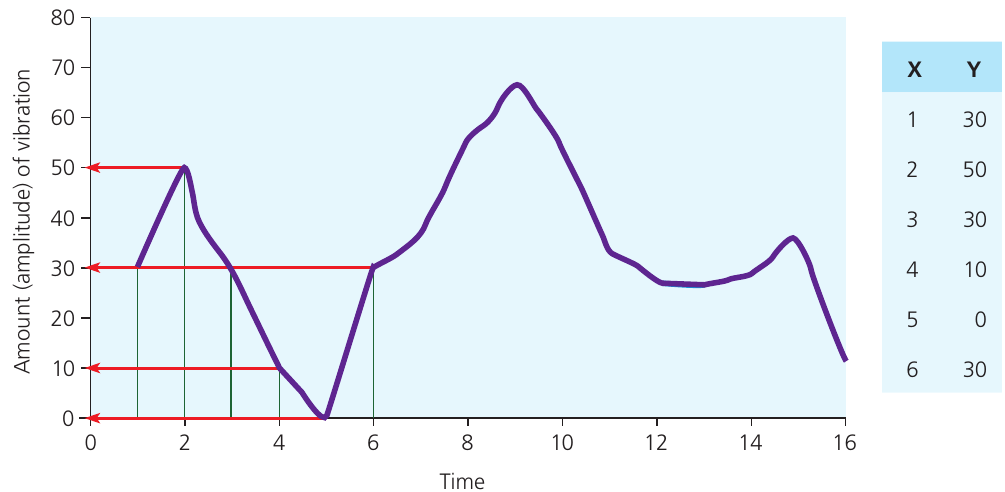
The graph above shows how the original analogue sound wave looks - it's a smooth, continuously changing line that represents the vibration amplitude over time.
From continuous to discrete
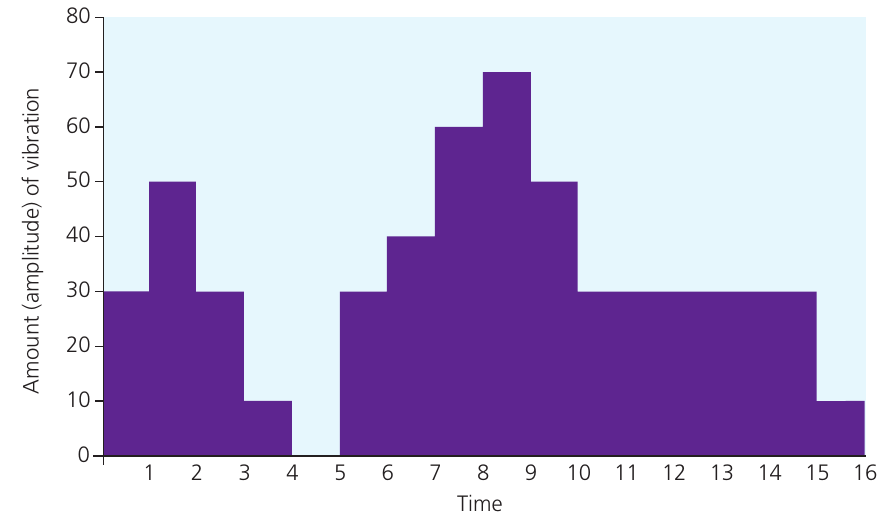
When we sample this continuous wave, we end up with individual measurement points rather than a smooth curve. Each sample represents the amplitude of the sound at a specific moment in time.
Note
Transformation Process: Notice how the smooth curve has become individual bars (discrete values). Each bar represents one sample taken at a specific time, and the computer can now store these as separate digital numbers.
This bar chart shows the same sound after sampling. Notice how:
- The smooth curve has become individual bars (discrete values)
- Each bar represents one sample taken at a specific time
- The computer can now store these as separate digital numbers
Why sampling isn't perfect
When we sample an analogue sound wave, we lose some of the original detail. This happens because:
Important
Sampling Limitations:
- Limited precision: The amplitude can only be stored to the nearest whole number (in this example, to the nearest ten)
- Time gaps: We only take one sample per second, missing what happens between samples
- Shape changes: The recreated sound has a blocky, stepped appearance rather than the smooth original curve
The sampled version gives us a similar shape to the original, but it's not as smooth and detailed. This is why higher quality audio uses more frequent sampling and more precise amplitude measurements.
Key terms to remember
- Analogue: Continuously varying signals that can take any value
- Digital: Discrete values that are separate and distinct
- Sample: A snapshot measurement of sound amplitude at a specific time
- Amplitude: The strength or height of the sound vibration
- Discrete: Individual, separate values (not continuous)
Summary
Key Points to Remember:
- Sound waves are analogue (continuously changing) but computers need digital (discrete) values
- Sampling converts analogue sound by taking regular measurements of the wave's amplitude
- Each sample captures the sound's strength at one moment in time
- The sampled version loses some detail compared to the original analogue sound
- More frequent sampling and higher precision create better quality digital audio