Transforming data (AQA GCSE Statistics): Revision Notes
📚Revision Notes
Transforming data
What is data transformation?
Data transformation occurs when you change all values in a dataset by the same mathematical operation. This might involve adding or subtracting a constant number, or multiplying/dividing by the same value. The brilliant thing about transformation is that it makes calculations much easier whilst still giving you the correct final answer.
Note
Data transformation is particularly useful when working with awkward numbers like decimals, very large numbers, or datasets where all values are clustered around a similar range. By transforming the data first, you can work with simpler numbers and still get accurate results.
The key principle
Important
The Fundamental Rule of Data Transformation
When every piece of data is transformed using the same operation, all the averages (mean, median, and mode) are transformed in exactly the same way.
This means if you add 5 to every data value, you also add 5 to the mean, median, and mode. If you multiply every value by 2, you multiply all the averages by 2 as well.
How to calculate using transformed values
Sometimes working with the original numbers can be tricky, especially when they're decimals or very large numbers. Transforming the data first can make your calculations much simpler.
Method for transforming data
Step 1: Transform each data value using the same operation (usually subtract a constant or divide by a power of 10)
Step 2: Calculate the required average using the transformed values
Step 3: Apply the reverse transformation to your answer to get the final result
Example
Worked Example: Calculating Mean with Decimal Data
Let's say you have these heights in metres: 2.05, 2.02, 2.14, 2.01, 2.20, 2.09
Step 1 - Transform the data: Subtract 2 from each value: 0.05, 0.02, 0.14, 0.01, 0.20, 0.09
Step 2 - Make it easier: Multiply by 100: 5, 2, 14, 1, 20, 9
Step 3 - Calculate the mean: Mean of transformed data =
Step 4 - Reverse the transformation:
- Divide by 100:
- Add 2 back:
So the mean height is 2.085 metres.
Working with percentage increases
When data increases by a percentage, you multiply by a specific value to find the new averages.
Note
Understanding Percentage Multipliers
For percentage increases, you need to multiply by to get the new total value, not just the increase amount.
Key multipliers to remember:
- Increase by 20% → multiply by 1.2 (this gives you 120% of the original)
- Increase by 5% → multiply by 1.05 (this gives you 105% of the original)
- Increase by 15% → multiply by 1.15 (this gives you 115% of the original)
Example with percentage increases
If prices are £45, £36, £57, £28 with a mean of £38.80, and all prices increase by 20%:
- New mean = £38.80 × 1.2 = £46.56
- New median = £36 × 1.2 = £43.20
- New mode = £28 × 1.2 = £33.60
Real-world application
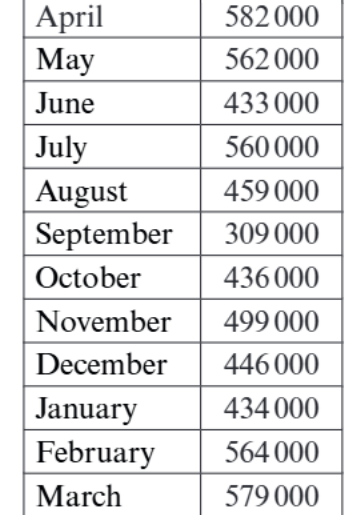
When working with large datasets like visitor numbers to museums, transformation can save significant time. Instead of adding up hundreds of thousands, you could divide all values by 1000, calculate your average, then multiply your answer by 1000 at the end.
For instance, if visitor numbers increase by 5% the following year, you simply multiply the previous year's mean by 1.05 to find the new mean - much quicker than recalculating from scratch!
Important
Common Mistakes to Avoid
-
Always remember to reverse your transformation! This is the most common mistake students make. If you subtract 10 at the start, you must add 10 back at the end.
-
Check your multipliers: For a 15% increase, don't multiply by 0.15 - that would give you only 15% of the original. You need 1.15 to get 115% (the original 100% plus the extra 15%).
-
Look for opportunities: Even when the question doesn't explicitly tell you to transform data, consider whether it would make your calculations easier.
Summary
Key Points to Remember:
- When all data values are transformed by the same operation, the averages transform in exactly the same way
- Transformation can make difficult calculations much simpler to handle
- Always apply the reverse transformation to get your final answer
- For percentage increases, multiply by
- This method works for mean, median, and mode - whatever you do to the data, you do to all the averages