Evolution (Edexcel GCSE Biology): Revision Notes
📚Revision Notes
Evolution
Note
Evolution is a change in the inherited characteristics of a population over time through a process of natural selection which may result in the formation of a new species.
Note
Theory of Evolution: All species have evolved from simple life forms that first developed more than three billion years ago.
Evolution occurs because of natural selection.
- Mutations occur which provide variation between organisms.
- If a mutation provides a survival advantage the organism is more likely to survive to breeding age.
- The mutation will then be passed onto offspring.
- Over many generations, the frequency of the mutation will increase within the population.
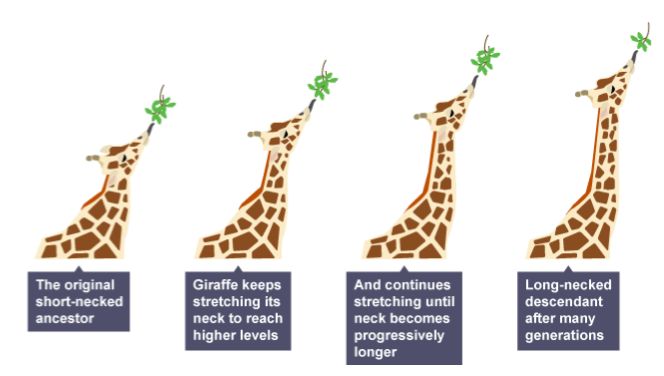
This may cause one population of a species to become so different that they can no longer interbreed to produce fertile offspring. This means they have become a new species. This is called speciation.
Slow continuous change of organisms from generations Charles Darwin came up with the theory of natural selection to explain how natural selection occurs.
Natural selection means survival of the fittest
Individuals in a population show genetic variation because of difference of alleles- new alleles arise through mutation
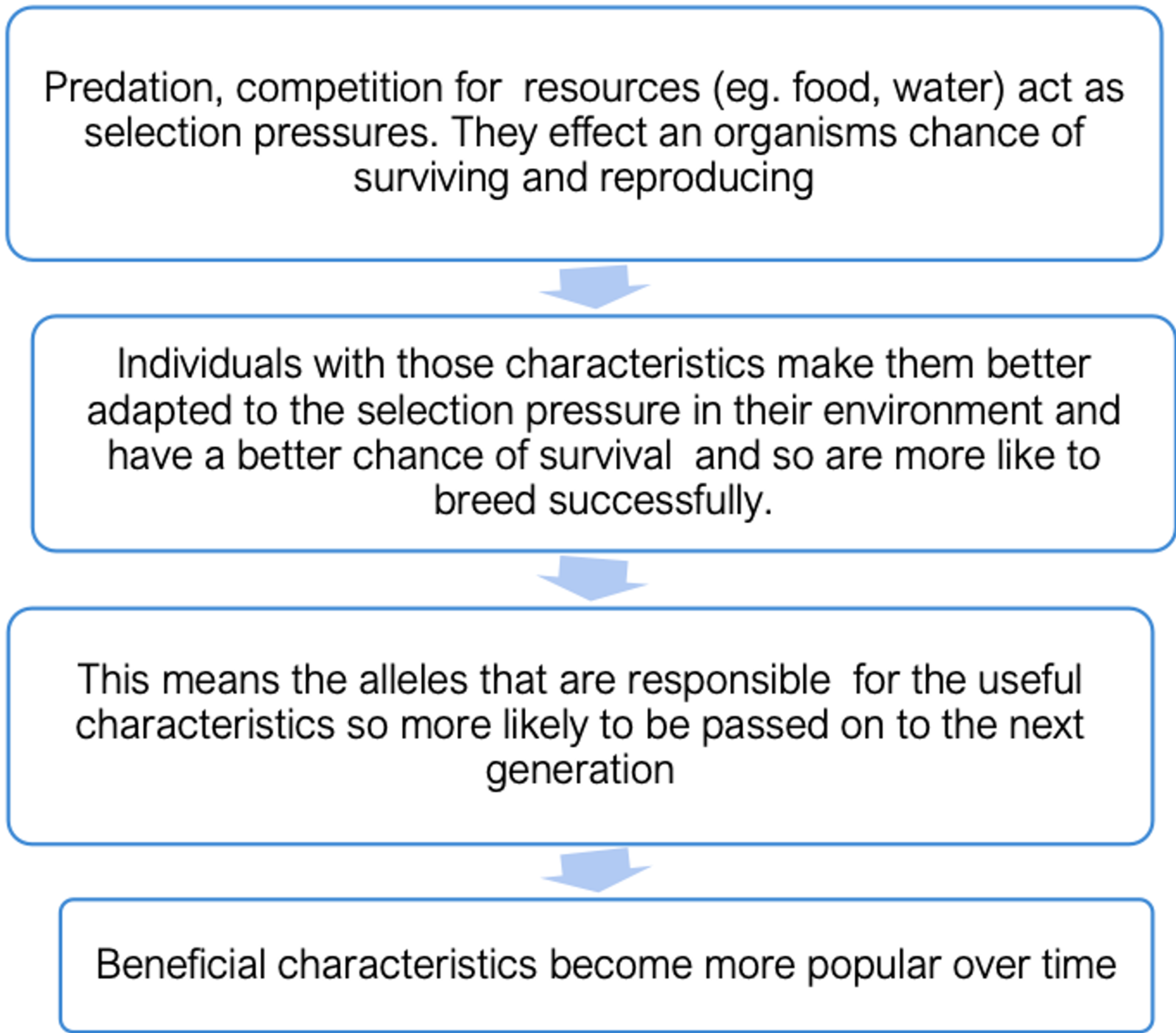
- Some individuals less adapted to selection process to the environment and less able to compete-less likely to survive and reproduce (extinct)
Bacteria- provides evidence for evolution
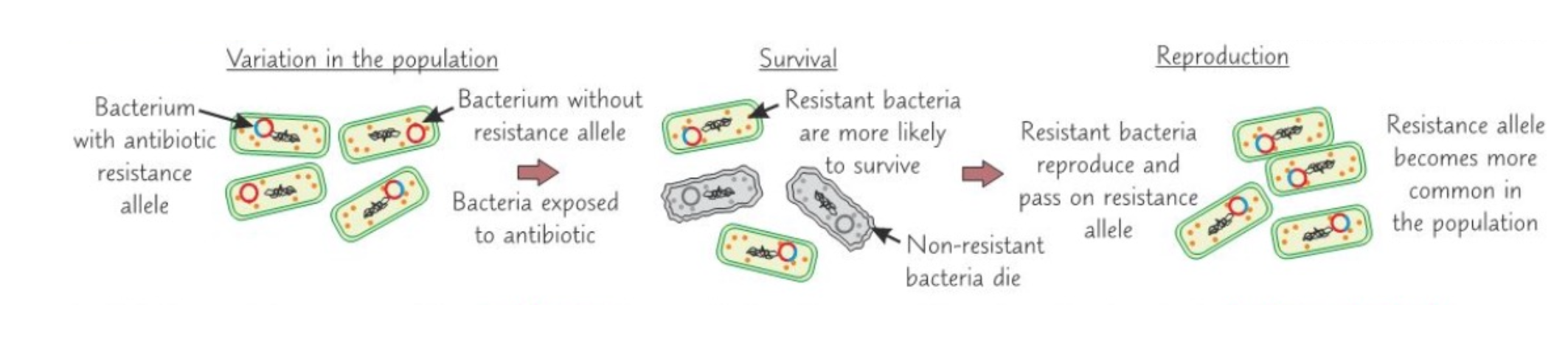
Bacteria sometimes develops in random mutations in their DNA- creates new alleles can change bacteria's characteristics.
Example: bacteria come less affected by an antibiotic (drug design to stop bacteria from reproducing)
For bacterium:
- Ability to resist antibiotic is a huge advantage.
- A resistance bacteria is able to survive better than the non resistance bacteria and so lives longer and reproduces many more times.
- Leads to the allele for antibiotic resistance being passed on to lots of offspring- just natural selection. This is how it spreads and becomes more common in population of bacteria over time.
Note
Antibiotic resistance provides evidence for evolution in which antibiotics are present. The emergence of other resistant organisms (eg. rat resistance to the poison warfarin) also provides evidence of evolution.
Fossils provide evidence of evolution
- Fossil- any trace of plant or animal that lived a long time ago (thousands of years).
- Most commonly found in rocks, deeper the rock older the fossil
- Arranging fossils in chronological order we can observe gradual changes in organisms.
- Provides evidence of evolution because it shows how species have changed and developed over time.