Genetic engineering (Edexcel GCSE Biology): Revision Notes
📚Revision Notes
Genetic engineering
Note
Genetic Engineering: The process of altering the genetic material of an organism by introducing a gene from another organism to give it a desired characteristic.
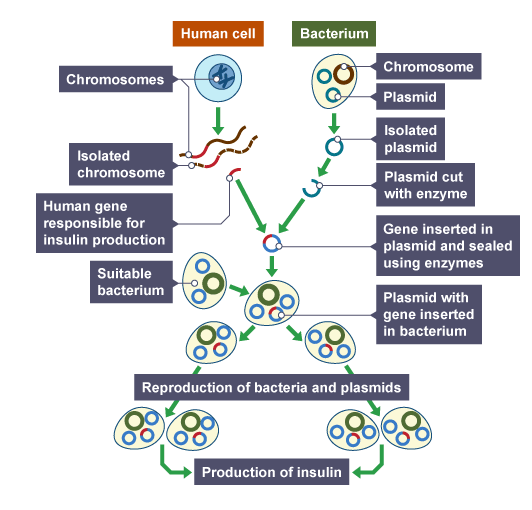
Applications of Genetic Engineering
- In Plants: Engineered to enhance traits like disease resistance or to produce larger fruits.
- In Bacteria: Engineered to produce substances beneficial to humans, such as insulin for diabetes treatment.
Enzymes can be used to cut DNA or join DNA pieces together
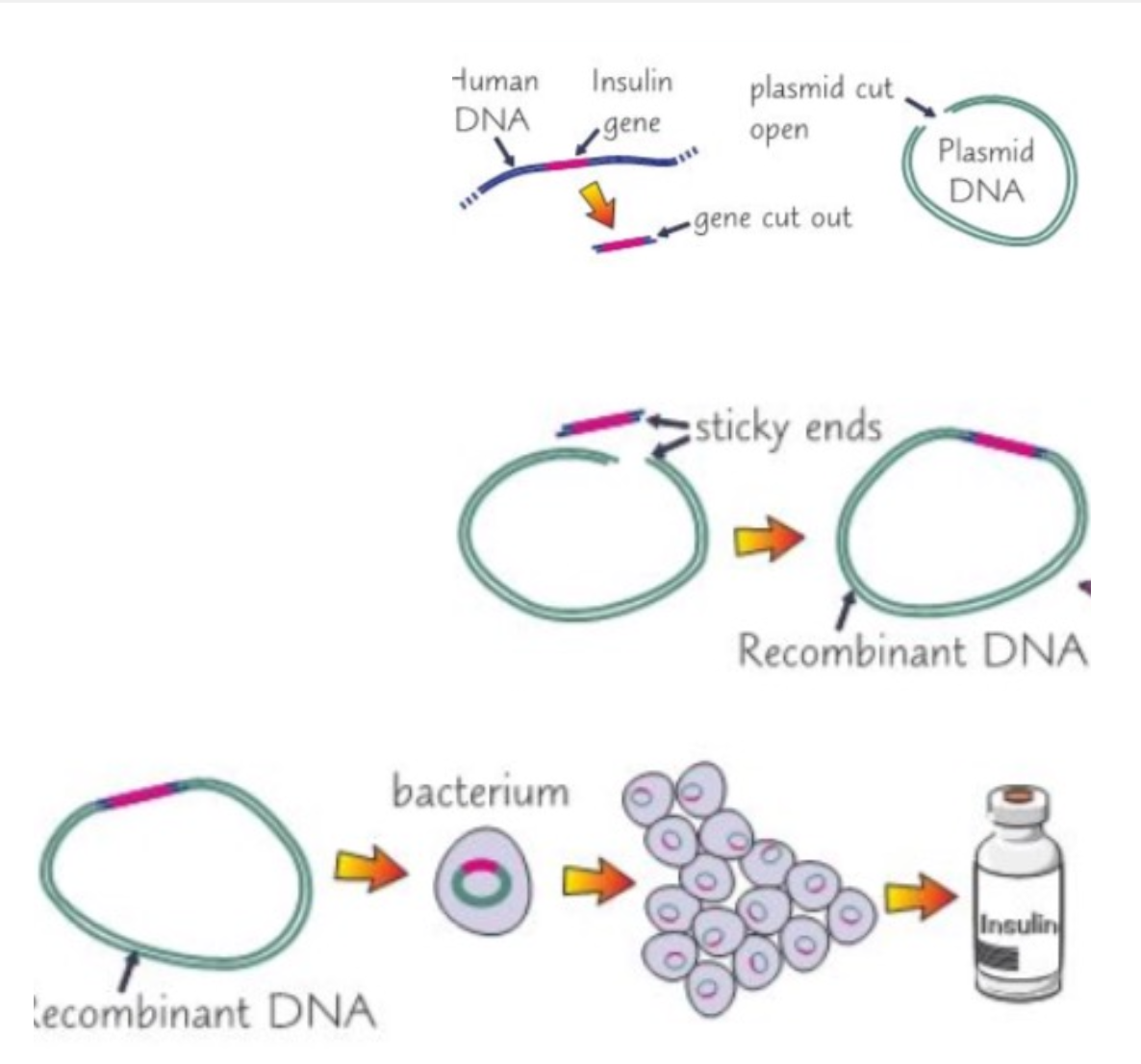
- Restriction enzymes- recognise specific sequence of DNA and cut it at this point. The pieces of DNA are left with sticky ends where they have been cut.
- Ligase enzymes- join DNA together at their sticky ends
- RECOMBINANT DNA- two bits of DNA stuck together Vectors can be used to insert DNA into other organisms
Vector- something that's used to transfer DNA in a cell
2 types of vectors:
- Plasmids- small and circular molecules of DNA transferred between bacteria
- Viruses- insert DNA in the organisms they infect
The Process:
- Gene Extraction: A desired gene is 'cut out' from an organism's DNA using restriction enzymes, creating sticky ends (unpaired bases).
- Vector Preparation: A plasmid (circular DNA) or virus is cut with the same restriction enzyme, creating matching sticky ends. The plasmid also contains an antibiotic resistance marker.
- Gene Insertion: The gene is inserted into the plasmid or virus, and the sticky ends are joined by DNA ligase enzymes.
- Transformation: The recombinant plasmid or virus is introduced into a host cell (like bacteria). As the bacteria multiply, they replicate the modified gene. Antibiotic resistance helps identify successful modifications.
- In Plants: The modified gene is introduced into meristematic (unspecialised) cells, which can grow into fully modified plants.
Genetically Modified (GM) Crops
- Benefits: Engineered for insect resistance and herbicide tolerance, leading to higher yields and less crop loss.
Genetic Modification in Medicine
- Gene Therapy: The introduction of normal genes into a patient's cells to correct genetic disorders by producing the correct proteins.
Benefits and Risks of Genetic Engineering
| Benefits | Risks |
|---|---|
| Medicine: Mass production of hormones (e.g., insulin) using microorganisms. | Environmental Impact: GM crops might affect wild plants and insects, potentially reducing biodiversity. |
| Agriculture: Enhanced yields by improving growth rates, enabling crops to grow in extreme conditions, and producing natural pesticides or herbicides. | Health Concerns: The long-term effects of GM crops on human health are not fully understood. |
| Nutritional Enhancement: Crops with added vitamins can be produced in areas where nutrients are scarce. | Ethical Concerns: Genetic engineering in agriculture might lead to human genetic modifications, raising concerns about designer babies. |
| World Hunger: Increased yields could help address food shortages as the global population grows. | Resistance: GM crops could create super weeds and pests due to increased resistance to herbicides and pesticides. |
Genetic engineering is useful in agriculture and medicine
| Benefit | Drawback | |
|---|---|---|
| Agriculture | Crops can be genetically modified to be resistant to herbicides (chemicals that kill plants). Making crops resistant to this allows farmers to spray weed killers on plants without crops being damaged or harmed | Transplanted genes may go out in the environment. Eg a herbicide resistance gene may be picked up by weeds creating a new super weed variety. Also, genetically modified crops could adversely affect food chains or even human health. |
| Medicine | Managed to transfer human genes to produce useful proteins into sheep's and cows. Eg. human antibodies used in therapy for illnesses like arthritis , some types of cancer and multiple sclerosis. | It can be hard to predict what effect modifying its genome will have on one organism. -Many genetically modified embryos don't survive and some genetically identified animals suffer health problems in later life. |
| Proteins can be extracted from the animal . Animals that have organs suitable form organ transplantation into humans might also be produced in the future. |