The ‘Atlantic triangle’ (Edexcel GCSE History): Revision Notes
📚Revision Notes
The Atlantic Triangle
What was the Atlantic triangle?
The Atlantic triangle, also known as the triangular trade, was a complex trading system that developed between Europe, Africa, and the Americas during the early 18th century. This trade network became crucial to Britain's colonial economy and played a devastating role in the expansion of slavery.
Important
Between 1701 and 1740, the transatlantic slave trade dramatically expanded, with approximately 100,000 people forcibly taken from Africa and transported to North America. This represents one of the largest forced migrations in human history.
While Britain also supplied Spanish colonies with enslaved people, this trade did not generate the enormous profits that British merchants had initially expected.
How the triangular trade system worked
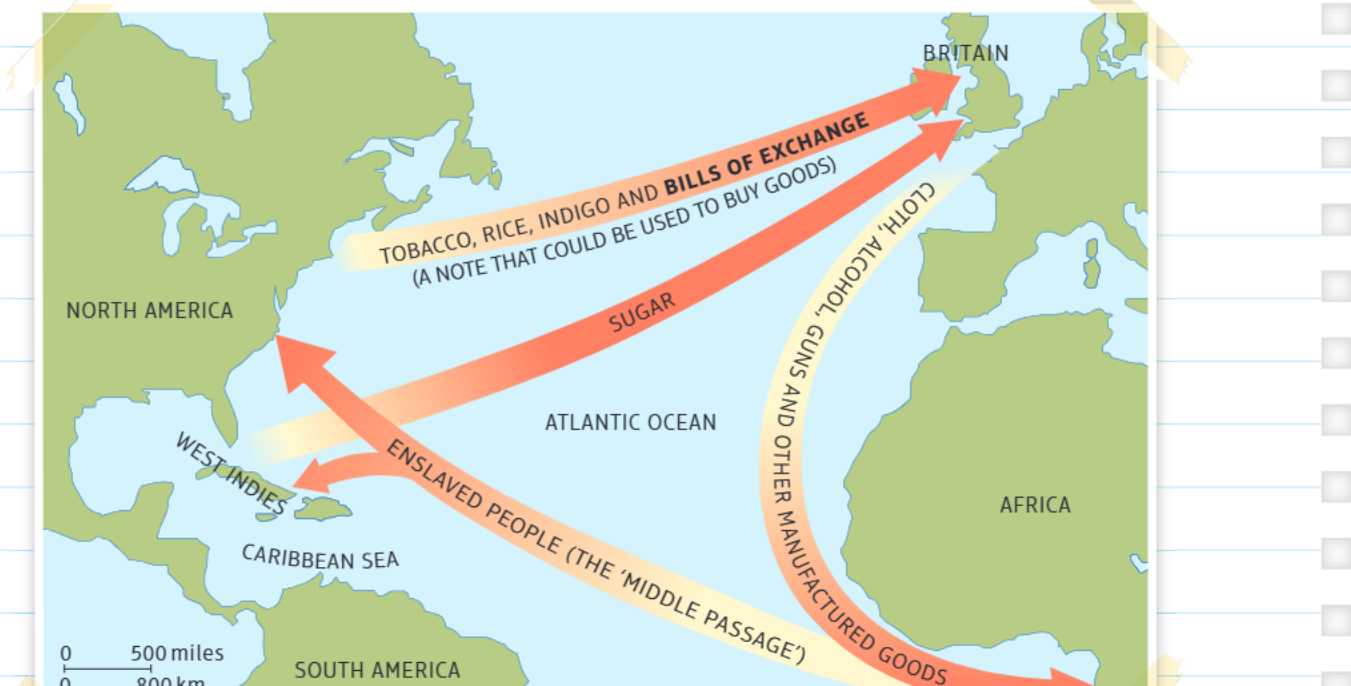
The Atlantic triangle operated as a three-way trading system connecting different continents and their resources. Each leg of the triangle involved different types of goods and represented different economic relationships between the regions involved.
Example
How the Three-Way Trade System Worked:
Step 1 - Europe to Africa: European merchants, particularly from Britain, shipped manufactured goods such as cloth, guns, and other products to Africa.
Step 2 - Africa to Americas: These goods were traded for enslaved people, who were then transported across the Atlantic Ocean to the Americas in what became known as the Middle Passage - one of the most horrific aspects of this trade system.
Step 3 - Americas to Europe: In the Americas, enslaved people were sold and forced to work on plantations producing cash crops. The profits from this labour, along with raw materials like tobacco, rice, indigo, and sugar, were then shipped back to Europe.
Note
The system also relied on bills of exchange (essentially early forms of banking transactions) to facilitate the financial aspects of this international trade network.
Britain's role in supplying enslaved people to Spanish colonies
In 1713, following military and diplomatic negotiations, the King of Spain granted Britain an exclusive right known as the asiento. This agreement gave Britain a monopoly on supplying enslaved people to Spanish colonies, which were primarily located in South and Central America.
The newly established South Sea Company received this monopoly contract. Under the original terms, the agreement was set to last for 30 years, with Britain committing to supply 4,800 enslaved people annually to Spanish territories. However, the trade relationship proved more complicated than anticipated.
Important
Britain was required to pay Spain a substantial fee for each enslaved person supplied under the asiento agreement. This arrangement meant that while Britain gained access to Spanish colonial markets, the profits were reduced by these mandatory payments to the Spanish crown.
Economic impact and challenges
The asiento attracted significant investment in the South Sea Company, with share prices rising as investors anticipated large profits from the Spanish slave trade. Some early investors became very wealthy when they sold their shares at peak prices, demonstrating the speculative nature of colonial trade investments.
However, the South Sea Company's profits were limited by several factors. Smuggling activities frequently undercut official trade, keeping prices lower than expected. Additionally, political tensions between Britain and Spain created ongoing disruptions to legitimate trade relationships.
Note
Between 1713 and 1739, approximately 75,000 enslaved people were transported to Spanish America under this agreement. This represented a significant portion of the transatlantic slave trade during this period, in addition to the 100,000 people who were transported to British colonies.
End of the asiento agreement
The asiento agreement came to an abrupt end in 1739 due to the outbreak of the War of Jenkins' Ear between Britain and Spain. This conflict, part of the broader War of the Quadruple Alliance, completely stopped the official trade relationship established by the asiento.
The war's impact on trade demonstrated how political conflicts could rapidly disrupt colonial economic arrangements. The end of the asiento marked a significant change in Britain's approach to the slave trade, though it continued to be heavily involved in supplying enslaved people to its own colonies.
Timeline of major events
- 1701-1740: Period of dramatic increase in transatlantic slave trade
- 1713: King of Spain grants Britain the asiento (exclusive right to supply enslaved people to Spanish colonies)
- 1713: South Sea Company receives monopoly to manage the asiento
- 1713-1739: Approximately 75,000 enslaved people transported to Spanish America under the asiento
- 1739: War of Jenkins' Ear begins, ending the asiento agreement
Summary
Key Points to Remember:
- The Atlantic triangle was a three-way trading system connecting Europe, Africa, and the Americas through the exchange of manufactured goods, enslaved people, and raw materials
- Britain gained exclusive rights to supply enslaved people to Spanish colonies through the asiento agreement in 1713, managed by the South Sea Company
- The agreement required Britain to supply 4,800 enslaved people annually and pay fees to Spain, limiting potential profits
- Between 1713-1739, around 75,000 people were transported to Spanish America under this agreement, in addition to 100,000 sent to British colonies
- The asiento ended in 1739 due to war between Britain and Spain, demonstrating how political conflicts could disrupt colonial trade arrangements